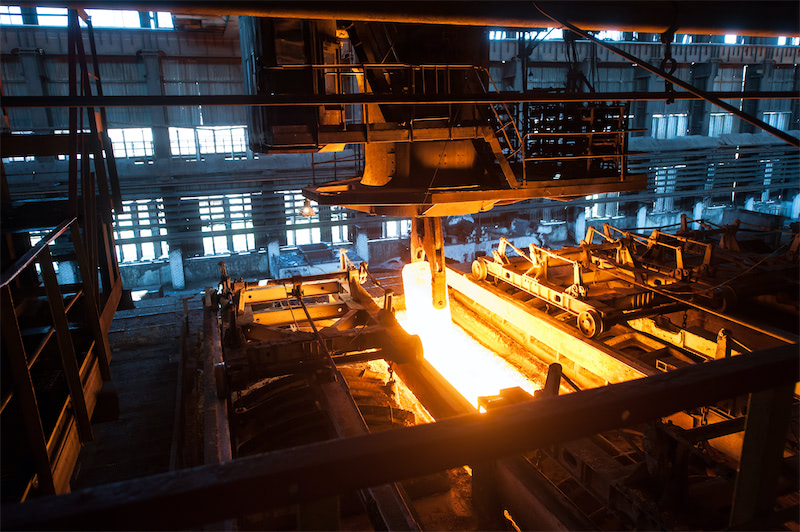
This week, iron ore prices bottomed out, with the weekly average declining WoW. On Monday, weighed down by the bearish sentiment from last week, the most-traded contract I2609 continued to decline and led the decline in ferrous metals, hitting an intraday low of 692.5 yuan/mt, a new low for the year. But as sentiment was released, short positions closed out with profit-taking; moreover, driven by news of long-term contract negotiations and BHP port worker strikes, iron ore prices bottomed out and rebounded. However, iron ore fundamentals remained weak, as hot metal output this week did not increase but decreased. Environmental protection-driven production restrictions in Tangshan ended, and blast furnaces under maintenance gradually resumed production. However, end-use demand weakened further, steel mill shipments were sluggish, inventories continued to accumulate, and some loss-making steel mills increased maintenance, pressing hot metal output lower. Overall demand for iron ore decreased, capping the upside room for ore prices. Port spot cargo held relatively firm, especially mainstream low-grade and high-grade ore, due to restricted SSF port departures, superimposed by the short-term supply of Ukrainian concentrates
Chart: MMI 61% Port Spot Index
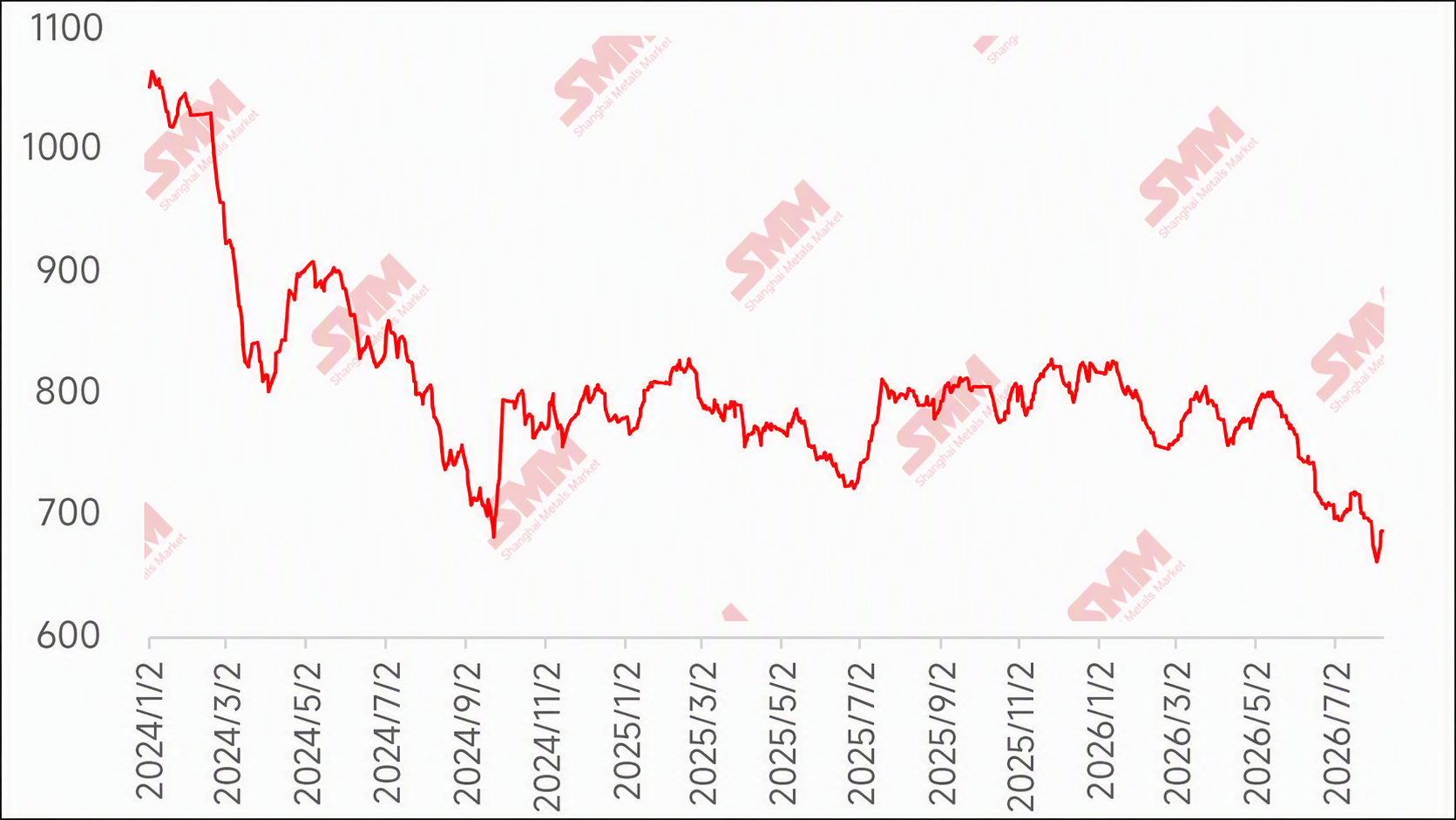
Source: SMM
This week, domestic iron ore concentrates prices declined noticeably. By region, prices in Hebei's Tangshan, Qian'an, Qianxi areas declined by 15-20 yuan/mt; in western Liaoning's Chaoyang, Beipiao, Jianping areas edged down by 5-10 yuan/mt; and in east China declined by 5-10 yuan/mt.
The 66% grade iron ore concentrate dry basis including tax EXW price in Tangshan, Hebei, is currently at 950-960 yuan/mt. Due to widespread losses among steel mills, their desire to bargain down prices is strong; meanwhile, the cost-effectiveness of local concentrates continued to weaken after a long period of holding prices firm, and coupled with the partial recovery and increase in concentrate supply from the Chengde area, the price-supporting mentality at mines and beneficiation plants loosened. Miners in other regions mostly produced normally as planned. Demand side, under the pressure of losses, steel mills mainly pushed for lower prices in procurement. Overall, domestic concentrates prices have trended downward this week.
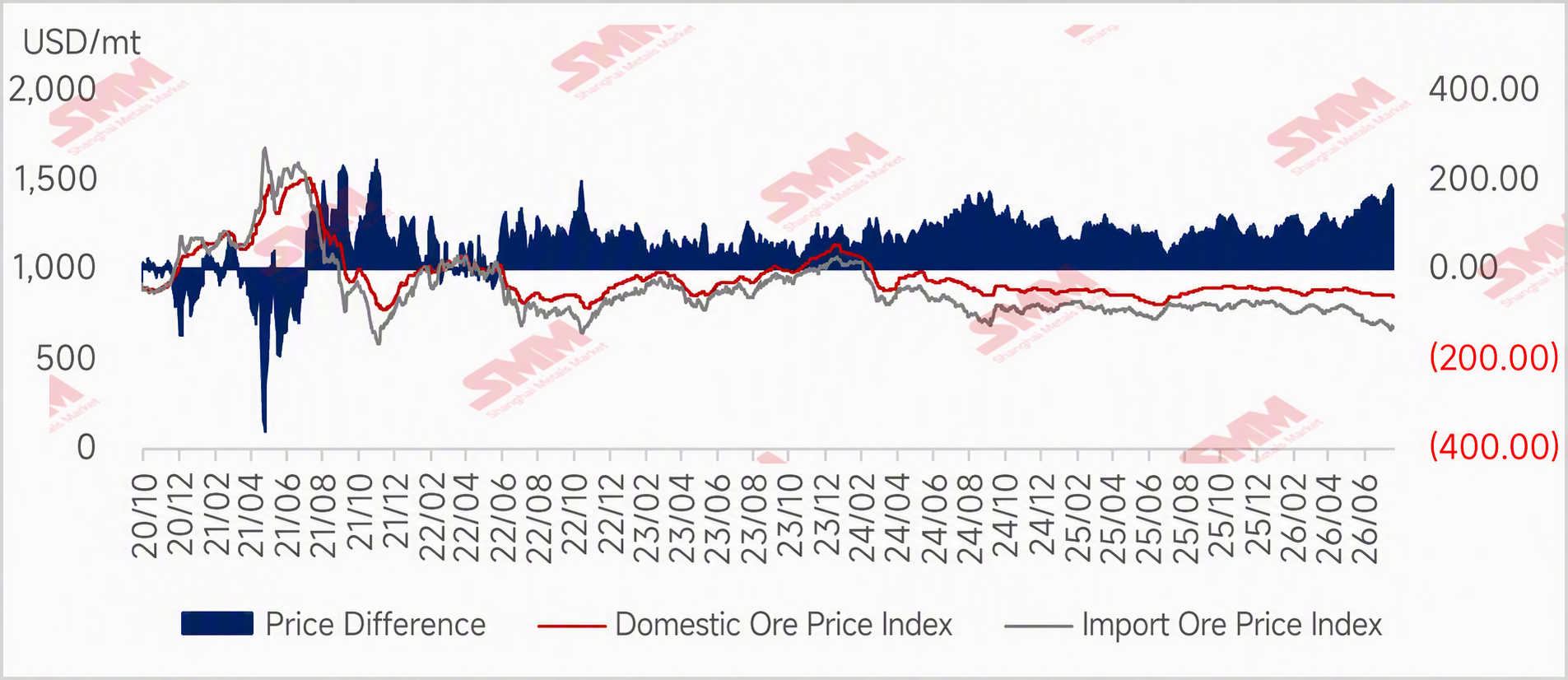
Chart: This week, the domestic and imported ore price spread widened first and then narrowed. It is expected to narrow next week.
Looking ahead to next week
for imported ore: Looking ahead to next week, iron ore prices may show a volatile pattern of first declining and then rising, with the bottom gradually lifting. Bullish and bearish factors intertwine, and the market tug-of-war will intensify.Supportive side, potential supply-side disruptions still have room to develop: BHP's Port Hedland union plans to launch a subsequent 24-hour strike escalation on August 9, posing a risk of phased disruptions to port operations and potentially disturbing short-term shipment pace. Meanwhile, Rio Tinto's long-term contract expires in August, and the subsequent negotiation progress also enters a market watch window, lifting the supply-side uncertainty premium somewhat. Liquidity side, the central bank conducted a 500 billion yuan 3-month reverse repo outright operation on August 5, releasing a marginal easing signal and providing some support to market sentiment. Additionally, premiums for pellets and high-grade ore have strengthened, with structural demand support still present. Pressing factors cannot be overlooked either : next week, affected by typhoon weather, terminal construction conditions will be limited, and demand will weaken further; steel mill finished product inventory pressure continues to accumulate, and wait-and-see sentiment on the procurement side intensifies, with restocking willingness remaining low. According to SMM's calculations based on blast furnace maintenance impact, daily average hot metal production at steel mills will continue its downward trend next week, and demand-side pressure will gradually escalate. Port inventories may further accumulate, capping the upside room of ore prices. Overall, ore prices are expected to consolidate next week. News-driven disruptions may push prices to probe upward in stages, but constrained by weak fundamentals, the rebound's magnitude may be limited. Subsequent focus is recommended on: progress of the BHP Port Hedland strike and the outcome of Rio Tinto's long-term contract negotiations, which may serve as key catalysts for near-term price direction .
Domestic ore: Looking ahead to next week, some ore processing plants are still expected to resume production, which may temporarily ease the tight concentrate supply; on the demand side, steel mill blast furnace hot metal production may continue to decline. Overall, domestic iron ore concentrate prices still face pressure to edge down slightly.
![[Japan Updated Anti-Dumping Duties on Chinese and South Korea Galvanized Steel]](https://imgqn.smm.cn/usercenter/aPBtI20251217171717.jpg)
![[SMM Steel] Low and Stable Price for Indonesia’s Wire Rod](https://imgqn.smm.cn/usercenter/VhIgs20251217171719.jpg)
![Cost Advantages Keep Stainless Steel Scrap Steady, but Weak Off-Season Demand Caps Upside Room [SMM Stainless Steel Scrap Weekly Review]](https://imgqn.smm.cn/usercenter/JdqON20251217171718.png)