Après avoir atteint la limite quotidienne de hausse le 5 août, le cours de l'action de Baowu Magnésium a reculé au cours des deux dernières séances de bourse. Vers 10h55 le 7, Baowu Magnésium était en hausse de 2,74 %, à 11,26 yuans par action.
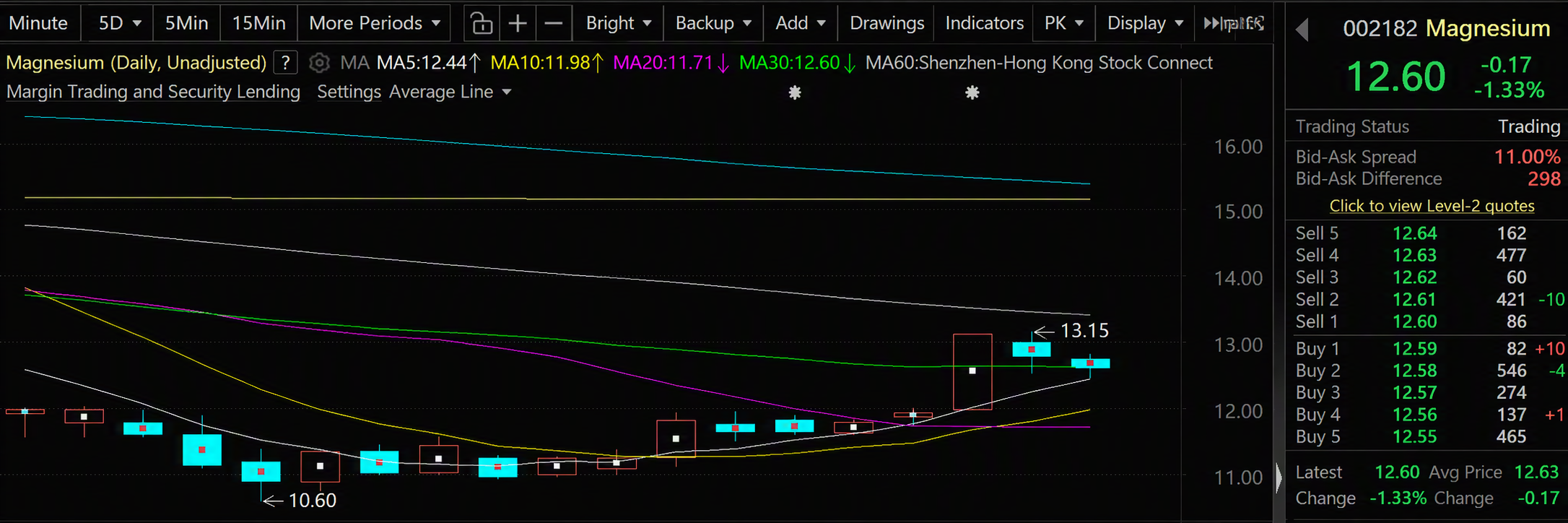
Sur le plan des nouvelles : le formulaire d'enregistrement des activités de relations avec les investisseurs de Baowu Magnésium, publié le 4 août 2026, indique :
Q : Quelles sont les principales activités de Baowu Magnésium ?Baowu Magnésium a répondu : Les activités de la Société comprennent les matériaux de magnésium, les produits de magnésium, les produits d'aluminium, les produits minéraux et les coffrages de construction. Les principaux produits de la Société comprennent les alliages de magnésium, les produits d'alliages de magnésium transformés en profondeur, les alliages d'aluminium, les produits d'alliages d'aluminium transformés en profondeur, les alliages-mères, le strontium métallique, etc.
Q : Veuillez présenter les ressources minérales de la Société.Baowu Magnésium a répondu : La filiale de la Société, Chaohu Baomei, possède des ressources de minerai de dolomite de 90 millions de tonnes et est en exploitation minière ; la filiale de la Société, Wutai Baomei, possède des ressources de minerai de dolomite de 580 millions de tonnes, et la société associée de la Société, Anhui Baomei, détient des ressources de minerai de dolomite de 1,3 milliard de tonnes. La filiale de la Société, Gansu Baomei, via sa division Gansu Mining, a conservé des ressources de minerai de quartzite de 14,91 millions de tonnes.
Q : Quelle a été la production des produits de magnésium en Chine au premier semestre 2026 ?Baowu Magnésium a répondu : Au premier semestre 2026, la production primaire de magnésium en Chine était d'environ 603 100 tonnes, en hausse d'environ 26,49 % en glissement annuel. Au premier semestre 2026, la Chine a exporté au total environ 239 100 tonnes de divers produits de magnésium, en hausse de 7,95 % en glissement annuel.
Q : Comment la Société promeut-elle le magnésium métallique ?Baowu Magnésium a répondu : S'appuyant sur la chaîne complète de l'industrie du magnésium, la Société se concentre sur l'allègement et la fabrication haut de gamme, saisit l'opportunité de la croissance rapide des applications du magnésium dans l'allègement, et fait ce qui suit : 1. Assurance de la chaîne complète : Avec une chaîne industrielle complète de « l'extraction du minerai à la fusion du magnésium, en passant par les alliages et la transformation en profondeur », elle assure un approvisionnement stable en magnésium et soutient les applications à grande échelle dans divers domaines. 2. Leadership technologique : En tirant parti des avantages technologiques de la Société, elle collabore avec des universités, des instituts de recherche et des clients pour mener des R&D sur de nouveaux grades d'alliages de magnésium, et réalise des percées dans des technologies clés telles que le moulage sous pression intégré de grande taille et la résistance à la corrosion et l'ignifugation des alliages de magnésium. 3. Extension d'application : Guidé par un développement « haut de gamme, vert et intelligent », il se concentre sur des secteurs tels que l'automobile, la robotique et l'aérospatiale, offrant des services intégrés de matériaux + composants + solutions.
Q : Quel est le rythme de nomination et de production en série des pièces moulées sous pression en alliage de magnésium dans le secteur des véhicules électriques ?Baowu Magnesium a répondu : La société a concentré ses ressources techniques avantageuses et a continué à approfondir sa présence dans les domaines d'activité des pièces moulées en magnésium de taille moyenne à grande, tels que les moteurs d'entraînement, les traverses de tableau de bord, les cadres de sièges et les pièces structurelles intégrées de carrosserie automobile. Dans le segment des traverses de tableau de bord, elle s'est concentrée sur des percées en coopération avec les principaux constructeurs automobiles, obtenant des nominations de traverses pour plusieurs modèles de voitures très en vue, et a lancé avec succès la première « traverse CCB par procédé semi-solide » au monde ; dans le segment des « moteurs d'entraînement », elle a avancé de manière ordonnée les livraisons en série aux clients, a activement mené des études de faisabilité sur le passage de l'aluminium au magnésium avec les principaux fournisseurs du secteur, et a réalisé des percées majeures dans deux dimensions : la R&D d'alliages de terres rares et l'optimisation des procédés. Parallèlement, les « pièces moulées de carrosserie automobile intégrées en alliage de magnésium » sont devenues le sujet le plus suivi dans les applications du magnésium parmi les grands fabricants de véhicules électriques en 2025. Après avoir réussi un essai routier complet pour un panneau de hayon intérieur d'un constructeur automobile, elle a ensuite achevé la production d'essai de la phase I des composants en magnésium, contribuant ainsi à une vaste gamme de données de tests de validation pour l'évolution technologique du secteur, et renforçant encore la confiance des constructeurs de véhicules électriques dans l'application de grands composants en magnésium. Sous cette dynamique favorable, la société a successivement établi une coopération approfondie en R&D avec plusieurs grands constructeurs automobiles.
En termes de performance : Baowu Magnesium a publié une prévision de performance semestrielle indiquant qu'elle s'attend à enregistrer une perte nette de 14 millions à 20 millions de yuans au premier semestre.
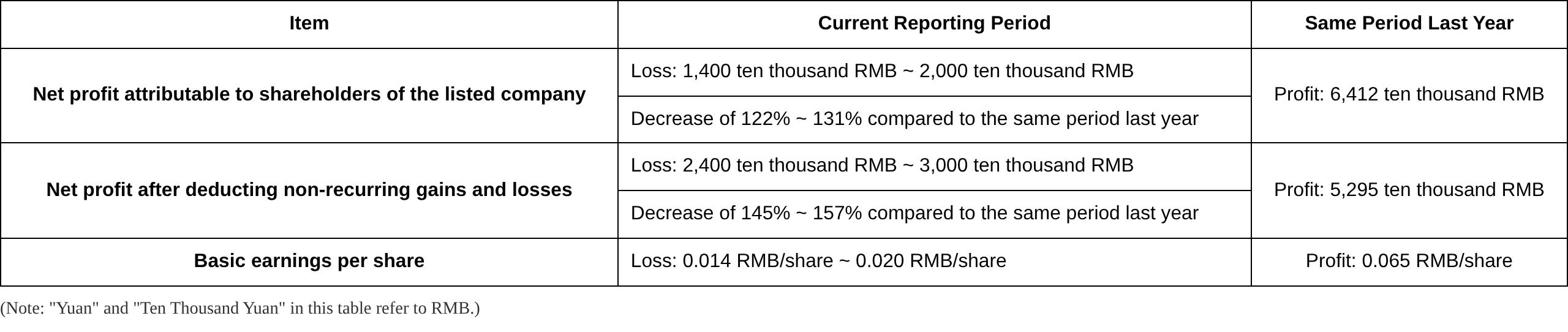
Concernant les raisons de l'évolution des performances, Baowu Magnesium a déclaré :Touchée par une légère hausse des prix du magnésium par rapport à la même période l'année dernière, la rentabilité du segment des matériaux en magnésium de la société est restée globalement stable d'une année sur l'autre. Les principales raisons de la baisse en glissement annuel de la performance semestrielle de la société comprennent : impactée par les fluctuations des prix de l'aluminium et des ventes de produits en aluminium inférieures à celles de la même période de l'année précédente, la rentabilité de l'activité des produits en aluminium a diminué ; le projet de ferrosilicium nouvellement construit par la filiale Gansu Baomei a été mis en service en mai, les indicateurs de consommation n'étant pas encore stabilisés et les coûts des produits étant relativement élevés ; la société associée Anhui Baomei est toujours en phase de montée en puissance, la production de magnésium brut et d'alliages ayant fortement augmenté par rapport à la même période de l'année précédente et divers indicateurs techniques de production s'améliorant progressivement, mais les produits sont encore en situation de perte, ce qui affecte les revenus de participation de la société en baisse sur un an ; et en raison de l'appréciation du yuan par rapport au dollar américain et à l'euro, les pertes de change de la société provenant de ses activités d'exportation ont augmenté sur un an, entre autres.
Le 14 juillet, Baowu Magnesium a publié un avis sur les transactions courantes entre parties liées. En raison des besoins quotidiens de production et d'exploitation, la société et ses filiales contrôlées prévoient de réaliser des transactions courantes entre parties liées en 2026 avec des parties liées, notamment l'actionnaire majoritaire Baosteel Metal et ses filiales, d'autres filiales de deuxième niveau de Baowu et leurs filiales, et la société participée Yian Yunhai, entre autres. Les catégories de transactions entre parties liées comprennent l'achat de produits et de marchandises auprès des parties liées, l'acceptation de services d'exploitation fournis par les parties liées, la vente de produits et de marchandises aux parties liées, la fourniture de services d'exploitation aux parties liées, ainsi que les activités financières (y compris les dépôts et prêts, l'affacturage, l'escompte et le règlement et la vente de devises, etc.). Le montant total des transactions courantes entre parties liées en 2026 (hors services financiers) est estimé à 1,28 milliard de yuans ; en outre, le montant prévu des transactions financières entre parties liées avec Baowu Group Finance Co., Ltd. n'a pas été ajusté, et le quota correspondant a été inclus dans l'arrangement global. Ces transactions entre parties liées respectent strictement le principe de tarification équitable orientée vers le marché, avec des conditions justes et raisonnables, ce qui contribue à assurer le fonctionnement soutenu et stable de la société, ne nuira pas aux droits et intérêts légitimes de la société cotée et de ses actionnaires minoritaires, et n'affectera pas l'indépendance opérationnelle de la société.
Lorsqu'on lui a demandé : « Bonjour, Secrétaire du Conseil. Est-il vrai, comme on le trouve en ligne, que votre entreprise peut produire en série de manière stable des lingots de magnésium métallique ultra-haute pureté de qualité semi-conducteur et qu'elle est le seul coté en bourse ? De plus, quelle a été la part du chiffre d'affaires dans ce domaine dans le total des ventes de l'entreprise au cours des dernières années ? » Baowu Magnesium a répondu sur la plateforme d'interaction avec les investisseurs le 23 juin : Les activités de l'entreprise comprennent les matériaux de magnésium, les produits en magnésium, les produits en aluminium, les produits minéraux et les coffrages de construction. Les principaux produits de l'entreprise comprennent les alliages de magnésium, les produits transformés en profondeur d'alliages de magnésium, les alliages d'aluminium, les produits transformés en profondeur d'alliages d'aluminium, les alliages-mères et le strontium métal, entre autres. Pour la part des revenus par produit, veuillez vous référer au rapport annuel 2025. En ce qui concerne les produits spécifiques et la part du chiffre d'affaires que vous avez mentionnés, l'entreprise n'a pas divulgué publiquement ces informations ; veuillez vous référer aux rapports périodiques ou aux annonces officiellement publiés par l'entreprise pour obtenir des informations pertinentes.
Concernant les questions : « 1. Pour le projet d'Anhui Qingyang, quel est l'état d'avancement de la mise en service de la mine, et quel est le volume actuel de production de minerai ? 2. Quels sont les avantages de la technologie de fusion du magnésium en cornue verticale de l'entreprise, et comment se compare-t-elle à celle des pairs de Fugu ? » Baowu Magnesium a répondu sur la plateforme d'interaction avec les investisseurs le 17 juin : L'entreprise adopte le procédé de fusion du magnésium en cornue verticale, qui présente des avantages techniques remarquables : augmentation de la capacité par cornue, raccourcissement du cycle de production, amélioration de l'efficacité de production, prolongation de la durée de vie des cornues de réduction, et réalisation d'un niveau plus élevé d'opérations mécanisées et automatisées. Le projet minier d'Anhui Qingyang a atteint une capacité de 20 millions de tonnes par an.
Concernant les principales activités de l'entreprise au cours de la période considérée, Baowu Magnesium a présenté dans son rapport annuel 2025 : L'entreprise est une entreprise leader de nouveaux matériaux à base de magnésium sous China Baowu, avec des avantages sur l'ensemble de la chaîne industrielle et en ressources minières, une technologie de fusion du magnésium en cornue verticale de pointe, et une capacité d'alliages de magnésium et une part de marché parmi les meilleures au monde. L'entreprise se concentre sur les matériaux légers, avec des produits couvrant l'automobile, l'électronique grand public, les vélos électriques, les coffrages de construction et d'autres domaines. Après plus de 30 ans de développement, l'entreprise est devenue une entreprise de haute technologie intégrant l'exploitation minière, la fusion et la transformation des métaux non ferreux, engagée à devenir un leader mondial de l'industrie du magnésium. Les activités de l’entreprise couvrent les matériaux à base de magnésium, les produits en magnésium, les produits en aluminium, les produits minéraux et les coffrages de construction. Ses principaux produits comprennent notamment des alliages de magnésium, des produits en alliages de magnésium à transformation approfondie, des alliages d’aluminium, des produits en alliages d’aluminium à transformation approfondie, des alliages maîtres et du strontium métallique, entre autres.
S’agissant de ses perspectives de développement futur, Baowu Magnesium a indiqué dans son rapport annuel 2025 que 2026 est la première année du 15e plan quinquennal de l’entreprise et que le secteur devrait entrer dans une période importante d’opportunités pour un développement haut de gamme et à grande échelle. Le conseil d’administration dirigera l’équipe de direction, avec pour positionnement central « construire un fournisseur de solutions d’allègement et devenir la force principale des nouveaux matériaux de China Baowu », en se concentrant sur son cœur de métier et en approfondissant ses efforts, en promouvant la montée en gamme de l’ensemble de la chaîne industrielle, l’innovation technologique, l’expansion du marché et le développement vert, afin d’obtenir une amélioration continue des performances d’exploitation et un renforcement significatif de la compétitivité de base. 1. Renforcer le rôle d’orientation stratégique et consolider les bases des nouvelles forces productives de qualité dans l’industrie du magnésium Accélérer la mise en place d’un modèle de développement de l’ensemble de la chaîne industrielle couvrant le magnésium primaire — les alliages — la transformation approfondie — les applications finales, se concentrer sur des percées dans les technologies clés de fusion verte et de production stable avec réduction des coûts, et accélérer la promotion à grande échelle des produits clés. 2. Coordonner la construction des projets clés et améliorer de manière synergique l’efficacité opérationnelle globale Accélérer la construction et les travaux de réception globale de la mine de Huayuan Wujia pour le projet de Qingyang, faire progresser de manière ordonnée la construction de la zone principale de l’usine et l’optimisation des indicateurs de production, et faire progresser de manière ordonnée la construction des projets clés de Gansu Baomei, Wutai Baomei et Chaohu Baomei. 3. Approfondir la réforme et l’innovation dans l’industrie du magnésium et promouvoir la modernisation du système de gouvernance d’entreprise Promouvoir régulièrement la transformation et l’innovation du développement des activités, faire avancer l’intégration des actifs et poursuivre l’optimisation de la gouvernance et du contrôle ainsi que des modèles de gestion opérationnelle. 4. Accélérer le déploiement du développement intelligent et faire progresser pleinement la construction du système d’informatisation Assurer une couverture complète du système financier standard de Baowu et la mise à jour ainsi que la mise en production des systèmes de coûts des filiales, construire un projet de référence d’informatisation de bout en bout pour l’activité magnésium, et renforcer davantage les capacités de Baowu Magnesium en matière de contrôle opérationnel, de gestion par la comptabilité, d’exploitation conforme et de prévention et maîtrise des risques5. Concentrer les efforts sur des percées dans le coût du magnésium primaire et améliorer continuellement la compétitivité sur le marché. Réduire les coûts de fabrication des trois composants principaux — les cornues de réduction, les tubes centraux et les cônes ; optimiser et améliorer les nuances d’acier pour prolonger la durée de vie des cornues de réduction ; et réduire la consommation d’énergie auxiliaire et le rapport minerai/magnésium. 6. Mettre en œuvre une gestion par la comptabilité et construire systématiquement un modèle opérationnel de développement de haute qualité. Approfondir l’étalonnage complet (benchmarking) pour identifier les écarts, s’attaquer systématiquement aux « quatre grands coûts » du magnésium primaire, de l’énergie, de la logistique et de la qualité, et améliorer le système de contrôle opérationnel. 7. Construire une forteresse solide de protection de la sécurité et de l’environnement et améliorer systématiquement le niveau de développement vert. Renforcer continuellement la rectification de la conformité en matière de sécurité et d’environnement. Mettre l’accent sur le contrôle des risques dans les domaines clés et l’amélioration de la sécurité intrinsèque. Accélérer la construction d’usines vertes et de capacités bas carbone.
8. Principaux facteurs de risque et contre-mesures auxquels l’entreprise est confrontée (1) Risque de fluctuation des prix des principales matières premières L’activité principale de l’entreprise est le magnésium, les alliages d’aluminium et la transformation profonde, et ses principales matières premières sont les métaux magnésium et aluminium. Les prix du magnésium et de l’aluminium sont affectés par des facteurs tels que l’offre et la demande, l’économie mondiale et les conditions économiques de la Chine, et sont également étroitement liés aux progrès de l’allègement automobile et à la demande dans l’industrie 3C. Si les prix du magnésium et de l’aluminium fluctuent considérablement à l’avenir, cela aura un certain impact sur le contrôle des coûts et la rentabilité de l’entreprise. L’entreprise augmente le taux d’autosuffisance en matières premières, ajuste sa structure de produits et augmente la proportion de produits transformés en profondeur pour réduire l’impact des fluctuations des prix des matières premières. (2) Risque de fluctuation de la demande du marché Les produits légers en magnésium et alliages d’aluminium de l’entreprise sont principalement utilisés dans l’automobile, l’électronique grand public et d’autres domaines. Actuellement, l’entreprise a saisi l’opportunité du développement de l’allègement automobile et, sur la base de la stabilisation de l’approvisionnement en matériaux de base en magnésium et alliages d’aluminium, elle se concentre sur l’expansion des activités de transformation profonde en aval telles que les pièces moulées sous pression en alliage de magnésium pour l’automobile, les coffrages de construction en alliage de magnésium et les produits extrudés en alliage d’aluminium. La demande du marché, telle que l’allègement automobile et la consommation d’électronique 3C, est influencée par de multiples facteurs, notamment la conjoncture macroéconomique, les politiques industrielles et l’innovation des technologies de procédé. Si la demande des marchés en aval est inférieure aux attentes, cela affectera la performance opérationnelle de l’entreprise. L’entreprise élargit l’application de ses produits dans divers domaines et augmente le taux de pénétration de ses produits dans chaque domaine d’application afin de réduire le risque de fluctuations de la demande du marché.
En revenant sur le marché chinois du magnésium au S1 2026, sous l’effet des arrêts de production concentrés intervenus plus tôt dans des usines de magnésium, la configuration d’un marché à offre forte et demande faible s’est discrètement inversée. La tension sur l’offre au comptant et les faibles stocks ont constitué une base solide pour une hausse progressive des fondamentaux du marché des lingots de magnésium. Parallèlement, des perturbations alimentées par l’actualité, telles qu’une flambée de la demande d’alliages de magnésium, ont fait bondir la demande spéculative et l’enthousiasme d’achat est resté élevé. Au T1, les prix du magnésium ont progressé par paliers. Des attentes excessivement élevées ont stimulé l’ardeur des usines à produire, et la production a continué d’augmenter. En juin 2026, la production chinoise de magnésium primaire a dépassé 110 000 t. Cette hausse continue de la production a accru la pression commerciale sur les usines de magnésium. Avec des stocks et une production en hausse, les prix du magnésium ont reculé par paliers au T2. Dans l’ensemble, les prix du magnésium au S1 ont suivi une tendance en V inversé.
D’après l’évolution des prix du lingot de magnésium à 99,90 % (Fugu, Shenmu) au S1 de cette année, on constate que le prix moyen du lingot de magnésium à 99,90 % (Fugu, Shenmu) au 30 juin s’établissait à 15 850 yuans/t. Par rapport à son prix moyen de 17 950 yuans/t au 31 décembre 2025, le prix moyen a diminué de 2 100 yuans/t au S1, soit une baisse de 11,7 %. Son prix moyen quotidien au S1 de cette année était de 16 607,33 yuans/t. Comparé à son prix moyen quotidien de 16 241,45 yuans/t au S1 2025, le prix moyen quotidien a augmenté de 365,88 yuans/t en glissement annuel, soit une hausse de 2,25 %.
Selon les cotations de SMM, le 7 août, le prix du lingot de magnésium à 99,90 % (Fugu, Shenmu) était de 15 850 à 15 950 yuans/t, avec un prix moyen de 15 900 yuans/t, en hausse de 0,32 % par rapport à la séance précédente. L’offre à bas prix s’est resserrée et les prix du magnésium ont légèrement progressé. Du côté de l’offre, sous l’effet de la hausse des coûts du charbon et de pertes persistantes, les producteurs ont affiché une forte volonté de maintenir les prix, mais une partie de l’offre a tout de même consenti de légères concessions, reflétant des divergences de sentiment de venteDu côté de la demande, les acheteurs et négociants en aval ont adopté une forte attitude attentiste, avec une faible volonté de reconstituer les stocks, se limitant à de petits achats ponctuels en juste-à-temps, et les échanges sur le marché étaient atones. Le soutien des coûts a limité la marge de baisse, mais les réductions de production n'ont pas encore effectivement entraîné de déstockage, et la pression des stocks sociaux persiste. À court terme, les prix du magnésium manquent d'élan à la hausse tandis que la baisse est limitée, et pourraient continuer à évoluer latéralement dans une fourchette étroite ; à l'avenir, il convient de surveiller le rythme de la reprise de la production en aval et les signaux de reconstitution des stocks.
![[L'Afrique du Sud propose des droits antidumping provisoires allant jusqu'à 28,11 % sur les aciers prélaqués chinois]](https://imgqn.smm.cn/usercenter/FFFrV20251217171719.jpg)
![[La Syrie conclut un accord avec l'Arabie saoudite pour relancer l'aciérie de Hama]](https://imgqn.smm.cn/usercenter/ntiFA20251217171719.jpg)
![[Analyse SMM] Les règles européennes de fusion-coulée arrivent : la chaîne d'approvisionnement en acier au carbone face à une refonte générationnelle](https://imgqn.smm.cn/usercenter/LSkpO20251217171720.jpg)