A partir de outubro de 2025, foram adicionados novos dados de programação de exportação das siderúrgicas; a produção planejada de vergalhões e fio-máquina inclui exportações, mas exclui exportações de tarugos de aço.
Segundo levantamento da SMM com 56 empresas siderúrgicas de referência:
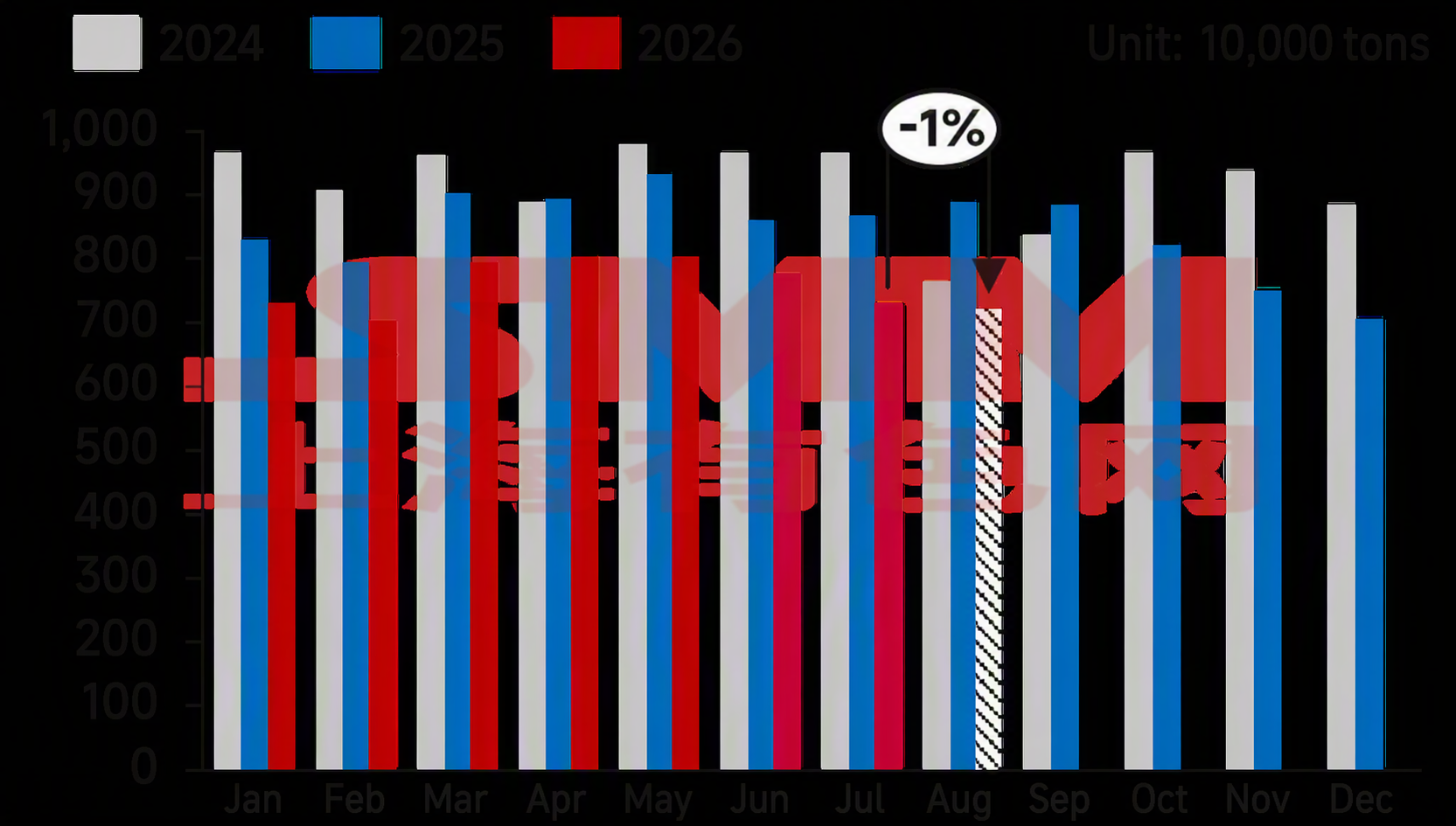
- A produção planejada de vergalhões em agosto foi de 7,2229 milhões de toneladas, uma queda de 96.100 toneladas ou 1,31% em relação à produção real de julho.
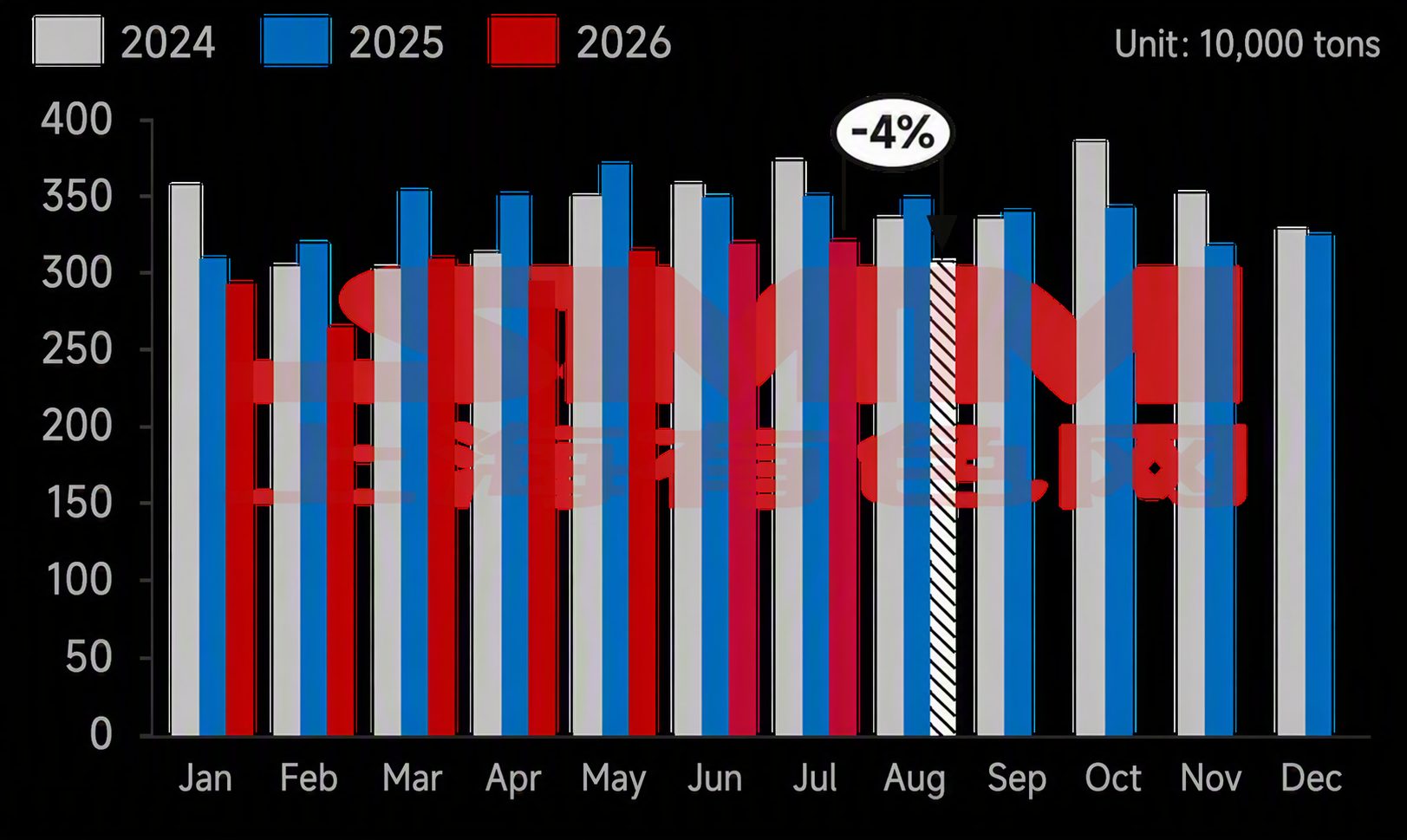
- A produção planejada de fio-máquina em agosto foi de 3,0722 milhões de toneladas, uma queda de 120.800 toneladas ou 3,78% em relação à produção real de julho.
Gráfico 1-2: Programação de Produção de Vergalhões e Fio-Máquina das Principais Siderúrgicas de Materiais de Construção (56 Usinas)
Fonte: SMM
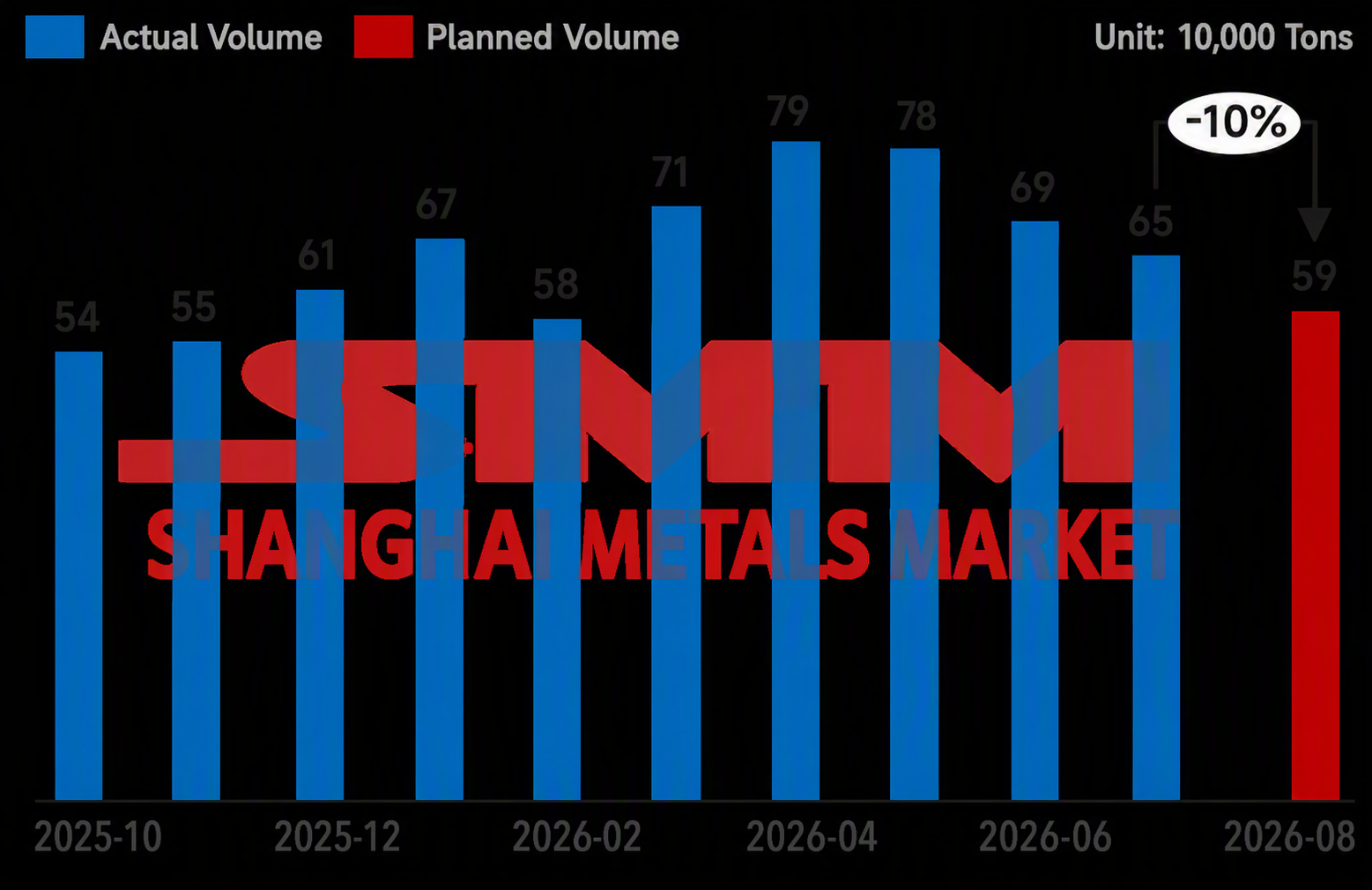
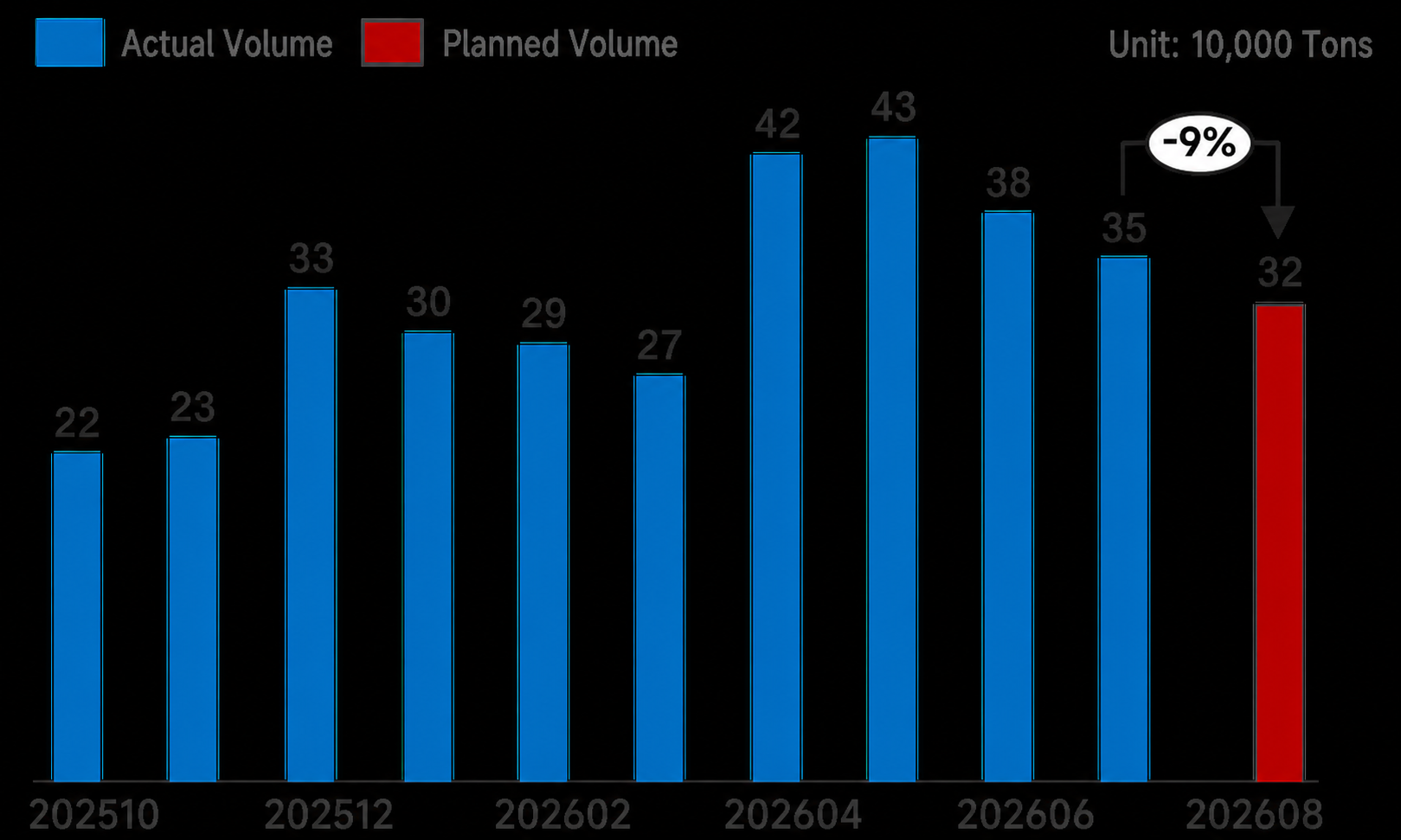
- Agosto a programação de exportação de aços longos das usinas da amostra foi de 590.000 toneladas, queda de 63.000 toneladas em relação ao mês anterior, sendo que a programação de exportação de tarugos foi de 320.000 toneladas, queda de 30.000 toneladas na comparação mensal.
Especificamente, a queda na programação de exportação de aços longos em agosto se concentrou nos tarugos, enquanto os pedidos de vergalhões e vergalhões em bobina continuaram a diminuir. Recentemente, os preços de exportação doméstica caíram de forma constante, e os compradores estrangeiros ficaram mais cautelosos na disposição de compra, com um forte sentimento de espera; além disso, problemas recorrentes na navegação do Estreito de Ormuz atrapalharam as consultas e o ritmo de aquisição de alguns clientes do Oriente Médio, afetando o desempenho geral da entrada de pedidos. Por região, os pedidos de tarugos nas usinas do Nordeste da China ainda não estavam totalmente preenchidos, e se o desempenho da demanda doméstica não fosse o ideal, as usinas poderiam assumir mais pedidos; no Leste da China, as usinas aumentaram os pedidos de tarugos, enquanto os pedidos de vergalhões e vergalhões em bobina diminuíram, principalmente porque algumas usinas, considerando a fraca demanda doméstica, reduziram ativamente os preços para captar pedidos de exportação de tarugos. Além disso, algumas usinas programaram planos de manutenção de linhas de laminação para agosto, reduzindo o volume disponível de pedidos de vergalhões e vergalhões em bobina.
Gráfico 3: Programação de Exportação de Aços Longos das Usinas da Amostra (Incluindo Tarugos)
Fonte: SMM
Gráfico 4: Programação de Exportação de Tarugos das Usinas da Amostra
Fonte: SMM
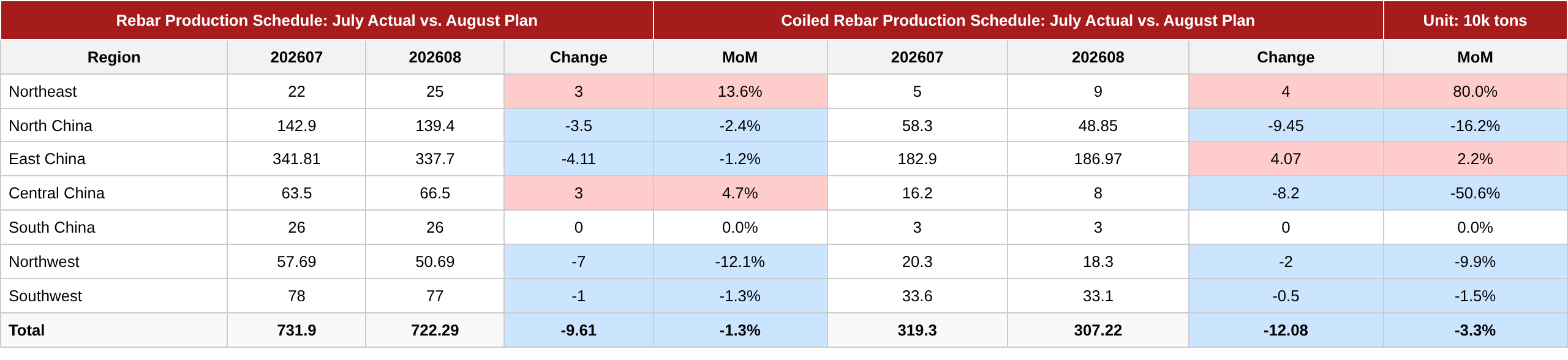
Por região:
Tabela 1: Produção de Vergalhões e Vergalhões em Bobina: Real do Mês Anterior vs Planejado deste Mês
Fonte: SMM
Nordeste: Algumas usinas relataram que os preços dos pedidos de exportação de tarugos não estavam favoráveis e os pedidos de exportação diminuíram, de modo que parte do metal quente foi redirecionado de volta ao setor de materiais de construção, com um aumento relativamente perceptível no fio-máquina.
Norte da China: A baixa lucratividade atual, aliada à elevada pressão de estoque em algumas usinas, gerou risco de fluxo de caixa negativo no curto prazo; algumas usinas iniciaram manutenção de altos-fornos no início de agosto, realizando simultaneamente manutenção nas linhas de laminação de fio-máquina, resultando em uma redução significativa da produção de fio-máquina na região.
Leste da China: As condições de produção entre as usinas regionais divergiram acentuadamente. Uma usina de Jiangsu realizou manutenção em alto-forno e linha de laminação em julho e retomou a produção normal em agosto, levando a uma recuperação expressiva da produção; uma usina de Shandong, considerando a rentabilidade de materiais de construção inferior à da bobina a quente e mantendo uma perspectiva baixista do mercado, reduziu significativamente a produção planejada para agosto; além disso, outras usinas da região programaram paralisações para manutenção em agosto, de modo que a produção planejada total ainda tinha espaço para queda.
Centro-Sul da China: Alguns produtores ajustaram o ritmo de produção com flexibilidade, mantiveram expectativas de melhoria da demanda na segunda quinzena de agosto e planejaram aumentar ligeiramente a produção de vergalhão; no entanto, algumas usinas planejaram suspender as linhas de laminação de fio-máquina em agosto devido às fracas transações do produto.
Noroeste da China: As usinas da região sofreram com baixa rentabilidade da produção, e algumas realizaram manutenção de altos-fornos em agosto, resultando em uma queda notável na produção.
Sudoeste da China: As usinas da região mantiveram, em sua maioria, os níveis de produção anteriores, com pouca variação na produção.
Lado dos custos:
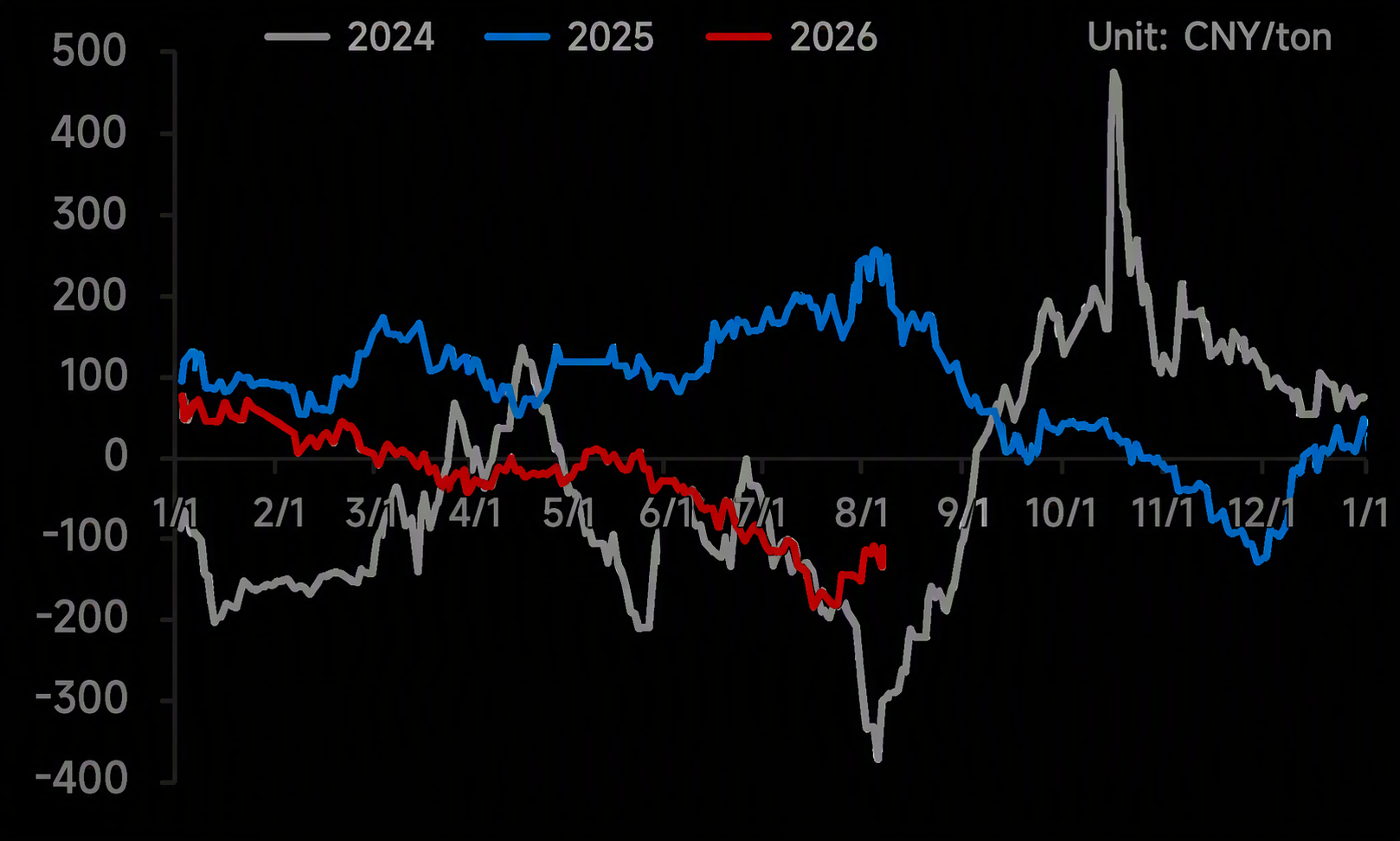
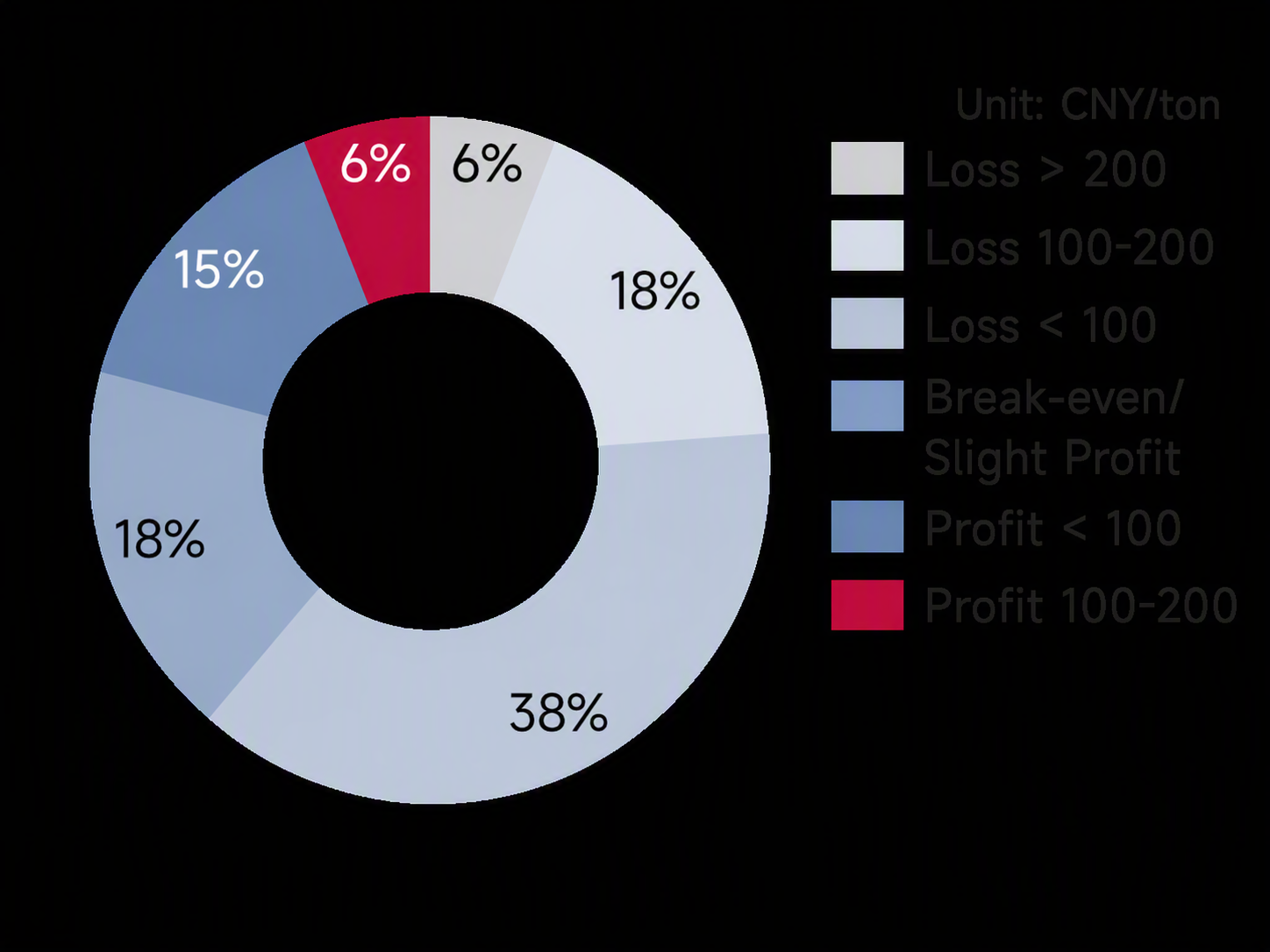
A terceira rodada de cortes nos preços do coque foi implementada, com uma quarta rodada esperada posteriormente, enquanto os preços do minério de ferro atingiram um fundo em estágios, enfraquecendo o suporte de custos. Anteriormente, as quedas nos preços à vista superaram as das matérias-primas, ampliando as perdas das usinas. Atualmente, a taxa de rentabilidade das siderúrgicas é de 21,4%, deteriorando-se ainda mais na comparação mensal. As margens de lucro predominantes agora variam entre -200 e 0 yuan/tonelada.
Gráfico 5: Tendências de lucro em tempo real da produção de vergalhão em siderúrgicas de 2024 até a data
Fonte: SMM
Gráfico 6: Condições de lucro marginal do vergalhão nas siderúrgicas da amostra
Fonte: SMM
Perspectivas:
Algumas siderúrgicas já operam com prejuízo, reduzindo o entusiasmo pela produção. Entre elas, usinas do Noroeste, Norte e Leste da China, sobrecarregadas por operações não lucrativas e alta pressão de estoque interno, planejaram recentemente manutenções em altos-fornos e linhas de laminação, de modo que a produção planejada de aço para construção em agosto cairá ainda mais. A procura de fio-máquina teve um desempenho pior do que a do vergalhão, levando as siderúrgicas do Norte e Centro da China a suspender as linhas de fio-máquina; por conseguinte, a queda mensal prevista na produção de fio-máquina é superior à do vergalhão.
Em resumo, as siderúrgicas permanecem orientadas para o lucro, demonstrando pouco entusiasmo pela produção de aço para construção durante as fases de prejuízo. Aliado à transição da procura de agosto do período de baixa para a alta temporada, a produção continuará a cair até ao nível mais baixo do ano. Contudo, com a chegada de setembro, o desempenho da procura, afetado pelo clima, melhorará; além disso, com o início de novos projetos, a procura global do mercado recuperará e a vontade das siderúrgicas de aumentar ativamente a produção poderá aumentar.

![Preços do magnésio sobem por três sessões consecutivas! Lado dos custos segue "em brasa", enquanto o lado da demanda luta para assumir o controle [Comentário SMM]](https://imgqn.smm.cn/usercenter/EutUV20251217171724.jpeg)
![[SMM estoque de carvão de coque e coque] Esta semana, o estoque de coque nas empresas de coqueificação foi de 449 mil toneladas](https://imgqn.smm.cn/usercenter/EXHJE20251217171720.jpg)