Trong nửa đầu năm, thị trường pin lưu trữ năng lượng toàn cầu đã có một bảng thành tích ấn tượng!
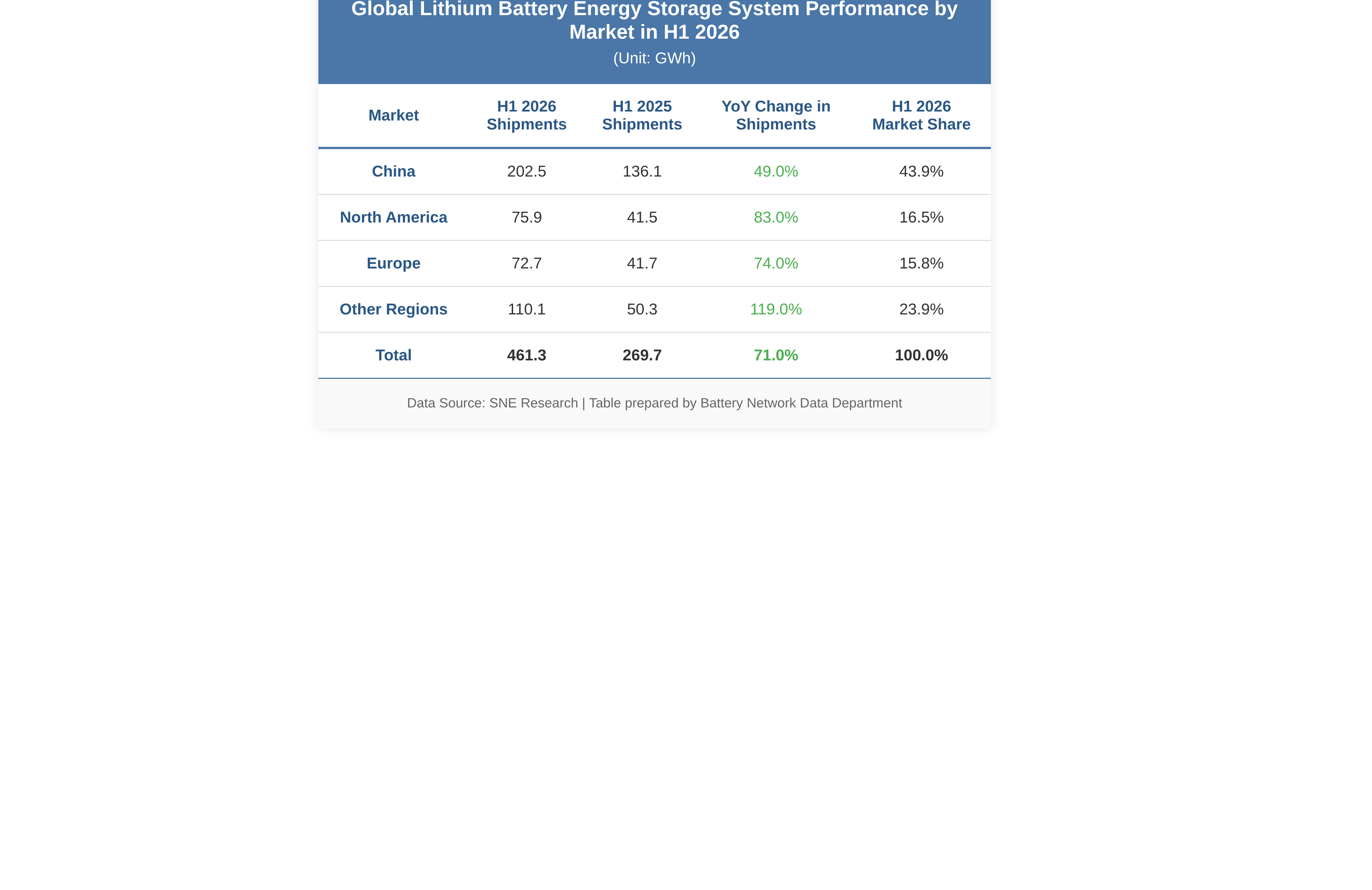
Vào ngày 3 tháng 8, dữ liệu mới nhất từ viện nghiên cứu Hàn Quốc SNE Research cho thấy, trong nửa đầu năm 2026, tổng lượng xuất xưởng hệ thống lưu trữ năng lượng pin toàn cầu đạt 461,3 GWh, tăng 71% so với 269,7 GWh cùng kỳ năm ngoái.
Xét về bối cảnh thị trường, trong bối cảnh chuyển dịch năng lượng toàn cầu, nhu cầu lưu trữ năng lượng liên tục tăng cao cũng thúc đẩy sự định hình lại rõ rệt của bối cảnh thị trường.
Phân tích của SNE lưu ý rằng, trong nửa đầu năm nay, mặc dù Trung Quốc vẫn giữ vững vị trí là thị trường lưu trữ năng lượng lớn nhất thế giới, nhưng tổng lượng xuất xưởng từ Bắc Mỹ, Châu Âu và các khu vực khác cộng lại đã vượt qua Trung Quốc, cho thấy động lực tăng trưởng của thị trường lưu trữ năng lượng toàn cầu đang mở rộng từ một khu vực đơn lẻ sang cấu trúc đa cực.
Cụ thể, trong nửa đầu năm, Trung Quốc giữ vững vị trí thị trường lớn nhất với lượng xuất xưởng 202,5 GWh, tăng 49% so với cùng kỳ năm trước, cho thấy tăng trưởng ổn định. Các khu vực khác đạt mức tăng trưởng lên tới 119%, với thị phần tăng lên 23,9%, trở thành khu vực tăng trưởng nhanh nhất; Bắc Mỹ và Châu Âu cũng tăng trưởng lần lượt 83% và 74%, thúc đẩy mạnh mẽ sự mở rộng thị trường. Kết quả là, thị phần của Trung Quốc giảm từ 50,5% xuống 43,9%. Các dự án lớn tại các thị trường mới nổi như Trung Đông và Úc liên tục được triển khai, thúc đẩy nhu cầu lưu trữ năng lượng toàn cầu lan rộng ra nhiều khu vực.
Các công ty Trung Quốc giành trọn Top 10 toàn cầu; Top 3 chiếm một nửa thị trường
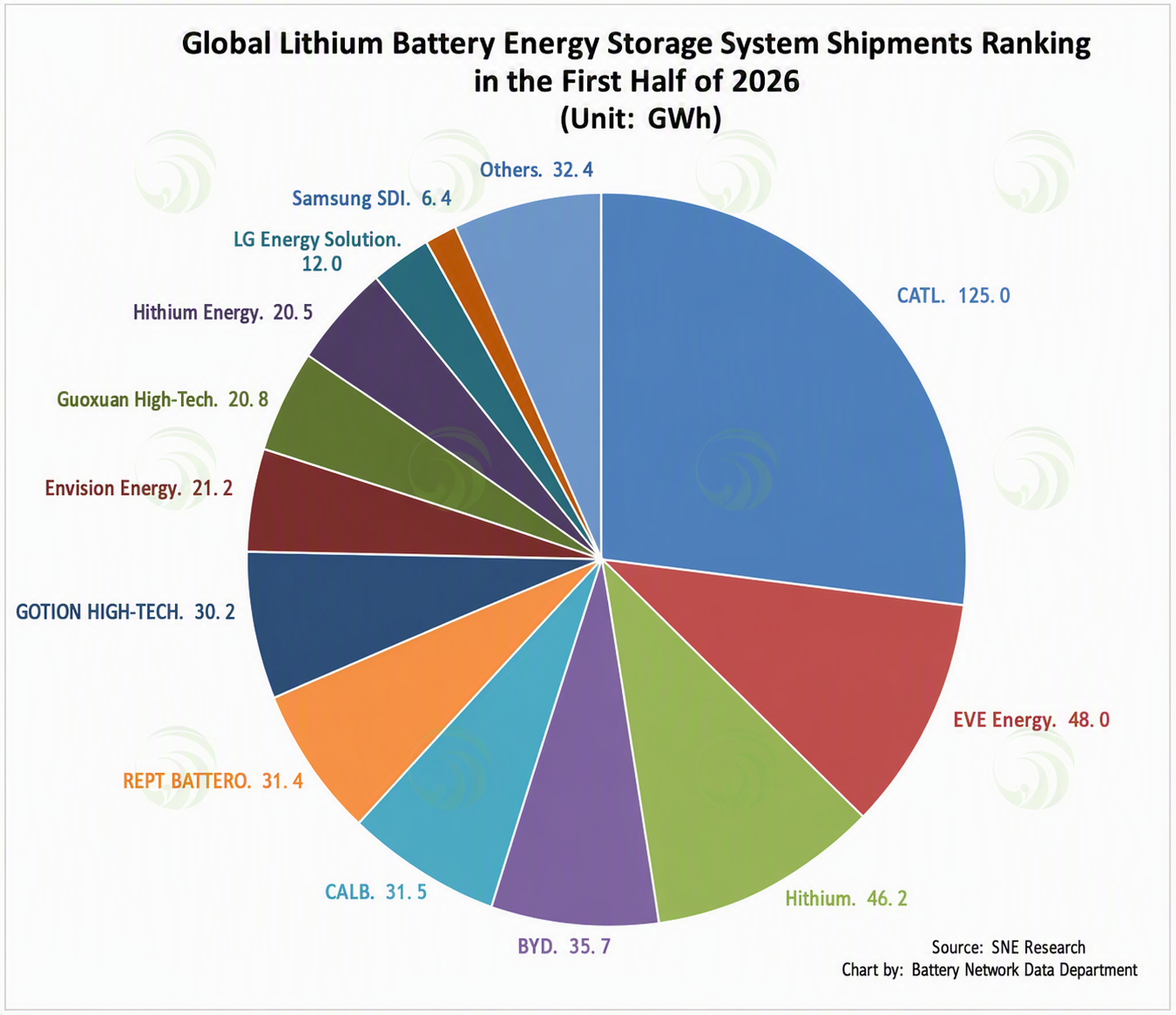
Xét về cục diện cạnh tranh giữa các doanh nghiệp, trong nửa đầu năm 2026, các doanh nghiệp pin Trung Quốc tiếp tục thống trị top 10 toàn cầu về lượng xuất xưởng pin lưu trữ năng lượng, nhưng cục diện cạnh tranh tổng thể đã có sự thay đổi rõ rệt: thị phần kết hợp của ba doanh nghiệp dẫn đầu (CATL, EVE và Hithium) tăng từ 45,8% lên 47,5%, tiếp tục tập trung sức mạnh vào nhóm dẫn đầu. Khoảng cách xuất xưởng giữa một số nhà sản xuất ở nhóm thứ hai và thứ ba đã thu hẹp xuống dưới 1 GWh, và thứ hạng có thể bị đảo lộn bất cứ lúc nào chỉ bởi một hoặc hai đơn hàng lớn. Trong khi đó, thị phần của các nhà sản xuất pin khác giảm từ 9,9% xuống 7,0%, không gian sinh tồn ngày càng bị thu hẹp.
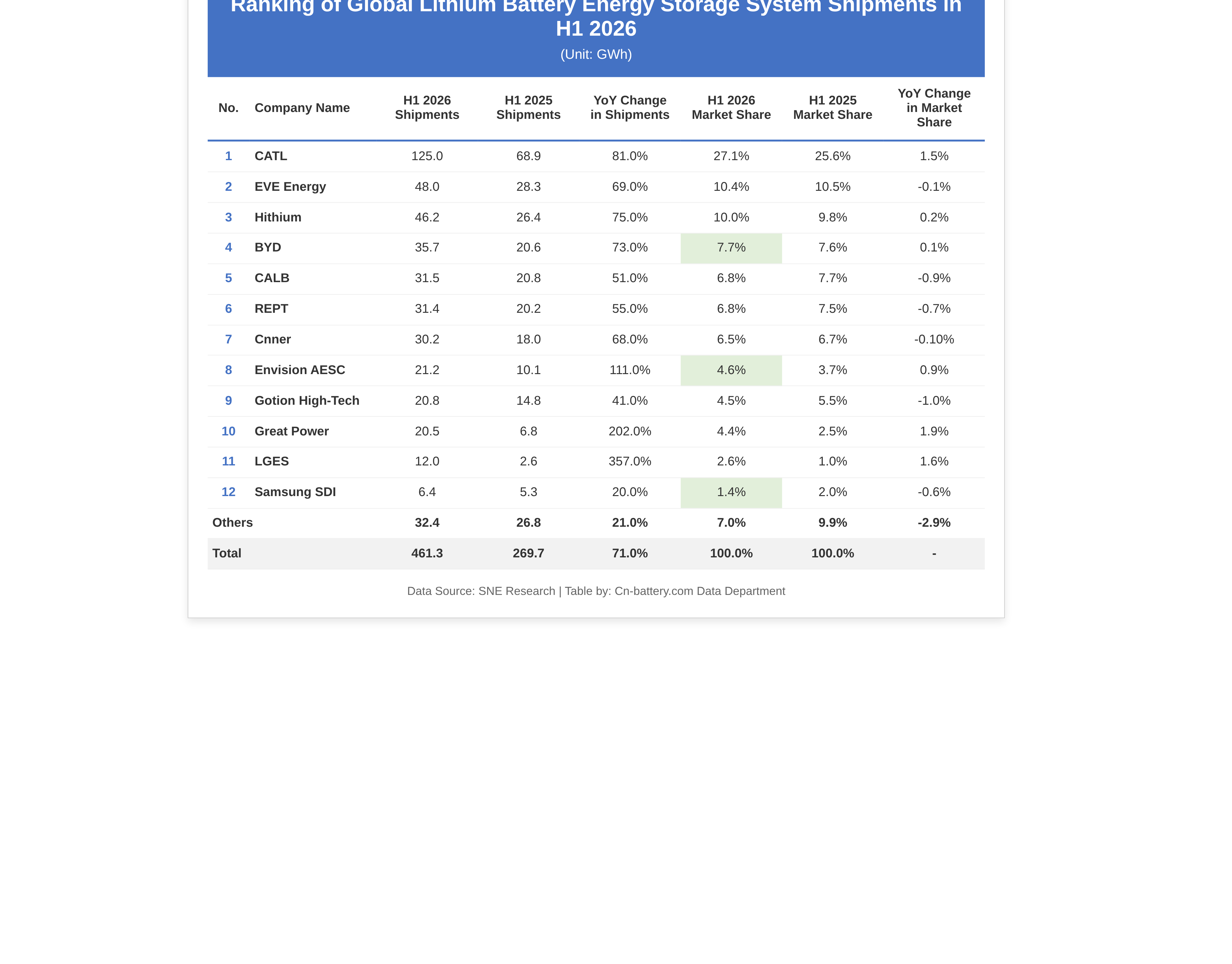
Trong số đó,CATL đứng đầu toàn cầu với lượng xuất xưởng 125 GWh, mở rộng thị phần từ 25,6% lên 27,1%, tăng 1,5 điểm phần trăm so với cùng kỳ năm trước, chủ yếu nhờ nhu cầu ổn định từ thị trường Trung Quốc và các đơn hàng lớn từ các dự án bên ngoài Trung Quốc. Tốc độ tăng trưởng so với cùng kỳ năm trước (YoY) 81,0% của họ vượt mức trung bình ngành; duy trì mức tăng trưởng cao trên nền tảng lớn như vậy càng củng cố vị trí dẫn đầu.
EVE và Hithiumlần lượt đứng thứ hai và thứ ba, với lượng xuất xưởng 48 GWh và 46,2 GWh, cả hai đều nắm giữ thị phần khoảng 10%.
BYDghi nhận lượng xuất xưởng 35,7 GWh, xếp thứ tư toàn cầu với thị phần 7,7%, ổn định.
Khoảng cách giữa hạng năm và hạng sáuCALB và REPT Batterocực kỳ nhỏ, với lượng xuất xưởng lần lượt là 31,5 GWh và 31,4 GWh, cùng chiếm thị phần 6,8%.
CORNEX New Energybám sát sau CALB và REPT Battero, xếp thứ bảy với lượng xuất xưởng 30,2 GWh và thị phần 6,5%.
AESC, Gotion High-tech và Great Power Energycũng có khoảng cách khá nhỏ, lần lượt xếp thứ tám đến thứ mười, với lượng xuất xưởng 21,2 GWh, 20,8 GWh và 20,5 GWh, thị phần tương ứng là 4,6%, 4,5% và 4,4%. Trong đó, Great Power Energy và AESC – những công ty có lợi thế cạnh tranh tại các thị trường ngoài Trung Quốc – ghi nhận tốc độ tăng trưởng vượt xa trung bình ngành, tăng lần lượt 202% và 111%, và là hai công ty duy nhất trong TOP10 toàn cầu về lượng xuất xưởng BESS nửa đầu năm 2026 đạt mức tăng trưởng gấp đôi.
Hai công ty pin Hàn QuốcLGES và Samsung SDIlần lượt xếp thứ 11 và thứ 12.
Trong đó, LGES xuất xưởng 12 GWh, tăng 357% so với cùng kỳ, tốc độ tăng trưởng cao nhất trong số 12 công ty, nắm 2,6% thị phần. Chỉ riêng quý 2, LGES xuất xưởng 6,7 GWh, cao hơn gấp hơn sáu lần so với 1,1 GWh cùng kỳ năm ngoái.
Samsung SDI xuất xưởng 6,4 GWh, tăng 20% so với cùng kỳ, tốc độ tăng trưởng thấp nhất trong 12 công ty, với thị phần 1,4%.
SNE đặc biệt đề cập rằng tại thị trường Bắc Mỹ, các doanh nghiệp Hàn Quốc thậm chí còn hiện diện mạnh mẽ hơn. Thị phần kết hợp của LGES và Samsung SDI tại Bắc Mỹ tăng từ 13,9% cùng kỳ năm trước lên 19,7%. Trong nửa đầu năm 2026, quy mô thị trường ESS Bắc Mỹ đạt 75,9 GWh, tăng 83% so với cùng kỳ. LGES đã xuất xưởng 0,3 GWh, thị phần tăng vọt từ 4,2% lên 13,6%, đứng thứ ba, chỉ sau CATL và Hithium. LGES đã xuất xưởng 12 GWh hệ thống lưu trữ năng lượng toàn cầu trong nửa đầu năm, trong đó khoảng 86% đến từ Bắc Mỹ, và 95% hệ thống lưu trữ năng lượng được xuất xưởng tại Bắc Mỹ dành cho lưới điện. Lượng xuất xưởng của Samsung SDI tại Bắc Mỹ tăng 16%, nhưng thị phần giảm từ 9,7% xuống 6,1%; tuy nhiên, công ty đã cung cấp 1,6 GWh sản phẩm cho các trung tâm dữ liệu AI ở Bắc Mỹ, thiết lập cơ sở cung ứng trong các lĩnh vực ứng dụng mới nổi.
Phân tích của SNE chỉ ra rằng, trong bối cảnh nhu cầu xe điện vẫn đang chậm lại, các doanh nghiệp Hàn Quốc đang chuyển đổi một phần dây chuyền sản xuất pin năng lượng sang sử dụng cho lưu trữ năng lượng và đẩy nhanh kế hoạch sản xuất hàng loạt pin LFP.
Battery Network lưu ý rằng, báo cáo hiệu suất mới công bố của LGES cho thấy trong nửa đầu năm, doanh thu mảng kinh doanh lưu trữ năng lượng tăng gấp 4,6 lần so với cùng kỳ, với đơn hàng mới ký kết vượt 3 nghìn tỷ won. Dây chuyền sản xuất Ultium Cells, liên doanh với General Motors, và nhà máy pin L-H Battery hợp tác với Honda đều đã bắt đầu sản xuất hàng loạt tế bào pin lưu trữ năng lượng.
Xét về sự thay đổi thị phần của 12 công ty trên, số doanh nghiệp tăng và giảm thị phần mỗi bên chiếm một nửa. Great Power Energy, LGES, CATL, AESC, Hithium và BYD ghi nhận mức tăng trưởng dương so với cùng kỳ, trong khi Gotion High-tech, CALB, REPT Battero, Samsung SDI, EVE và CORNEX New Energy suy giảm ở các mức độ khác nhau.
Ngoài 12 công ty trên, các công ty BESS khác đã xuất xưởng 32,4 GWh trong nửa đầu năm, tăng 21% so với cùng kỳ, nhưng thị phần của họ giảm từ 9,9% cùng kỳ năm ngoái xuống còn 7,0%. Không gian sống cho các doanh nghiệp vừa và nhỏ đang thu hẹp, và ngành đang tiếp tục tập trung vào các công ty hàng đầu.
Cần lưu ý rằng, khối lượng xuất xưởng của các doanh nghiệp ở phân khúc trung và cao là rất sát sao, với khoảng cách chỉ khoảng 1 GWh—tương đương khối lượng của một hoặc hai đơn hàng dự án lớn. Điều này có nghĩa là kết quả của bất kỳ cuộc đấu thầu quan trọng nào, hoặc biến động về tốc độ giao hàng theo quý, có thể trực tiếp làm thay đổi thứ hạng trong kỳ đó.
Sang nửa cuối năm, việc phân bổ đơn hàng cho nhiều dự án lớn sẽ lần lượt được tiết lộ, trong khi năng lực sản xuất tại một số doanh nghiệp mới bắt đầu được giải phóng và dự kiến lượng xuất xưởng sẽ tăng tốc. Kết hợp hai yếu tố này, nhóm từ vị trí thứ năm trở đi rất có thể sẽ chứng kiến một đợt tái cơ cấu mới.
ESS Phía Lưới Điện Là Động Lực Tăng Trưởng Chính; ESS Hộ Gia Đình Là Điểm Bứt Phá Về Tăng Trưởng
Trong nửa đầu năm, lượng xuất xưởng của các nhà sản xuất ESS nhìn chung tăng, nhưng tốc độ tăng trưởng phân hóa đáng kể: một số doanh nghiệp tiến nhanh, trong khi số khác tụt lại rõ rệt. Nguyên nhân sâu xa là sự khác biệt về dấu ấn khu vực và cơ cấu sản phẩm – hai yếu tố ảnh hưởng chính: thứ nhất, mức độ thâm nhập tại các thị trường ngoài Trung Quốc, đặc biệt là châu Âu và Mỹ; thứ hai, khả năng giành vị thế trong hai phân khúc tăng trưởng cao – ESS phía lưới điện và ESS hộ gia đình.
Xét theo lĩnh vực ứng dụng, trong nửa đầu năm,ESS phía lưới điệnlượng xuất xưởng ứng dụng đạt 347 GWh, chiếm 75% tổng số và là động lực chính cho tăng trưởng thị trường; lượng xuất xưởng ESS hộ gia đình tăng từ 20,9 GWh lên 47,7 GWh, tăng hơn gấp đôi, dẫn đầu về tốc độ tăng trưởng so với cùng kỳ năm trước trong ba ứng dụng chính với mức 128%, và tỷ trọng của nó cũng tăng từ 7,7% lên 10,3%, lần đầu tiên vượt 10%; ESS công nghiệp và thương mại cũng tăng trưởng 59%, với lượng xuất xưởng mở rộng từ 24,9 GWh lên 39,6 GWh.
Trong đó, trong nửa đầu năm, lượng xuất xưởng trên thị trường ESS phía lưới điện tăng trưởng 69% so với cùng kỳ, và các nhà sản xuất pin lớn của Trung Quốc tiếp tục dẫn đầu. CATL đứng đầu với 30% thị phần, theo sau là Hithium (13%), EVE (10%), BYD (9%) và CALB (8%); năm nhà sản xuất hàng đầu cộng lại chiếm khoảng 70% thị phần. CORNEX New Energy và AESC lần lượt chiếm 8% và 6%, cũng nằm trong số các nhà cung cấp cốt lõi.
Đáng chú ý, ESS phía lưới điện vẫn là nguồn cầu lớn nhất, nhưng tỷ trọng của nó đã giảm nhẹ so với mức 76,2% cùng kỳ năm ngoái. Điều này có nghĩa là trong khi lưu trữ năng lượng phía lưới điện tiếp tục mở rộng, nhu cầu ở các kịch bản khác đang được giải phóng với tốc độ nhanh hơn. Kết quả đấu thầu các dự án lớn trong nửa cuối năm có thể tiếp tục thay đổi cục diện cạnh tranh.
Thị trường ESS Công nghiệp và Thương mạilượng xuất xưởng tăng 59% so với cùng kỳ, và CATL vẫn giữ vững vị trí số một với 35% thị phần. REPT Battero theo sát với 14%, trong khi BYD (10%), Gotion High-tech (6%) và CALB (6%) xếp thứ ba đến thứ năm. Trong số đó, CATL và REPT Battero cùng chiếm khoảng 49%, gần một nửa thị trường, giúp họ có sức ảnh hưởng lớn trên thị trường lưu trữ năng lượng công nghiệp và thương mại. Các nhà sản xuất khác cùng nắm giữ 10% thị phần, mức cao nhất trong ba ứng dụng chính, cho thấy trong lĩnh vực lưu trữ năng lượng công nghiệp và thương mại, ngoài những doanh nghiệp hàng đầu, vẫn còn nhiều nhà sản xuất vừa và nhỏ đang cạnh tranh, và cục diện khá phân mảnh.
Lưu trữ năng lượng gia đìnhlà điểm bứt phá không thể phủ nhận trong nửa đầu năm, với mức tăng trưởng 128% so với cùng kỳ, vượt xa các phân khúc phía lưới điện và công nghiệp - thương mại. Trong số đó, REPT Battero, tận dụng nền tảng khách hàng tích lũy lâu năm và danh tiếng về giao hàng, tiếp tục đứng đầu với 32% thị phần, tiếp theo là EVE (25%) và Great Power Energy (23%). Ba doanh nghiệp dẫn đầu cùng chiếm 80% thị phần, mức độ tập trung rõ ràng cao hơn so với các phân khúc phía lưới điện và công nghiệp - thương mại.
Quan trọng hơn, thị phần của lưu trữ năng lượng gia đình trong toàn thị trường đã tăng từ 7,7% cùng kỳ năm ngoái lên 10,3%, lần đầu vượt trên 10%. Đằng sau sự thay đổi cơ cấu này là sự phục hồi nhu cầu lưu trữ năng lượng gia đình ở châu Âu và tỷ lệ sử dụng thiết bị lưu trữ năng lượng dân dụng tại Trung Quốc cũng đồng thời gia tăng.
Ngoài ra, sự mở rộng của các trung tâm dữ liệu AI và việc tăng cường phát điện từ năng lượng tái tạo cũng thúc đẩy nhu cầu lưu trữ năng lượng liên quan đến ổn định lưới điện. Năng lực cung cấp pin cho một số sản phẩm và dự án đang bị tiêu thụ nhanh chóng, và thị trường đã xuất hiện xu hướng đặt hàng trước để đảm bảo nguồn cung.
Kết luận
Trong nửa đầu năm, ngành pin lưu trữ năng lượng duy trì đà tăng trưởng mạnh mẽ, và lượng xuất hàng cả năm dự kiến sẽ vượt qua cột mốc lịch sử 1 TWh.
Trong khi đó, bên dưới sự thịnh vượng cao, những dòng chảy ngầm đang khuấy động. Nhìn chung, thị trường pin lưu trữ năng lượng toàn cầu đang thể hiện cục diện cạnh tranh: "nhóm dẫn đầu vững vàng, nhóm thứ hai và thứ ba bước vào cuộc hỗn chiến, còn các doanh nghiệp khác thì giành giật sự sống trong khe hẹp": các doanh nghiệp hàng đầu do CATL đại diện đang tăng tốc xây dựng hào lũy cao hơn và liên tục mở rộng thị phần nhờ tận dụng hiệu ứng quy mô, rào cản công nghệ và sự gắn kết sâu sắc với khách hàng; trong khi đó, nhóm thứ hai và thứ ba phải đối mặt với thử thách khốc liệt "tiến hay lùi", và một số doanh nghiệp đã chứng kiến thị phần bị bào mòn.
Khả năng mở rộng sang các thị trường bên ngoài Trung Quốc, tiến độ công nghiệp hóa các lộ trình công nghệ mới như pin thể rắn và pin natri-ion, mức độ mà tính kinh tế của các dự án lưu trữ năng lượng kích hoạt cuộc chiến giá cả, cũng như các chính sách liên quan đến lưu trữ năng lượng tại Trung Quốc và nước ngoài cùng những thay đổi trong bối cảnh thương mại toàn cầu sẽ đều ảnh hưởng đến bối cảnh cạnh tranh. Đối với các doanh nghiệp trong chuỗi ngành lưu trữ năng lượng, hai quý tới sẽ là giai đoạn then chốt: họ có thể tận dụng đà tăng trưởng, lội ngược dòng, hoặc bỏ lỡ cơ hội.
![[Pin Li: Do-Fluoride sẽ rót 210 triệu NDT vào Guangxi Ningfu cho dự án pin 20GWh]](https://imgqn.smm.cn/usercenter/AYpRQ20251217171727.jpg)
![[SMM Analysis] Nhập khẩu kim loại coban của Trung Quốc giảm 4% so với tháng trước, xuất khẩu tăng 55% so với tháng trước vào tháng 8 năm 2026](https://imgqn.smm.cn/usercenter/jZvMC20251217171729.jpg)