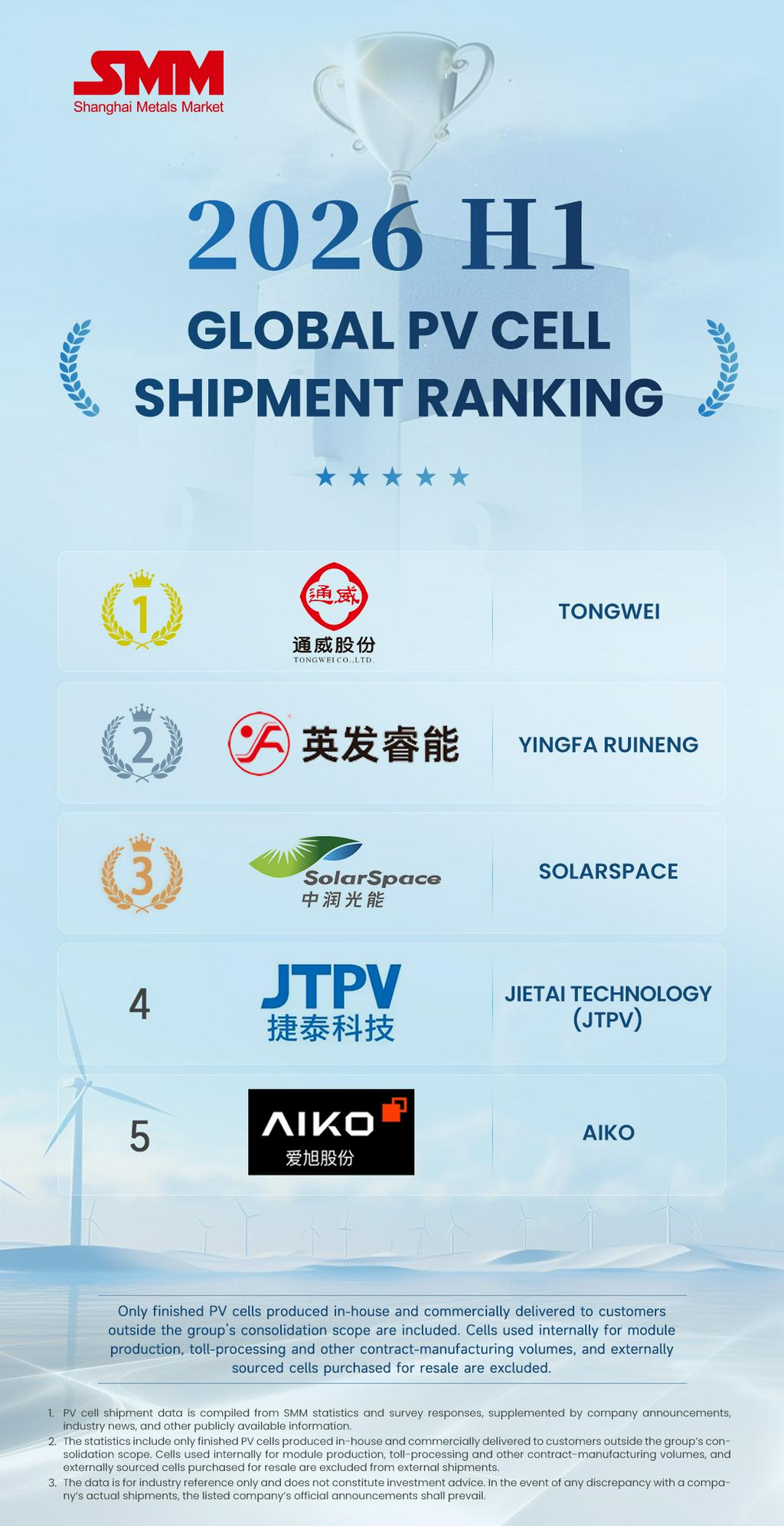
Компания SMM опубликовала рейтинг поставок фотоэлектрических элементов за первую половину 2026 года. В рейтинг включены только готовые фотоэлектрические элементы, произведенные собственными силами и коммерчески поставленные клиентам вне консолидированной корпоративной группы каждой компании. Элементы, использованные для внутреннего производства модулей, толлинговых и других контрактных производств, а также закупленные на стороне элементы для перепродажи, исключаются.
Лидирующие позиции сохраняются, а в среднем сегменте конкуренция всё более разрозненна.
Пять крупнейших поставщиков сохранили свои позиции в первом полугодии. Ведущие производители продолжили укреплять свои преимущества за счет масштаба и снижения производственных издержек, в то время как результаты поставщиков среднего звена становились всё более разрозненными. Быстрое расширение ассортимента N-типа и растущая концентрация рыночной доли среди специализированных производителей фотоэлектрических элементов стали определяющими чертами ландшафта поставок.
Рынки за пределами Китая становятся главным драйвером роста.
Спрос на рынках за пределами Китая обеспечил самый сильный импульс роста в первом полугодии благодаря концентрированным поставкам на развивающиеся рынки, такие как Ближний Восток и Индия. Спрос в европейском сегменте распределенной генерации также оставался устойчивым. В Китае параллельно развивались крупные проекты и распределенная солнечная энергетика, при этом элементы N-типа продолжали наращивать рыночную долю.
Консолидация мощностей ускоряется в Китае.
Внутренний рынок Китая вступил в фазу консолидации мощностей и обновления ассортимента продукции. Мощности PERC выводились из эксплуатации ускоренными темпами, а мощности TOPCon вводились в строй в более концентрированном виде. На этом фоне отрасль оказалась в окне возможностей для потенциального восстановления маржи в первом полугодии.
Изменения в регулировании могут приблизить сроки производства и отгрузок.
На рынок во втором полугодии будут влиять несколько политических переменных. Обязательный национальный стандарт энергоэффективности для кристаллических кремниевых фотоэлектрических модулей и инверторов Китая GB 47834-2026 вступит в силу 1 января 2027 года. Минимальные пороги эффективности преобразования модулей составляют 23,2% для продуктов TOPCon и HJT и 23,5% для продуктов BC. Это, вероятно, усилит давление на распродажу запасов низкоэффективной продукции и ускорит вывод оставшихся мощностей PERC. Китай также введет 2-процентный акциз на фотоэлектрические элементы с 1 апреля 2027 года. Ожидания, связанные с новым налогом, могут побудить производителей ускорить производство и отгрузки.
Прогноз
Китайские производители продолжат наращивать мощности за пределами Китая во втором полугодии. Однако торговые барьеры и неопределённость политики могут ограничить рост поставок. В целом рынок фотоэлектрических элементов, как ожидается, останется между адаптацией к новым мерам политики и продолжающимся восстановлением баланса спроса и предложения.
Рейтинг SMM по поставкам фотоэлектрических элементов за 1 полугодие 2026 г.
![[Цены на поликремний сегодня в целом стабильны.]](https://imgqn.smm.cn/usercenter/qQwIB20251217171741.jpg)
![[SMM PV News Flash] Сэкономьте более 70% на ежемесячных счетах за электроэнергию | Chint New Energy реализует проект PV+ESS для общественного супермаркета Saverite Mart в Южной Африке](https://imgqn.smm.cn/usercenter/ZqmSz20251217171738.jpg)
![[SMM PV Flash News] DMEGC: Поставки PV-продукции в первом полугодии превысили 12 ГВт.](https://imgqn.smm.cn/usercenter/VprpL20251217171738.jpg)