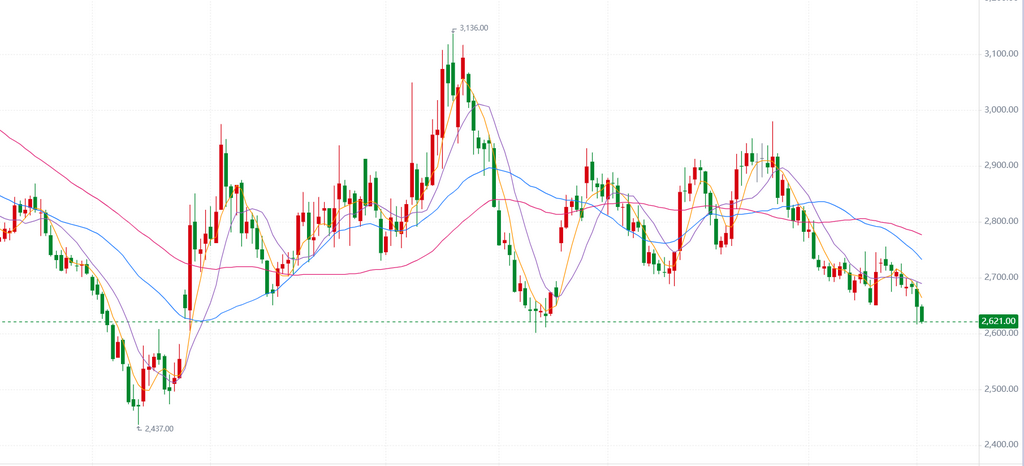
31 juillet 2026 – Le contrat à terme sur l'alumine a clôturé aujourd'hui à 2 621 yuans/tonne, prolongeant sa récente faiblesse. La veille (30 juillet), les prix ont brièvement touché un plus bas intrajournalier à 2 617 yuans/tonne, chutant de 1,37 % en une seule séance et marquant un nouveau creux à court terme. Sous la pression baissière conjuguée d'une offre en expansion continue, d'une concurrence accrue des importations et d'un sentiment spéculatif en berne, le marché de l'alumine subit une correction de valorisation dictée par les fondamentaux. Cependant, contrairement au net repli de fin 2025, le coût des matières premières, nettement plus élevé, constitue un plancher de soutien qui pourrait s'avérer difficile à franchir nettement.
Côté offre, la capacité opérationnelle d'alumine en Chine reste durablement élevée, et la pression additionnelle continue de s'accumuler. Dans la région du Guangxi, les lignes de production précédemment arrêtées pour maintenance redémarrent progressivement, rétablissant peu à peu la capacité d'offre régionale. Par ailleurs, la région du Sud doit encore absorber près de 3 millions de tonnes de nouvelles capacités prévues dans les mois à venir, ce qui renforce les anticipations d'un marché mieux approvisionné.
La dissipation de l'effervescence autour des nouvelles sur l'offre de bauxite a encore sapé le soutien psychologique des prix à terme. Les inquiétudes quant à des perturbations de l'offre guinéenne de bauxite, qui avaient un temps ébranlé le marché, sont progressivement sorties du feu des projecteurs. Avec la sortie des positions longues spéculatives sur fond d'attention médiatique déclinante, le marché a perdu sa prime de sentiment et les prix reviennent vers les fondamentaux offre-demande.
L'offre étrangère continue de peser lourdement sur le marché intérieur. Les importations d'alumine ont fortement augmenté cette année, les stocks portuaires atteignant un niveau élevé de 940 000 tonnes. L'afflux persistant d'alumine étrangère n'a pas seulement renforcé la disponibilité domestique, il a aussi exercé une pression baissière continue sur les cotations au comptant. L'affaiblissement des prix spot a créé une boucle de rétroaction négative avec le marché à terme, accentuant la spirale baissière.
Néanmoins, malgré ces arguments baissiers multiples, les prix actuels ne sont pas sans défense. Comparé à la déroute de décembre 2025 qui avait touché un plancher à 2 437 yuans/tonne, les attentes concernant le plancher sont cette fois très différentes. À l'époque, la bauxite guinéenne se négociait autour de 60 $/tonne seulement, alors qu'aujourd'hui les prix ont grimpé dans une fourchette de 70-75 $/tonne, portant le coût complet moyen du secteur à environ 2 530 yuans/tonne. Cette base de coûts nettement plus élevée implique que, même avec des fondamentaux très baissiers, une répétition de la chute libre est peu probable, car les effets de soutien des coûts se renforceront marginalement à mesure que les prix baissent.
L'ouverture potentielle d'un arbitrage à l'exportation reste l'un des rares catalyseurs haussiers à l'horizon. Si les prix de l'alumine à l'étranger continuent d'augmenter alors que les prix intérieurs restent déprimés, élargissant suffisamment l'écart pour couvrir les coûts d'exportation, des fenêtres d'exportation pourraient s'ouvrir périodiquement, offrant un débouché marginal à l'excédent de capacité national. Toutefois, même si une telle fenêtre se matérialisait, les volumes détournés ne suffiraient probablement pas à compenser la pression additionnelle des nouvelles capacités dans le sud. Les opportunités d'exportation serviraient plutôt de catalyseurs de rebond à court terme dictés par le sentiment, qu'une condition suffisante pour un renversement de tendance.
Dans l'ensemble, les prix de l'alumine devraient évoluer dans une fourchette étroite à court terme, pris en tenaille entre le récit d'une offre excédentaire baissière et le soutien des coûts. La fourchette de négociation centrale est estimée entre 2 600 et 2 650 yuans/tonne. Étant donné que les fondamentaux du marché devraient rester détendus en août, les prix à terme pourraient enfoncer le seuil psychologique clé des 2 600 yuans, bien que le potentiel de baisse semble limité par le soutien rigide des coûts miniers.


![Le risque du détroit continue de perturber le sentiment du marché de l'aluminium, le stockage de la saison de pointe est inférieur aux attentes, les prix de l'aluminium sous pression [Résumé de la réunion matinale SMM sur l'aluminium]](https://imgqn.smm.cn/usercenter/zsKTq20251217171652.jpg)