I. Data Impor & Ekspor: Volume Meningkat
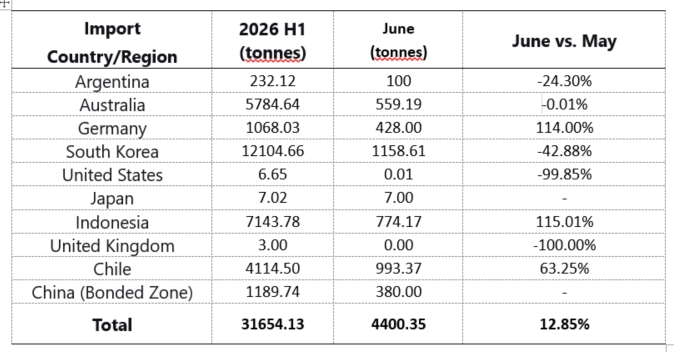
Menurut data bea cukai, Tiongkok mengimpor 4.400 ton litium hidroksida pada Juni 2026, naik 12% dari bulan sebelumnya dan hampir tiga kali lipat dari tahun sebelumnya. Dari jumlah itu, 1.159 ton berasal dari Korea Selatan, menyumbang 26% dari total impor bulan tersebut; Chili di urutan kedua dengan 993 ton; sementara impor dari Indonesia tetap rendah, dengan 774 ton tiba pada Juni.
Di sisi ekspor, Tiongkok mengekspor 6.018 ton litium hidroksida pada Juni, naik 70% dari bulan sebelumnya, didorong terutama oleh konsentrasi pengiriman akhir kuartal dan pemulihan moderat permintaan luar negeri. Sebanyak 5.032 ton diekspor ke Korea Selatan dan 679 ton ke Jepang.
Sejak 2026, Tiongkok beralih dari pengekspor bersih menjadi pengimpor bersih litium hidroksida. Data kumulatif menunjukkan total impor Januari–Juni mencapai 31.700 ton, meningkat hampir tiga kali lipat dari 8.000 ton yang diimpor pada periode yang sama tahun lalu, mencerminkan ketahanan permintaan domestik.
Lonjakan impor kini sudah menjadi fakta. Di baliknya terdapat keunggulan siklus permintaan dan harga domestik atas pasar luar negeri, serta langkah strategis para pedagang untuk membangun pijakan menjelang kemungkinan pencatatan di bursa. Namun, terlepas dari faktor pendorongnya, pertanyaan yang lebih praktis muncul — seiring volume impor yang mencetak rekor, dapatkah importir mempertahankan profitabilitas? Berikut ini, kami menilai margin keuntungan litium hidroksida impor melalui dua jalur: penjualan kembali langsung dan pemrosesan karbonasi.
II. Profitabilitas Penjualan Kembali Langsung Litium Hidroksida Impor
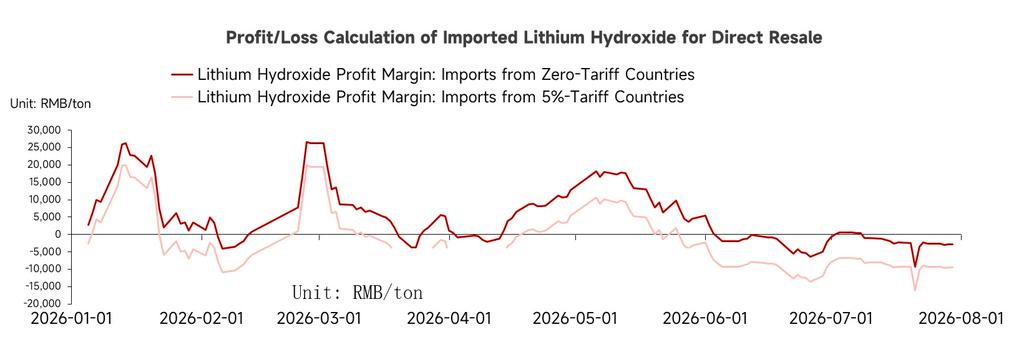
Perhitungan laba berikut didasarkan pada perbandingan antara biaya CIF impor (termasuk tarif, PPN, serta biaya pelabuhan & keagenan) dan harga spot litium hidroksida tingkat baterai SMM domestik. Rincian bertahap disajikan di bawah ini.
Januari–Mei (Paruh Pertama): Laba impor umumnya besar, dengan margin mencapai hingga 25.000 yuan per ton atau lebih. Selama periode ini, harga litium hidroksida domestik berada dalam tren naik, sementara permintaan luar negeri tetap lesu dan kenaikan harga tertinggal cukup jelas. Ditambah dengan tingginya tingkat persediaan di luar negeri, pemegang asing menunjukkan keinginan kuat untuk melepas di tengah harga domestik yang tinggi, menawarkan diskon tertentu pada transaksi aktual, yang memungkinkan pembeli domestik menikmati margin yang lebih baik dari perkiraan teoretis.
Juni–Juli: Profitabilitas menyempit signifikan. Pada pertengahan hingga akhir Juli, bahkan impor dari sumber bebas tarif seperti Korea Selatan dan Australia berada di sekitar titik impas. Selama fase ini, harga lithium hidroksida domestik memasuki saluran penurunan, sementara penurunan harga di luar negeri tertinggal. Pada saat yang sama, permintaan luar negeri sedikit meningkat, dan pemegang — yang sebagian besar telah membersihkan persediaan sebelumnya — menjadi lebih enggan untuk melepas kargo, dengan perilaku penimbunan yang meluas. Akibatnya, penurunan harga di luar negeri tidak secepat penurunan di Tiongkok, semakin menekan margin impor mendekati impas.
Perlu dicatat juga bahwa perhitungan margin di atas secara implisit bergantung pada asumsi utama: bahwa lithium hidroksida impor dapat melewati bea cukai dalam waktu penyimpanan yang singkat dan dijual dengan harga spot SMM lithium hidroksida baterai (partikel kasar). Namun, dalam praktiknya, asumsi ini mungkin tidak berlaku di semua skenario.
Realitas yang dihadapi pedagang saat mengimpor lithium hidroksida ke pasar Tiongkok ada dua. Di satu sisi, produsen bahan katoda domestik utama memiliki hubungan jangka panjang dengan merek domestik terkemuka, dengan sistem kualifikasi pemasok dan parameter proses yang mapan — mengganti merek impor memerlukan siklus rekualifikasi yang panjang dan menghadapi penerimaan hilir yang terbatas. Di sisi lain, lithium hidroksida dari berbagai negara sumber berbeda dalam distribusi ukuran partikel, kandungan material magnetik, dan profil pengotor, menjadikannya bukan pengganti "drop-in" yang mudah.
Faktor-faktor ini berarti bahwa lithium hidroksida impor seringkali sulit bertransaksi langsung pada harga spot hidroksida domestik dalam praktiknya. Sebaliknya, harus dijual dengan diskon — baik melalui pengurangan harga langsung atau dengan mengacu pada kontrak berjangka karbonat utama. Ini menyiratkan bahwa keuntungan sebenarnya tidak sebesar yang terlihat dari angka-angka yang tampak.
III. Profitabilitas Pemrosesan Karbonasi Lithium Hidroksida Impor
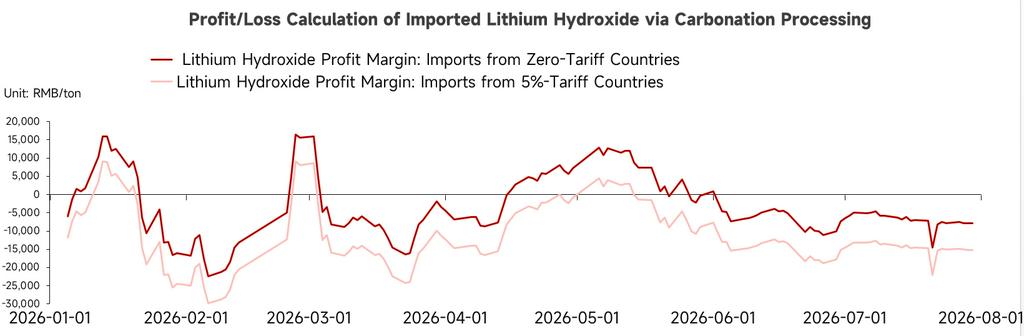
Asumsi inti adalah sebagai berikut: material impor dibeli dengan diskon 94%–98% dari harga spot SMM lithium hidroksida baterai, dan tingkat pemulihan proses karbonasi diperkirakan 95%–98%. Dalam kondisi ini, setelah litium hidroksida impor dikarbonasi menjadi litium karbonat, peluang keuntungan hanya muncul pada bulan-bulan tertentu, dengan margin keseluruhan tetap cukup tipis.
Ringkasan
Volume impor terus meningkat, dan pada sebagian besar paruh pertama tahun ini, jendela impor yang menguntungkan tersedia (terutama pada bulan Maret dan Mei). Namun, sejak bulan Juni dan seterusnya, laba semu menyempit dengan cepat menuju titik impas. Dengan memperhitungkan lebih lanjut diskon yang diperlukan untuk penjualan kembali langsung atau kompresi margin dari proses karbonasi, profitabilitas aktual impor litium hidroksida dalam beberapa bulan terakhir menjadi semakin terbatas. Bagi importir yang bertujuan mempertahankan profitabilitas di bidang ini ke depannya, mengandalkan arbitrase harga sederhana tidak lagi memadai. Sebaliknya, keunggulan kompetitif harus dibangun melalui kemitraan saluran hilir, premi kualitas, dan manajemen risiko nilai tukar.
Catatan: Perhitungan margin impor dalam laporan ini didasarkan pada patokan CIF tertentu. Harga transaksi aktual dapat bervariasi menurut negara asal, merek, dan volume pembelian, sementara tingkat diskon dan biaya karbonasi merupakan estimasi berdasarkan pasar dan disediakan hanya untuk tujuan referensi.
Sumber data: SMM & China Customs