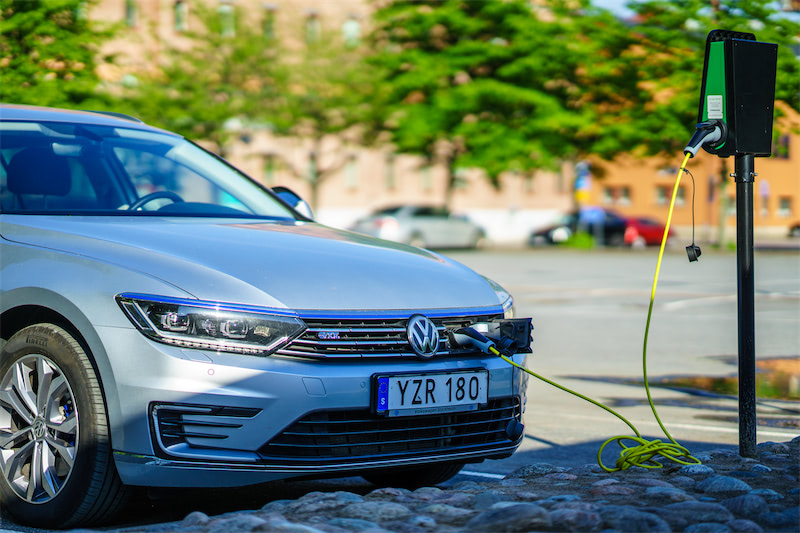
In recent years, the advertised figures for driving range and battery energy density of NEVs have been continuously refreshed. However, many people may not have noticed that such improvements do not entirely stem from breakthroughs in electrochemical systems—the iterations of cathode materials, anode materials, and electrolytes often take years or even longer. The more direct changes have occurred at the structural level within the battery pack.
CTM, CTP, CTB, and CTC represent several technology routes with progressively higher levels of battery integration. Their shared logic is simple: reduce intermediate layers and pack the battery more tightly into the auto body. Yet each generation of solutions differs in the trade‑offs among space utilization, manufacturing cost, and ease of repair.
I. CTM (Cell to Module): Traditional “Nested Dolls” Approach
In the early stages of NEV development, assembly methods for battery packs followed a relatively conservative approach. Battery cells were first assembled into modules, the modules were then arranged into a battery pack, and finally the battery pack was fixed beneath the vehicle floor. Cell→Module→Pack→Auto body thus formed four independent layers.
The advantages and disadvantages of this solution are both obvious. The advantage lies in repair convenience—if a single module fails, it can be replaced individually without touching the entire battery pack. At the same time, the module housing provides extra protection for the cells, resulting in relatively mature structural safety. Yet the cost is just as direct: module housings, connectors, and cooling pipes occupy a large amount of space, usually leaving the internal space utilization rate of the battery pack at only about 40%. This meant that for the same volume, the CTM solution could accommodate the fewest cells, limiting the driving range potential.
For a long period, CTM was the industry’s default choice because it fit the division‑of‑labor logic of traditional automotive supply chains—battery enterprises supply modules, while automakers are responsible for integration. However, this division of labor also created a structural ceiling: the volumetric utilization rate of the battery pack was difficult to break through.
II. CTP (Cell to Pack): Removing the “Middleman”
The core change introduced by CTP is eliminating the intermediate module layer, allowing cells to form the battery pack directly; the space utilization rate rose from around 40% to over 70%. Meanwhile, because module housings, connectors, and fasteners were removed, the number of components in the battery pack dropped, and manufacturing costs decreased accordingly.
Within the industry, two different technical choices have emerged for the implementation path of CTP.
One is the completely module‑free solution represented by BYD’s blade battery. By manufacturing cells into elongated strips and arranging them directly into the battery pack, supported by a honeycomb structure, it not only improves space utilization but also assumes some structural functions. The other is the highly integrated solution represented by CATL’s CTP 3.0 (Qilin battery). It combines cells with multifunctional elastic interlayers into an integrated energy unit and integrates components such as crossbeams, longitudinal beams, cooling plates, and thermal insulation pads, further optimizing the internal layout and thermal management. The Qilin battery achieved a volumetric utilization rate of 72% and a system energy density of 255 Wh/kg.
In terms of market penetration, CTP has already secured a dominant mainstream position. Currently, leading domestic NEV manufacturers have launched mass‑produced models equipped with CTP solutions, covering both independent and joint‑venture brands, and spanning a broad price range from entry‑level to high‑end products. At the same time, the market share of the traditional CTM solution has continued to shrink, now retained mainly in some micro vehicles or specific export models. Overall, CTP has become the most prevalent battery integration technology route at this stage.
III. CTB and CTC: The Battery Becomes Part of the Auto Body
The idea behind CTB (Cell to Body) is to integrate the upper cover of the battery pack with the vehicle floor into a single part. Battery cells are installed directly onto the vehicle floor, eliminating the separate battery pack upper cover. One of the main benefits of this solution is releasing vertical layout space, making the passenger compartment more spacious or creating conditions to lower the vehicle stance. Meanwhile, once the battery pack participates in the body’s load‑bearing, the torsional rigidity of the whole vehicle can increase by more than 70%.
BYD’s Seal series and Xiaomi’s Pengcheng series are representative models employing the CTB solution. The torsional rigidity of the Seal body officially announced by BYD reaches 40,500 N·m/°; Xiaomi’s announced CTB battery volumetric efficiency is 77.8%.
CTC (Cell to Chassis) goes a step further, integrating the battery system more deeply with the chassis or lower vehicle body and further weakening the structural boundary of the battery pack as an independent assembly. In some solutions, the battery system is also integrated collaboratively with thermal management, electric drive, and high/low‑voltage control modules. Representative examples of this approach are the Tesla Model Y (produced at the Texas factory) and the CTC2.0 Plus solution installed on the Leap Motor C10.
The technical goals of CTB and CTC are consistent—exchange structural integration for higher space utilization and body stiffness. The difference between the two routes is mainly reflected in engineering implementation: CTB subtracts elements from the existing body architecture while retaining a relatively independent chassis frame; CTC, on the other hand, treats the chassis and battery as an integrated whole from the very beginning of design, demanding a higher level of upfront vehicle platform definition.
From market data, although CTB and CTC are still at a relatively early stage of penetrating from the high‑end to the mass market, this technology route has already begun to extend down to lower price brackets. The 2026 MG4 applies CTB technology to the 60,000–100,000 yuan price range, indicating that structural integration solutions are no longer exclusive configurations for high‑end models.
Concerns Regarding Structural Integration Solutions
The most direct challenge faced by CTB and CTC structural integration solutions is repair economy.
Under the traditional CTM approach, some faults could be repaired by replacing the module. Once CTP eliminated modules, the battery pack can usually still be removed as an independent assembly, but the smallest unit for on‑site repair and the difficulty of repair depend on the specific structure. CTB and CTC further increase the degree of integration between the battery and the auto body, which may raise the difficulty of disassembly, detection, and damage assessment.
According to estimates by industry institutions, the single‑repair cost of CTB/CTC solutions is 3 to 5 times that of CTP solutions for equivalent damage. This poses new challenges for insurance companies, repair systems, and used‑car residual‑value management. Currently, some automakers, when promoting CTB solutions, simultaneously roll out supporting services such as “battery‑body integrated warranty” or “chassis armor” to alleviate consumer concerns, but a standardized solution at the industry level has yet to be formed.
In addition, CTB and CTC solutions impose significantly higher requirements on vehicle manufacturing precision and after‑sales detection equipment. Once the battery is integrated with the auto body, the disassembly process involves the removal and installation of body structural components. The repair equipment and technical capabilities of traditional 4S stores may need corresponding upgrades, and behind this lies the cost of restructuring the entire after‑sales system.
Evolution Direction
From CTM to CTP, and then to CTB and CTC, the direction of battery pack integration technology evolution is clear—the fewer the layers, the higher the space efficiency and the stronger the body stiffness. This is an advancement path driven by space efficiency and manufacturing costs.
Yet this trend is not a linear acceleration. For CTB and CTC to achieve large‑scale popularization, in addition to breakthroughs in engineering technology, supporting systems such as repair standards, insurance pricing, and used‑car evaluation need to be developed synchronously. Based on current industry data, CTP will maintain its mainstream position, while the penetration rate of CTB/CTC will depend on two variables: the degree of standardization of structural integration solutions, and the speed at which repair costs and the insurance system can adapt.
SMM New Energy Industry Research Lithium Battery End‑User Analyst Fu Linqi
18122430020
![[SMM Analysis] 486GWh! Who Is Leading the Energy Storage Battery Cell Market in 2026H1?](https://imgqn.smm.cn/usercenter/akEdZ20251217171728.jpg)