SMM July 30 News:
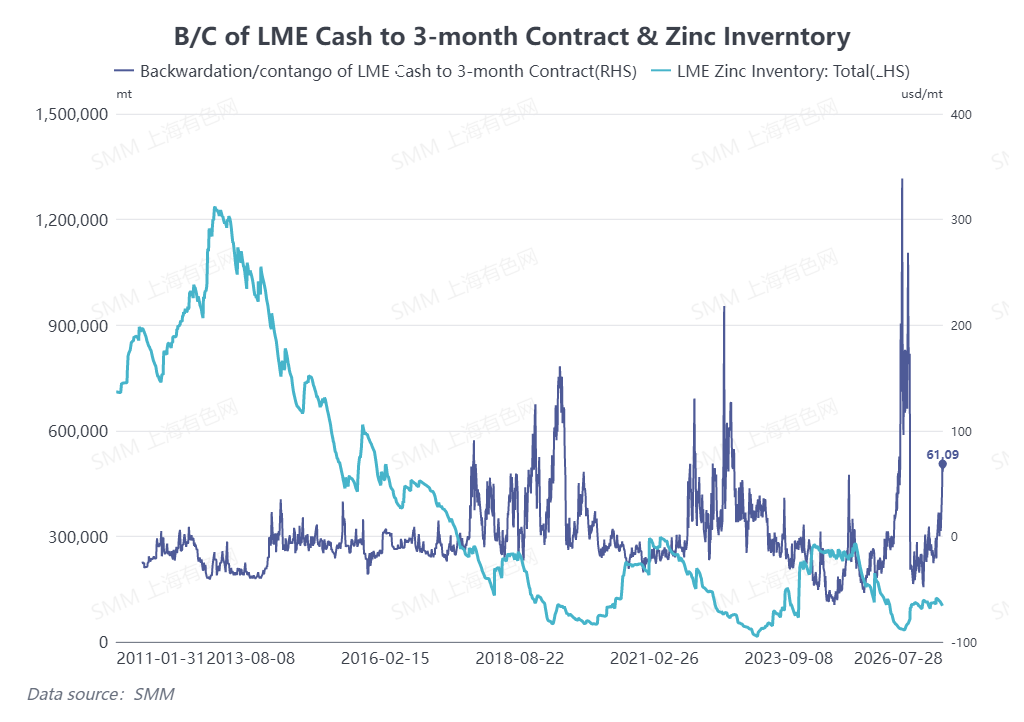
As of July 28, LME zinc inventories (including off-warrant stocks) had fallen to 119,600 mt, down by approximately 45,000 mt from mid-June. As overseas inventories continued to decline, the LME zinc market structure shifted from contango to backwardation, with the backwardation widening further. By July 28, the LME zinc cash-to-3M spread had strengthened to US$61.09/mt.
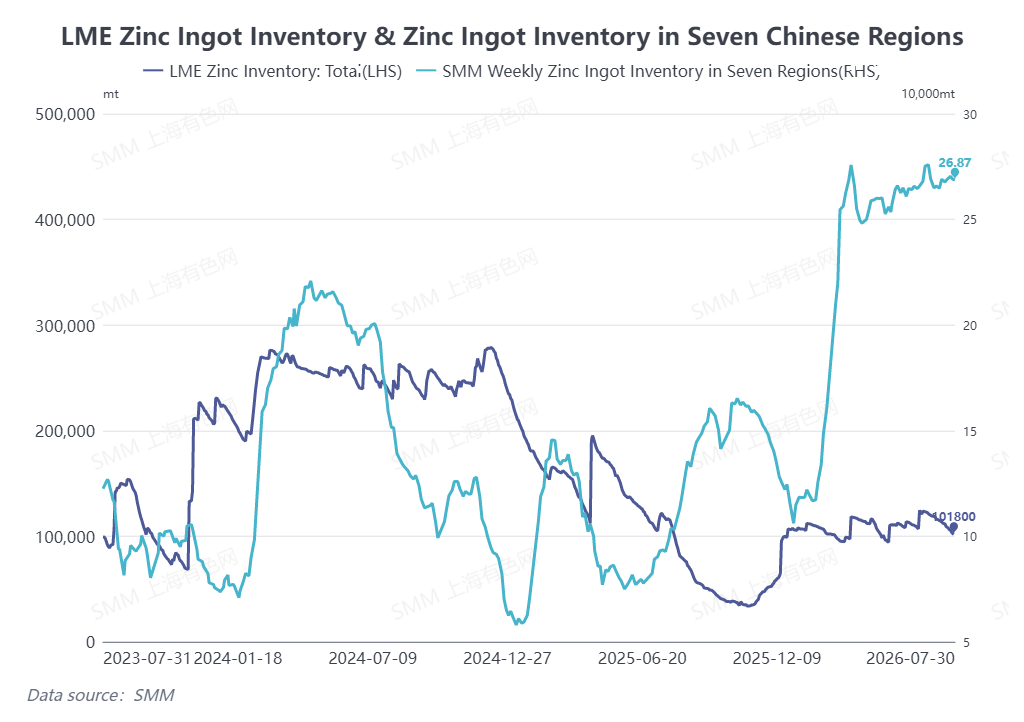
In contrast, China's domestic zinc market remains in its traditional seasonal demand lull. According to SMM, social inventories of refined zinc across seven major domestic markets have remained elevated at around 260,000 mt. The widening divergence between domestic and overseas supply-demand fundamentals has driven the Shanghai-LME zinc price ratio steadily lower. Against this backdrop, China's long-dormant refined zinc export window has reopened, fueling growing market discussions around the classic "long SHFE zinc, short LME zinc" reverse arbitrage strategy.
Overseas Zinc Tightness Persists as Import Economics Continue to Deteriorate
China's refined zinc import window has remained closed since July 2025. Customs data show that China's net refined zinc imports totaled 210,000 mt in 2025, down 51% YoY, reflecting a significant contraction in import volumes.
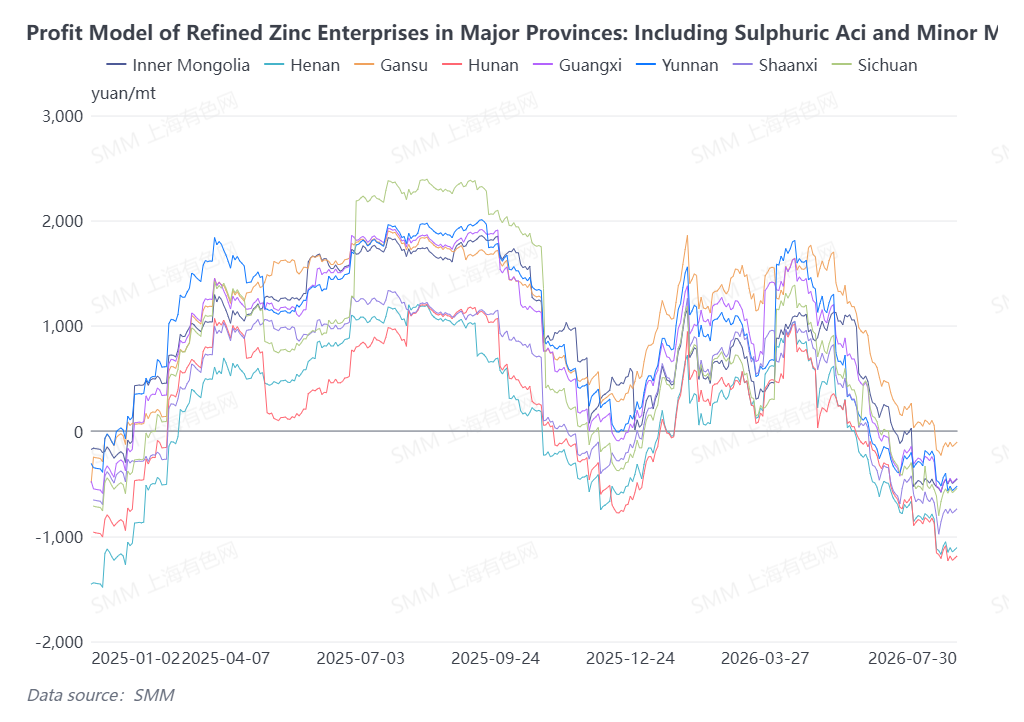
Entering 2026, SMM estimates that although domestic zinc concentrate treatment charges (TCs) continued to fall to record lows, elevated sulfuric acid prices and strong by-product revenues helped support smelter profitability until June. As a result, Chinese smelters maintained relatively high operating rates throughout the first half of the year.
Meanwhile, downstream demand recovered more slowly than expected. Demand from galvanized steel, die-casting, and other major zinc-consuming sectors weakened after entering the traditional off-season in the second quarter. Domestic smelter maintenance remained largely routine, resulting in only limited reductions in refined zinc output. Against a backdrop of stable supply and soft demand, China's refined zinc social inventories remained around 260,000 mt, with destocking progressing much more slowly than in overseas markets.
Overseas, however, supply disruptions continued throughout the year. Production interruptions at smelters including Kazzinc, Cajamarquilla, and YP, combined with tight global zinc concentrate availability, constrained refined zinc production outside China. Since June, declining LME inventories have tightened spot availability, pushing the cash-to-3M spread sharply higher and lifting overseas spot premiums.
Under this combination of tight overseas fundamentals and relatively weak domestic conditions, China's Shanghai-LME zinc price ratio has continued to decline throughout 2026. As of July 28, the SMM 0# refined zinc spot price averaged RMB 24,670/mt, while the Shanghai-LME price ratio had fallen to approximately 6.8, widening China's theoretical refined zinc import loss to around RMB 4,600/mt.
Reverse Arbitrage Gains Momentum as Export Window Reopens and LME Delivery Economics Improve
From an arbitrage perspective, profits from the reverse arbitrage strategy primarily stem from the weakening Shanghai-LME price ratio. Physical exports and LME warehouse deliveries represent the final step that converts futures profits into physical trading margins. Therefore, whether export opportunities emerge and whether LME delivery economics turn positive are critical to completing the arbitrage cycle.
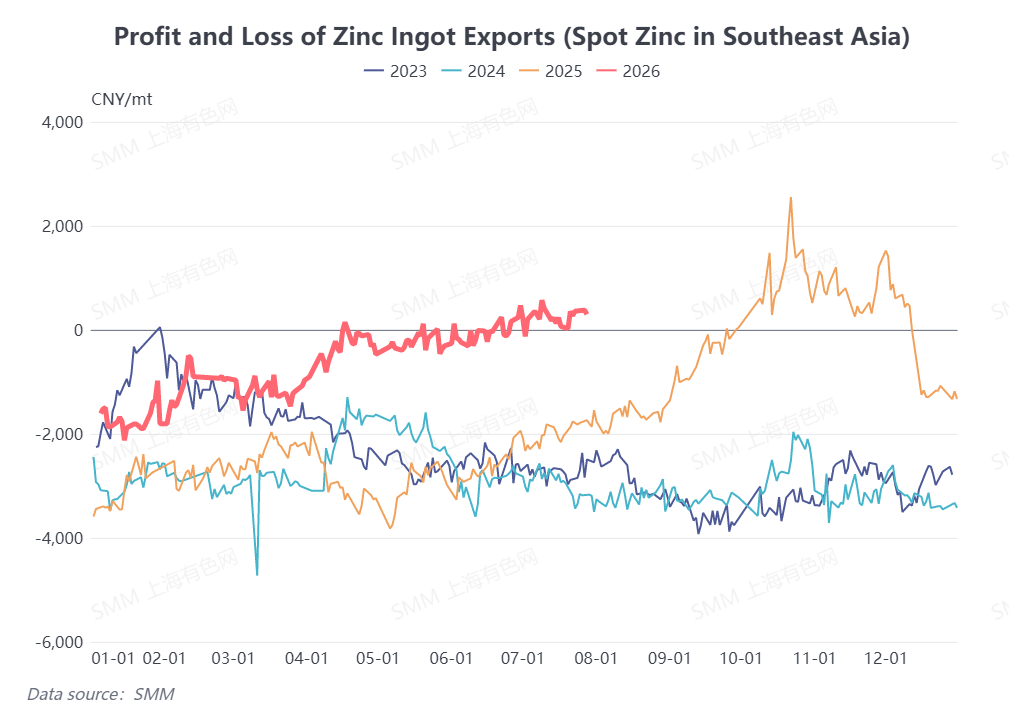
According to SMM calculations, as of July 28, the theoretical profit for exporting Chinese refined zinc to Southeast Asian spot markets had reached approximately RMB 300/mt, indicating that the physical export window has officially reopened.
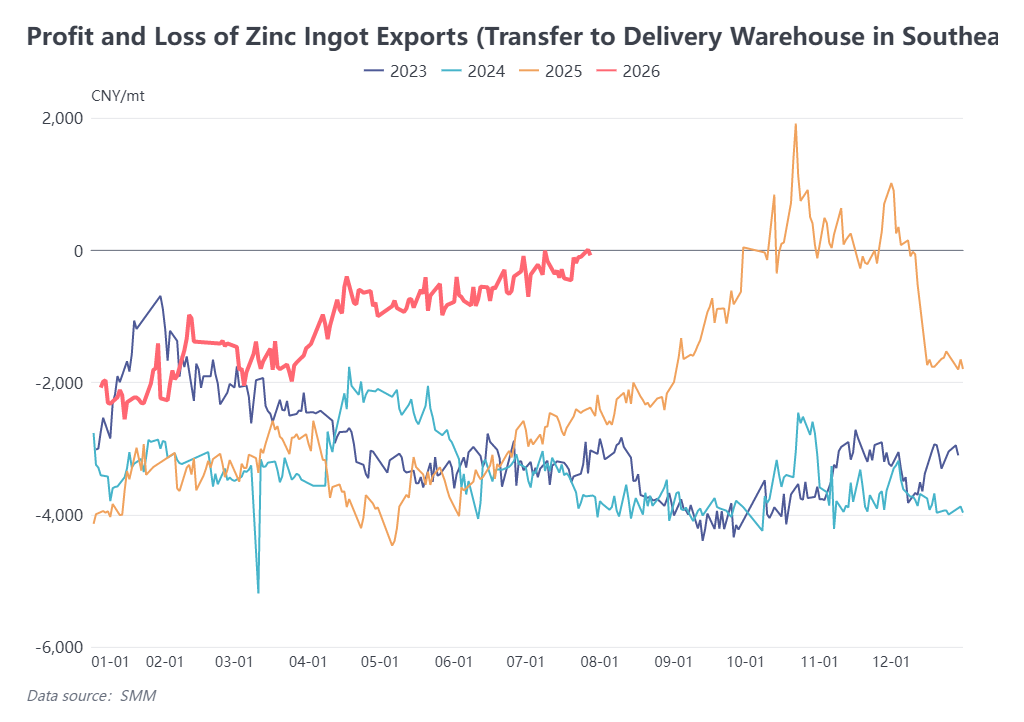
Meanwhile, supported by the expanding LME backwardation structure, the theoretical profit for delivering Chinese refined zinc into LME warehouses in Southeast Asia has also approached breakeven. Under backwardation, stronger nearby prices allow market participants to realize higher premiums after delivery, bringing the LME warehouse delivery window close to opening.
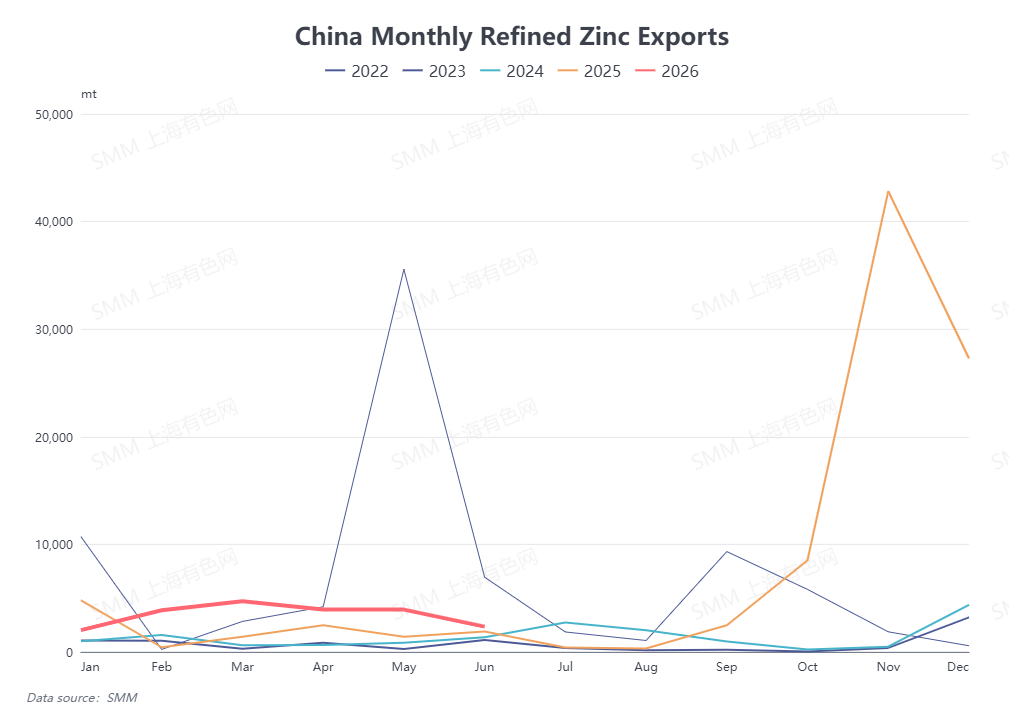
Notably, this marks only the third time in nearly twenty years that China's refined zinc export window has reopened on a meaningful scale, making it a rare opportunity that has attracted significant market attention.
Market feedback indicates that since July, some Chinese zinc holders have actively sought export opportunities. Current shipments are mainly destined for Southeast Asian spot markets, although overall export volumes remain relatively limited.
Should the LME backwardation continue to widen and the Shanghai-LME price ratio weaken further, the profitability of LME warehouse deliveries is expected to improve accordingly. Higher arbitrage returns could significantly increase physical export volumes, while the resulting rebalancing between domestic and overseas markets may ultimately help stabilize the Shanghai-LME price ratio.
That said, the reverse arbitrage strategy is not without risks. A recovery in overseas inventories, a narrowing of the LME backwardation, or stronger-than-expected domestic zinc demand could all lead to a rebound in the Shanghai-LME price ratio, putting pressure on reverse arbitrage positions. In addition, exchange rate fluctuations, export logistics, and the eligibility of LME-approved brands will all influence the ultimate profitability of physical exports and should be monitored closely.
Outlook
Looking ahead to the second half of 2026, SMM expects China's domestic zinc demand to remain relatively subdued, while overseas markets are likely to stay comparatively tight amid constrained mine supply and resilient demand in certain regions.
SMM expects the Shanghai-LME zinc price ratio to remain at relatively low levels throughout the second half of the year, allowing China's refined zinc spot export window to remain open periodically. Under the reverse arbitrage framework, expanding physical exports are expected to support stronger Chinese refined zinc export volumes in H2.
SMM will continue to closely monitor developments in the Shanghai-LME price ratio, changes in the LME market structure, and the actual realization of export arbitrage opportunities.
(The above information is based on market collection and comprehensive evaluation by the SMM research team. The information provided in this article is for reference only. This article does not constitute direct advice for investment research and decision-making. Customers should make cautious decisions and should not replace their independent judgment with this information. Any decisions made by customers are not related to SMM.)