Estados Unidos y Europa han sido durante mucho tiempo fuentes importantes de chatarra de cobre y materiales complejos con contenido de cobre. Sin embargo, la ampliación de la capacidad de reciclaje, las políticas más estrictas de seguridad de recursos y los controles de exportación más rigurosos están favoreciendo que más recursos secundarios —y su valor de procesamiento— permanezcan en los mercados locales. El impacto podría extenderse más allá de la chatarra de alta calidad, como Millberry y cobre n.º 1, hacia los residuos electrónicos, cables de desecho, materiales de cobre mezclados y otras materias primas complejas multimetálicas.
El 3 de julio, Aurubis inauguró oficialmente su proyecto Complex Recycling Hamburg (CRH) en Alemania. La instalación, de 190 millones de euros, realizó su primera colada en marzo de 2026 y actualmente está aumentando la producción. A plena capacidad, CRH procesará más de 30.000 toneladas anuales de materiales reciclados complejos adicionales, a la vez que amplía la capacidad de Aurubis para tratar productos intermedios complejos procedentes de su red de fundición. La instalación puede procesar materiales que contengan cobre, plomo y azufre, recuperando cobre, plomo y metales preciosos, y produciendo también ácido sulfúrico.
El proyecto de reciclaje de Aurubis en Estados Unidos es considerablemente más grande. Su planta de reciclaje de múltiples metales en Richmond, Georgia, realizó su primera colada en septiembre de 2025 y posteriormente entró en la etapa de aumento de producción, con nuevas expansiones en curso en 2026. Una vez completadas ambas fases, la planta podrá procesar hasta 180.000 toneladas anuales de materiales reciclados complejos, incluyendo placas de circuitos impresos, cables de cobre de desecho y otras materias primas que contienen metales. Se espera que el proyecto se abastezca principalmente de proveedores estadounidenses y recupere cobre, níquel, estaño y metales preciosos a nivel nacional.
Estos proyectos sugieren que parte de los materiales complejos que antes se exportaban a Asia para su desmontaje, clasificación o fundición podrían ser absorbidos cada vez más localmente. A medida que entre en funcionamiento nueva capacidad, la competencia en Estados Unidos y Europa se está ampliando desde la chatarra de cobre tradicional de alta calidad hacia los residuos electrónicos, los materiales de cobre mezclados y las materias primas complejas multimetálicas, ampliando la gama de materiales por los que los compradores asiáticos deben competir.
Estados Unidos también está tratando de retener más chatarra de cobre de alta calidad mediante medidas políticas. Entre las propuestas figura la obligación de vender en el mercado nacional al menos el 25% de la chatarra de cobre de alta calidad producida en Estados Unidos y se estudia un sistema de licencias de exportación. Sin embargo, la definición de “chatarra de cobre de alta calidad”, los métodos de cálculo, los plazos de aplicación y los procedimientos de notificación aún no se han aclarado por completo. No obstante, la orientación política está claramente encaminada a mejorar la disponibilidad de materias primas para los procesadores y fundiciones secundarias nacionales.
Europa está adoptando un enfoque diferente. Junto con la ampliación de la capacidad de reciclaje local, el Reglamento revisado de la UE sobre el traslado de residuos restringirá las exportaciones de residuos no peligrosos a países no miembros de la OCDE. Los mercados que no cumplan las normas medioambientales de la UE y no figuren en la lista de países autorizados no podrán seguir recibiendo los envíos de residuos correspondientes. Los exportadores también deberán organizar auditorías independientes de las instalaciones receptoras en el extranjero.
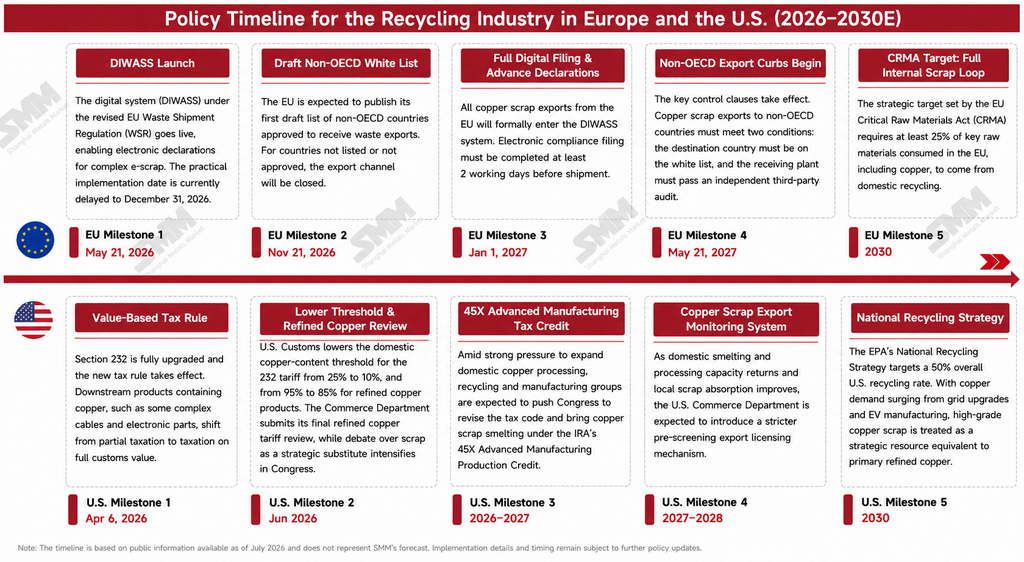
Aunque Estados Unidos y Europa están utilizando medidas diferentes, la dirección general es similar. Estados Unidos confía en la nueva capacidad de procesamiento, los posibles requisitos de venta en el mercado interno y los eventuales controles a la exportación, mientras que Europa combina la expansión del reciclaje regional con una regulación más estricta de los residuos transfronterizos.
A corto plazo, es poco probable que estos cambios provoquen una drástica disminución de las exportaciones de chatarra de cobre de Estados Unidos y Europa. CRH todavía está aumentando su producción y también procesará productos intermedios de la propia fundición de Aurubis, mientras que Richmond se centra principalmente en materiales complejos como las placas de circuitos y los cables de desecho. Por tanto, las capacidades de procesamiento anunciadas no pueden traducirse directamente en reducciones equivalentes de las exportaciones tradicionales de chatarra de cobre.
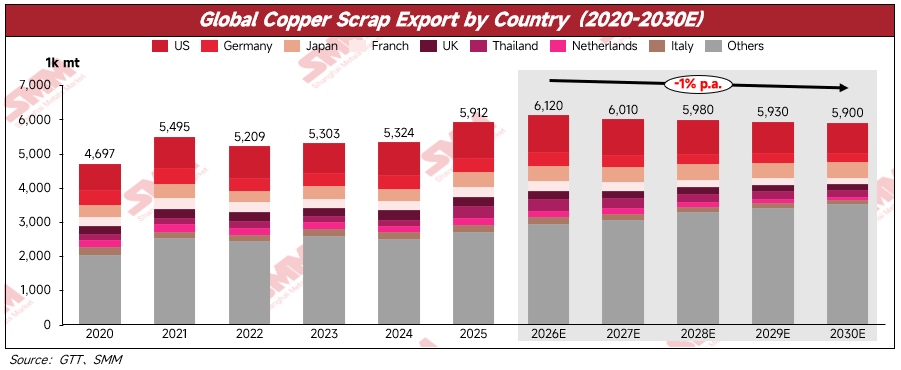
El efecto más inmediato probablemente sea una competencia más intensa por las materias primas dentro de Estados Unidos y Europa. A medida que las fundiciones locales mejoren su capacidad para procesar materiales complejos y chatarra de alta calidad, es posible que se vendan más cargamentos en el mercado nacional, lo que refuerza la firmeza de los precios de los proveedores y su disposición a retener material. Según investigaciones de mercado de SMM, los compradores de China, India, Japón, Corea del Sur y el Sudeste Asiático ya han informado de mayores índices de pago, ciclos de aprovisionamiento más largos y una intensificación de la competencia por los cargamentos estadounidenses y europeos.
En general, la expansión de la capacidad de reciclaje y el refuerzo de las políticas de gestión de recursos indican que el mercado mundial de chatarra de cobre se está orientando hacia una mayor regionalización y prioridad local. Es posible que la generación mundial de chatarra no disminuya, pero una proporción cada vez mayor podría ser absorbida por las fundiciones y procesadores locales, reduciendo el volumen disponible libremente para el comercio transfronterizo.
A medida que los nuevos proyectos alcancen gradualmente la producción plena y las políticas de exportación se aclaren, se espera que la competencia se amplíe desde la chatarra de cobre Millberry y n.º 1 hacia los cables de desecho, los residuos electrónicos, los materiales de cobre mezclados y otros recursos complejos multimetálicos. Los compradores asiáticos podrían necesitar diversificar las fuentes de suministro, reforzar la capacidad de procesamiento de materias primas complejas, mejorar los sistemas de reciclaje nacionales y asegurar más acuerdos de suministro a largo plazo.
![Después de la caída de la prima, el reaprovisionamiento aguas abajo aumentó, las transacciones de hoy fueron mejores que las del viernes pasado [Cobre al contado del sur de China SMM]](https://imgqn.smm.cn/usercenter/tXxfd20251217171713.jpg)
![El comercio de usuarios finales es lento, el diferencial del precio al contado se debilita [SMM Cobre al contado del norte de China]](https://imgqn.smm.cn/usercenter/Bwtty20251217171714.jpeg)