FOB Pricing Remains the Standard for Nigerian Tantalum Concentrate Exports

Published: Jul 29, 2026 20:36

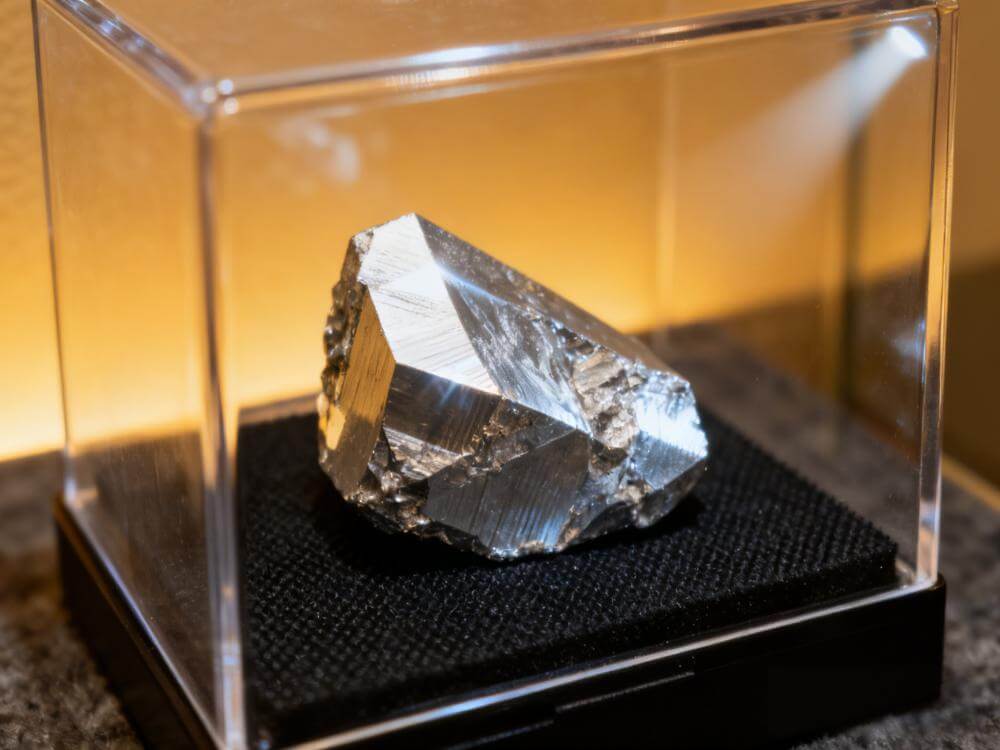
[SMM Express] Free on Board (FOB) remains the predominant pricing basis for Nigerian columbite-tantalite (coltan) concentrate exports, with most shipments priced at major export terminals including Onne Port in Rivers State and Apapa Port in Lagos. FOB pricing is widely used in transactions between Nigerian exporters and international buyers as it provides a transparent basis for valuing concentrates before freight and insurance costs are added.

Market participants indicate that sales to Chinese trading companies and processors are frequently negotiated on a Cost, Insurance and Freight (CIF) basis for delivery to China, with the corresponding FOB value derived after deducting ocean freight and marine insurance costs. Meanwhile, smaller domestic and regional transactions may be concluded on Ex Works (EXW) or truck-delivered-to-port terms before cargoes enter formal export channels.

The continued dominance of FOB pricing reflects established international trade practices for critical mineral concentrates and facilitates price benchmarking across global tantalum markets. As demand for transparent and traceable supply chains increases, standardised pricing mechanisms are expected to remain important in supporting efficient trade and market confidence.

Data Source Statement: Except for publicly available information, all other data are processed by SMM based on publicly available information, market communication, and relying on SMM's internal database model. They are for reference only and do not constitute decision-making recommendations.

For any inquiries or for more information, please contact: lemonzhao@smm.cn
For more information on how to access our research reports, please contact:service.en@smm.cn
Related News
Southern Palladium's Bengwenyama Project Triples Projected Chrome Output, Repositions as PGM-Chrome Co-Product Operation
5 mins ago
Southern Palladium's Bengwenyama Project Triples Projected Chrome Output, Repositions as PGM-Chrome Co-Product Operation
Read More
Southern Palladium's Bengwenyama Project Triples Projected Chrome Output, Repositions as PGM-Chrome Co-Product Operation
[SMM Express] Southern Palladium has repositioned its Bengwenyama platinum group metals project on South Africa's Bushveld Complex Eastern Limb as a dual PGM-chrome co-product operation. The shift follows updated Definitive Feasibility Study testwork presented at the Noosa Mining Investor Conference on 24 July 2026. Chromite recovery from the project's UG2 orebody has been lifted to 85.6%, sharply up from the 30% assumed in the earlier prefeasibility study. At a planned run-of-mine feed rate of 2.4 million tonnes per year, projected chrome concentrate output has risen to approximately 1.054 million tonnes per year, nearly triple the 0.35 million tonnes previously modelled. Chrome is now expected to contribute close to one-third of Bengwenyama's total revenue at full production, up from around 12% originally, reclassifying it from a minor by-product credit into a genuine parallel revenue stream. The improved recovery stems from a redesigned processing flowsheet using dense media separation pre-concentration and a coarser primary grind that protects chromite particles from over-grinding. One issue remains unresolved: Cr2O3 contamination in the PGM concentrate currently exceeds the level needed for acceptable smelter and refinery specifications, and the company has not disclosed a timeline for resolving it. South Africa already holds the world's largest chrome ore reserves, and a successful scale-up at Bengwenyama would add a new, currently undeveloped source of domestic chrome concentrate over the medium term. The project still requires full DFS completion and financing before construction, a process typically spanning 18 to 36 months. For chrome ore buyers, the update is a reminder that future South African supply growth may increasingly come from PGM developments carrying substantial chromite credits, not just dedicated chrome or ferrochrome producers.
5 mins ago
Spot Pricing Dominates Rwanda's Tantalum Concentrate Trade
1 hour ago
Spot Pricing Dominates Rwanda's Tantalum Concentrate Trade
Read More
Spot Pricing Dominates Rwanda's Tantalum Concentrate Trade
[SMM Express] Research on Rwandan tantalum concentrate market indicates that most concentrate transactions are negotiated on a spot basis, with prices typically determined by buyer demand rather than long-term supply agreements. According to market participants, contract prices are frequently renegotiated after delivery to reflect prevailing market conditions, highlighting the short-term nature of the country's tantalum concentrate trade. Findings also show that 22–30% Ta₂O₅ concentrates are among the most actively traded grades and that Chinese smelters remain the primary buyers of Rwandan material. Market prices are reported to fluctuate mainly in response to demand for concentrate and the quantity of material available for sale. Weak demand, lower prices and limited working capital are noted to be among the main challenges facing the sector. These market observations suggest that Rwanda's tantalum concentrate trade continues to be influenced by downstream purchasing activity in China, with spot market dynamics remaining the principal driver of pricing and trading activity.
1 hour ago
Costs push ADC12 prices higher, while demand-side support remains limited [ADC12 Price Daily Review]
8 hours ago
Costs push ADC12 prices higher, while demand-side support remains limited [ADC12 Price Daily Review]
Read More
Costs push ADC12 prices higher, while demand-side support remains limited [ADC12 Price Daily Review]
[ADC12 Price Daily Review: Costs Drive ADC12 Prices Higher, Demand-Side Support Limited] Today, ADC12 market quotations were raised by 100 yuan/mt overall. Driven by the synchronous rise in aluminum prices and futures, aluminum scrap procurement costs further increased. The cost side provided strong support for ADC12 prices, and most enterprises chose to raise their quotations accordingly to pass on the cost pressure.
8 hours ago