

Tuesday, July 28, 2026
Futures: Overnight, LME copper opened at $13,746/mt, consolidated at highs early in the session, then moved higher to touch $13,781.5/mt before its center drifted lower, dipping to $13,704/mt, and finally moved sideways to close at $13,759.5/mt, up 1.09%. Trading volume was 16,000 lots and open interest stood at 244,000 lots, down 1,039 lots from the previous trading day, suggesting bear position reduction. Overnight, the most-traded SHFE copper 2609 contract opened at 105,500 yuan/mt, rose right at the open to touch 105,640 yuan/mt, then its center descended to a low of 105,060 yuan/mt before moving sideways and closing at 105,280 yuan/mt, down 0.31%. Trading volume was 34,000 lots and open interest was 206,000 lots, down 26.83 million lots from the previous trading day, also reflecting bear position reduction.
[SMM Copper Morning Briefing] News:
(1) According to , two people familiar with the matter told Reuters that Panama is considering forming a national mining company to partner with Canada’s First Quantum Minerals to restart the suspended Cobre Panama (CP) operation. The mine, one of the world’s largest copper mines, was shut in 2023 after Panama’s Supreme Court ruled First Quantum’s 20-year mining contract unconstitutional amid widespread opposition over environmental and governance concerns. According to IMF data, the closure cost Panama 4.5% of its GDP, reduced global copper production by 1%, and cut First Quantum’s revenue by 40%.
Spot:
(1) Shanghai: In the morning of July 27, the SHFE copper 2608 contract repeatedly shot up and pulled back, with its overall center edging slightly higher. It opened at 105,080 yuan/mt, first rose to 105,320 yuan/mt, then pulled back to the 105,100–105,130 yuan/mt range, climbed again to touch an intraday high of 105,440 yuan/mt, declined slightly to 105,160 yuan/mt, and edged up before the close to finish at 105,230 yuan/mt. The backwardation spread between the front-month and next-month contracts ranged from 120 yuan/mt to 170 yuan/mt, and the import profit margin for the SHFE copper 2608 contract for front-month delivery stood between a loss of 500 yuan/mt and 430 yuan/mt. Looking ahead to today, as the month-end approaches, suppliers have started quoting cargoes with invoices dated next month, and the divergent invoice structure has widened the price spread between cargoes with invoices dated this month and those dated next month. Some buyers still need to replenish cargoes with invoices dated this month, making such cargoes relatively tight. End-use consumption side, copper prices stayed high and downstream purchase willingness remained subdued, resulting in sluggish intraday end-user transactions. Suppliers had to successively lower their quotes to achieve a small volume of deals, underscoring that high copper prices are still significantly dampening demand. According to SMM, some downstream processing enterprises, affected by accumulated finished product inventories, further slowed their procurement pace. Supply side, some imported cargoes – including brands such as Peruvian full plates, ESOX, and Myanmar – have begun to flow into the spot market. These arrivals supplemented spot supply and marginally eased the previously tight availability of tradable cargoes. SMM recorded Shanghai social inventory at 70,000 mt, up 1,700 mt from last Thursday, and Jiangsu social inventory at 21,700 mt, down 300 mt WoW from last Thursday. Overall, under the combined effects of supplementary imported arrivals, weak consumption, and month-end invoice differentiation, spot prices against the SHFE copper 2608 contract are expected to remain at a premium today.
(2) Guangdong: On July 27, Guangdong #1 copper cathode spot was quoted at premiums of 50 yuan/mt to 110 yuan/mt against the front-month contract, with an average premium of 80 yuan/mt, down 85 yuan/mt from the previous trading day. SX-EW copper was quoted at discounts of 20 yuan/mt to parity, with an average discount of 10 yuan/mt, down 90 yuan/mt from the previous trading day. The average price of Guangdong #1 copper cathode was 105,360 yuan/mt, up 275 yuan/mt from the previous trading day, and the average price of SX-EW copper was 105,270 yuan/mt, up 270 yuan/mt from the previous trading day. Overall, higher copper prices and increased inventory dampened downstream restocking willingness, driving spot premiums steadily lower. Overall trading was weak.
(3) Imported copper: On July 27, the average warrant price remained flat from the previous trading day at $113/mt (price range: $108-118/mt); the average B/L price remained flat from the previous trading day at $108/mt (price range: $105-111/mt); the average EQ copper (CIF B/L) price remained flat from the previous trading day at $76/mt (price range: $72-80/mt). Quotes referenced cargoes arriving from mid-to-late July through late August.
(4) Secondary copper: On July 27 at 11:30, the futures closing price was 105,230 yuan/mt, up 340 yuan/mt from the previous trading day. The average spot premium was 325,280 yuan/mt, down 45 yuan/mt WoW. On July 27, copper scrap prices remained flat WoW. The copper scrap sales sentiment index remained unchanged at 2.60, and the purchase sentiment index rose to 2.21. The price spread between copper cathode and copper scrap was 4,113 yuan/mt, up 295 yuan/mt WoW. The price spread between copper cathode rod and secondary copper rod was 1,230 yuan/mt. According to the SMM survey, copper prices consolidated at highs. After active shipments earlier, copper scrap suppliers held low inventory and their shipment sentiment did not carry over from last week. Meanwhile, downstream scrap utilization enterprises, with ample inventory, mainly stayed on the sidelines in the short term and would only consider restocking when copper prices pull back.
Prices: On the macro front, Trump expressed enough patience to reach a new deal with Iran and negotiations are underway. Easing geopolitical tensions and reduced concerns over energy price rises pushing up inflation led to recovering risk appetite, which supported copper prices. Fundamentals side, supply inched up in the short term with a modest recovery in domestic and imported cargo arrivals, somewhat easing the previous tightness in circulating supply. Demand side, downstream enterprises’ production and purchase willingness remained subdued, pressured by high copper prices. Inventory side, as of Monday, July 27, SMM copper inventories in major Chinese regions rose by 5,300 mt WoW to 117,200 mt. On balance, supported by recovering macro risk appetite, copper prices are expected to drift higher in a narrow range today.
[The information provided is for reference only. This article does not constitute direct investment research advice. Clients should make decisions prudently and not treat this as a substitute for their own independent judgment. Any decision made by the client is unrelated to SMM.]
US-Iran Negotiations Advance, Easing Geopolitical Risks, Copper Prices Drift Higher and LME Copper Gains over 1%[SMM Copper Morning Brief]
SMM Morning Meeting Minutes: Overnight, LME copper opened at $13,746/mt, consolidated at highs in early trading, rose to $13,781.5/mt before its center moved lower, then dipped to a low of $13,704/mt, and finally moved sideways to close at $13,759.5/mt, up 1.09%. Trading volume reached 16,000 lots, open interest at 244,000 lots, down 1,039 lots from the previous trading day, reflecting bearish position reduction. Overnight, the most-traded SHFE copper 2609 contract opened at 105,500 yuan/mt, rose to a high of 105,640 yuan/mt in early trading, before its center shifted lower to touch a low of 105,060 yuan/mt. Its center then moved sideways, eventually closing at 105,280 yuan/mt, down 0.31%. Trading volume was 34,000 lots, open interest at 206,000 lots, down 26.83 million lots from the previous trading day, also reflecting bearish position reduction.
Data Source Statement: Except for publicly available information, all other data are processed by SMM based on publicly available information, market communication, and relying on SMM's internal database model. They are for reference only and do not constitute decision-making recommendations.
For any inquiries or for more information, please contact: lemonzhao@smm.cn
For more information on how to access our research reports, please contact:service.en@smm.cn
Related News
8 hours ago
SHFE: Approves Jinchuan Group Co., Ltd. to increase the registered production site for “JNMC” brand Grade A copper (permanent cathode-K)
Read More
SHFE: Approves Jinchuan Group Co., Ltd. to increase the registered production site for “JNMC” brand Grade A copper (permanent cathode-K)
8 hours ago
![[SMM Announcement] Chinese Market Metal Prices and News Updates Suspended during National Day Holiday (Oct 1-7)](https://imgqn.smm.cn/usercenter/HeIuV20251217171708.jpg)
8 hours ago
[SMM Announcement] Chinese Market Metal Prices and News Updates Suspended during National Day Holiday (Oct 1-7)
Read More
[SMM Announcement] Chinese Market Metal Prices and News Updates Suspended during National Day Holiday (Oct 1-7)
8 hours ago
9 hours ago
Koryx Copper Completes Haib PFS Drilling, Targets Updated Resource and PFS by Year-End
Read More
Koryx Copper Completes Haib PFS Drilling, Targets Updated Resource and PFS by Year-End
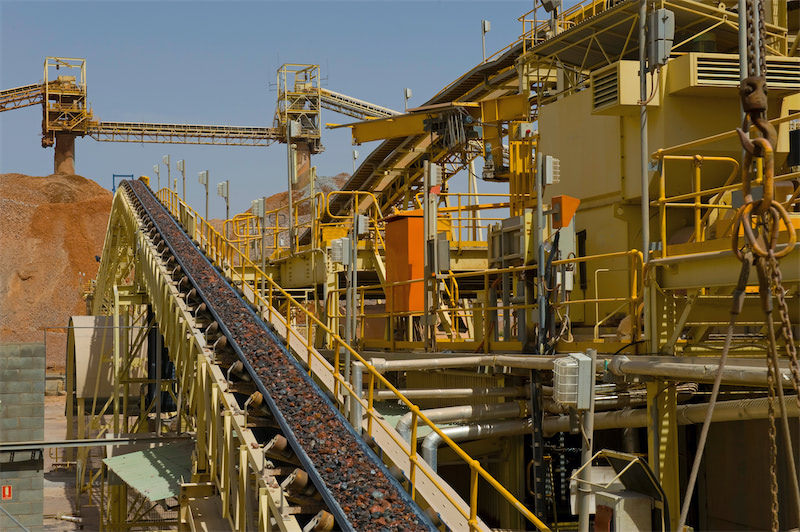
Koryx Copper has completed its infill and expansion drilling programme at the wholly owned Haib Copper Project in southern Namibia, advancing the project toward an updated Mineral Resource Estimate (MRE) and Pre-Feasibility Study (PFS) targeted for publication before the end of 2026.
The company reported assay results from a further 18 drill holes totalling 7,074 metres. Among the latest results, hole HM199 returned 438 metres grading 0.40% copper equivalent (CuEq), including 224 metres at 0.51% CuEq. Hole HM193 returned 681 metres at 0.34% CuEq, including 22 metres at 0.71% CuEq and 169 metres at 0.40% CuEq.
Koryx said the results continued to demonstrate wide mineralised intercepts across the Haib deposit, together with higher-grade zones closer to surface in some areas. The company said the results broadly correlate with its existing geological model, while the completed drilling programme will feed into geological modelling and estimation work for the updated resource estimate and PFS.
Haib is a large disseminated porphyry copper-molybdenum-gold deposit. Koryx currently envisages developing the project as a large-scale open-pit operation using conventional sulphide milling and flotation to produce copper and molybdenum concentrates.
The latest drilling follows Koryx's March 2026 Mineral Resource Estimate, which reported 744 million mt of Indicated material grading 0.28% copper, containing approximately 2.09 million mt of copper, and 579 million mt of Inferred material grading 0.24% copper, containing approximately 1.39 million mt of copper, using a 0.15% copper cut-off. Koryx said the updated MRE and PFS remain on track for publication before the end of 2026.
Completion of the PFS drilling programme marks another step in Koryx Copper's advancement of Haib toward a potential large-scale copper development. The latest drilling continues to show broad mineralised intervals, while the upcoming updated resource estimate will provide greater clarity on whether recent infill and expansion drilling has materially changed the project's resource base. Attention will now turn to the updated MRE and PFS expected before year-end, which should provide further detail on the proposed mine configuration, processing strategy, production profile and project economics.
9 hours ago
Related News
SHFE: Approves Jinchuan Group Co., Ltd. to increase the registered production site for “JNMC” brand Grade A copper (permanent cathode-K)
Sep 28, 2026 17:46 (GMT+8)
[SMM Announcement] Chinese Market Metal Prices and News Updates Suspended during National Day Holiday (Oct 1-7)
Sep 28, 2026 17:06 (GMT+8)
Koryx Copper Completes Haib PFS Drilling, Targets Updated Resource and PFS by Year-End
Sep 28, 2026 16:54 (GMT+8)

KCM Restarts Chingola B Mine, Targets Over 200,000 mt/month of Ore Productio
Sep 28, 2026 16:49 (GMT+8)
Register to Continue Reading
Gain access to the latest insights in metals and new energy
Already have an account?Sign in here