Analysis of China's Platinum and Palladium Imports in H1 2026
In H1 2026, China's platinum and palladium imports diverged. Imports of unwrought platinum and platinum powder maintained steady growth, with the cumulative H1 increase standing at roughly 17.8% YoY; imports of unwrought palladium and palladium powder surged significantly, with the cumulative H1 increase reaching 116% YoY. Overall, PGM imports remained resilient, driven by industrial demand from glass fiber, hydrogen energy, and other sectors, while the spike in palladium imports was closely tied to a low base, arbitrage on the price spread between Chinese and overseas markets, and a policy window for Russian palladium trade. The H2 trajectory warrants attention to global mine supply, shifts in automotive and new energy demand, the ongoing impact of international geopolitics on Russian palladium trade, and the arbitrage space between domestic and overseas markets.
Imports of Unwrought Platinum and Platinum Powder Up 2.5% MoM in June Cumulative H1 Total Up 17.8% YoY
In June 2026, China’s imports of unwrought platinum and platinum powder totaled 10.67 mt, up 2.5% MoM and up 27.9% YoY; the cumulative H1 import volume reached 48.18 mt, up 17.8% YoY.

By trade mode, imports of unwrought platinum were dominated by Ordinary Trade, accounting for over 90%. By import source, South Africa remained the top supplier, followed by Russia, Zimbabwe, and others. As the world’s largest platinum producer, South Africa’s mine supply situation significantly affects China's import volumes. Since the start of 2026, power shortages in South Africa have eased somewhat, and mine expansions have advanced, but aging mines and inadequate capital expenditure continued to suppress supply elasticity, keeping overall supply rigid.
Support for platinum import growth from the demand side stemmed from two main factors:
First, robust platinum demand from the glass fiber industry, where platinum demand surged 83% YoY to 12 mt, driving overall industrial demand up 9% YoY; second, the continued expansion of platinum demand from the hydrogen energy and fuel cell sectors, with PEM electrolyzers, fuel cell vehicles, and other fields becoming core growth drivers for platinum demand;
However, platinum prices were under pressure and consolidated in H1 2026. Affected by a hawkish US Fed stance, a strengthening US dollar index, and global growth concerns, NYMEX most-traded platinum futures fluctuated around the $1,930–$2,070/oz range in late May, while the most-traded platinum futures contract on GFEX consolidated near 485 yuan/g. The high and fluctuating price environment fostered a strong wait-and-see sentiment among downstream consumers, spot trading was sluggish, and the pace of imports slowed in stages. Looking ahead to H2, as global platinum inventories continue to destock and electronic & hydrogen energy projects accelerate, China's platinum imports are expected to maintain mild growth, though caution is needed regarding the drag on industrial demand from a macroeconomic downturn.
In June, imports of unwrought palladium and palladium powder increased 17.6% MoM, with H1 cumulative imports doubling YoY
In June 2026, China's imports of unwrought palladium and palladium powder stood at 4.75 mt, up 17.6% MoM and up 114% YoY. Cumulative H1 imports reached 26.97 mt, up 116% YoY.
By trade mode, imports of unwrought palladium were also dominated by Ordinary Trade. By import source, Russia and South Africa were the primary countries of origin. Based on China’s May 2026 customs subcategory data, China imported 1.93 mt of palladium from Russia and 1.89 mt from South Africa that month, with the two countries together accounting for over 85% of the total.
The sharp increase in palladium imports was driven by three main factors:
First, the low base effect from the same period in 2025, when monthly palladium imports in H1 2025 were mostly in the 1–3 mt range. Second, in March–April 2026, as the US Commerce Department's final antidumping determination on Russian unwrought palladium approached, some traders accelerated imports of Russian palladium ahead of the USITC's final ruling and potential tariff imposition. In April, China's palladium imports reached a multi-year monthly record. Third, significant arbitrage opportunities emerged in Q1, with cross-market arbitrage participants locking in overseas supply via import channels and selling on the futures market, leading to large volumes of warrant creation and increased spot supply of palladium in China.

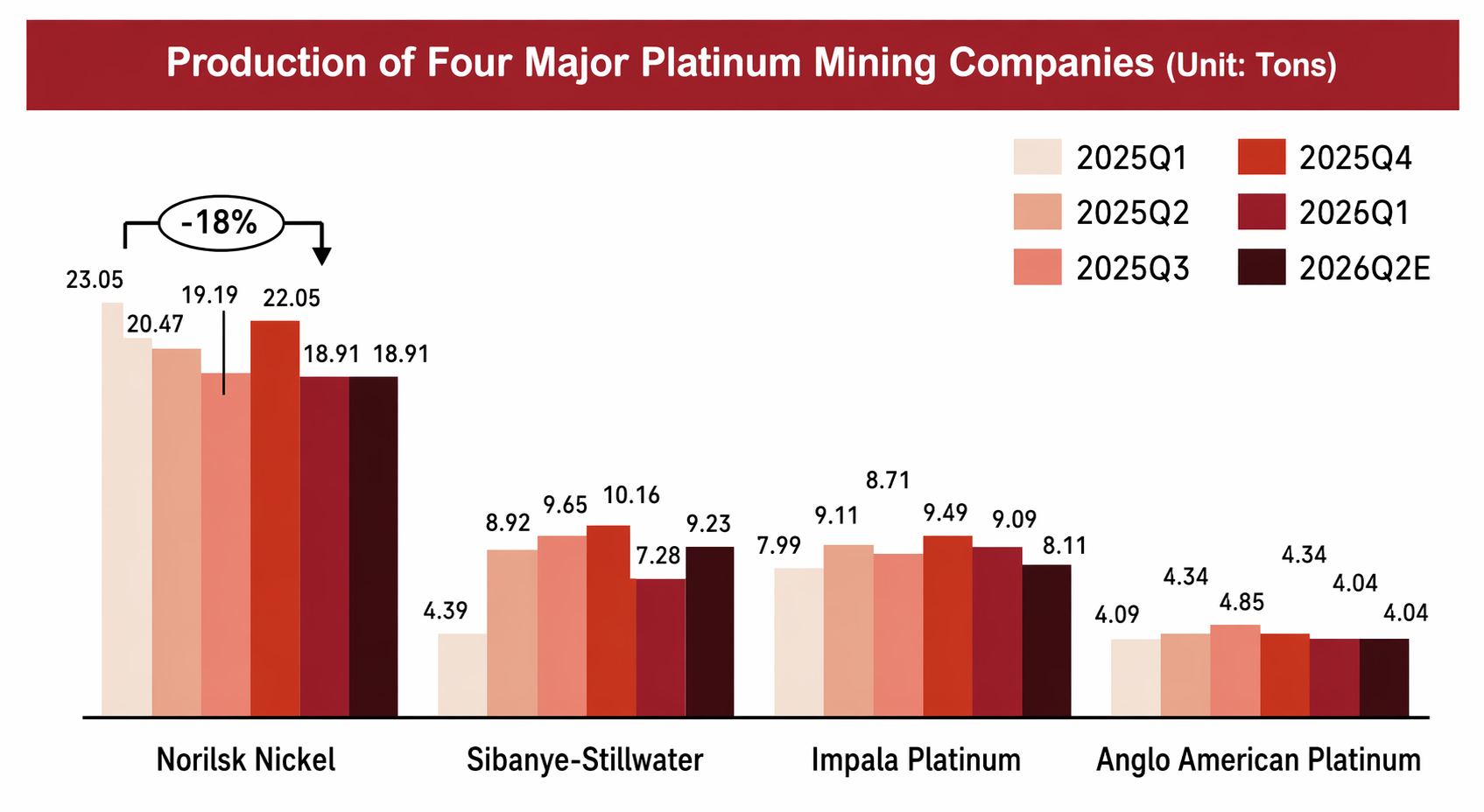
However, palladium market fundamentals remain under pressure. Globally, auto catalysts account for as much as 83% of palladium consumption, and the ongoing electrification of vehicles is exerting a long-term drag on gasoline vehicle catalyst demand. The core demand for palladium faces structural contraction risk, and heightened concerns over global economic growth may drive palladium into a structural surplus cycle. Supply side, in May 2026, Norilsk Nickel’s Q1 platinum and palladium production fell sharply due to the impact of Western sanctions, providing some support for the bottom of palladium prices, but this has not been sufficient to reverse the weak demand landscape.
H2 outlook: as the impact of the USITC's final ruling is gradually absorbed and earlier concentrated arrivals of cargo are digested by the market, palladium imports are expected to pull back from Q2 highs. For the full year, palladium imports will still maintain a high YoY growth rate, though a MoM decline in H2 is highly likely.
H2 outlook
Overall, China's platinum and palladium imports in H1 2026 reflected a pattern of "stable platinum and strong palladium." Supported by demand from fiberglass and hydrogen energy, platinum imports showed resilience and are expected to sustain mild growth in H2. Palladium imports surged sharply amid a trade policy window and price spreads between Chinese and overseas markets, but import growth is likely to moderate in H2 as policy impacts fade and structural demand-side pressures emerge.
In H2, the following factors require close attention:
- Mine supply: disruptions in platinum supply caused by South Africa's power situation and mine capital expenditure, and the impact of changes in Nornickel's production on palladium supply;
- Trade policy: the impact of anti-dumping measures and sanctions progress on Russian palladium on the pace of China's palladium imports;
- End-use demand: the boost to real platinum and palladium demand from China's automobile production and sales, implementation of hydrogen energy projects, and technological shifts in the glass and glass fiber sectors;
- Price spreads and futures market: the impact of the price spread between Chinese and overseas markets and GFEX platinum and palladium futures delivery conditions on import windows.