

Jul 23, 2026
In 2026, as restorative lithium iron phosphate (LFP) capacity expands from 150,000–160,000 mt to 170,000–180,000 mt, traditional LFP hydrometallurgy recycling enterprises are facing a reshaping of profits and the competitive landscape driven by competition among different technology routes.
I. Prices
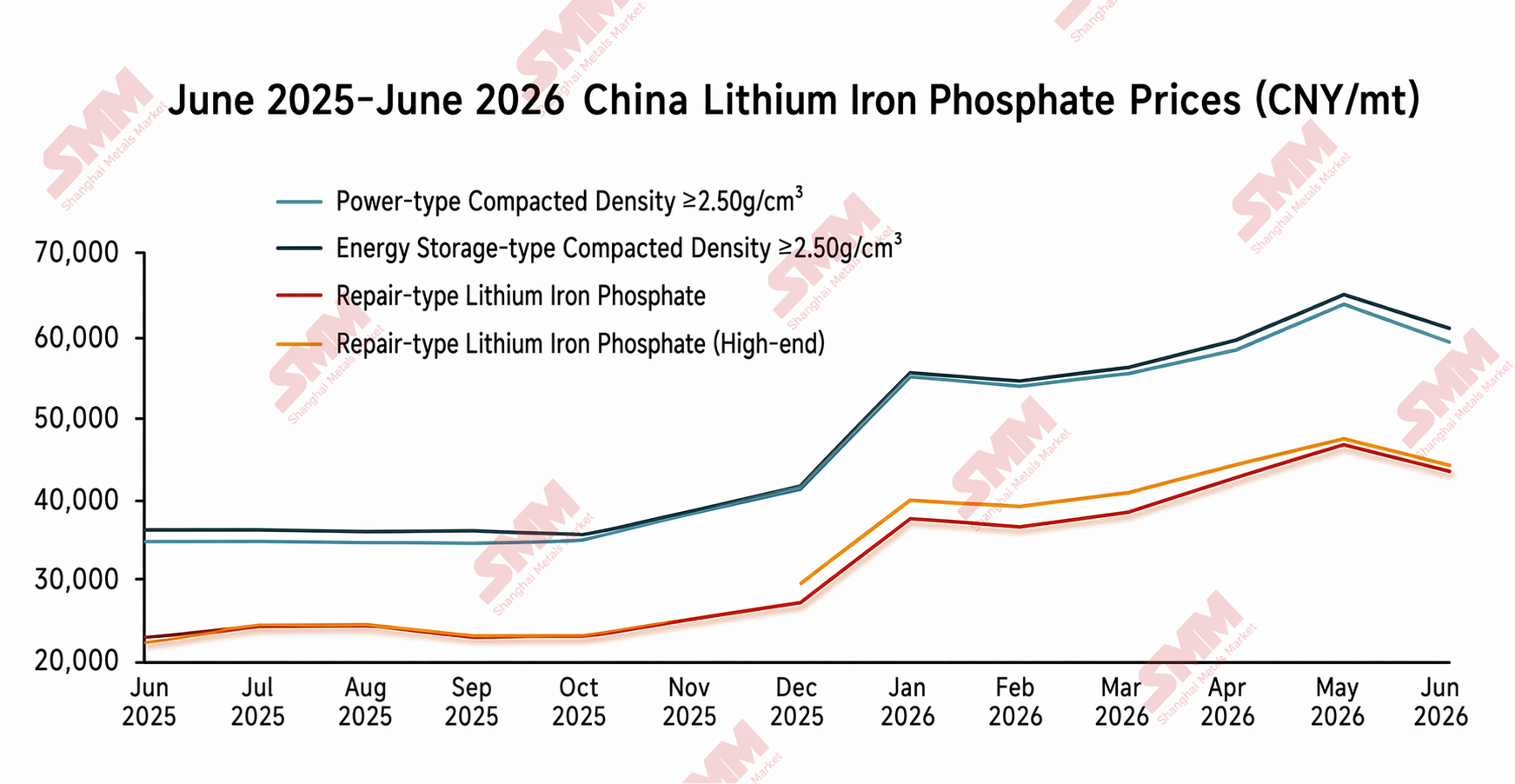
According to SMM data, from June 2025 to June 2026, China's LFP monthly average price exhibited an overall upward trend and then consolidated at highs. Restorative LFP prices have consistently operated within the 75%–85% range of primary LFP prices, forming a clear "discount band".
Behind this pricing logic is the market consensus of a "performance discount": even if the compaction density of restorative products improves, downstream battery plants still regard them as "recycled materials" and demand a price discount to cover potential performance risks. However, as the share of high-end restorative products increases, along with the expansion of application fields, the 75%–85% discount rate may gradually narrow to 80%–90%, and restorative enterprises may gain better price acceptance.
SMM has currently launched two LFP restorative prices, and (high-end). The difference lies in compaction density: the compaction density of the high-end restorative type is not less than 2.55 g/cm³, while that of the standard restorative type is less than 2.55 g/cm³. Both restorative LFP materials are mainly used in energy storage.
II. Capacity
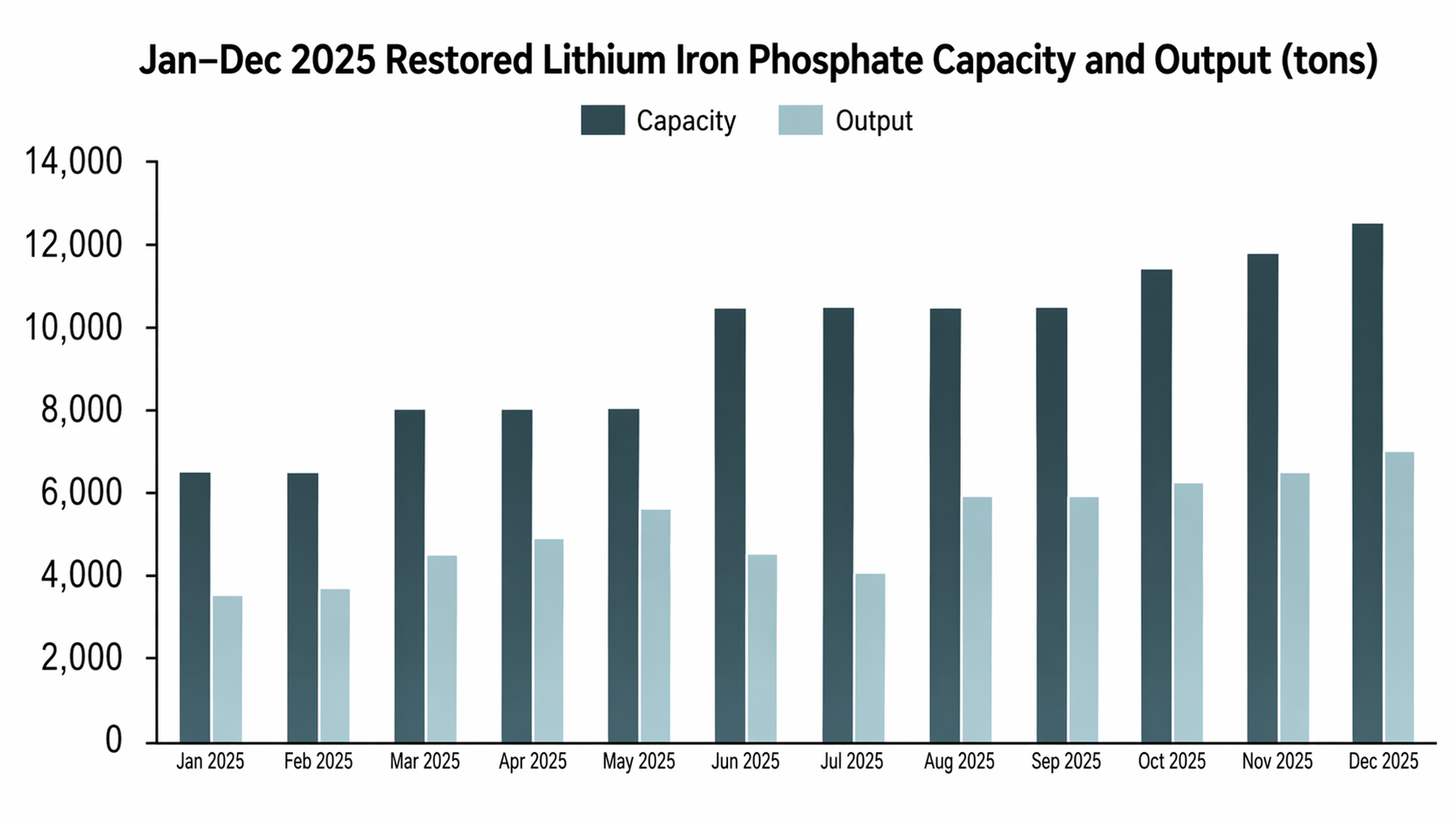
In 2025, the nominal capacity of restorative LFP enterprises was approximately 150,000–160,000 mt.
As of 2026, currently reported nominal capacity is around 170,000–180,000 mt.
Although this volume accounts for only a single-digit percentage of China's total LFP cathode capacity, its growth rate is notable. More critically, the operating rate of restorative capacity is generally higher than that of some surplus wet-process LFP capacity. In H1 2026, the operating rate was around 40%–50%, compared with H2 2025. As can be seen from the capacity and production chart for from January to December 2025, restorative LFP production increased month by month, and the capacity utilization rate continued to improve, indicating that downstream demand is being genuinely released.
III. Competitive Landscape
The current LFP recycling/reuse market has formed three main types of players:
- Traditional hydrometallurgy recycling enterprises: Using black mass as raw material, they extract lithium carbonate and iron phosphate through hydrometallurgy and then synthesize LFP, offering stable product performance but at high cost;
- Restorative LFP enterprises: Using waste positive electrodes or black mass as raw materials, they directly repair and regenerate cathode material, achieving low cost but with a wide range of performance variability;
- Integrated battery / material enterprises: They build in-house recycling, repairing, and cathode production lines, forming an internal closed loop, achieving the lowest cost but with limited exports.
The rise of restorative enterprises is compressing the originally linear industry chain of "hydrometallurgy recycling → lithium carbonate/iron phosphate → cathode" into a short chain of "scrap cathode → restorative cathode." This "short-chaining" poses a direct threat to the business model of traditional hydrometallurgy enterprises.
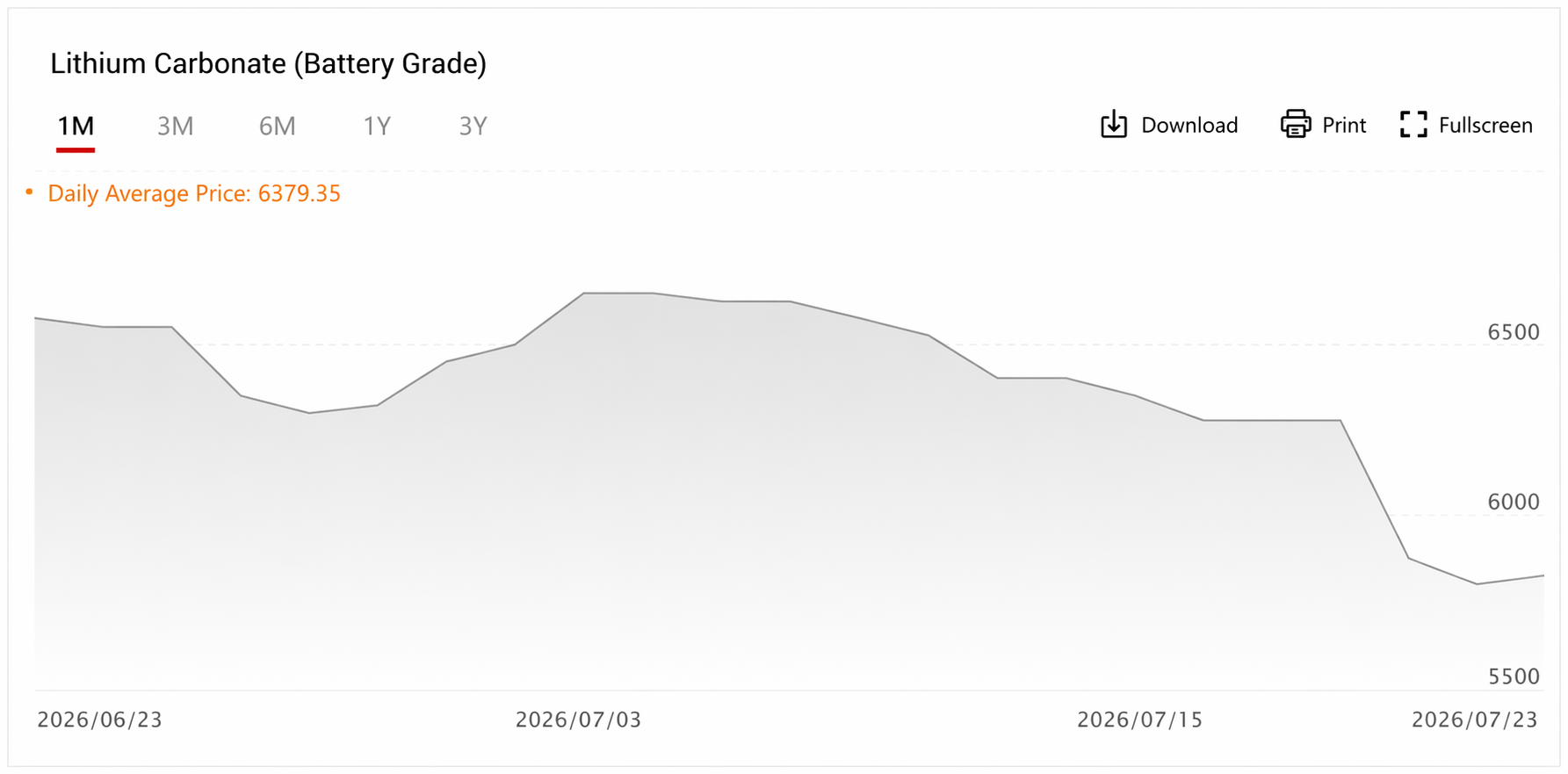
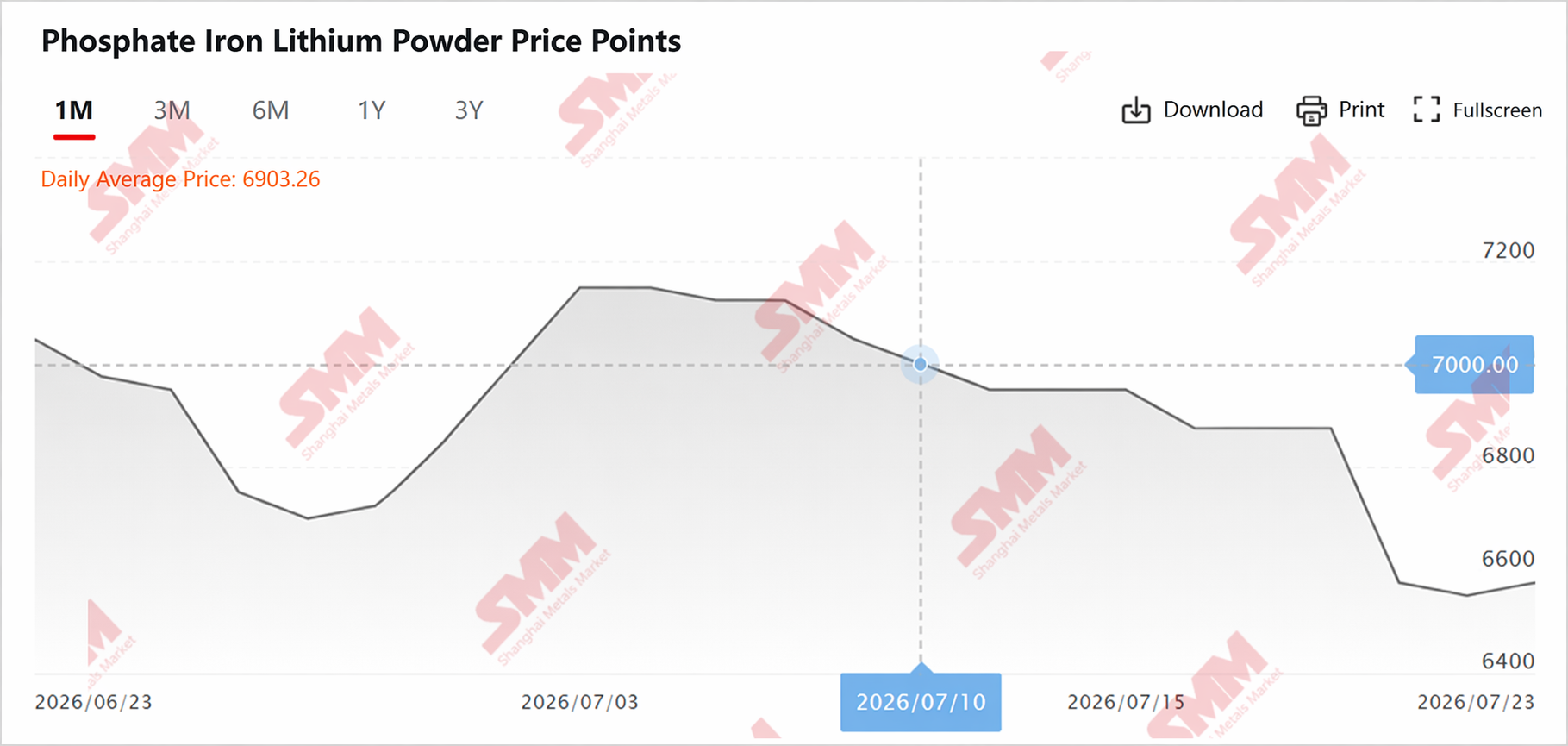
Moreover, as restorative technologies gain popularity, restorative enterprises have begun to participate in scrap tenders for LFP electrodes, jelly rolls, and other materials from battery cell enterprises. With expanding demand, the price of scrap LFP electrodes has continued to rise, further widening the price spread between LFP electrode black mass and battery black mass. The supply of LFP electrode black mass in the hydrometallurgy market has tightened, leading some non-integrated enterprises to switch to using LFP battery black mass for production.
IV. Conclusion
The rise of restorative LFP is essentially a possibility for the lithium battery recycling industry to expand its technology pathways. Its core value lies in reintroducing scrap cathode materials into the battery industry chain through a shorter route and at a lower cost.
For traditional hydrometallurgy enterprises, the core contradiction has shifted from "whether to engage in recycling" to "which technology pathway to adopt for recycling." In the next three years, players with "hydrometallurgy + restorative + cathode integration" capabilities will demonstrate greater resilience than those relying solely on the hydrometallurgy route. Meanwhile, enterprises that cling to traditional hydrometallurgy and have weak cost control may accelerate their exit from the market in this round of technology route competition.
SMM New Energy Research Team
Wang Cong 021-51666838
Ma Rui 021-51595780
Feng Disheng 021-51666714
Lyu Yanlin 021-20707875



