SMM News, ngày 23 tháng 7
Theo số liệu thống kê hải quan, Trung Quốc ghi nhận xu hướng phân kỳ rõ rệt với xuất khẩu tăng và nhập khẩu giảm đối với hợp kim kẽm đúc áp lực trong nửa đầu năm 2026. Xuất khẩu tăng mạnh bất thường, trong khi nhập khẩu tiếp tục thu hẹp.
I. Xuất khẩu: Tăng so với cùng kỳ, châu Á là thị trường chiếm ưu thế
Xuất khẩu hợp kim kẽm đúc áp lực của Trung Quốc tăng trưởng mạnh trong nửa đầu năm 2026.
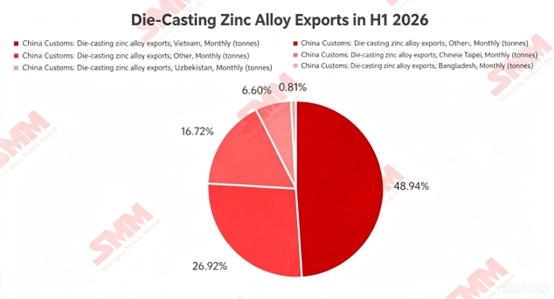
Lũy kế xuất khẩu từ tháng 1 đến tháng 6 đạt 7.082,34 tấn, tăng vọt 137,68% so với cùng kỳ. Số liệu hàng tháng cho thấy đà xuất khẩu duy trì. Xuất khẩu tháng 6 đạt 1.994,54 tấn, tăng 11,46% so với tháng trước và tăng mạnh 220,59% so với cùng kỳ.
Theo điểm đến xuất khẩu, mức độ tập trung thị trường vẫn cao, châu Á chiếm trên 70% tổng xuất khẩu nửa đầu năm. Việt Nam là điểm đến xuất khẩu hàng đầu của Trung Quốc, chiếm 48,94% lượng hàng. Đài Loan (Trung Quốc) đứng thứ hai với 16,72%. Uzbekistan, Bangladesh và các nền kinh tế khác cũng chiếm thị phần nhất định.
Phần II. Nhập khẩu: Nhu cầu yếu kéo dài sự thu hẹp nhập khẩu
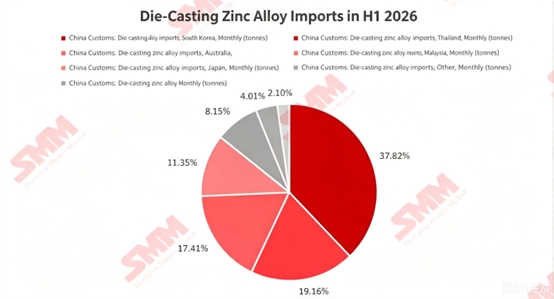
Trái ngược hoàn toàn với xuất khẩu sôi động, thị trường nhập khẩu hợp kim kẽm đúc áp lực vẫn ảm đạm. Tổng nhập khẩu hợp kim kẽm đúc áp lực của Trung Quốc lũy kế từ tháng 1 đến tháng 6 năm 2026 đạt 15.878,56 tấn, giảm mạnh 32,93% so với cùng kỳ. Nhập khẩu tháng 6 đạt 2.619,61 tấn, giảm nhẹ 0,12% so với tháng trước và giảm sâu 43,38% so với cùng kỳ. Nguồn nhập khẩu cũng tập trung cao, với Hàn Quốc, Australia và Nhật Bản là ba nước dẫn đầu, chiếm trên 74% tổng nhập khẩu.
Việc mở rộng năng lực sản xuất hợp kim kẽm đúc áp lực trong nước liên tục đã gây áp lực lên khối lượng nhập khẩu. Trong khi đó, tiêu thụ hạ nguồn trong nước nửa đầu năm yếu hơn so với cùng kỳ, thiếu sự hỗ trợ vững chắc từ phía cầu.
Triển vọng xuất nhập khẩu nửa cuối năm
Nhìn sang nửa cuối năm 2026, xu hướng xuất khẩu tăng, nhập khẩu giảm của hợp kim kẽm đúc áp lực có khả năng tiếp diễn, trong khi tác động từ một số yếu tố then chốt đáng được chú ý sát sao.
Xuất khẩu: Dự kiến tiếp tục mạnh, cần theo dõi rủi ro
• Yếu tố thuận lợi: Tỷ lệ giá kẽm Thượng Hải-London duy trì ở mức thấp, tạo cho hợp kim kẽm đúc áp lực Trung Quốc lợi thế cạnh tranh giá rõ rệt trên thị trường xuất khẩu.
• Rủi ro tiềm ẩn: Những bất ổn lớn nhất nằm ở chính sách thương mại nước ngoài và sự thay đổi chênh lệch giá trong nước - nước ngoài.
Nhập khẩu: Dự kiến tiếp tục suy yếu; chưa thấy dấu hiệu phục hồi rõ rệt.
• Lý do cốt lõi: Tình trạng dư cung năng lực hợp kim trong nước không thể giảm bớt trong ngắn hạn. Ngoài ra, nhu cầu hợp kim nhập khẩu sẽ vẫn ở mức thấp nếu tiêu dùng trong nước không có sự phục hồi bất ngờ tích cực trong nửa cuối năm. Chênh lệch giá nhập khẩu hiện tại bất lợi cũng gây áp lực lên khối lượng nhập khẩu.
![Hệ số định giá oxit kẽm thứ cấp bị giằng co [Phân tích SMM]](https://imgqn.smm.cn/usercenter/XrnKf20251217171755.jpg)
![Khoản thanh toán cho oxit kẽm cấp thấp mắc kẹt giữa xu hướng tăng và giảm, dự kiến duy trì ở mức cao [Phân tích SMM]](https://imgqn.smm.cn/usercenter/TeRBO20251217171754.jpg)