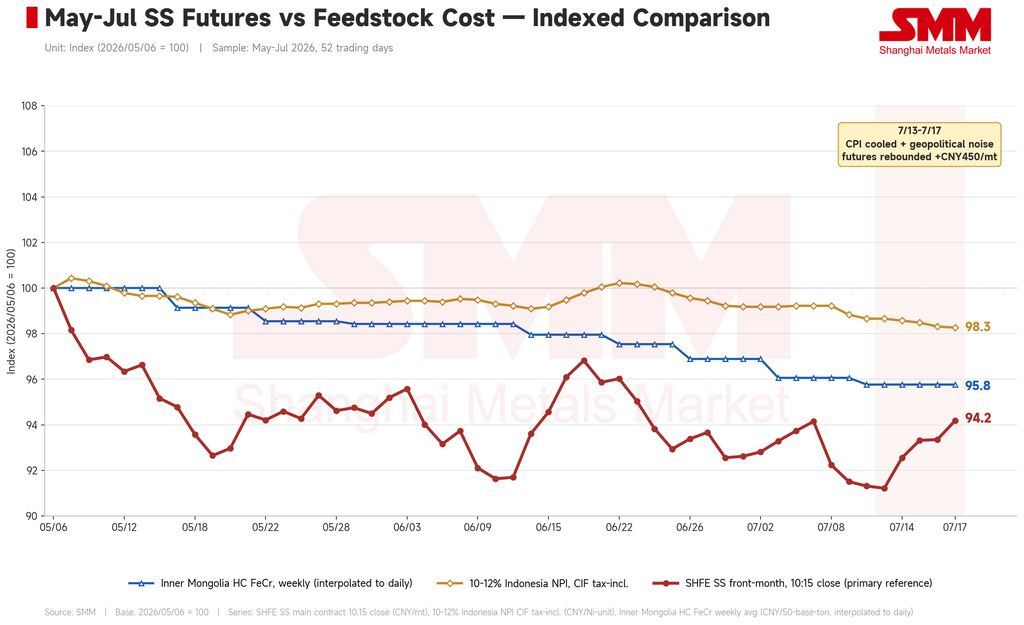
Minggu ini (13-17 Juli), harga berjangka baja tahan karat China bangkit dari penurunan, didorong oleh angin segar ganda: data IHK AS bulan Juni yang lebih rendah dari perkiraan, sehingga meredakan ekspektasi inflasi dan meningkatkan selera risiko pasar, sementara pertumbuhan pasokan bijih nikel Indonesia yang terbatas mempertahankan kelangkaan bahan baku, sehingga menopang sisi biaya. Kontrak acuan ditutup pada Jumat, 17 Juli di RMB 14.795/mt (sekitar $2.185/mt), naik RMB 450/mt — sekitar 3,1% — dari RMB 14.345/mt (sekitar $2.119/mt) pada Jumat sebelumnya. Ciri khas minggu ini tetap pada kesenjangan antara harga berjangka dan spot: harga berjangka melonjak tajam karena sentimen makro yang membaik, sementara harga spot, meskipun juga menguat, naik jauh lebih sedikit daripada kontrak berjangka.
Dari sisi makro dan berita, sentimen baik di dalam maupun luar negeri secara luas membaik, meskipun gangguan geopolitik tetap menjadi faktor liar. Di luar negeri, IHK AS bulan Juni melambat menjadi 3,5% tahun-ke-tahun dan turun 0,4% bulan-ke-bulan — penurunan bulanan pertama dalam enam tahun — sementara IHP turun 0,3% bulan-ke-bulan, penurunan pertamanya sejak tahun lalu, dan IHP inti melambat menjadi 4,7% tahun-ke-tahun. Pendinginan data inflasi secara menyeluruh menghidupkan kembali ekspektasi pemangkasan suku bunga dan meningkatkan selera risiko. Namun, para pejabat Fed tetap berhati-hati dalam pernyataan publik mereka: Gubernur Kevin Warsh dan Lisa Cook, bersama dengan Presiden Fed New York John Williams, semuanya menekankan perlunya membawa inflasi kembali secara berkelanjutan ke target 2%, tanpa memberikan sinyal jelas tentang pelonggaran yang akan segera terjadi. Pada saat yang sama, ketegangan di Timur Tengah berulang kali mengganggu sentimen pasar — Iran sempat mengumumkan penutupan Selat Hormuz, AS menanggapinya dengan memblokade pelabuhan Iran dan mengusulkan biaya transit 20%, dan kemudian ketegangan mereda kembali — menciptakan tarik-menarik atas harga minyak dan ekspektasi biaya komoditas yang lebih luas. Di dalam negeri, ekonomi China menunjukkan ketahanan meskipun pertumbuhan melambat: PDB tumbuh 4,3% tahun-ke-tahun di kuartal kedua dan 4,7% untuk paruh pertama, sementara permintaan listrik nasional berulang kali mencatat rekor tertinggi, memberikan dukungan pada sentimen secara keseluruhan.
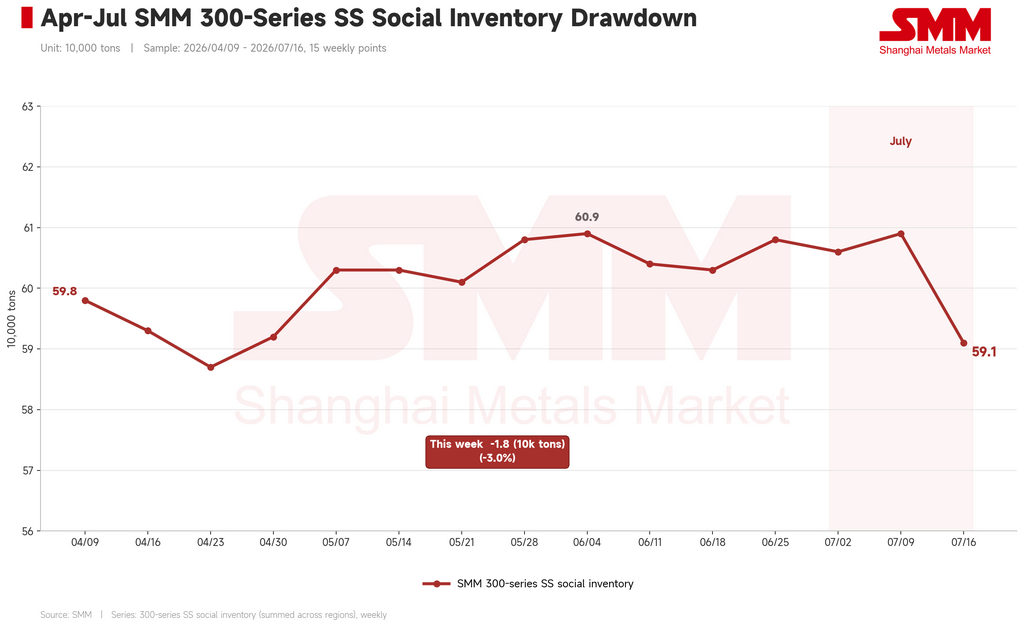
Dari sisi fundamental, pengurangan stok berlanjut dan permintaan spot menunjukkan ketahanan. Stok sosial baja tahan karat seri 300 yang dilacak SMM tercatat sebesar 591.000 mt minggu ini, turun 18.000 mt dari 609.000 mt pada minggu sebelumnya — pengurangan signifikan bahkan di musim sepi tradisional, meredakan tekanan jangka pendek dari penumpukan stok. Harga spot bertahan karena tiga alasan utama: pertama, kedatangan pasokan terbatas — pabrik mempertahankan harga, dan topan minggu ini mengganggu logistik, memperlambat laju material baru mencapai pasar; kedua, sentimen perdagangan membaik — kenaikan harga berjangka memicu aksi beli saat harga turun, dan pengguna akhir melepaskan sebagian permintaan restocking, secara nyata memperbaiki atmosfer perdagangan dari beberapa minggu terakhir; ketiga, kehati-hatian pengguna akhir yang terus berlanjut — pasar masih dalam masa sepi musiman tradisional, permintaan mendasar umumnya lemah, dan pembeli menunjukkan selera terbatas untuk material dengan harga lebih tinggi setelah kenaikan, dengan sikap menunggu yang masih membatasi kenaikan harga spot relatif terhadap harga berjangka.
Mengenai biaya dan pasokan, harga bahan baku terus melunak, semakin meningkatkan profitabilitas pabrik. Besi kasar nikel Indonesia (kadar 10–12% — paduan feronikel kadar rendah yang digunakan dalam produksi baja nirkarat) dihargai RMB 1.132,5 per poin nikel (sekitar US$167/poin) minggu ini, turun sedikit dari RMB 1.137 (sekitar US$168/poin), karena pabrik terus menekan untuk harga pembelian yang lebih rendah. Ferokrom karbon tinggi dari Mongolia Dalam dikutip pada RMB 8.100 per ton basis 50 mt (sekitar US$1.197) dalam pembacaan terbaru, turun RMB 25 dari sebelumnya RMB 8.125 (sekitar US$1.200), dengan basis biaya bahan baku terus menurun. Harga produk jadi, sebaliknya, cenderung lebih tinggi karena dukungan harga dari pabrik dan transaksi yang membaik, memperlebar selisih antara barang jadi dan bahan baku. Hal itu secara langsung meningkatkan margin peleburan baja nirkarat, semakin memperkuat profitabilitas di seluruh industri, meredakan tekanan pada pendapatan sisi produksi, dan memberikan sejumlah dukungan untuk jadwal produksi saat ini — tanpa tanda-tanda kontraksi pasokan sejauh ini.
Secara keseluruhan, harga berjangka baja nirkarat Tiongkok stabil dan bangkit kembali minggu ini berkat kombinasi kekuatan sentimen makro yang membaik dan pengurangan stok spot, namun divergensi antara harga berjangka dan spot belum menyempit — kenaikan harga berjangka jelas melampaui harga spot, dengan harga spot terkendala oleh penerimaan pengguna akhir yang lemah selama masa sepi. Ke depannya, geopolitik Timur Tengah tetap menjadi ketidakpastian utama; eskalasi lebih lanjut dapat mengganggu pasar berjangka melalui dampak sisi biaya dan perubahan selera risiko. Di sisi industri, pertanyaan kuncinya adalah apakah pengurangan stok di masa sepi dapat berlanjut, dan apakah keinginan pabrik untuk mempertahankan harga dapat berkelanjutan di tengah latar belakang permintaan yang lemah. SMM memperkirakan kontrak acuan akan mempertahankan nada cukup kuat dan terbatas kisaran dalam waktu dekat, dengan divergensi spot-berjangka yang berlanjut. Klien industri disarankan untuk menyikapi volatilitas berjangka yang dipicu makro dengan kepala dingin, memantau secara cermat ketahanan aktual pengurangan stok spot di luar musim serta perubahan selera beli pengguna akhir, dan menjaga pendekatan operasional yang stabil dan terkelola risiko.