SMM, ngày 10 tháng 7:
I. Nhựa EVA cấp quang điện: Thị trường "tàu lượn siêu tốc" hoàn chỉnh
Nửa đầu năm 2026, giá nhựa EVA cấp quang điện đã trải qua một chu kỳ đầy đủ: "đi ngang ở mức đáy - tăng vọt đột biến - tích lũy ở đỉnh - lao dốc nhanh - tạo đáy và ổn định", với biên độ dao động vượt quá 50%.
1. Diễn biến giá
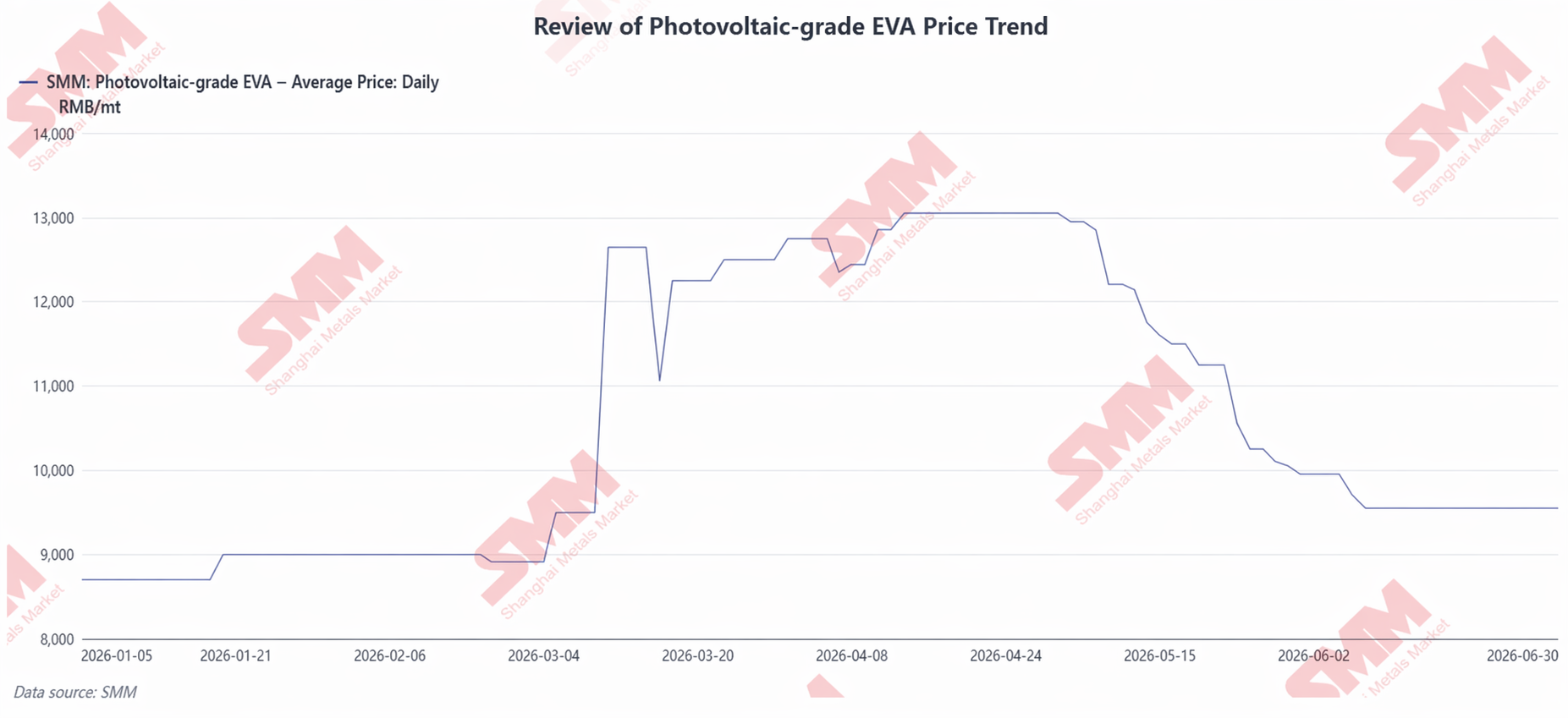
Vào đầu năm, giá nhựa EVA cấp quang điện dao động trong vùng đáy 8.700-9.000 nhân dân tệ/tấn. Các nhà máy hóa dầu đối mặt với áp lực tồn kho cao, và toàn ngành trong tình trạng thua lỗ hoặc lợi nhuận mỏng. Các nhà sản xuất màng keo ở hạ nguồn chủ yếu sử dụng lượng nguyên liệu dự trữ từ trước, với tốc độ thu mua thận trọng. Giai đoạn xuất khẩu gấp rút đã mở ra ngay trước khi chính sách xóa bỏ hoàn thuế xuất khẩu có hiệu lực vào tháng 3. Lịch sản xuất mô-đun của Trung Quốc tăng vọt từ 27,19 GW trong tháng 2 lên 36,46 GW, thúc đẩy lịch sản xuất màng keo tăng, và giá nhựa nhanh chóng bị đẩy từ 9.000 nhân dân tệ/tấn lên 12.650 nhân dân tệ/tấn, một mức tăng cực kỳ nhanh. Trong tháng 4, giá nhựa tích lũy ở đỉnh 12.250-13.050 nhân dân tệ/tấn, và vào giữa tháng, giá đạt đỉnh của nửa đầu năm. Bước sang tháng 5, giai đoạn xuất khẩu gấp rút mô-đun chính thức khép lại, lịch sản xuất của người dùng cuối giảm mạnh, nhu cầu nguyên liệu màng keo suy yếu nhanh chóng, và tồn kho nhựa toàn ngành tiếp tục tăng. Thêm vào đó, với căng thẳng Mỹ-Iran hạ nhiệt, giá dầu thô quốc tế sụt giảm đáng kể, và hỗ trợ chi phí từ nguyên liệu thô EVA yếu đi, đẩy giá nhựa vào xu hướng giảm kéo dài. Vào tháng 6, khi các nhà máy hóa dầu chủ động kiểm soát sản xuất để hỗ trợ giá, và nhu cầu bổ sung thiết yếu của các nhà sản xuất màng keo hạ nguồn tiếp tục xuất hiện, tồn kho toàn ngành giảm dần. Áp lực tồn kho cao trước đó được giải tỏa rõ rệt, và giá EVA cấp quang điện ngừng giảm và ổn định quanh mức 9.550 nhân dân tệ/tấn.
2. Mô hình cung-cầu
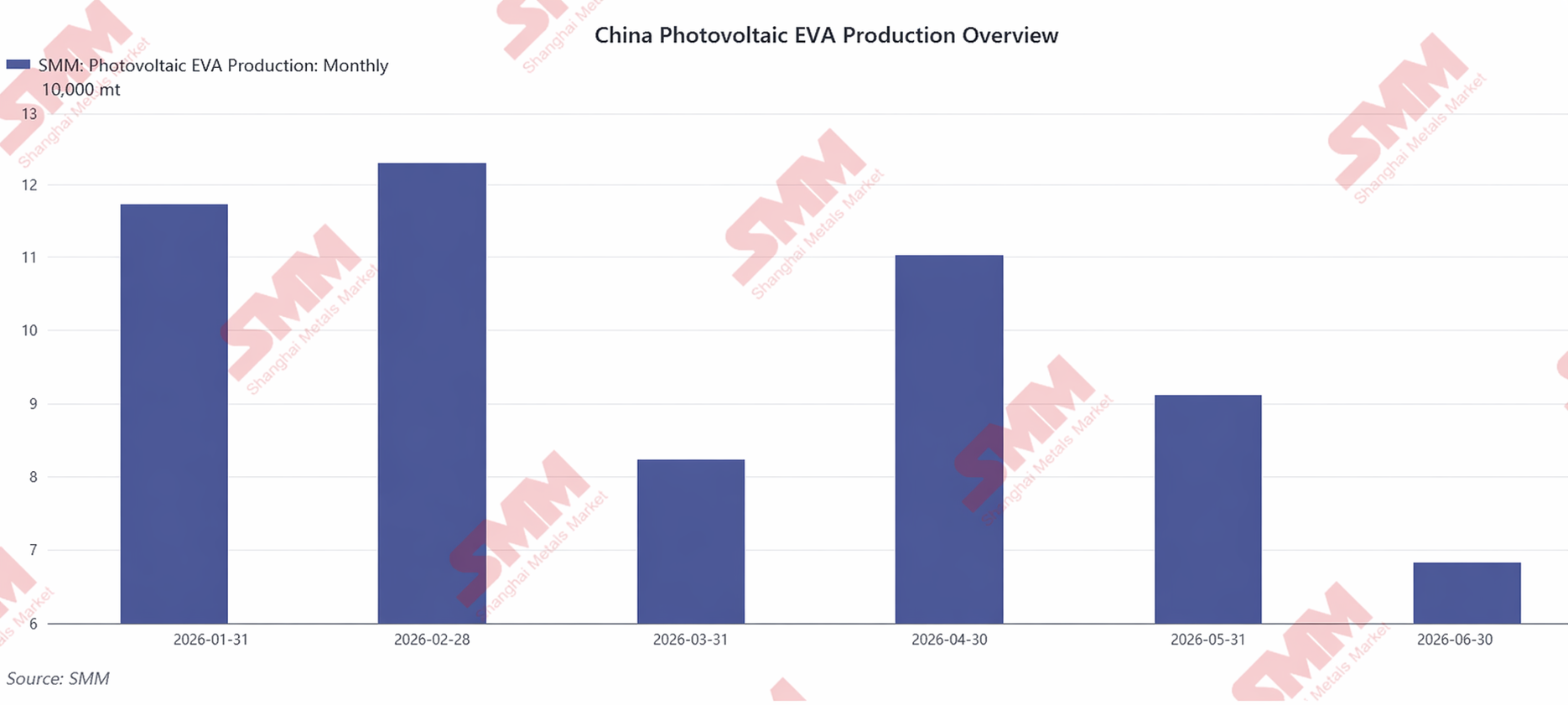
Nửa đầu năm 2026, tổng sản lượng EVA cấp quang điện của Trung Quốc đạt khoảng 592.700 tấn, giảm 18,16% so với cùng kỳ. Vào tháng 3, làn sóng xuất khẩu gấp rút mô-đun đã đẩy lịch sản xuất tăng mạnh, và tỷ lệ vận hành màng keo cũng leo thang theo. Tuy nhiên, do bảo dưỡng tập trung tại nhiều cơ sở và việc các doanh nghiệp hóa dầu chủ động cắt giảm sản xuất, sản lượng EVA cấp quang điện giảm mạnh 33,2% so với tháng trước, có nghĩa là nguồn cung không theo kịp đà tăng của cầu, càng khuếch đại thêm sự mất cân đối cung-cầu ngắn hạn. Vào tháng 4, sản lượng mô-đun theo kế hoạch giảm xuống 28,8 GW, và nguồn cung nhựa được giải phóng trước đó dần dư thừa. Vào giữa đến cuối quý 2, mặc dù sản lượng mô-đun hạ nguồn theo kế hoạch có sự phục hồi nhẹ, các nhà sản xuất màng đã áp dụng chiến lược mua sắm thận trọng, chỉ mua khi cần thiết. Đồng thời, các doanh nghiệp hóa dầu liên tục điều chỉnh lịch sản xuất giữa vật liệu cấp PV và không phải PV để chủ động kiểm soát sản lượng, và áp lực cung toàn ngành tiếp tục giảm bớt.
3. Chi phí và Lợi nhuận
Ethylene và vinyl acetate, hai nguyên liệu cốt lõi, cùng chiếm khoảng 80% chi phí sản xuất EVA cấp PV. Trong nửa đầu năm, chi phí nhựa đã trải qua chu kỳ ba giai đoạn: "căng thẳng địa chính trị leo thang – ổn định ở mức cao – nhu cầu suy yếu và giảm trở lại", đây là một trong những yếu tố cốt lõi khiến giá nhựa EVA biến động mạnh. Từ tháng 1 đến tháng 4, căng thẳng địa chính trị leo thang giữa Mỹ và Iran đẩy giá dầu thô quốc tế lên cao, kéo theo ethylene và vinyl acetate cùng tăng. Hơn nữa, mức tăng giá nhựa giao ngay vượt xa mức tăng chi phí nguyên liệu, và lợi nhuận của các nhà máy hóa dầu tiếp tục phục hồi. Từ tháng 5 đến tháng 6, khi mùa cao điểm lắp đặt mô-đun kết thúc, nhu cầu cuối cùng suy yếu, kéo giá nhựa EVA giảm mạnh. Trong khi đó, lượng tồn kho nguyên liệu giá cao trước đó của các doanh nghiệp liên tục được tiêu thụ, và lợi nhuận ngành đồng thời thu hẹp nhanh chóng.
II. Nhựa POE cấp PV: Thị trường có độ co giãn cao phụ thuộc vào nhập khẩu
Do các yếu tố cung-cầu và tiến độ nội địa hóa khác nhau, nhựa POE cho thấy sự phân kỳ rõ rệt so với EVA về mức độ biến động và tốc độ phục hồi.
1. Diễn biến giá
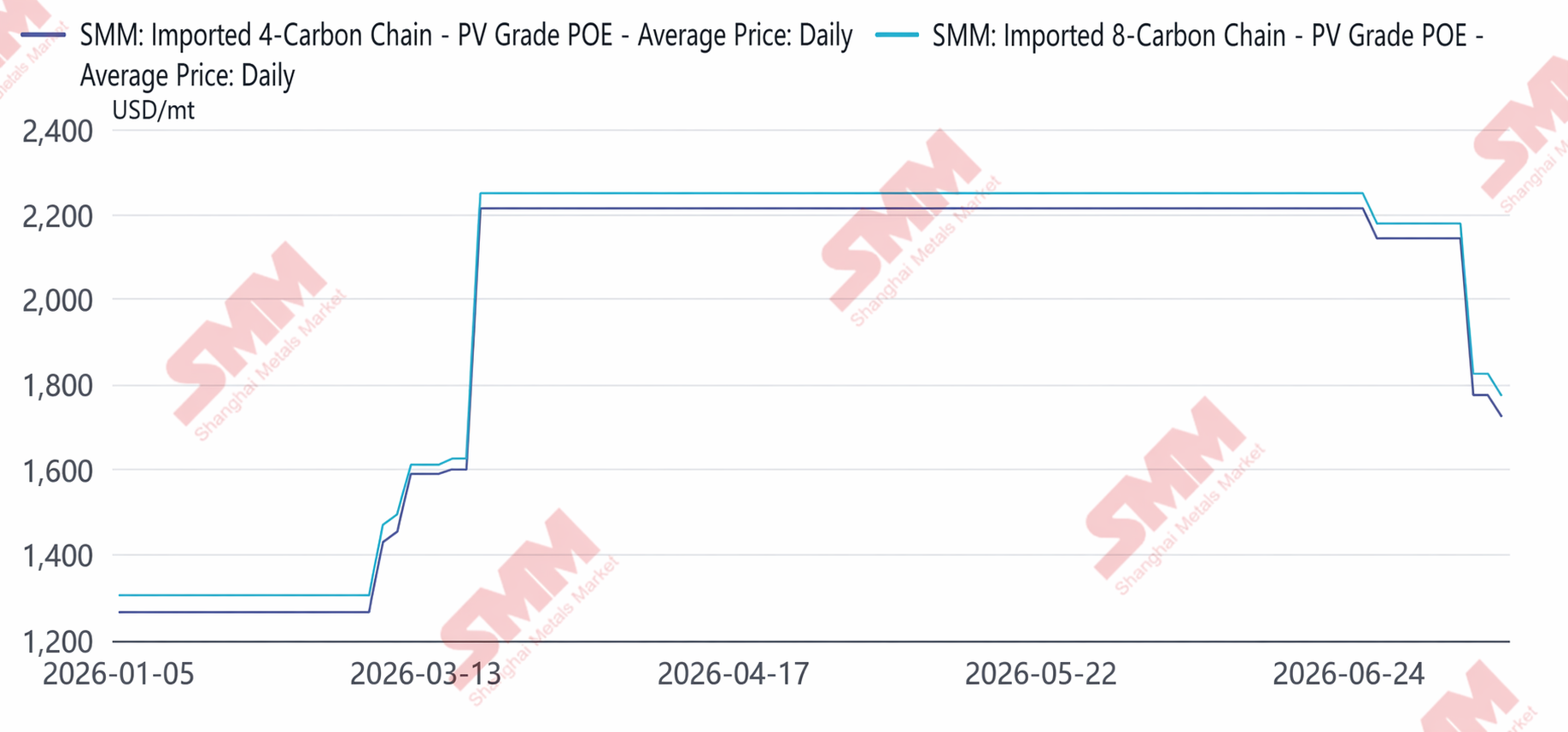
POE gốc C4 nhập khẩu tăng từ 1.265 USD/tấn vào đầu năm, bị đẩy lên 2.215 USD/tấn vào tháng 3 do căng thẳng Trung Đông, ổn định ở mức cao 2.215 USD/tấn từ tháng 4 đến tháng 5, và hạ xuống 2.144 USD/tấn vào tháng 6. Giá POE cấp PV gốc C4 trong nước dao động ngang trong khoảng thấp 11.281-11.400 nhân dân tệ/tấn từ tháng 1 đến tháng 2. Vào tháng 3, chi phí tăng mạnh nhanh chóng đẩy giá POE lên, và POE gốc C4 tiếp tục tăng vọt lên 16.000 nhân dân tệ/tấn vào tháng 4, mức tăng lũy kế hơn 40% trong hai tháng. Bước sang tháng 5, khi căng thẳng địa chính trị hạ nhiệt, nhu cầu hạ nguồn suy yếu và công suất POE nội địa mới tiếp tục được đưa vào vận hành, tình trạng mất cân đối cung cầu dần trầm trọng, giá cả giảm từ mức cao. Trong tháng 6, tình trạng mất cân đối thị trường thêm tồi tệ, giá POE giảm nhanh hơn, đến cuối tháng 6 giá POE gốc C4 đã quay về mức khoảng 13.000 nhân dân tệ/tấn.
2. Đặc điểm riêng của POE
Quá trình nội địa hóa POE đạt được những bước đột phá theo giai đoạn, nhưng trong ngắn hạn, việc thay thế hoàn toàn hàng nhập khẩu vẫn gặp trở ngại đáng kể. Trong nửa đầu năm, năng lực sản xuất POE nội địa tăng đều đặn và khối lượng nhập khẩu từ nước ngoài đồng thời thu hẹp. Tuy nhiên, do bị hạn chế bởi các rào cản kỹ thuật như độ ổn định sản phẩm và quy trình xúc tác, thị trường Trung Quốc vẫn cần các loại nhập khẩu để bổ sung nguồn cung. Đồng thời, do chi phí nguyên liệu tương đối cao và ngưỡng kỹ thuật cao để sản xuất màng POE tinh khiết, các nhà sản xuất màng ở hạ nguồn có khả năng hấp thụ thực tế hạn chế, khiến nhu cầu tiêu dùng cuối cùng khó có thể bùng nổ quy mô lớn trong ngắn hạn. Tốc độ mở rộng nguồn cung nhanh hơn đáng kể so với tăng trưởng nhu cầu.
III. Triển vọng nửa cuối năm
Trong nửa cuối năm, cả hai loại nhựa sẽ đối mặt với cuộc giằng co giữa "kỳ vọng phục hồi nhu cầu" và "áp lực tăng trưởng nguồn cung," nhưng EVA sẽ chịu áp lực nặng nề hơn về tổng thể. Với EVA, gần 600.000 tấn công suất mới có thể được tung ra chủ yếu từ cuối quý 3 đến quý 4, hạn chế dư địa tăng giá. Mặc dù có thể có cơ hội phục hồi theo mùa cao điểm, nhưng mức tăng bị hạn chế do làn sóng công suất. Đối với POE, áp lực tung công suất mới cũng xuất hiện, nhưng dưới sức ép lợi nhuận ngành, một số dự án khởi động theo kế hoạch có thể bị trì hoãn và sản lượng tăng thực tế có thể thấp hơn kế hoạch. Nhìn về dài hạn, với tiêu chuẩn bắt buộc quốc gia về tiêu thụ năng lượng dự kiến có hiệu lực vào năm 2027 và tiến độ khảo sát quản trị năng lực ngành, nếu các biện pháp này có thể buộc loại bỏ năng lực lạc hậu, tiêu thụ nhiều năng lượng, thì mô hình cung cầu trung và dài hạn của cả EVA cấp quang điện và nhựa POE được kỳ vọng sẽ liên tục cải thiện.
![[Solar: New Jersey thông qua luật điện mặt trời ban công]](https://imgqn.smm.cn/usercenter/GOtTW20251217171740.jpg)
![[Solar: Solar đạt mức phát điện cao mới tại Bồ Đào Nha vào tháng 8]](https://imgqn.smm.cn/usercenter/CpbPE20251217171736.jpg)
![[Solar: Thượng viện Brazil thông qua chế độ thuế trung tâm dữ liệu gắn ưu đãi với sử dụng năng lượng tái tạo]](https://imgqn.smm.cn/usercenter/mfLxa20251217171736.jpg)