[SMM Rebar Production Schedule] Worsening Losses and Off-Season Demand Push July Building Materials Planned Production Further Down

Published: Jul 6, 2026 16:12
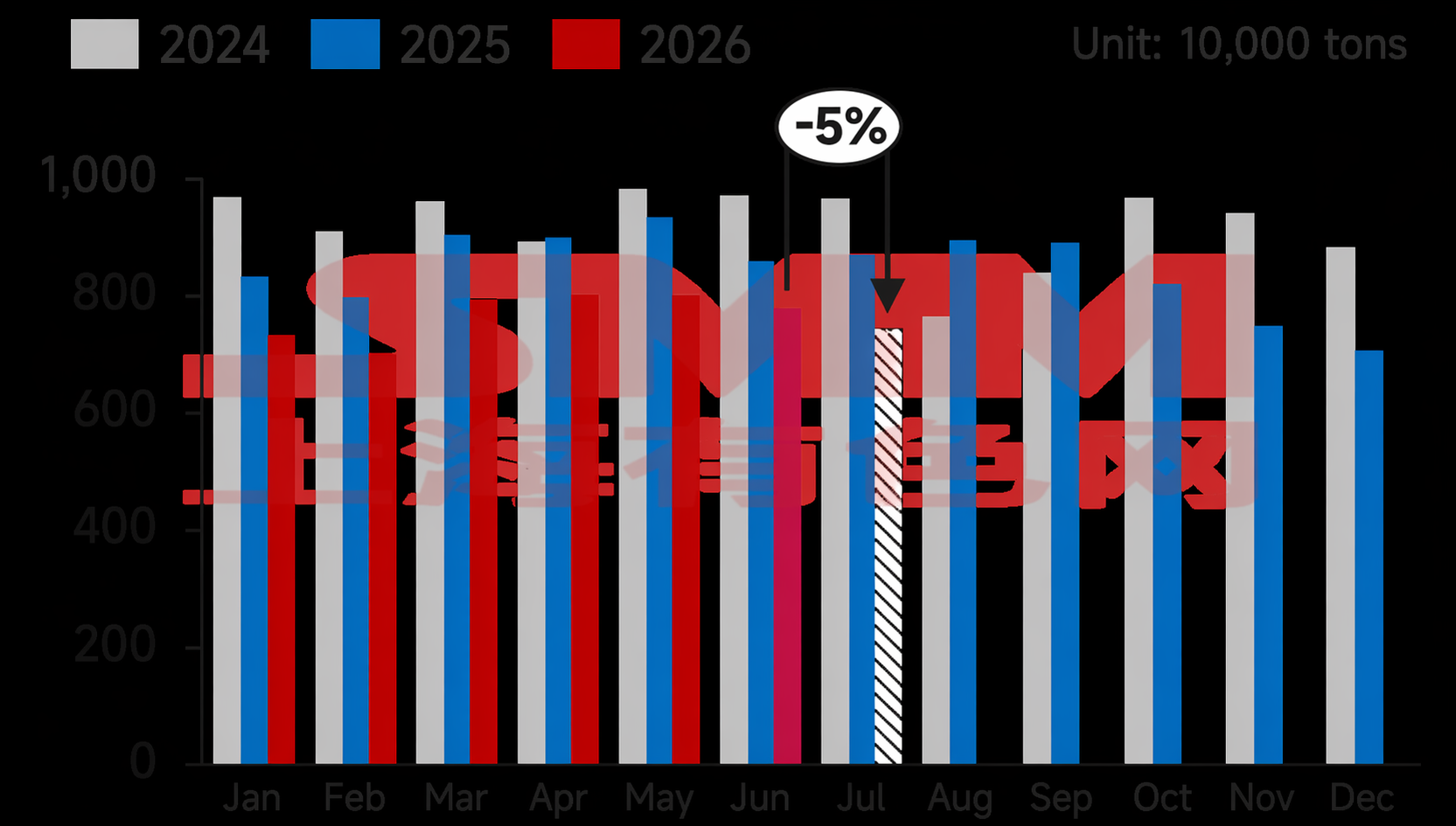
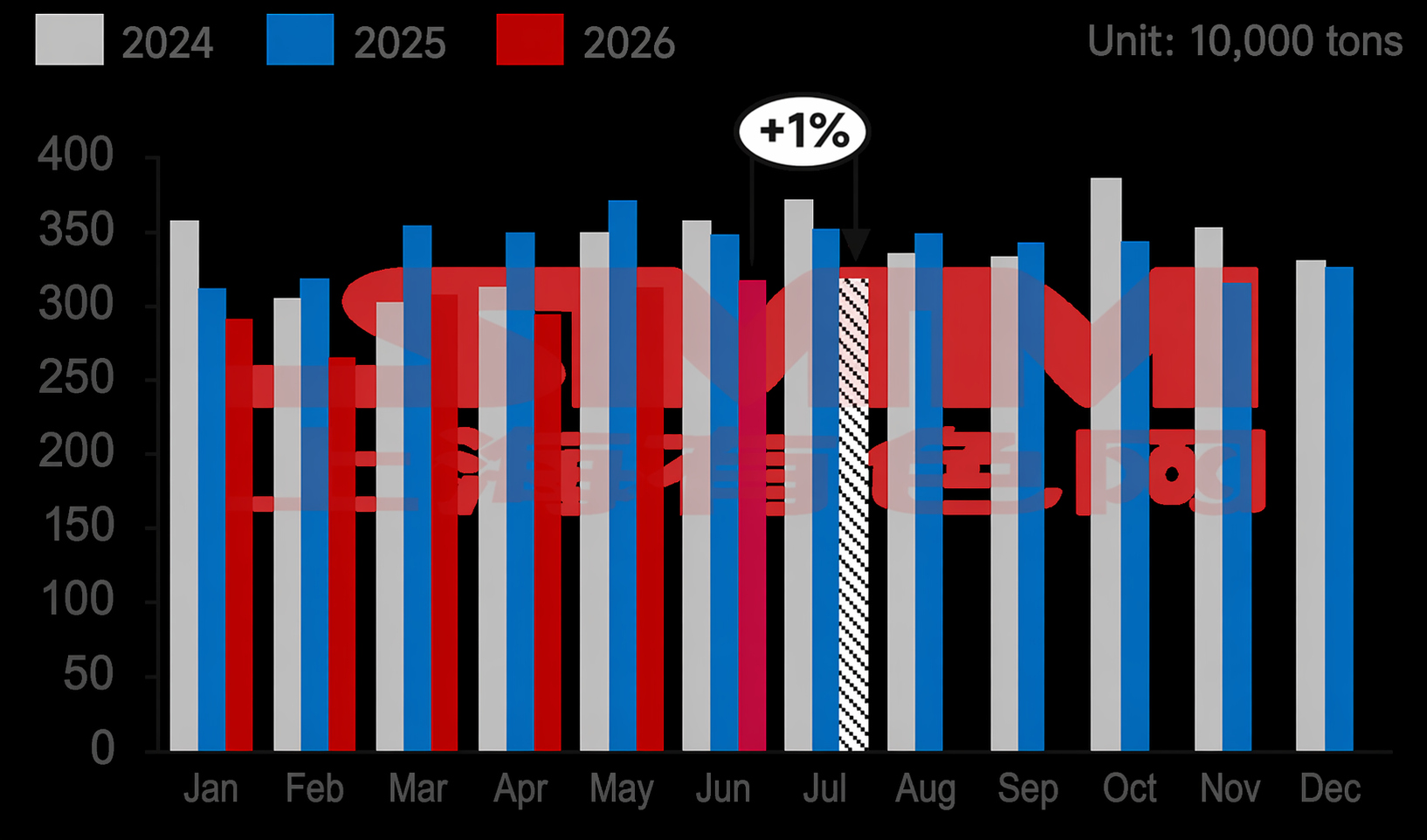
In July, the planned rebar production was 7.428 million mt, down 389,700 mt from June's actual production, a decrease of 4.98%. Average daily output of rebar in July stood at 239,600 mt, down 8.05% MoM. In July, the planned wire rod production was 3.197 million mt, up 18,700 mt from June's actual production, an increase of 0.59%. However, the average daily output of wire rod in July was 103,100 mt, down 2.66% MoM. In July, the sample steel mills' long product export schedule reached 653,000 mt, down 41,000 mt MoM. Among this, the steel billet export schedule was 350,000 mt, down 30,000 mt MoM.

Starting from October 2025, new steel mill export schedule data was added. The planned production of rebar and wire rod includes exports, but excludes billet exports.

According to an SMM survey of 56 sample major steel producers:

  • In July, planned rebar production was 7.428 million mt, down 389,700 mt or 4.98% from June's actual production; daily rebar production in July was 239,600 mt, down 8.05% MoM.
  • In July, planned wire rod production was 3.197 million mt, up 18,700 mt or 0.59% from June's actual production; however, daily wire rod production in July was 103,100 mt, down 2.66% MoM.

Chart 1-2: Rebar & Wire Rod Production Schedule at Mainstream Construction Steel Mills (56 Mills)
 

Source: SMM

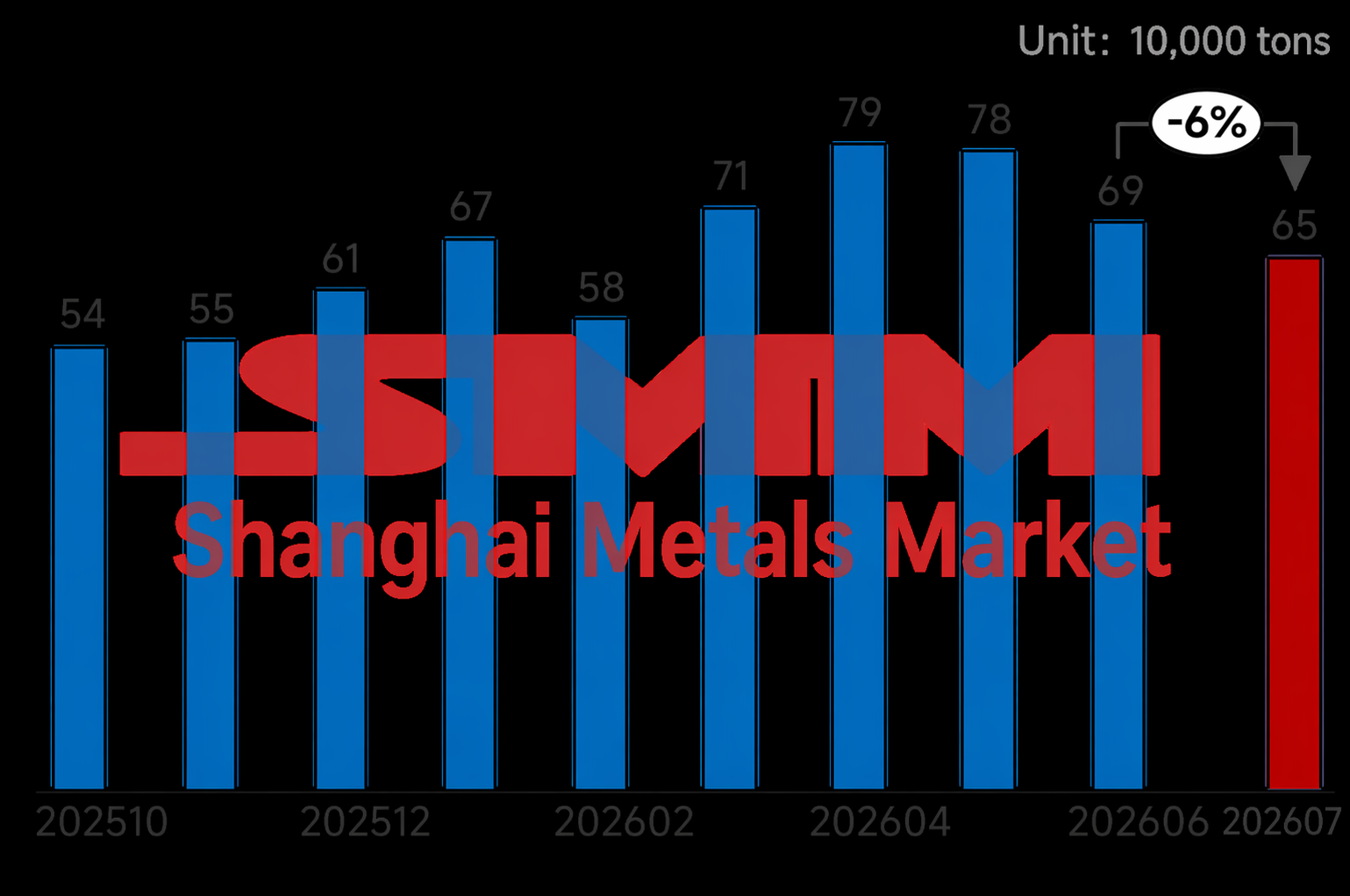
  • In July, the export schedule for long products at sample mills was 653,000 mt, down 41,000 mt MoM, with the billet export schedule at 350,000 mt, down 30,000 mt MoM.

Specifically, the decline in July's long product export schedule was still mainly in billet, while order intake for rebar and wire rod edged down. Earlier, the Strait of Hormuz was navigable, and some Middle Eastern buyers adopted a wait-and-see attitude toward Chinese purchases. In addition, price advantages of neighboring countries improved, making Chinese export prices less competitive, which led to a decline in procurement volumes in the Southeast Asian market. By region, mills in the Northeast region, considering that the price advantage of billet exports declined and was inferior to domestic trade transactions, saw further reductions in order intake. Meanwhile, mills in East China had maintenance in July and controlled their July export order intake in advance.

Chart 3: Export Schedule of Long Products at Sample Steel Mills (Including Billet)
Source: SMM

Chart 4: Billet Export Schedule at Sample Steel Mills
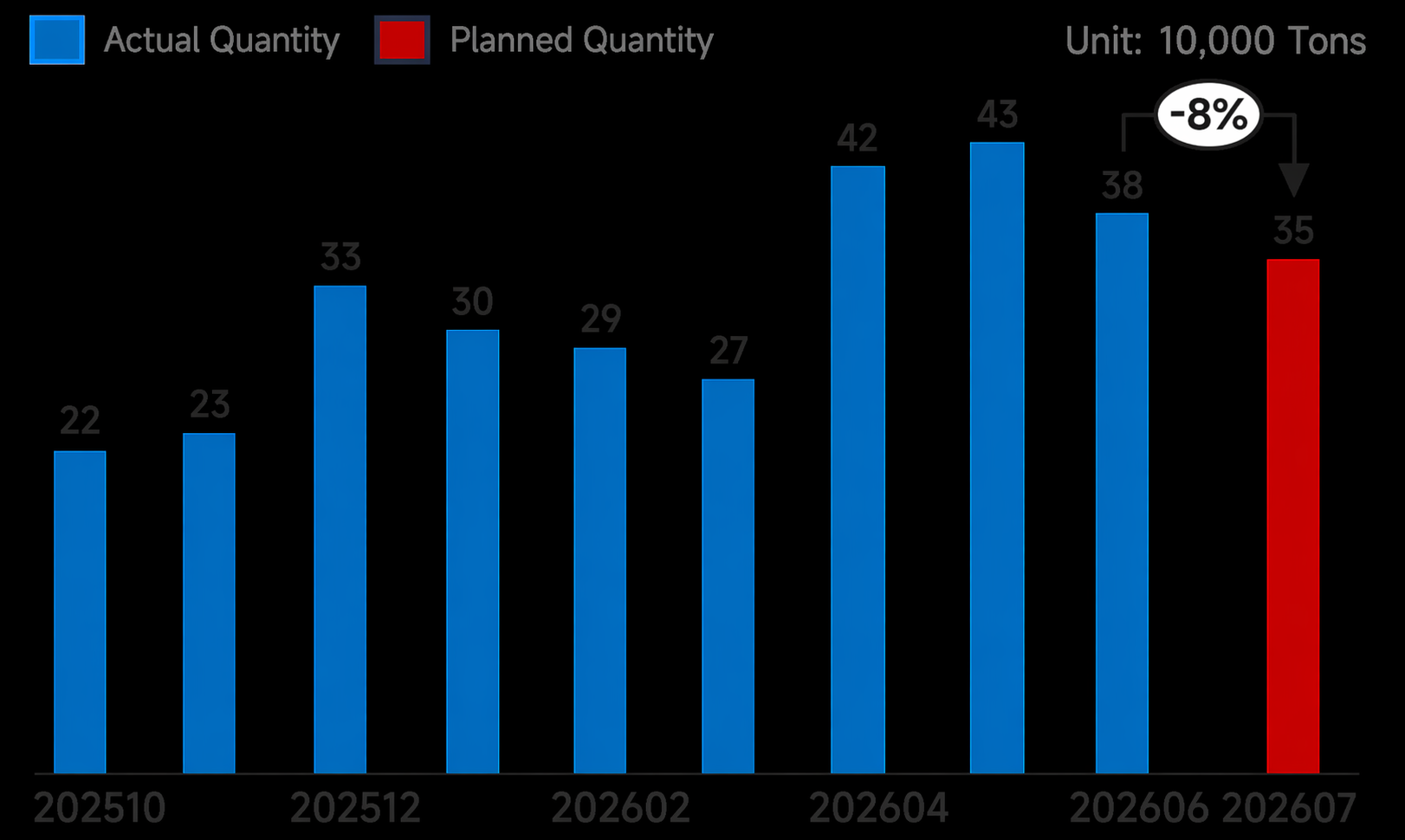
Source: SMM


By region:

Table 1: Rebar and Coiled Rebar Production Schedule - Last Month's Actuals and This Month's Plans
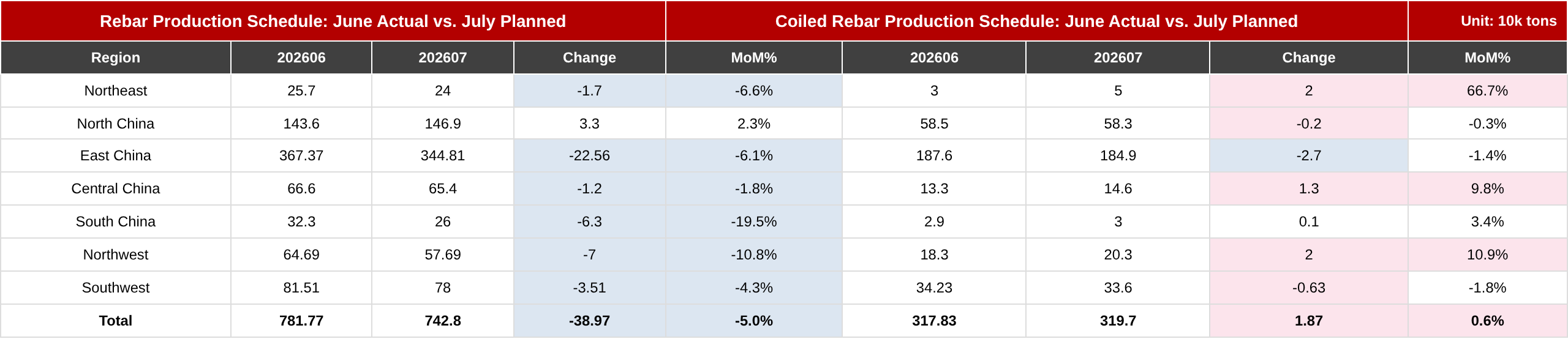
Source: SMM

Northeast: For some mills, pricing for overseas billet export orders was unfavorable, leading to a slight decline in export orders. Additionally, some hot metal was redirected to construction steel, but the total volume changed little.

North China: Current production profitability of steel mills is mostly around break-even levels, and they can still maintain previous production levels for the time being.

East China: Some mills in the region have maintenance plans for blast furnaces and rolling lines. Some mills plan to halve their July rebar production. In addition, for a few mills, profitability of sheets & plates is relatively better than that of construction steel, so some hot metal was shifted to increase sheets & plates output. As a result, overall construction steel production dropped notably.

Central & South China: Some steel mills face significant inventory pressure. Combined with rebar production being less profitable than specialty products, they plan maintenance or rebar production cuts in July.

Northwest: Many steel mills in the region were incurring losses, with some focusing mainly on hot-rolled coils or wide and thick plates, leading to a significant decline in rebar production, while the impact on wire rod output was relatively small.

Southwest: In July, individual mills underwent blast furnace maintenance, slightly affecting building material production. Additionally, as the region remained a national price trough, some mills reduced operating loads.


Cost side:

The 10th round of coke price increases was proposed. Although its implementation remained under negotiation, steel mills had already absorbed an additional 3-4 rounds of increases in June, continuously compressing finished product margins. Some enterprises were already at a loss-making stage, with the current mill profitability rate at 33.33%, a marked decline from June. The prevailing margin level now ranged from -200 to 100.

Chart-5: Real-Time Profit Trend of Rebar Production at Steel Mills, 2024 to Date
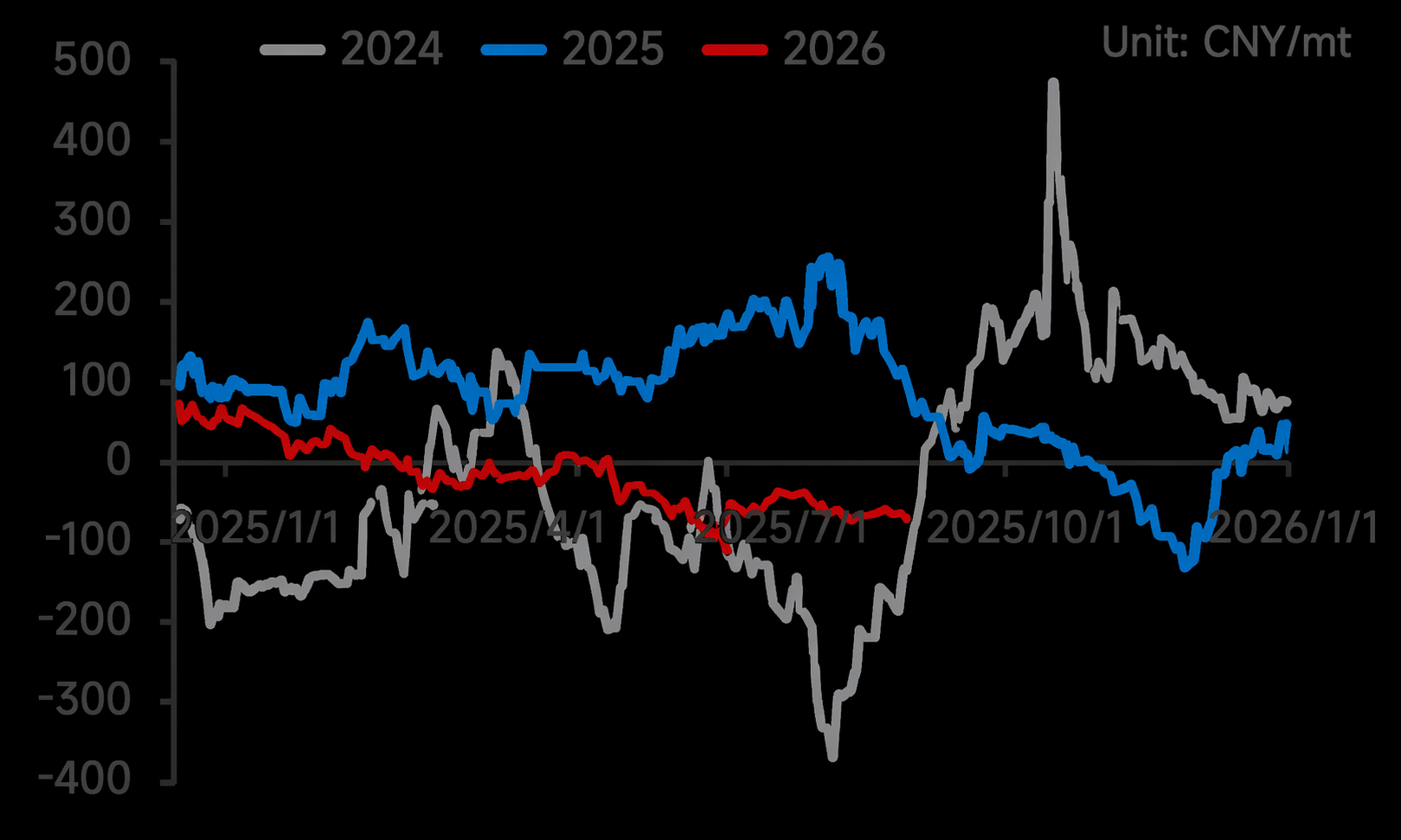
Source: SMM

Chart-6: Marginal Profitability of Rebar at Sample Steel Mills
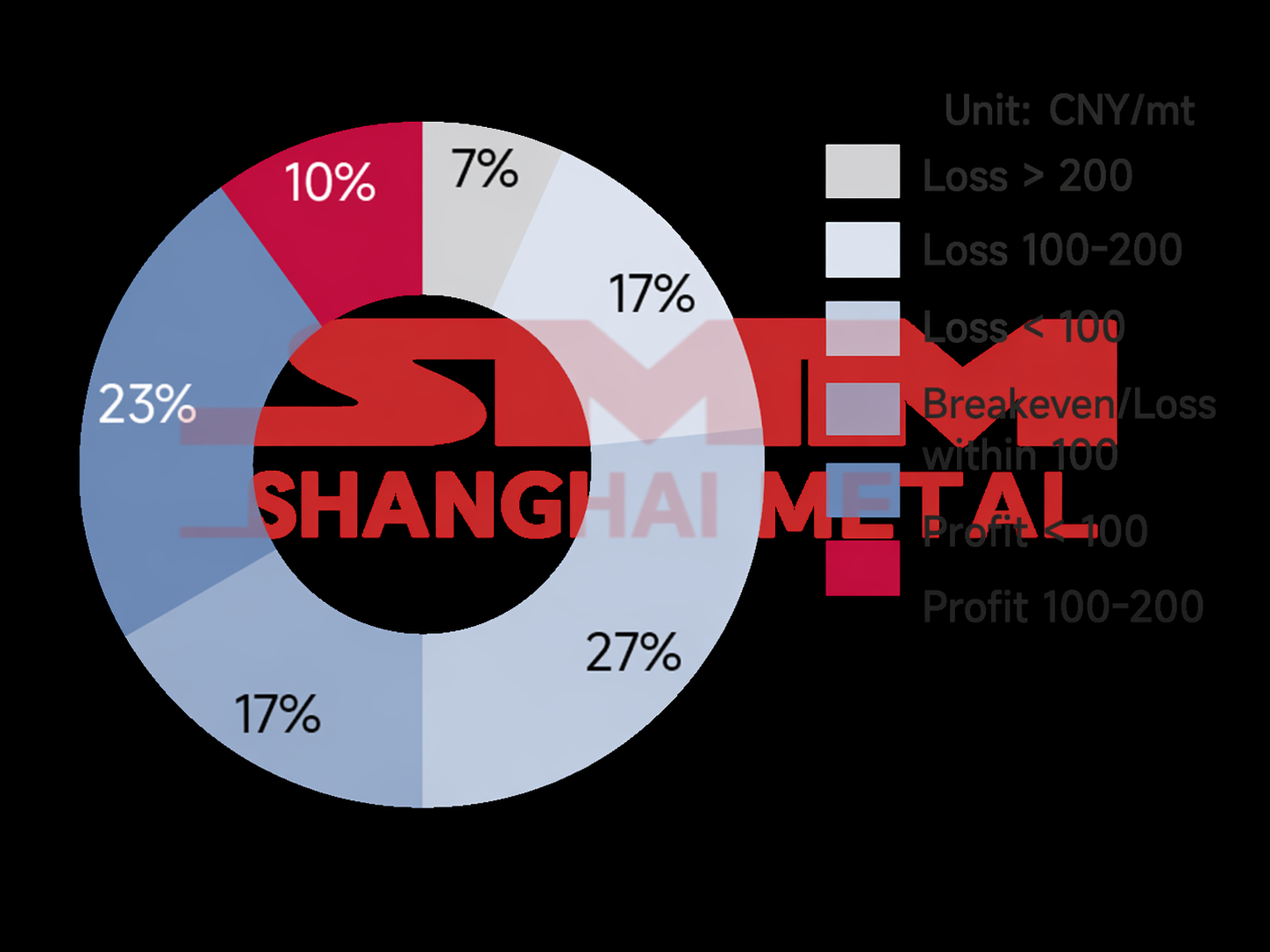
Source: SMM


Outlook:

Recently, most steel mills have been operating around the break-even line, weakening production enthusiasm. In east China, south China, and the northwest, mills have scheduled maintenance or switched to other steel products due to poor rebar margins, resulting in a notable drop in planned rebar output for July. Meanwhile, wire rod margins were slightly better than rebar, and some mills had already reduced wire rod output to low levels earlier, producing on a monthly basis to replenish end-user standing demand. As a result, the decline in daily average wire rod production was less than that of rebar.

Overall, the seasonal demand off-season from July to August, combined with building material production generally starting to incur losses, is expected to lead to adjustments in steel mill production pace. Additionally, some mills have scheduled annual overhauls in August, making a later shift to increased building material output less likely. Therefore, production is expected to remain at low levels before profitability improves. However, to ensure direct supply volumes, the planned production cut for August is expected to be relatively small.

Data Source Statement: Except for publicly available information, all other data are processed by SMM based on publicly available information, market communication, and relying on SMM's internal database model. They are for reference only and do not constitute decision-making recommendations.

Images in this article contain AI-translated captions for reference only.

For any inquiries or for more information, please contact: lemonzhao@smm.cn
For more information on how to access our research reports, please contact:service.en@smm.cn
Related News
7.6 SMM Global Steel Daily Report
36 mins ago
7.6 SMM Global Steel Daily Report
Read More
7.6 SMM Global Steel Daily Report
[Flat products]HRC up 1 USD, deals at 489-497 USD/tonne HRC prices rose 1 USD/tonne today and other flat product export prices also rose 1 USD/tonne day on day, with HRC deals at 489-497 USD/tonne. Inquiries were fair, but actual deals were mediocre, as overseas buyers' target prices sat slightly below Chinese sellers' offers. [Billet]Export billet FOB up 1 USD to 459-462 USD/tonne Export billet prices edged up 1 USD/tonne today, with FOB offers at 459-462 USD/tonne. According to market feedback, overseas competition remains fierce while domestic mills' offers are near cost, leaving little willingness to concede further and making deals difficult. [Rebar]Rebar export offers firm, Singapore CFR at 520-525 USD According to traders, China's rebar export offers to Singapore recently clustered at 520-525 USD/tonne CFR. Some mills cut output, leaving export resources relatively limited and offers firm, but overseas buyers showed weak willingness to accept high prices, so overall deals were mediocre. [Vietnam]Domestic Mill Price Cuts Squeeze Imports as ASEAN HRC Weakens On July 6, ASEAN HRC import offers edged down to 535 USD/tonne CFR amid thin trading. Over the prior week Vietnam's two leading mills each slashed HRC ex-works prices by 33-34 USD/tonne: Hoa Phat's target price to key clients fell to 535-537 USD/tonne CIF, while Formosa Ha Tinh's September-shipment offer dropped to 546-556 USD/tonne. Formosa's official July prices, released last Friday, were cut roughly 40 USD/tonne month-on-month, quoted at 538 USD/tonne CIF for volumes above 20000 tonnes and up to 548 USD/tonne CIF for small lots, with August-September shipment. With domestic material now more competitive, Vietnamese buyers clearly favored local supply and showed little appetite for imports, forcing import offers lower: Indian HRC deals slipped to 535-540 USD/tonne CFR and Indonesian HRC to 525-535 USD/tonne CFR, both with scarce transactions. The Asian slab market softened in tandem, with local Vietnamese slab down to 490 USD/tonne FOB and Indonesian August-shipment export slab at 490-495 USD/tonne FOB. Separately, the Ha Tinh provincial government formally terminated the Thach Khe iron ore project, whose reserves total about 544 million tonnes, leaving Vietnam unable to lift domestic iron ore self-sufficiency via large-scale mine development in the near term. [Turkey]Weak Demand and Overbooked EU Quota Keep Turkish HRC Sliding On July 6, Turkish HRC prices extended their decline, weighed by limited domestic demand and a lack of alternative export outlets, with September-delivery offers down to 605-630 USD/tonne EXW. The EU quota reset brought no relief: the new quarterly HRC quota was instantly overbooked by large volumes that had arrived earlier, with third-quarter over-declaration reaching 205% and about 330000 tonnes queuing for customs clearance against a quota of roughly 160000 tonnes, further capping prices as export channels clogged. On longs, as of July 3, Turkish rebar export prices fell to 575 USD/tonne FOB on persistently weak domestic and export demand, declining mill inventories and an absence of firm orders, while HRC on an FOB basis eased to 585 USD/tonne. The domestic market remained depressed, with traders reluctant to stockpile amid tight cash flow and high borrowing costs, and no meaningful demand recovery is expected this summer. [India]Inventory Build Drags Longs as Rebar Slips While Safeguard Duty Props HRC On July 6, Indian blast-furnace (BF) route rebar prices fell about 17 USD/tonne week-on-week to around 512 USD/tonne, dragged down by a seasonal construction slowdown, rainfall, project delays and dealer inventory accumulation. Demand stayed limited to needs-based restocking, mill inventories ran at about 10-15 days, and the market expects major mills to cut long-product offers further. By contrast, HRC held firm at around 609 USD/tonne, supported by the import safeguard duty and falling import volumes, clearly outperforming longs and highlighting the divergence between flat and construction steel.
36 mins ago
[SMM Steel Shipping] China's total steel exports last week rose 9% WoW.
42 mins ago
[SMM Steel Shipping] China's total steel exports last week rose 9% WoW.
Read More
[SMM Steel Shipping] China's total steel exports last week rose 9% WoW.
[SMM Steel Shipping] China's total steel exports last week rose 9% WoW.
During this week, port departures of steel from China's main ports reached 3.0789 million mt, up 9% WoW.
42 mins ago
July Steel Mill Daily Average Production Schedule Down MoM
1 hour ago
July Steel Mill Daily Average Production Schedule Down MoM
Read More
July Steel Mill Daily Average Production Schedule Down MoM
1 hour ago
Register to Continue Reading
Gain access to the latest insights in metals and new energy
Already have an account?Sign in here
[SMM Rebar Production Schedule] Worsening Losses and Off-Season Demand Push July Building Materials Planned Production Further Down - Shanghai Metals Market (SMM)