Publicado:
16 de junho de 2026 - 23h32
(Kitco News) – A queda de 26% do ouro durante o conflito no Irã resultou do fortalecimento do dólar, dos rendimentos e das ações, que superaram o apelo de porto seguro do metal amarelo, mas a inflação persistente, a incerteza política e a demanda dos bancos centrais permanecem intactas, e os preços do ouro ainda atingirão quase US$ 4.800 em 2026 e US$ 4.900 em 2027, de acordo com o Barclays.
Em nota de pesquisa publicada na segunda-feira, a equipe de pesquisa de ativos cruzados do gigante bancário britânico, liderada por Lefteris Farmakis e Themistoklis Fiotakis, disse que a liquidação de três meses do ouro foi impulsionada pelo fortalecimento do dólar americano, pelos mercados acionários extremamente aquecidos, que absorveram todo o capital de risco disponível, e pelo desmonte de posições alavancadas em ouro, com as vendas de ouro dos bancos centrais russo e turco também contribuindo para a fraqueza.
Os analistas disseram que o deslize do ouro de seu pico de janeiro para sua mínima de junho refletiu uma normalização das taxas de juros reais, com os mercados precificando cortes de juros do Fed para este ano, e o apelo de curto prazo da alta das ações diminuindo o apelo de investimento do ouro.
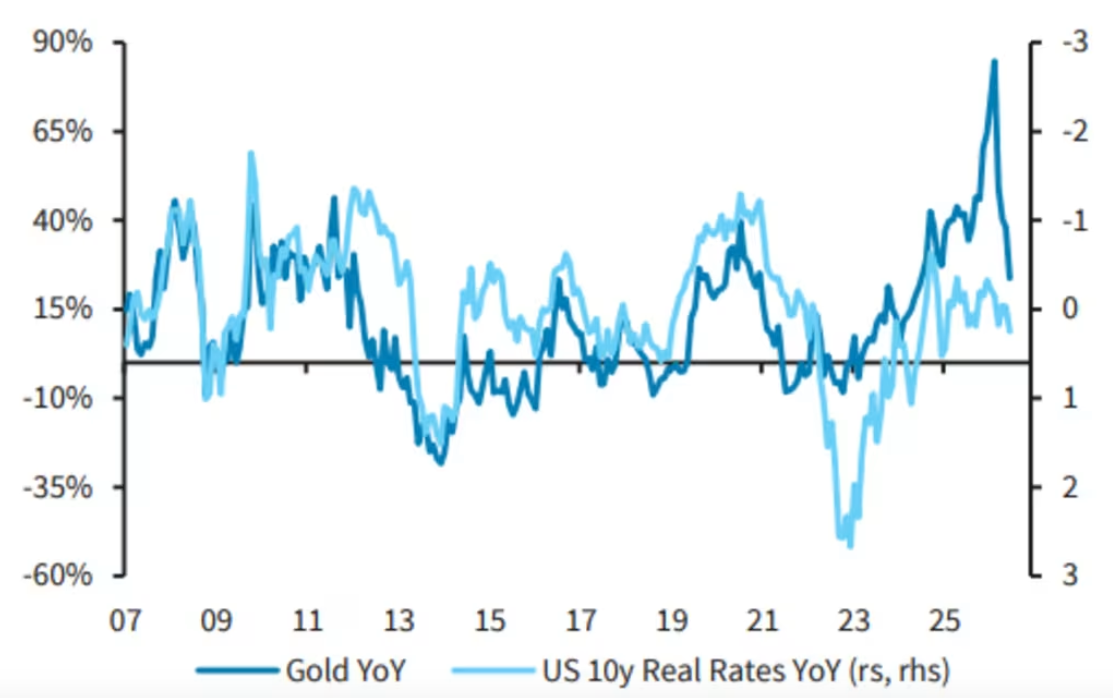
A equipe do Barclays calculou que a alta do índice do dólar e o rali de 10% do S&P 500 foram responsáveis por 10% da queda do preço do ouro, com o restante vindo do desmonte de posições nos mercados de metais.
Os analistas disseram, no entanto, que esses fatores são temporários e que os impulsionadores estruturais do ouro — inflação persistente, incerteza política e diversificação contínua de reservas — ainda estão intactos e se reafirmarão à medida que o estresse geopolítico relacionado à crise de Ormuz se dissipar. Eles caracterizaram esses impulsionadores como "variáveis de movimentação lenta, cuja influência se acumula ao longo do tempo", razão pela qual não eram adequados para sustentar os preços do ouro durante o choque de curto prazo da crise iraniana.
O Barclays calculou que cada aumento de um ponto percentual na inflação proporciona um impulso de 5% ao ouro, e eles acreditam que o impulso inflacionário do choque energético do Irã será favorável.
O banco estima que o valor justo atual do ouro está em US$ 4.150 por onça, e espera uma recuperação agora que o conflito com o Irã parece estar diminuindo.
A equipe do Barclays disse que agora antecipa uma reafirmação da tendência de queda do dólar, um retorno às compras consistentes dos bancos centrais e uma pressão ascendente sustentada sobre a inflação devido aos preços mais altos da energia.
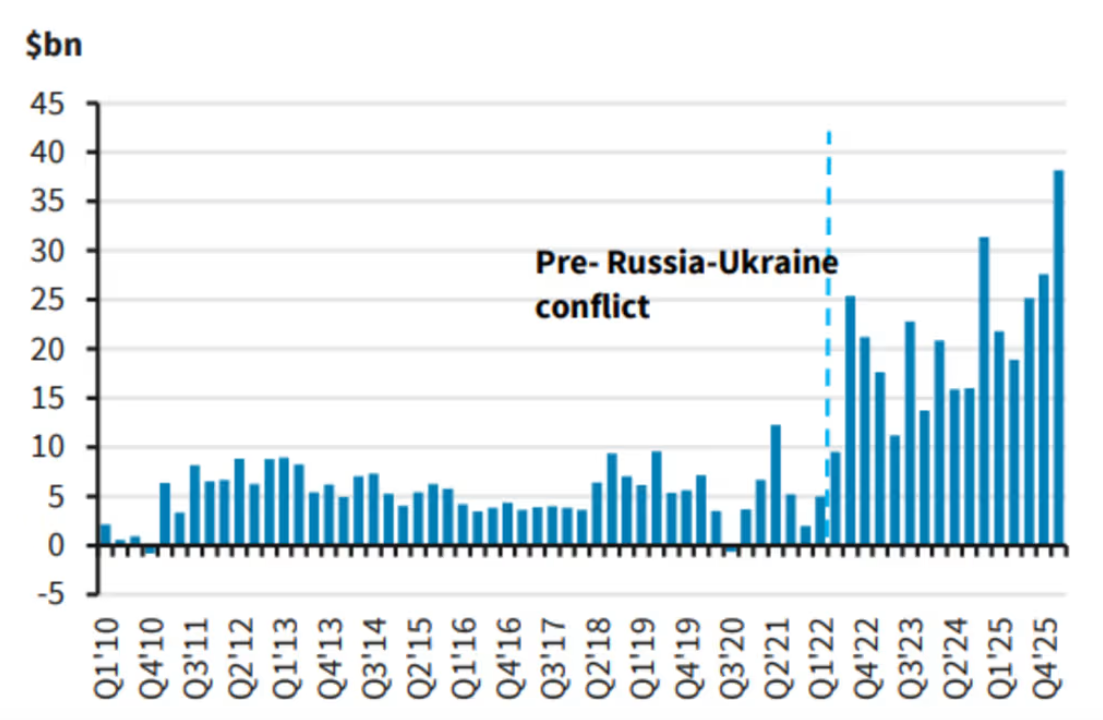
Barclays disse que mantém suas previsões de preço do ouro para 2026 e 2027 em US$ 4.791 e US$ 4.900 por onça, mas alertou que ainda pode haver algum risco de queda de curto prazo na marcação a mercado. Os analistas também recomendaram exposição a ações de mineração de ouro, incluindo Endeavour, Hochschild, Fresnillo, Newmont e Agnico Eagle.
“Apesar das recentes oscilações de preço, se há um período em que o ouro deveria ser negociado com prêmio, é agora”, disseram.
Fonte: