

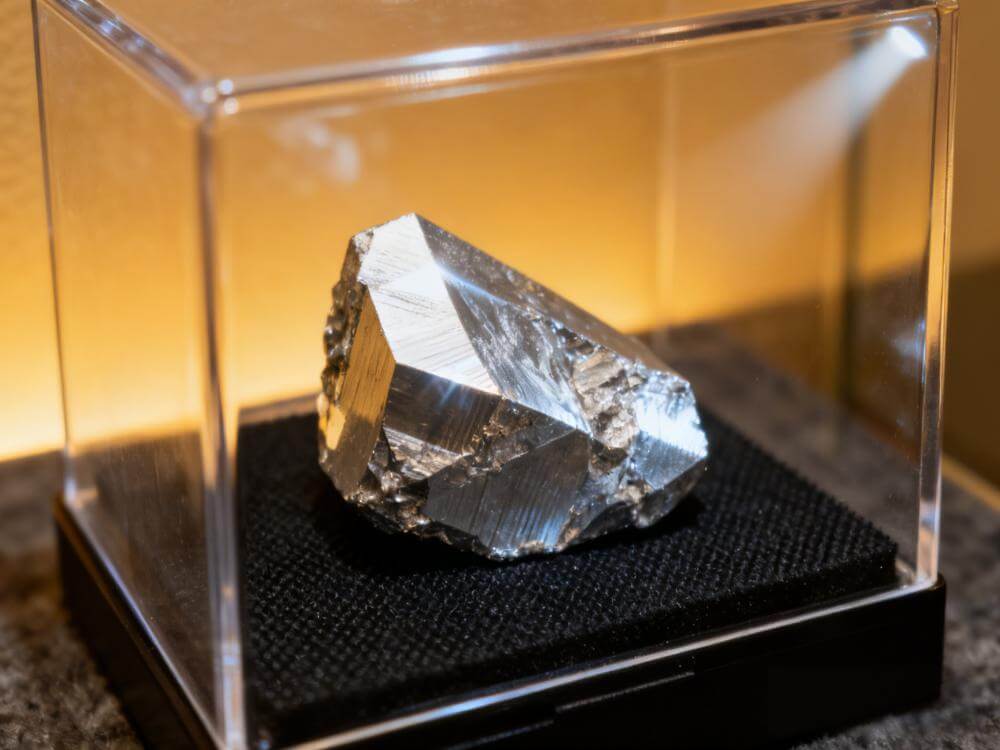
SMM June 3 news: According to customs data, China's cadmium telluride (CdTe) exports showed a continuous upward trend over the past three months. Following exports of 48 mt in February, exports rose to 64 mt in March and further climbed to 80 mt in April. Market participants noted that the increase in exports was well reflected in the continuous rise of domestic tellurium prices. Market participants stated that the core reason for tellurium price increases remained on the supply side, where China maintained a highly monopolistic position with global supply being extremely concentrated. Demand side, multi-sector resonance drove steady demand growth, particularly as summer approached and the peak season for thermoelectric cooling modules arrived, boosting end-user purchasing demand for tellurium. This year, large overseas end-users such as First Solar continued to expand CdTe thin-film module capacity, providing strong long-term support for global tellurium raw material demand. Additionally, AI data center construction would also highly likely trigger thermoelectric cooling demand. As AI computing chip power consumption continued to climb, bismuth telluride thermoelectric cooling modules became a key thermal management solution, inevitably driving structural growth in tellurium demand. In the short term, China's export controls showed no signs of easing. Although CdTe exports were on an upward trend, the likelihood of further significant increases was relatively small. Meanwhile, downstream CdTe PV and AI thermoelectric demand continued to accelerate in release, and the tight balance in tellurium supply-demand dynamics would most likely persist, with prices expected to stay high or even continue to rise. Risk factors to watch include: whether the recovery rate of tellurium as a by-product of copper mine improves, and progress in ex-China alternative capacity (such as tellurium recycling technology).
Multiple Factors Converge to Drive Tellurium Prices to Gradually Rise [SMM Tellurium Report]
Data Source Statement: Except for publicly available information, all other data are processed by SMM based on publicly available information, market communication, and relying on SMM's internal database model. They are for reference only and do not constitute decision-making recommendations.
For any inquiries or for more information, please contact: lemonzhao@smm.cn
For more information on how to access our research reports, please contact:service.en@smm.cn
Related News
![Tug-of-war between sellers and buyers intensified, magnesium ingot market in the doldrums this week [SMM Magnesium Weekly Review]](https://imgqn.smm.cn/usercenter/XUnxM20251217171723.jpeg)
9 mins ago
Tug-of-war between sellers and buyers intensified, magnesium ingot market in the doldrums this week [SMM Magnesium Weekly Review]
Read More
Tug-of-war between sellers and buyers intensified, magnesium ingot market in the doldrums this week [SMM Magnesium Weekly Review]
[SMM Magnesium Weekly Review: Supply-Demand Tug-of-War Intensifies, Magnesium Ingot Market Remains in the Doldrums ] This week, China’s magnesium ingot market drifted lower overall. Fugu and Shenmu 99.90% magnesium ingot quotes were at 15,950-16,050 yuan/mt, down 350 yuan/mt on the week. After the holiday, market pessimism spread; smelters were active in selling, while downstream only made just-in-time procurement. Amid strong supply and weak demand, prices continued to decline gradually. The average FOB price at Tianjin port was $2,365/mt. China’s smelters struggled to hold prices firm, and FOB offers adjusted downward in tandem. Outside China, as the summer break approaches, new orders were scarce, and foreign trade was sluggish. Dolomite cost support was limited. Magnesium powder and magnesium alloy weakened in tandem. Weak downstream demand in the off-season dragged on the market. In the short term, magnesium ingot will remain in a weak consolidation.
9 mins ago
![[SMM Analysis] SS declined, combined with persistently weak transactions during the off-season, and stainless steel inventory stopped its decline, stabilized, and slightly accumulated.](https://imgqn.smm.cn/usercenter/EutUV20251217171724.jpeg)
34 mins ago
[SMM Analysis] SS declined, combined with persistently weak transactions during the off-season, and stainless steel inventory stopped its decline, stabilized, and slightly accumulated.
Read More
[SMM Analysis] SS declined, combined with persistently weak transactions during the off-season, and stainless steel inventory stopped its decline, stabilized, and slightly accumulated.
[SMM Analysis] SS Decline and Weak Off-Season Trading Keep Stainless Steel Inventory Basically Stable with Slight Buildup
SMM, June 25: This week, stainless steel social inventory ended its previous destocking trend, and under off-season conditions, overall inventory stabilized and edged up slightly.
Total inventory in the two core markets of Wuxi and Foshan rose slightly, from 932,000 mt on June 18, 2026, to 932,800 mt on June 25, up 0.06% WoW. The inventory shifted from continuous destocking to slight buildup, with off-season inventory pressure becoming marginally apparent.
This week, the stainless steel market was fully in the traditional consumption off-season, with end-user rigid demand support continuing to weaken.
During the week, metals futures weakened across the board, coupled with news-related disturbances from Indonesia. SS futures drifted lower, bearish sentiment in the market intensified, downstream end-users became more wait-and-see, overall purchasing willingness was insufficient, and spot market trading remained weak.
This week, news of maintenance and production cuts at steel mills continued to simmer, with some mills reducing shipments, leading to a marginal decline in market supply. Meanwhile, traders, amid pessimistic expectations, showed low willingness to actively purchase, and generally adopted strategies of selling at lower margins and reducing inventory to accelerate the turnover of goods on hand. This largely offset the inventory buildup pressure from weak off-season demand, keeping overall social inventory basically stable with only a slight increase.
Overall, the core factors behind the shift from destocking to slight inventory buildup this week were weak end-user rigid demand during the off-season and weakening futures dampening market sentiment. Meanwhile, supply contraction from steel mill maintenance and traders' proactive destocking provided critical support to prevent a pronounced inventory buildup. At this stage, the market's off-season characteristics are increasingly evident...
34 mins ago
1 hour ago
A Guangdong Tungsten Enterprise's Long-Term Contract Procurement Price Remained Flat in Second Half of June
Read More
A Guangdong Tungsten Enterprise's Long-Term Contract Procurement Price Remained Flat in Second Half of June
[Wolfram Snapshot] SMM, June 25: A Guangdong tungsten enterprise announced its long-term contract purchase quotations for the second half of June as follows: wolframite concentrates (55% grade) at 518,000 yuan/standard tonne (65% WO3 basis), scheelite concentrates (55% grade) at 517,000 yuan/standard tonne (65% WO3 basis). The long-term contract prices for ore were flat MoM from the first half of June. APT (national standard, zero grade) was executed at 780,000 yuan/mt, flat compared with the long-term contract price in the first half of June.
1 hour ago
Related News
Tug-of-war between sellers and buyers intensified, magnesium ingot market in the doldrums this week [SMM Magnesium Weekly Review]
Jun 25, 2026 17:46
[SMM Analysis] SS declined, combined with persistently weak transactions during the off-season, and stainless steel inventory stopped its decline, stabilized, and slightly accumulated.
Jun 25, 2026 17:21
A Guangdong Tungsten Enterprise's Long-Term Contract Procurement Price Remained Flat in Second Half of June
Jun 25, 2026 15:59
Today, tungsten concentrate transactions were scarce, and the short-term market was in the doldrums.
Jun 24, 2026 11:04
Register to Continue Reading
Gain access to the latest insights in metals and new energy
Already have an account?Sign in here