เมื่อวันที่ 20 พฤษภาคม 2569 ประธานาธิบดีอินโดนีเซีย ปราโบโว ซูเบียนโต ประกาศในระหว่างการประชุมเต็มคณะของสภาแห่งชาติว่ารัฐบาลได้ลงนามในกฎระเบียบฉบับสำคัญที่มุ่งเป้าไปที่การกำกับดูแลการส่งออกทรัพยากรธรรมชาติอย่างเป็นทางการแล้ว กรอบนโยบายอันกล้าหาญนี้จะจัดตั้งหน่วยงานส่งออกทรัพยากรธรรมชาติที่บริหารโดยรัฐโดยเฉพาะ ดำเนินการส่งออกผ่านรัฐวิสาหกิจ (BUMN) ในฐานะผู้ส่งออกรายเดียวที่รัฐบาลแต่งตั้ง
ตามที่สื่อท้องถิ่นเปิดเผยและสไลด์นำเสนอที่แสดงในระหว่างการประชุม กลไกรวมศูนย์นี้จะนำไปใช้กับน้ำมันปาล์ม ถ่านหิน และเฟอร์โรอัลลอย (paduan besi) เป็นลำดับแรก ภายใต้ระบบนี้ การส่งออกโดยตรงของภาคเอกชนจะถูกยกเลิกอย่างค่อยเป็นค่อยไป โดยบังคับให้ผู้ซื้อต่างประเทศและผู้ผลิตอินโดนีเซียต้องดำเนินสัญญา โลจิสติกส์ และการชำระเงินทั้งหมดผ่านหน่วยงาน BUMN ที่รัฐแต่งตั้ง
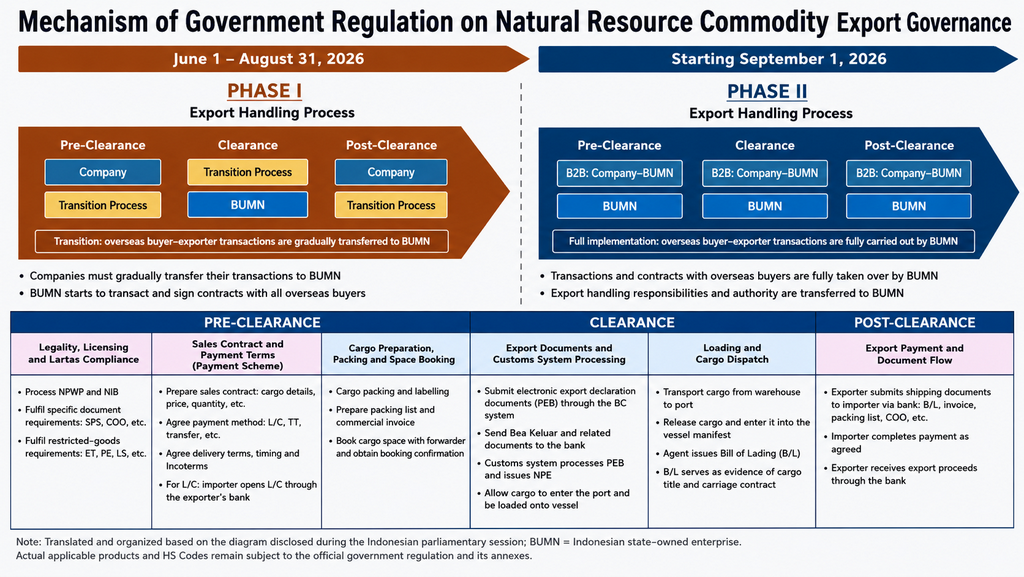
1. กรอบเวลาการดำเนินงานสองระยะ
จากแผนภาพนโยบายอย่างเป็นทางการที่เปิดเผยในที่ประชุม การเปลี่ยนผ่านไปสู่รูปแบบการส่งออกรวมศูนย์ที่นำโดย BUMN จะเกิดขึ้นในสองระยะกำกับดูแลที่แตกต่างกัน:
|
ระยะ |
กรอบเวลาดำเนินการ |
กลไกการบริหาร |
|---|---|---|
|
ระยะที่ 1 (ช่วงเปลี่ยนผ่าน) |
1 มิถุนายน 2569 – 31 สิงหาคม 2569 |
ภาคเอกชนยังคงจัดการขั้นตอนการบริหารและโลจิสติกส์ภายในบางส่วน อย่างไรก็ตาม ธุรกรรมนำเข้า-ส่งออกทั้งที่มีอยู่และใหม่กับผู้ซื้อต่างประเทศต้องเริ่มย้ายไปยังหน่วยงาน BUMN อย่างเป็นขั้นตอน |
|
ระยะที่ 2 (ผูกขาดเต็มรูปแบบ) |
1 กันยายน 2569 เป็นต้นไป |
เข้าควบคุมทั้งหมด กระแสธุรกรรมทั้งหมด สัญญาซื้อขาย การสำแดงส่งออก พิธีการศุลกากร การจัดการขนส่ง และการเรียกเก็บรายได้จากการส่งออก (DHE) จะถูกบริหารจัดการหรือนำโดย BUMN ที่ได้รับมอบหมายทั้งหมด |
2. การแทรกแซงเชิงโครงสร้างเชิงลึก: ก่อนถึงหลังพิธีการศุลกากร
กลไกกำกับดูแลนี้ไม่ได้เพียงแค่ติดตั้ง "ตรายาง" ของรัฐบาล แต่เป็นการจัดสรรใหม่อย่างรากฐานของห่วงโซ่การค้าส่งออกทั้งหมด โดยฝัง BUMN เข้าไปอย่างลึกซึ้งในสามขั้นตอนหลักด้านโลจิสติกส์และการเงิน:
[ก่อนพิธีการศุลกากร]  ──>  [พิธีการศุลกากร]  ──>  [หลังพิธีการศุลกากร]
(สัญญาและเอกสาร) (ศุลกากรและการขนถ่าย) (การชำระเงินและ FX DHE)-
การเตรียมการก่อนพิธีการ (สัญญาและการเตรียมสินค้า): ครอบคลุมการตรวจสอบความถูกต้องตามกฎหมาย ใบอนุญาตเหมือง IUP การปฏิบัติตามข้อจำกัดการส่งออก (Lartas) การร่างสัญญาซื้อขาย การสรุปเงื่อนไขการชำระเงิน ใบกำกับสินค้าเชิงพาณิชย์ และการเช่าเรือ/การจองห้องโดยสารเรือ
-
พิธีการ (ศุลกากรและการขนส่งจริง): รวมถึงการยื่นใบขนส่งออก (PEB) การจัดการการอนุมัติในระบบศุลกากร การขนส่งสินค้าจากคลังสินค้าของโรงถลุงไปยังท่าเทียบเรือ การบรรทุกสินค้า และการออกใบตราส่งสินค้า (B/L)
-
หลังพิธีการ (เอกสารและกระแสเงินทุน): BUMN จะทำหน้าที่เป็นตัวกลางหลัก ส่งเอกสารการค้า (B/L, Commercial Invoice, Packing List, Certificate of Origin/COO) ไปยังธนาคารผู้ออกของผู้ซื้อ และบริหารการนำรายได้จากการส่งออกกลับประเทศ (DHE) ภายใต้ข้อกำหนดด้านธนาคารภายในประเทศที่เข้มงวด
3. คำถามมูลค่าพันล้านดอลลาร์: NPI และ FeNi จะถูกจัดเป็น “เฟอร์โรอัลลอย” หรือไม่?
สำหรับห่วงโซ่อุปทานสเตนเลสและแบตเตอรี่รถยนต์ไฟฟ้าทั่วโลก ประเด็นเร่งด่วนคืออินโดนีเซียกำหนดขอบเขตของ “เฟอร์โรอัลลอย” (paduan besi) อย่างไร ฉันทามติของตลาดชี้ชัดว่า “เฟอร์โรอัลลอย” ที่กล่าวถึงมีแนวโน้มสูงว่าจะมุ่งไปที่ Nickel Pig Iron (NPI) ซึ่งเป็นกระแสการค้าขนาดใหญ่ราว 11.5 ล้านตันของการส่งออก NPI จากอินโดนีเซียในปี 2025
อย่างไรก็ดี เนื่องจากกฎระเบียบอย่างเป็นทางการที่มีผลผูกพันทางกฎหมายซึ่งรัฐบาล “ลงนาม” ยังไม่ถูกเผยแพร่ต่อสาธารณะอย่างเป็นทางการ จึงจำเป็นต้องมีความชัดเจนเพิ่มเติมเพื่อยืนยันขอบเขตที่แท้จริงของวัสดุที่ได้รับผลกระทบ
ที่สำคัญ ร่างกฎระเบียบที่หลุดออกมานั้นไม่ได้กล่าวถึงคำว่า “เฟอร์โรอัลลอย” เลยแม้แต่น้อย คำว่า “เฟอร์โรอัลลอย” (paduan besi) ถูกเน้นและนำเสนอเพียงด้วยวาจาโดยประธานาธิบดีปราโบโว ระหว่างการประชุมสภาผู้แทนราษฎรเต็มคณะ (Rapat Paripurna DPR) ในวันพุธ (20/5)
ตามข้อความร่างที่หลุดออกมา ขอบเขตที่เป็นลายลักษณ์อักษรของกฎหมายถูกจัดโครงสร้างดังนี้:
หมวดที่ II: การกำหนดสินค้าโภคภัณฑ์ทรัพยากรธรรมชาติเชิงยุทธศาสตร์
มาตรา 2 (1) สินค้าโภคภัณฑ์ทรัพยากรธรรมชาติเชิงยุทธศาสตร์ที่อยู่ภายใต้การกำกับดูแลการส่งออก ได้แก่:
a. ถ่านหิน;
b. น้ำมันปาล์ม; และ
c. สินค้าโภคภัณฑ์ทรัพยากรธรรมชาติเชิงยุทธศาสตร์อื่นๆ
(2) รัฐบาลอาจแก้ไขสินค้าโภคภัณฑ์ทรัพยากรธรรมชาติเชิงยุทธศาสตร์ตามที่อ้างถึงในวรรค (1) ข้อ a และ b และกำหนดสินค้าโภคภัณฑ์ทรัพยากรธรรมชาติเชิงยุทธศาสตร์อื่นๆ ตามที่อ้างถึงในข้อ c ผ่านการประชุมประสานงาน (coordinated meeting (rapat koordinasi) นำโดย:
a. รัฐมนตรีผู้รับผิดชอบด้านการบูรณาการ การประสานงาน และการควบคุมงานของกระทรวงในด้านเศรษฐกิจ (Coordinating Minister for Economic Affairs / Menko Perekonomian); หรือ
b. รัฐมนตรีผู้รับผิดชอบด้านการบูรณาการ การประสานงาน และการควบคุมงานของกระทรวงในด้านอาหาร (Coordinating Minister for Food / Menko Pangan), โดยมีรัฐมนตรี/หัวหน้าหน่วยงานที่ไม่ใช่กระทรวงที่เกี่ยวข้องเข้าร่วม
ข้อกำหนดนี้เผยกรอบกฎหมายสำคัญ: การขยายรายการควบคุมการส่งออกเพื่อกำหนดให้ NPI, FeNi หรือโลหะผสมเฟอร์โรนิกเกิลที่เกี่ยวข้องอยู่ภายใต้ “สินค้าเชิงยุทธศาสตร์อื่นๆ” จำเป็นต้องถูกกำหนดผ่านการประชุมประสานงานอย่างเป็นทางการ (rapat koordinasi) ที่นำโดยรัฐมนตรีประสานงานด้านเศรษฐกิจหรือรัฐมนตรีประสานงานด้านอาหารเท่านั้น
เนื่องจากกฎระเบียบที่เป็นลายลักษณ์อักษรเองไม่ได้กล่าวถึง “เฟอร์โรอัลลอย” ขอบเขตทางกฎหมายของนโยบายนี้จึง ยังไม่ถูกกำหนดแน่นอน จนกว่าการประชุมประสานงานระดับสูงระหว่างกระทรวง (rapat koordinasi) จะเกิดขึ้นและออกบัญชีแนบท้ายที่ชัดเจนพร้อมรหัส HS ที่สอดคล้องกัน ผลกระทบเชิงปฏิบัติต่อการค้า NPI ยังต้องรอการยืนยันอย่างเป็นทางการ
หากผลิตภัณฑ์กึ่งสำเร็จนิกเกิล-เหล็กถูกจัดให้อยู่ภายใต้ข้อกำหนดผู้ส่งออกเพียงรายเดียวของ BUMN อย่างเป็นทางการหลังการประชุมนี้ SMM คาดว่าจะเกิดการสะดุดเชิงโครงสร้างสำคัญ 4 ประการ:
I. ความยืดหยุ่นในการเจรจาโดยตรงลดลง
ปัจจุบัน NPI ของอินโดนีเซียถูกขายผ่านระบบนิเวศที่ยืดหยุ่นสูง ซึ่งประกอบด้วยโรงงานเหล็ก โต๊ะซื้อขายทั่วโลก โบรกเกอร์อิสระ และสัญญาซัพพลายแบบ back-to-back การบังคับให้สัญญาเหล่านี้ต้องผ่านผู้ส่งออกรัฐเพียงรายเดียวจะบีบพื้นที่การดำเนินงานสำหรับการค้นหาราคาโดยตรง การล็อกปริมาณแบบสปอต และการขายต่อความถี่สูงอย่างรวดเร็ว
II. ความโปร่งใสราคาส่งออกแบบสมบูรณ์
ด้วยการส่งผ่านสัญญาซื้อขายทั้งหมด ใบแจ้งหนี้การขนส่ง และการเรียกเก็บเงินตราต่างประเทศ (DHE) ผ่านช่องทางของรัฐ รัฐบาลอินโดนีเซียจะได้ความโปร่งใสแบบเรียลไทม์และสมบูรณ์ต่อราคาธุรกรรมจริง ซึ่งสอดรับกับการเข้มงวดอย่างต่อเนื่องของอินโดนีเซียต่อเกณฑ์อ้างอิงเหมืองภายในประเทศ (HPM) ระบบโควตา RKAB รายปี และข้อกำหนดเข้มงวดให้รายได้ส่งออกต้องถูกเก็บไว้ในบัญชีธนาคารภายในประเทศ
III. การตัดบทบาทพ่อค้าและโบรกเกอร์
สต็อกนิกเกิล-เหล็กที่อยู่ระหว่างขนส่งหรือเก็บในท่าเรือในอดีตทำหน้าที่เป็นสินทรัพย์ทางการเงินที่มีสภาพคล่องสูงสำหรับโบรกเกอร์และเทรดเดอร์ที่ใช้คำสั่งโอนและสัญญา back-to-back การทำให้คู่สัญญาและช่องทางชำระเงินเป็นมาตรฐานภายใต้ BUMN จะบีบมาร์จินของเทรดเดอร์ที่ไม่ได้ผลิต ทำให้ราคาอ้างอิงตลาดสปอตทางกายภาพแข็งตัวมากขึ้น
IV. ความล่าช้าในการดำเนินการส่งออก
การย้ายสัญญารับซื้อระยะยาวไปสู่แม่แบบของ BUMN จะก่อให้เกิดแรงเสียดทานอย่างมีนัยสำคัญในช่วงเปลี่ยนผ่านระยะที่ 1 SMM คาดว่าจะเกิดความล่าช้าจากการลงนามสัญญาใหม่ การปรับช่องทางธนาคาร การออกเลตเตอร์ออฟเครดิต (L/C) ใหม่ และการประสานงานด้านธุรการเบื้องต้นที่ศุลกากรท่าเรือ ซึ่งจะรบกวนตารางการมาถึงท่าเรือระยะสั้นชั่วคราว
4. การวิเคราะห์ผลกระทบต่อตลาดและราคา (หาก NPI ถูกนำมารวมด้วย)
ความเชื่อมั่นระยะสั้นเทียบกับความเป็นจริงระยะกลาง
-
ระยะสั้น (ขับเคลื่อนด้วยความเชื่อมั่น): ผลกระทบโดยตรงต่อปริมาณการขนส่ง NPI ทางกายภาพที่กลับไปจีนจะยังจำกัดในช่วงเปลี่ยนผ่านเริ่มต้น เนื่องจากผู้ส่งออกเอกชนยังคงช่วยด้านโลจิสติกส์ อย่างไรก็ตาม เมื่อพิจารณาถึงอุปทานแร่นิกเกิลภายในประเทศที่ตึงตัว การลดกำลังการผลิตของโรงงาน RKEF หลายแห่ง และการส่งออก NPI ที่ลดลงอยู่แล้ว ตลาดมีแนวโน้มจะตีความประกาศนี้เป็นภัยคุกคามด้านอุปทานรอบใหม่ ส่งผลให้ความเชื่อมั่นเชิงบวกเพิ่มขึ้น
-
ระยะกลาง (การเปลี่ยนแปลงเชิงโครงสร้าง): หาก NPI ถูกบรรจุในรายการรหัส HS อย่างเป็นทางการ โรงงานสเตนเลสจีนจะต้องเผชิญผู้ขายจากรัฐอินโดนีเซียแบบรวมศูนย์ ซึ่งจะนำไปสู่การตรวจสอบการชำระเงินที่เข้มงวดขึ้น ตัวเลือกสำหรับธุรกรรมยืดหยุ่นนอกมาตรฐานที่น้อยลง และการแทบจะหายไปของดีล FOB ต้นทุนต่ำที่อยู่นอกตลาด
ต้นทุนธุรกรรมเทียบกับต้นทุนการผลิต
ต่างจากความปั่นป่วนฝั่งเหมือง เช่น เกณฑ์ HPM ที่สูงขึ้น เกรดแร่ลูกรังที่ลดลง หรือโควตา RKAB ที่ถูกจำกัด นโยบายรวมศูนย์การส่งออกนี้ไม่ได้เพิ่มต้นทุนการถลุง NPI ทางกายภาพโดยตรง แต่ทำหน้าที่เสมือนภาษีต่อประสิทธิภาพของธุรกรรม เพิ่มภาระการปฏิบัติตามกฎ ความล่าช้าทางธุรการ และการกำกับดูแลด้านราคาของรัฐ SMM สรุปว่าผลกระทบของนโยบายนี้คือการเพิ่ม “แรงเสียดทานฝั่งธุรกรรม” มากกว่าต้นทุนการผลิตวัตถุดิบ ซึ่งท้ายที่สุดจะสนับสนุนความตั้งใจของผู้ขายในการตรึงราคา และตอกย้ำความแข็งตัวของราคานิกเกิลพิกไอรอนเกรดนิกเกิลสูง
มุมมองของ SMM
กฎระเบียบการส่งออกใหม่ของอินโดนีเซียส่งสัญญาณว่าแนวชาตินิยมด้านทรัพยากรกำลังขยายอิทธิพลได้สำเร็จไปไกลกว่าหน้าประตูเหมืองและสำนักงานภาษี เข้าสู่เวทีการขายและการค้าระดับโลกโดยตรง
อย่างไรก็ตาม ประเด็นสำคัญคือ ยังไม่มีสิ่งใดถูกกำหนดตายตัวทางกฎหมายสำหรับอุตสาหกรรมนิกเกิลในขณะนี้ เนื่องจากกฎระเบียบที่เป็นลายลักษณ์อักษรยังเปิดช่องไว้ภายใต้ “สินค้าเชิงยุทธศาสตร์อื่นๆ” และคำว่า “เฟอร์โรอัลลอย” ถูกกล่าวเพียงด้วยวาจาโดยประธานาธิบดีในวันพุธ (20/5) กรอบทั้งหมดจึงยังไม่ถูกตรึง ตัวชี้วัดสำคัญสำหรับห่วงโซ่นิกเกิลในช่วงสัปดาห์ข้างหน้าคือ การประชุมประสานงานระหว่างกระทรวง (rapat koordinasi) ที่กำลังจะมีขึ้น จะรับรองรหัส HS สำหรับ NPI และ FeNi อย่างเป็นทางการเข้าสู่บัญชีแนบท้ายกฎระเบียบฉบับสุดท้ายหรือไม่

![[SMM สแตนเลสแฟลช] ราคาเศษสแตนเลสอินเดียปรับต่างทิศทาง โดย 304 อ่อนตัวตามนิกเกิล ขณะที่ 316 ตึงตัวยังทรงตัว](https://imgqn.smm.cn/usercenter/PFIti20251217171734.jpg)