В первом квартале 2026 года водородная энергетика Китая официально вышла за рамки этапа верификации концепций и полностью вступила в новую стадию масштабного развития. Два знаковых события — ввод в эксплуатацию проекта компании Xinjiang Sunion Energy по производству водорода из коксового газа и превышение совокупного объёма заправки водородом отметки в 10 000 кг на водородной заправочной станции Батута для тяжеловесных железнодорожных перевозок во Внутренней Монголии — подтвердили ключевой отраслевой тренд: снижение затрат, расширение сценариев применения и региональная агломерация — с двух сторон: низкозатратного водородоснабжения и диверсификации прикладных сценариев соответственно.
I. Состояние рынка: ускоренное масштабное развитие, двойной прорыв в снабжении и применении
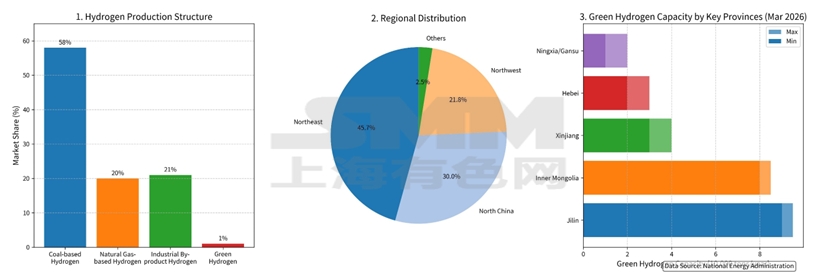
Производственные мощности по выработке водорода достигли скачкообразного роста, при этом Северо-Западный и Северный Китай стали ключевыми центрами агломерации. Под воздействием стратегии двойной углеродной нейтральности производственные мощности Китая по выработке водорода продемонстрировали взрывной рост. По состоянию на конец марта 2026 года введённые и строящиеся мощности по производству водорода из возобновляемых источников энергии по всему Китаю превысили 1 млн тонн в год, из которых действующие мощности составляют более 250 000 тонн в год, что более чем вдвое превышает показатель конца 2024 года. Промышленное размещение характеризуется высокой географической концентрацией; Северо-Западный и Северный Китай стали ключевыми кластерами благодаря ресурсным преимуществам. Цзилинь (более 90 000 тонн в год) и Внутренняя Монголия (более 80 000 тонн в год) демонстрируют стремительное развитие. Действующие мощности по производству водорода в Северо-Восточном Китае составляют 45,7% от общенационального объёма, формируя начальную промышленную модель «водородоснабжение с запада на восток и транспортировка водорода с севера на юг».
Структура снабжения продолжает оптимизироваться, а производство водорода из промышленных побочных продуктов стало основой низкозатратного водородоснабжения. В настоящее время в структуре водородоснабжения Китая происходят глубокие преобразования. Благодаря низкой себестоимости и преимуществам утилизации отходов производство водорода из промышленных побочных продуктов стало наиболее экономичным путём на данном этапе. Очистка водорода из побочного коксового газа угольной химии характеризуется практически нулевой стоимостью сырья, что идеально соответствует чувствительным к затратам промышленным сценариям. Одновременно, благодаря технологическим итерациям, стоимость зелёного водорода в ряде регионов Северо-Западного Китая снизилась до 12–15 юаней за килограмм, постепенно приближаясь к стоимости серого водорода и закладывая основу для долгосрочного низкоуглеродного водородоснабжения.
Сценарии применения эволюционировали от демонстрационных к диверсифицированным, при этом промышленность и транспорт выступают основными двигателями роста. 2026 год считается стартовым годом крупномасштабного промышленного применения водородной энергетики, со стремительным расширением сценариев в области углублённого применения. В транспортном секторе коммерческая эксплуатация водородных тяжёлых грузовиков достигла зрелости: в Люйляне (провинция Шаньси) введено в эксплуатацию более тысячи единиц. Запуск водородных заправочных станций для тяжеловесных железных дорог заполняет пробел в снижении углеродных выбросов железнодорожного транспорта. В промышленном секторе среди химических предприятий сформировалась замкнутая модель «производство и потребление водорода на месте путём очистки побочных продуктов». Промышленная декарбонизация заменила транспорт в качестве основной движущей силы роста отрасли.
II. Обзор последних проектов: два эталонных проекта точно соответствуют рыночным трендам
Проект компании Xinjiang Sunion Energy по производству водорода из коксового газа задаёт образец для производства водорода из промышленных побочных продуктов. Недавно проект Xinjiang Sunion Energy по производству зелёного водорода из коксового газа мощностью 5 000 нм³/ч был полностью введён в эксплуатацию. Проект преобразует отработанный промышленный коксовый газ в высокочистый чистый водород, реализуя рециклинг отходов и эффективно решая проблемы выбросов, одновременно обеспечивая низкозатратное водородоснабжение метанольных заводов. Кроме того, он предоставляет тиражируемую модель развития для зон агломерации угольной химии в Северо-Западном Китае и укрепляет региональный потенциал водородоснабжения.
Водородная заправочная станция Батута во Внутренней Монголии знаменует веху в применении водородной энергетики на тяжеловесных железных дорогах. По состоянию на 16 апреля 2026 года первая в Китае водородная заправочная станция для тяжеловесных железных дорог — станция Батута — зафиксировала совокупный объём заправки водородом свыше 10 000 кг. Оснащённая блочным компрессором на 45 МПа и максимальной скоростью заправки водородом 7,2 кг/мин, станция специально построена для мощных водородных маневровых локомотивов. Она знаменует существенный прогресс в применении водородной энергетики на тяжеловесных железных дорогах, решает проблему высоких выбросов традиционных локомотивов и подтверждает стабильность работы оборудования высокопоточной заправки водородом в условиях экстремального холода и высоких нагрузок.
III. Резюме и перспективы
В первом квартале 2026 года водородная энергетика Китая вступила в прагматичную стадию, ориентированную на расчёт экономической эффективности. От утилизации коксового газа в Синьцзяне до водородной заправки для железных дорог во Внутренней Монголии — логика промышленного развития смещается от исключительно политически обусловленной к многомерной модели, ведомой ресурсами, прикладными сценариями и экономической целесообразностью, что, как ожидается, преобразит структуру энергопотребления промышленного и транспортного секторов.
![[Обзор SMM] Еженедельный обзор отрасли водородной энергетики, 20260829-0903](https://imgqn.smm.cn/usercenter/PPLUj20251217171727.jpg)