Los futuros de referencia del acero inoxidable en China se dispararon a su nivel más alto desde 2023 en la última semana de negociación antes del feriado del Primero de Mayo, impulsados por una serie de interrupciones en el suministro de materias primas clave. Sin embargo, el repunte aún no ha encontrado un respaldo convincente de la demanda física, lo que plantea una reapertura potencialmente volátil.
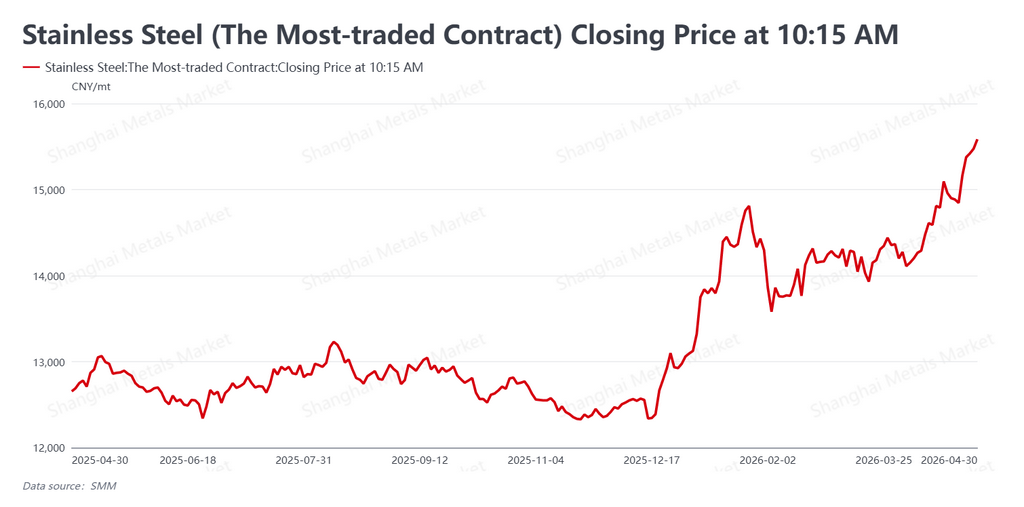
El contrato de acero inoxidable más negociado en la SHFE (SS2606) cerró en aproximadamente 2.278 $/t (15.585 RMB/t) el 30 de abril, ganando alrededor de 61 $/t (420 RMB/t) durante la semana. El movimiento fue impulsado casi en su totalidad por factores de presión de costos —interrupciones repentinas en el suministro de chatarra y el recorte de producción de un importante productor de níquel-cobalto— más que por una mejora en el consumo aguas abajo.
Contexto macroeconómico: fortaleza doméstica, cautela externa
El entorno macroeconómico ofreció un panorama mixto. En el ámbito doméstico, la Oficina Nacional de Estadísticas de China informó que las ganancias de las empresas industriales a gran escala aumentaron un 15,5% interanual en el primer trimestre, reforzando la narrativa de una recuperación manufacturera resiliente. Los datos de ingresos fiscales del Ministerio de Finanzas reflejaron el mismo tono.
En el exterior, el panorama fue menos favorable. La Reserva Federal de EE. UU. mantuvo las tasas sin cambios como se esperaba, pero la disidencia agresiva de tres miembros votantes —señalando resistencia a recortes a corto plazo— y la incertidumbre geopolítica en curso pesaron sobre la valoración a futuro de las materias primas en general. Por ahora, sin embargo, la historia de oferta doméstica de China está predominando sobre los vientos en contra externos.
El repunte de los futuros supera al mercado físico
A pesar del fuerte movimiento en los futuros, el mercado spot contó una historia más cautelosa. Según SMM (Shanghai Metals Market), el inventario total del mercado bajó ligeramente a 945.900 t esta semana, una modesta caída de 3.500 t. El desestocamiento continuó, pero a un ritmo lento.
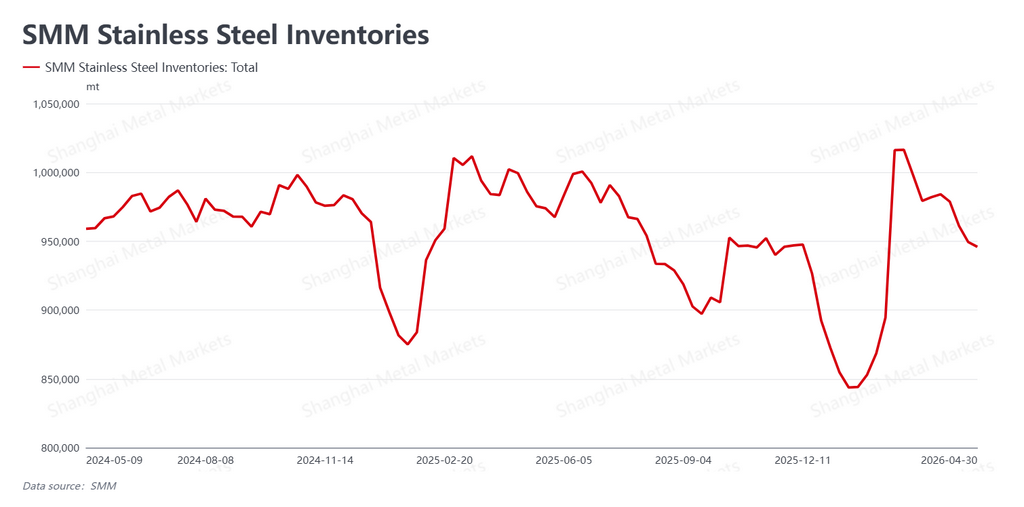
Más notablemente, las transacciones físicas fueron débiles. Los precios de futuros avanzaron demasiado rápido para que el spot los siguiera, y con la brecha de precios ampliándose, los compradores aguas abajo optaron en gran medida por mantenerse al margen. Aparte de una breve ráfaga de compras a principios de semana, los volúmenes de transacción se desvanecieron. Las operaciones de procesamiento —corte, nivelación y otros centros de servicio— reportaron actividad moderada, sin señales del reabastecimiento prevacacional que típicamente caracteriza finales de abril. La liquidez spot existente fue impulsada en gran medida por arbitraje de base más que por demanda genuina del usuario final.
En resumen, los futuros han descontado una narrativa alcista de materias primas que el mercado físico aún no ha validado.
El verdadero impulsor: shocks de oferta de materias primas
La acción de precios de la semana estuvo anclada por dos desarrollos en el lado de los costos.
Primero, un endurecimiento creciente en el mercado de chatarra de acero inoxidable de China. Controles más estrictos de facturación y cumplimiento fiscal en las transacciones de chatarra están generando preocupaciones a mediano y largo plazo sobre la disponibilidad de chatarra, empujando a las acerías chinas a aumentar su dependencia del arrabio de níquel (NPI) como materia prima sustituta.
Segundo —y con impacto más inmediato— un importante productor chino de níquel-cobalto anunció una parada temporal de producción en parte de sus operaciones a partir del 1 de mayo, citando el aumento de costos de materiales auxiliares y la presión de tasas de utilización sostenidamente altas. Se espera que el cierre afecte aproximadamente el 50% de la producción de la empresa. Esto envió una clara señal de contracción de oferta a través del complejo de materias primas.
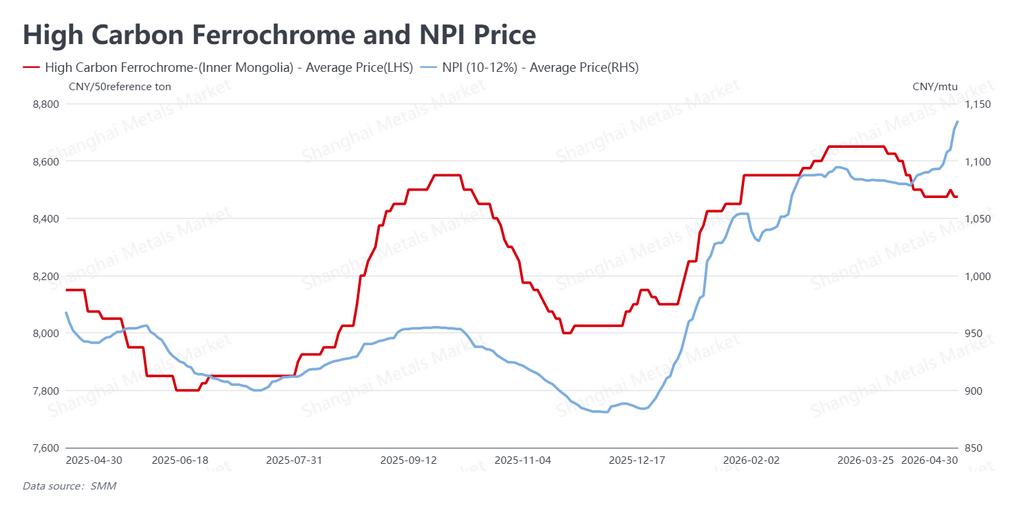
En respuesta, las ofertas de NPI subieron a aproximadamente 166 $ por punto de níquel (1.135 RMB/punto Ni) durante la semana. El ferrocromo de alto carbono se mantuvo estable en alrededor de 1.239 $ por 50 toneladas base (8.475 RMB/50 toneladas base). El desplazamiento al alza del piso de costos dio al repunte de futuros un ancla fundamental, incluso mientras la demanda spot quedaba rezagada.
Perspectiva: expectativas de costos vs. realidad de la demanda
El mercado de acero inoxidable de China cerró el tradicionalmente fuerte "Abril Plateado" con una nota firme, respaldado por la convergencia de restricciones en el suministro de chatarra y recortes de producción de un importante actor aguas arriba. Juntos, estos factores han elevado significativamente las expectativas de costos a corto plazo.
Pero la desconexión entre los elevados precios de futuros y la tibia demanda spot crea una tensión que necesitará resolverse. Cuando se reanude la negociación tras el feriado del Primero de Mayo, el mercado enfrentará una prueba directa: ¿pueden los compradores físicos absorber material a estos niveles de precios más altos, o la falta de seguimiento aguas abajo forzará una corrección?
Para los participantes de la industria, el riesgo clave de cara a mayo es la elevada volatilidad de precios en los máximos actuales. Se debe prestar especial atención a la rapidez —o lentitud— con que los usuarios finales comiencen a interactuar con material de mayor precio en el mercado físico. Hasta que eso ocurra, el repunte sigue siendo un movimiento impulsado por costos en busca de confirmación por el lado de la demanda.
Escrito por Bruce Chew
Analista de Níquel y Acero Inoxidable, Shanghai Metals Market
Correo electrónico: bruce.chew@metal.com
Tel: +601167087088