SMM April 29:
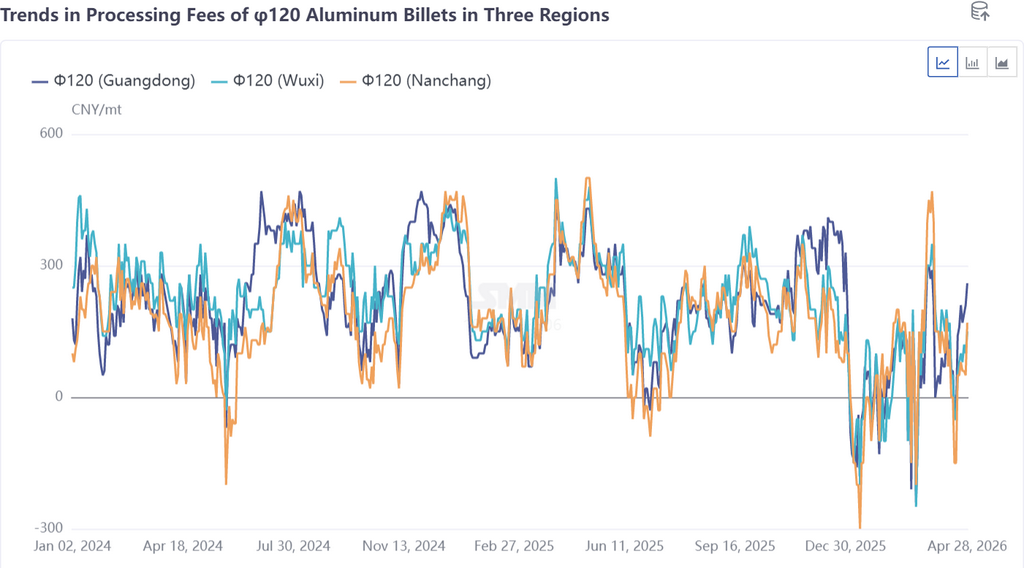
SMM Aluminum Billet Market: In March, the aluminum billet operating rate rebounded significantly by 11.8 percentage points MoM to 53.2%, but still declined 4.1 percentage points YoY. Downstream profile enterprises basically completed resumption of work after the Lantern Festival, with improved raw material purchase willingness and intensity. The aluminum billet market transactions were in an accelerated recovery phase, and both social inventory and in-factory inventory of aluminum billets showed clear destocking trends. As the PV and battery sectors entered the export order rush period, industrial billet orders recovered, providing certain support to the domestic aluminum billet supply side in March. However, as the sluggish trend in the architectural profile sector remained unchanged, end-use demand was still difficult to see substantial improvement. The processing fees for 6063-grade construction billets, which dominated the market at low levels, could hardly be called satisfactory. Although the center slowly rose from previous lows, it continued to remain below the cost line since Q1. Meanwhile, high aluminum price fluctuations were unfavorable for the stability of processing enterprise orders while driving production costs to surge sharply. Actual transactions still relied on volume discounts, and aluminum billet enterprises hovering on the edge of losses still faced severe capital pressure. Downstream enterprise restocking sentiment was clearly under pressure, industry profits declined, and competition intensified continuously, causing the overall recovery performance of the aluminum billet supply side during the March peak season to fall short of prior expectations.
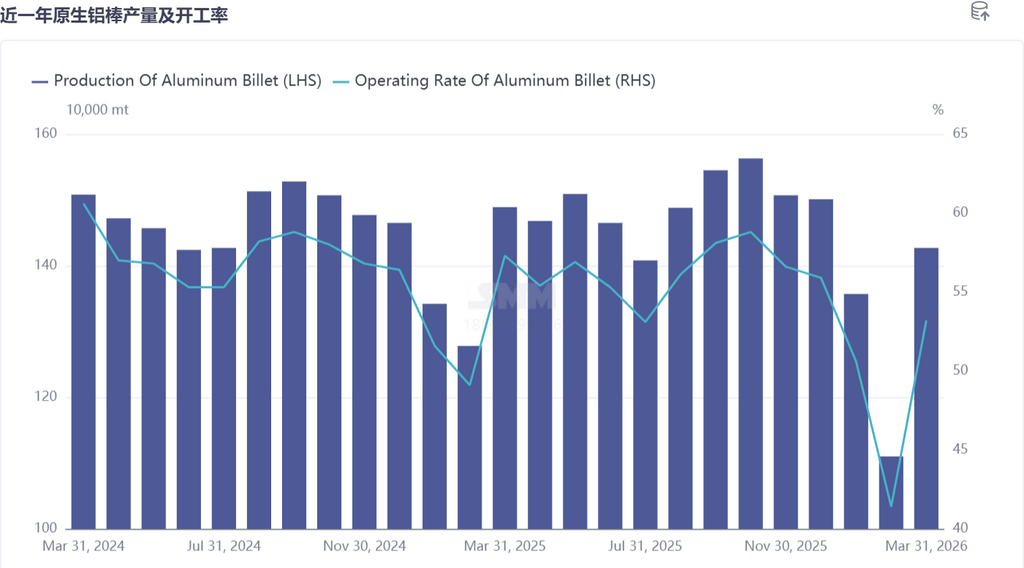
As April draws to a close, demand-side recovery is the core driver for alleviating inventory pressure. Pre-Chinese New Year stockpiling by downstream industries was relatively limited this year. After the holiday, as enterprise operating rates steadily rebounded, terminal rigid demand orders were continuously released, providing strong support for spot warehouse withdrawals. Combined with the traditional "Golden March, Silver April" peak consumption season deepening gradually, downstream processing enterprises' purchase willingness recovered, and spot market transactions were generally active, effectively offsetting the incremental pressure from the upstream supply side. However, the core contradiction of aluminum billet actual transactions relying on volume discounts showed no significant improvement, and downstream restocking actions became increasingly cautious and rational. Considering the domestic proportion of liquid aluminum, production expectations of aluminum billet sample enterprises, and the performance of post-holiday aluminum billet social inventory, in-factory inventory, and processing fees, SMM expects the domestic aluminum billet supply side to maintain stable operations in April, with the operating rate expected to edge up slightly to around 53.3%. However, this remains low compared to peak season levels in the same period in previous years, and the intensifying cut-throat competition remains severe.
Notably, as the transition from peak to off-season approaches, May-July enters the high-incidence period for phased production cuts at aluminum billet enterprises, and signs of this are already emerging in south-west China. Although aluminum billet processing fees in three regions have shown signs of bottoming out since late April, the performance since Q1 has left aluminum billet enterprise profitability in a worrying state. Production efficiency at billet plants in some regions has weakened, with enterprises resorting to production line maintenance, equipment servicing, product switching, and raw material reduction to achieve marginal production cuts. The domestic aluminum billet operating rate is expected to show no improvement in May.
Considering the current industry situation, the aluminum billet market is unlikely to see a strong reversal in the short term. The supply-demand structural imbalance continues to be prominent, industry shipment resistance remains elevated, and aluminum billet processing fee competition is becoming increasingly fierce, with cut-throat competition intensifying continuously. At this stage, the market generally adopts a low-price-for-volume business model, and the procurement side generally follows market trends and purchases based on prevailing prices, which has become the industry norm.
Looking ahead, primary aluminum price fluctuation trends, the recovery pace of profile end-use orders, and industry-related regulatory policies will be the core key factors determining aluminum billet market trends and driving market recovery.
(April production data are forecast values only. Data source disclaimer: Data other than publicly available information are derived by SMM based on public information, market communication, and SMM's internal database models, and are for reference only and do not constitute decision-making advice.)