เมื่อมองย้อนกลับไปในปี 2025 ซึ่งเป็นปีเปลี่ยนผ่านของการบังคับใช้นโยบาย “การออกใบแจ้งหนี้ย้อนกลับ” “เอกสารเลขที่ 770” ของคณะกรรมการพัฒนาและปฏิรูปแห่งชาติได้กำหนดไว้อย่างชัดเจนให้ยุติความร่วมมือด้านการส่งเสริมการลงทุนของรัฐบาลท้องถิ่นที่ไม่เป็นไปตามข้อกำหนด ภายใต้แนวนโยบายการสร้างตลาดแห่งชาติที่เป็นเอกภาพ อุตสาหกรรมเศษทองแดงจึงค่อย ๆ ก้าวสู่เส้นทางการพัฒนาที่เป็นมาตรฐานและสอดคล้องตามกฎหมายมากขึ้น
ในปี 2026 นโยบาย “การออกใบแจ้งหนี้ย้อนกลับ” จะเข้าสู่ระยะบังคับใช้อย่างเต็มรูปแบบ เมื่อเทียบกับช่วงเปลี่ยนผ่านในปี 2025 การกำกับดูแลของหน่วยงานภาษีจะลึกซึ้งและละเอียดมากขึ้น ได้แก่ ประการแรก เสริมความเข้มงวดในการตรวจสอบว่าบริษัทผู้ออกใบแจ้งหนี้เป็นนิติบุคคลที่ดำเนินธุรกิจจริง และขจัดการดำเนินงานของบริษัทเปลือก ประการที่สอง กำหนดให้ผู้ออกใบแจ้งหนี้ต้องมีสถานประกอบการจริง โดยที่อยู่ซึ่งใช้เพียงเพื่อออกใบแจ้งหนี้และโอนเงินจะถือเป็นการออกใบแจ้งหนี้เท็จ ประการที่สาม บังคับใช้อย่างเข้มงวดให้ “3 กระแส” ได้แก่ กระแสเงิน กระแสใบแจ้งหนี้ และกระแสสินค้า สอดคล้องกัน เพื่อให้มั่นใจว่าธุรกรรมทางธุรกิจมีวงจรปิดที่สมบูรณ์
วิสาหกิจ “นกอพยพ” ที่ก่อนหน้านี้พึ่งพา “รางวัลและเงินอุดหนุน” ที่ผิดกฎหมายจากรัฐบาลท้องถิ่น จะยากที่จะดำเนินต่อไปได้ตั้งแต่ปี 2026 เป็นต้นไป รูปแบบ “เศรษฐกิจใบแจ้งหนี้” ได้ถูกยุติลงแล้ว และในระดับท้องถิ่นก็ห้ามการคืนเงินทางการคลังที่ผิดกฎหมายหรือการลดหย่อนและยกเว้นในรูปแบบแฝงทุกรูปแบบ หากตรวจพบ ผู้ฝ่าฝืนจะต้องเผชิญบทลงโทษรุนแรงจากหน่วยงานของรัฐที่เกี่ยวข้อง
“การออกใบแจ้งหนี้ย้อนกลับ” ไม่เพียงช่วยแก้ปัญหาใบกำกับภาษีซื้อของเศษทองแดงที่ขาดหายมาอย่างยาวนาน แต่ยังเป็นฐานสำคัญในการตรวจสอบความแท้จริงของการดำเนินธุรกิจของบริษัทอีกด้วย ตามแนวนโยบาย หลังจากบริษัทรีไซเคิลทรัพยากรออกใบแจ้งหนี้ให้แก่ผู้ขายที่เป็นบุคคลธรรมดาแล้ว บริษัทสามารถนำภาษีมูลค่าเพิ่มขาออกที่ต้องชำระมาหักเครดิตได้ 1% ตามที่กำหนด ขณะเดียวกัน บริษัทรีไซเคิลยังต้องชำระภาษีเงินได้บุคคลธรรมดาล่วงหน้าแทนผู้ขายที่เป็นบุคคลธรรมดาในอัตรา 0.5% ของรายได้จากการขาย ทำให้ภาระภาษีของธุรกรรมมีความชัดเจนและโปร่งใสมากขึ้น
นโยบายยังได้กำหนดเพิ่มเติมให้บริษัทจัดทำสมุดบัญชีการจัดซื้อที่เป็นมาตรฐาน และบันทึกกระบวนการของแต่ละธุรกรรมผ่านภาพถ่าย วิดีโอ และวิธีการอื่น ๆ เมื่อพบการออกใบแจ้งหนี้เท็จ บริษัทอาจไม่เพียงต้องชำระภาษีย้อนหลังและค่าปรับเท่านั้น แต่อาจต้องรับผิดทางอาญาด้วย
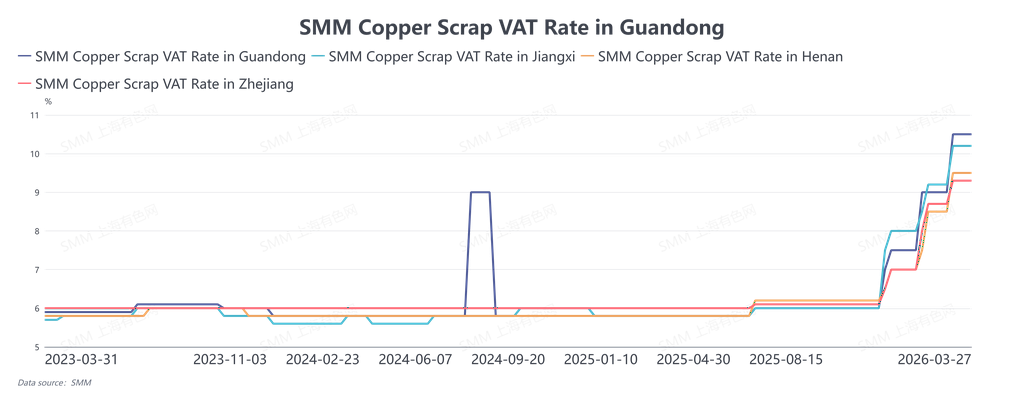
จากการสำรวจของ SMM พบว่า บริษัทจำนวนมากขึ้นเรื่อย ๆ ได้เริ่มดำเนินการตามข้อกำหนดของ “การออกใบแจ้งหนี้ย้อนกลับ” อย่างไรก็ตาม เนื่องจากวงเงินการออกใบแจ้งหนี้ที่ผู้ขายซึ่งเป็นบุคคลธรรมดาสามารถจัดหาได้มีจำกัด และวงเงินรวมรายปีของ “การออกใบแจ้งหนี้ย้อนกลับ” สำหรับบริษัทเดียวไม่เกิน 5 ล้านบาทหยวน ทำให้หลายบริษัทต้องหันไปใช้เศษทองแดงนำเข้าหรือเศษทองแดงในประเทศที่รวมภาษีมูลค่าเพิ่มแล้วเป็นส่วนเสริม เมื่อความต้องการอุปทานที่รวมภาษีมูลค่าเพิ่มยังคงเพิ่มขึ้นอย่างต่อเนื่อง ต้นทุนราคาของสินค้าประเภทนี้ก็ปรับสูงขึ้นอย่างต่อเนื่อง และในบางวันซื้อขาย ราคาทองแดงเส้นสว่างเปลือยที่รวมภาษีมูลค่าเพิ่มแล้วถึงขั้นกลับสูงกว่าราคาทองแดงแคโทด ในปี 2026 โครงสร้างตลาดจะเผชิญการเปลี่ยนแปลงอย่างลึกซึ้ง โดยการแข่งขันของบริษัทจะเปลี่ยนจาก “แข่งขันกันด้วยเงินอุดหนุนและสิทธิประโยชน์” ไปสู่ “แข่งขันกันด้วยประสิทธิภาพพลังงาน”:
ภายใต้บริบทของตลาดแห่งชาติแบบบูรณาการ ความแตกต่างของราคาเสนอซื้อขายวัตถุดิบและผลิตภัณฑ์สำเร็จรูปที่เดิมเกิดจากเงินอุดหนุนและแรงจูงใจท้องถิ่นที่แตกต่างกันจะค่อยๆ เลือนหาย และการไหลเวียนของเศษทองแดงจะกลับสู่ปัจจัยพื้นฐานด้านอุปสงค์-อุปทานและตรรกะของต้นทุนการขนส่ง
หลังจากการทำให้การดำเนินงานที่ถูกต้องตามกฎระเบียบเป็นมาตรฐานแล้ว ประสิทธิภาพในการใช้เงินทุนของผู้ประกอบการ การเข้าถึงการสนับสนุนสินเชื่อจากธนาคาร และความสามารถด้านการเงินของห่วงโซ่อุปทาน จะกลายเป็นจุดแข็งการแข่งขันที่สำคัญ ท่ามกลางความผันผวนของราคา ความสามารถของผู้ประกอบการในการคว้าโอกาสในตลาดสปอตด้วยการใช้ประโยชน์จากความได้เปรียบด้านต้นทุนเงินทุน จะส่งผลโดยตรงต่อความสามารถในการทำกำไร
บริษัทรีไซเคิลทรัพยากรเชลล์ที่ไม่เป็นไปตามข้อกำหนดและผู้ผลิตแบบ “นกอพยพ” จะถอนตัวออกจากตลาดอย่างหนาแน่น เหลือเพียงผู้ผลิตที่ถูกต้องตามกฎหมายและเป็นไปตามข้อกำหนดด้านการยื่นจดบันทึกและการอนุมัติของกระทรวงอุตสาหกรรมและเทคโนโลยีสารสนเทศเท่านั้น ที่จะสามารถเข้าร่วมการแข่งขันอย่างเป็นธรรมในตลาดอนาคตได้
กล่าวโดยสรุป ในปี 2026 ตลาดเศษทองแดงกำลังก้าวสู่ความเป็นมาตรฐานและความโปร่งใสที่มากขึ้น ขณะที่นโยบายระดับชาติยังคงได้รับการปรับปรุง “เส้นแดง” ของการดำเนินธุรกิจยิ่งชัดเจนขึ้น และการปฏิบัติตามกฎระเบียบได้กลายเป็นเงื่อนไขเบื้องต้นของการอยู่รอดและการพัฒนา มีเพียงการเข้าใจนโยบายและใช้กติกาให้เกิดประโยชน์เท่านั้นที่ผู้ประกอบการจะสามารถก้าวหน้าได้อย่างมั่นคงและต่อเนื่องในกระบวนการปรับโครงสร้างอุตสาหกรรมนี้