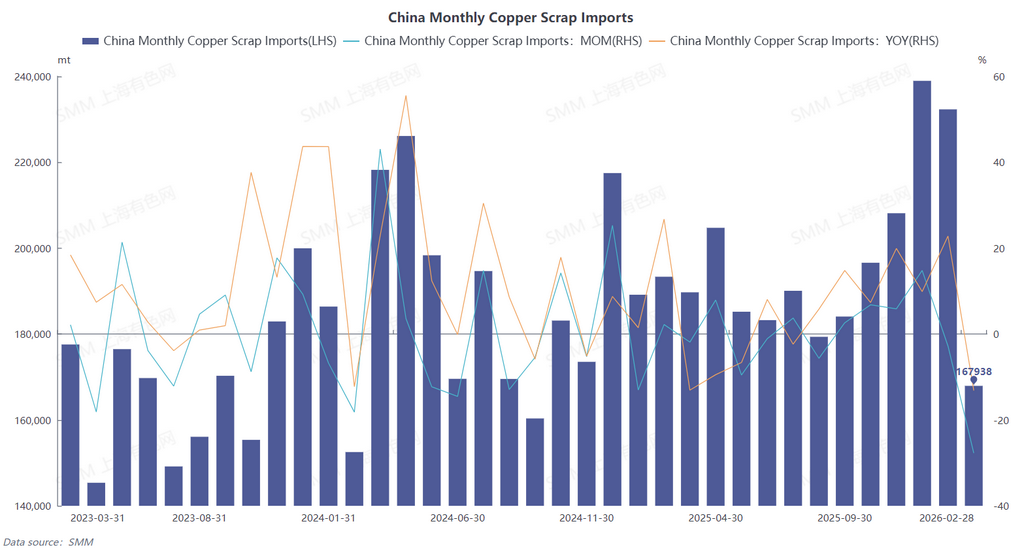
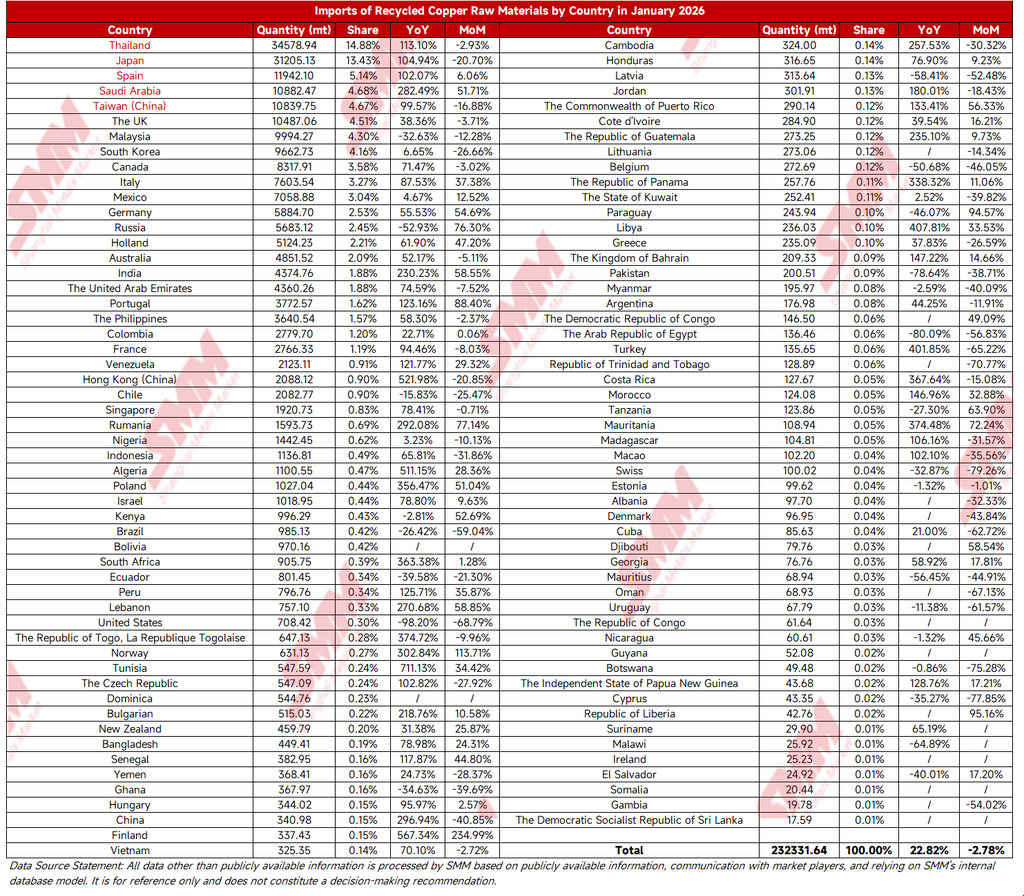
Menurut data terbaru dari Administrasi Umum Bea Cukai, Tiongkok mengimpor 232.300 mt kandungan fisik scrap tembaga dan scrap tembaga cacah pada Januari 2026, turun 2,78% dibanding bulan sebelumnya dan naik 22,82% dibanding tahun sebelumnya. Pada Februari, impor tercatat 167.900 mt kandungan fisik, turun 27,72% dibanding bulan sebelumnya dan turun 13,14% dibanding tahun sebelumnya. Secara kumulatif, impor Januari–Februari 2026 mencapai 400.300 mt kandungan fisik, naik 4,64% secara tahunan. (Kode HS: 74040000)
Sumber impor scrap tembaga Tiongkok menunjukkan karakteristik yang jelas berupa “satu pemasok dominan dengan beberapa pemasok kuat, serta sumber pasokan yang terdiversifikasi.” Jepang, Thailand, dan Spanyol tetap kokoh di tiga besar dalam jangka panjang, dengan posisi inti sebagai pemasok yang solid. Jepang: ekspor ke Tiongkok mencapai 31.200 mt pada Januari, setara 13,43%, naik 104,94% dibanding tahun sebelumnya; pada Februari, ekspor sebesar 26.600 mt, dengan pangsa naik menjadi 15,81%, dan masih tumbuh 13,93% secara tahunan. Meski kedua bulan mencatat penurunan bulanan, posisinya sebagai pemasok inti tetap tidak tergoyahkan. Thailand: ekspor sebesar 34.600 mt pada Januari, menjadikannya pemasok terbesar pada bulan itu, dengan pangsa 14,88%, naik 113,1% dibanding tahun sebelumnya; pada Februari, ekspor sebesar 26.400 mt, mencakup 15,69%, naik 27,53% secara tahunan, bersama Jepang membentuk dua sumber pasokan utama. Spanyol, Arab Saudi, dan negara lainnya juga mempertahankan laju pertumbuhan yang relatif tinggi, menjadi penopang penting bagi diversifikasi pasokan.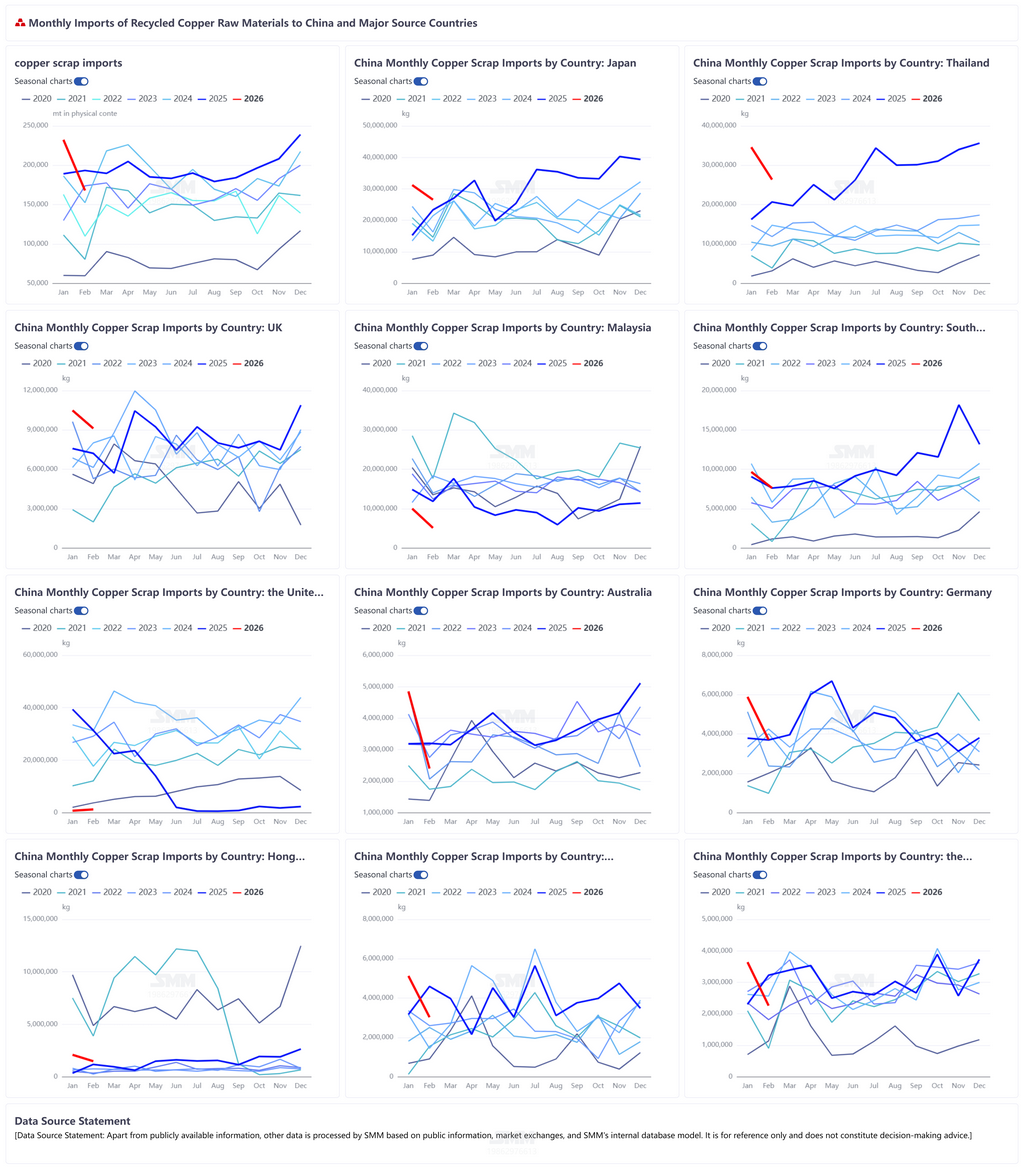
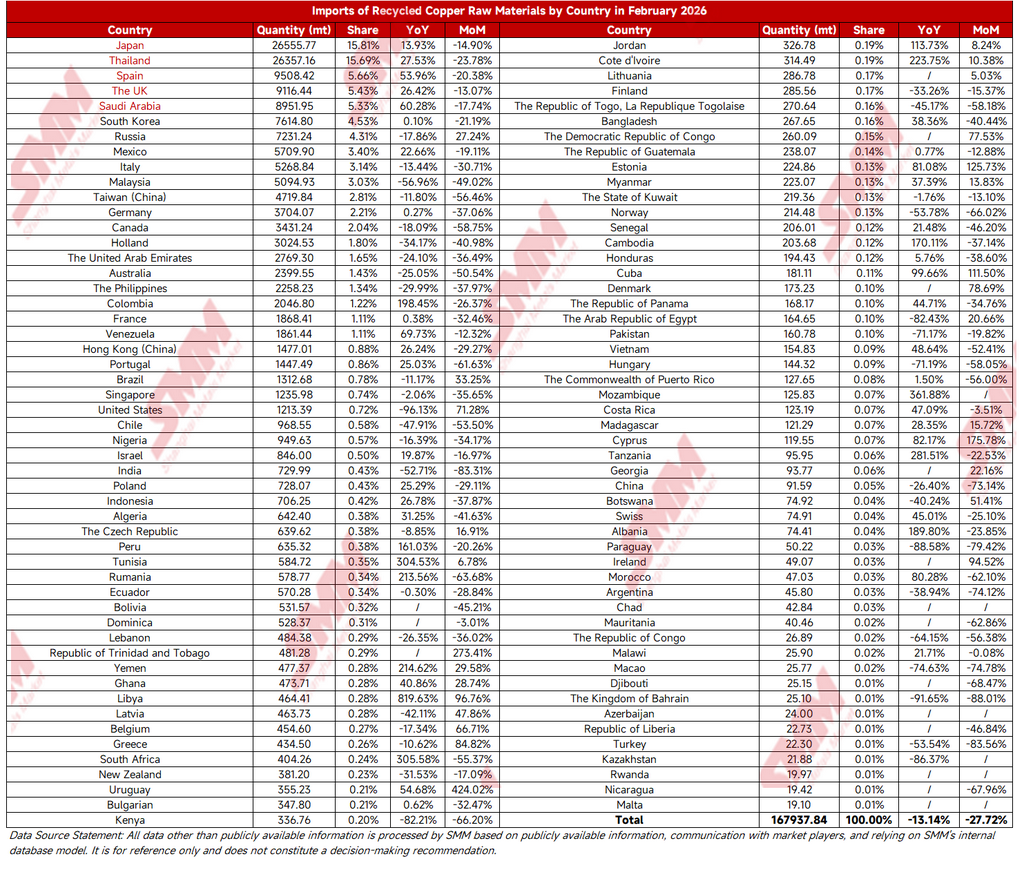
Februari bertepatan dengan libur Tahun Baru Imlek tradisional di Tiongkok, ketika perusahaan pengolahan tembaga di Tiongkok umumnya memasuki masa penghentian operasi dan pemeliharaan, permintaan hilir menyusut sementara, dan minat perusahaan untuk membeli bahan baku menurun signifikan. Pada saat yang sama, logistik pelabuhan dan efisiensi bea cukai juga melambat sementara karena libur, yang semakin menyebabkan impor Februari turun 27,72% dibanding bulan sebelumnya. Fluktuasi ini sejalan dengan pola impor di sekitar Tahun Baru Imlek pada tahun-tahun sebelumnya. Selain itu, dilihat dari data per negara, semua negara pemasok inti mencatat penurunan bulanan dengan derajat yang berbeda-beda pada Februari, yang secara langsung menekan total impor.
Dalam jangka pendek, seiring perusahaan di Tiongkok sepenuhnya melanjutkan kerja dan produksi setelah Tahun Baru Imlek, permintaan hilir berangsur pulih, dan logistik pelabuhan kembali normal, impor scrap tembaga diperkirakan akan pulih signifikan secara bulanan pada Maret. Dalam jangka panjang, pola pasokan “satu pemasok dominan dengan beberapa pemasok kuat, serta sumber pasokan yang terdiversifikasi” akan berlanjut. Seiring pelepasan kapasitas global skrap tembaga, impor skrap tembaga kemungkinan akan mempertahankan pertumbuhan yang stabil, memberikan dukungan bahan baku penting bagi rantai industri tembaga Tiongkok.

![[ Analisis SMM ] Panduan Visual Laporan Semester 2026 dari 19 Pabrik Peleburan Tembaga](https://imgqn.smm.cn/usercenter/gCNEi20251217171715.jpeg)