Em 9 de março, a SMM registou o inventário social total de cátodo de cobre nas principais regiões da China em 578.900 t, um aumento de 1.700 t em relação à semana passada e de 70.400 t em relação a 24 de fevereiro, atingindo um máximo histórico. No mesmo período, os prémios à vista do cátodo de cobre SMM #1 recuperaram gradualmente, de um prémio de -260 yuan/t em 27 de fevereiro para paridade em 10 de março. No geral, esta subida dos prémios à vista foi impulsionada principalmente pela aproximação da entrega, contexto em que o spread em contango entre os contratos do mês corrente e do mês seguinte se manteve em torno de 300 yuan/t; os fornecedores mantiveram os preços firmes e restringiram as vendas, enquanto cerca de metade do material foi convertida em warrants e ficou bloqueada, reduzindo em conjunto a oferta circulante.
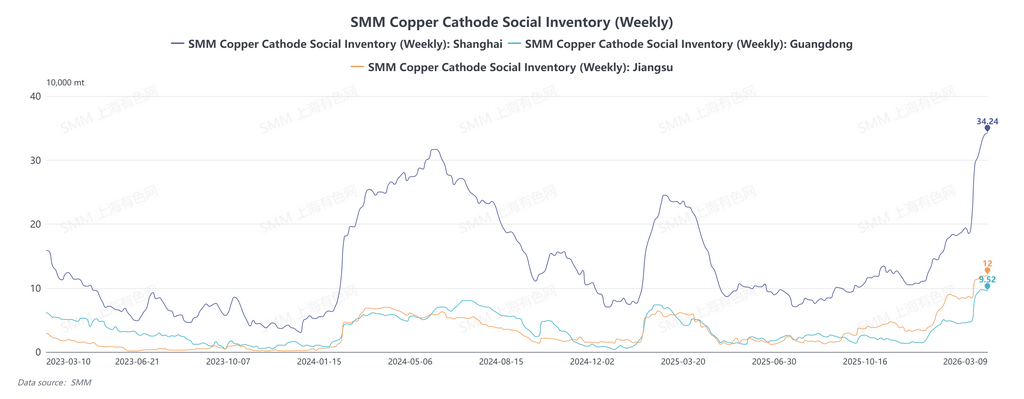
Observando o ritmo de acumulação de inventários, da semana de 2 de março a 9 de março, os inventários em três regiões-chave aumentaram 14.400 t, um crescimento de 2,65%. Isto representa uma desaceleração significativa face ao aumento semanal médio de cerca de 45.000 t no período de 5 a 26 de fevereiro. A desaceleração na acumulação de inventários abriu espaço para a melhoria dos prémios. A acumulação atual de inventários decorre principalmente de dois fatores: primeiro, a continuação das chegadas de cobre importado. Segundo pesquisa da SMM, um volume substancial de cobre importado continua a chegar recentemente, e espera-se que as chegadas não apresentem uma queda significativa em março. O fluxo estável de material importado fornece um complemento contínuo de oferta ao mercado doméstico e é um suporte crucial para manter níveis elevados de inventário total. A situação efetiva das chegadas de importação em abril ainda está por confirmar, exigindo atenção aos dados aduaneiros no fim do mês e às mudanças no ritmo de desembaraço nos portos. Segundo, parte das cargas está a ser entregue para stocks em zona franca/warrants de armazém.
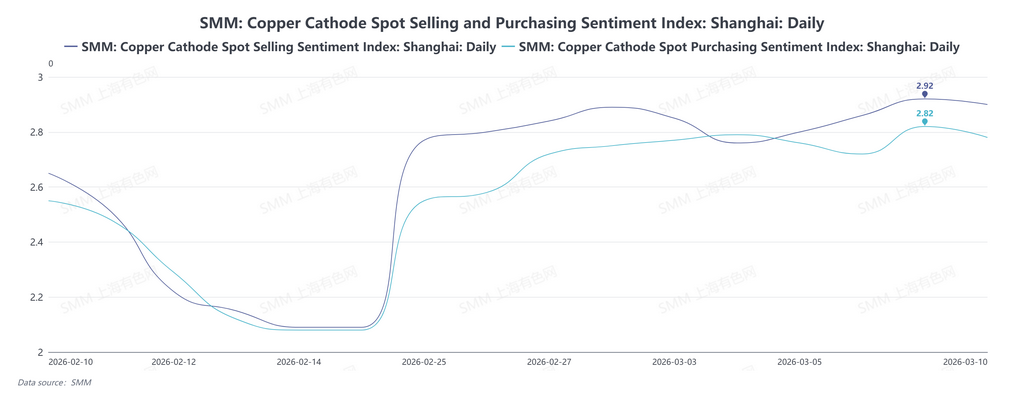
De acordo com os índices de sentimento de compra e venda no mercado à vista de cobre eletrolítico na região de Xangai registados pela SMM, o índice de sentimento de compra subiu de 2,08 em 24 de fevereiro para 2,78 em 10 de março, enquanto o índice de sentimento de venda aumentou de 2,09 para 2,90 no mesmo período. Alguns participantes a jusante têm aceitação limitada dos preços atuais do cobre, mantendo uma estratégia de compras focada nas necessidades imediatas, o que faz com que o sentimento de venda supere ligeiramente o de compra.
Com base nas comunicações da SMM com empresas:
-
Produtor a montante 1: O consumo recente é relativamente bom, com vendas diárias em torno de 2.000 t.
-
Produtor a montante 2: Atualmente, o cobre eletrolítico produzido destina-se principalmente à exportação. Os estoques domésticos estão baixos, portanto não há pressa em vender. Não há disposição para vender quando os descontos são excessivos.
-
Trader 1: As cotações no mercado de Changzhou são mais altas do que em Xangai, principalmente porque as cargas circulantes disponíveis localmente são, em sua maioria, warrants. Na atual estrutura de spread, os detentores têm alta flexibilidade de venda — podem optar por vender ou manter.
-
Trader 2: O mercado não está com falta de oferta; ainda há um grande número de warrants em armazéns aguardando absorção. No entanto, devido ao mecanismo de entrega, o incentivo para vender depende do nível do prêmio. Somente quando o prêmio excede o custo de capital haverá forte disposição para liquidar.
-
Usuário a jusante 1: Os pedidos recentes estão relativamente robustos. Quando os preços do cobre caíram em 9 de março, já recompletamos estoques no ponto mais baixo. O estoque atual de matéria-prima sustenta as operações até 15 de março. Não há planos imediatos de novas compras; as necessidades posteriores serão atendidas principalmente por retiradas de contratos de longo prazo.
-
Usuário a jusante 2: O prêmio spot recente tem se mantido bastante firme, principalmente devido ao spread entre meses. Sem um spread mensal tão alto, o prêmio certamente não atingiria esse nível.
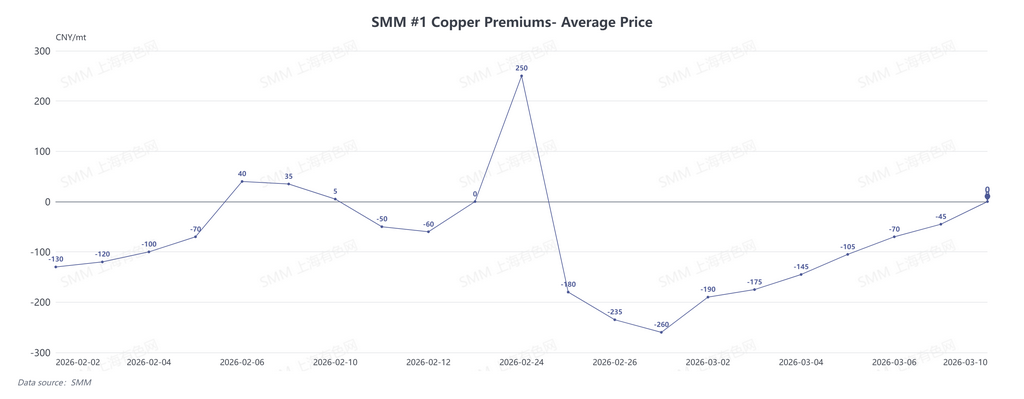
Em resumo, esta rodada de recuperação dos prêmios spot é impulsionada por múltiplos fatores:
Primeiro, a aproximação da entrega e o alargamento do spread mensal reforçaram a disposição dos detentores em sustentar os preços. Com a entrega se aproximando, o spread de contango entre meses permanece em torno de 300 yuan/tonelada. Os detentores estão sustentando os preços, relutantes em vender, e fortemente inclinados a entregar estoques na forma de warrants.
Segundo, a estrutura de estoques ampliou ainda mais a restrição da oferta circulante disponível. Tomando Jiangsu como exemplo, de 118.000 toneladas de estoque social, 94.000 toneladas eram warrants de futuros. Essa parte fica travada em armazéns de entrega, dificultando a formação de oferta efetiva no curto prazo, levando a um período de relativa restrição das cargas circulantes no mercado spot. Segundo a SMM, algumas empresas a jusante em Jiangsu tiveram dificuldade para obter material no mercado e optaram por comprar usando a média do SMM Flat Copper Price como referência, com pequenos ajustes.
Em terceiro lugar, a retomada abrangente das atividades por empresas a jusante liberou a demanda de compras. Após o Festival das Lanternas, empresas de processamento a jusante em Jiangsu, Zhejiang e Xangai entraram em fase de retomada total. Pesquisas indicam que as empresas do setor de materiais para baterias mantêm altas taxas de operação. Processadores de folha de cobre relataram que os fabricantes de baterias a jusante sustentam altas taxas de operação, com os cronogramas de produção de março já apresentando características de alta temporada. Empresas de tubos de cobre, apoiadas pela formação de estoques de alta temporada do setor de ar-condicionado, têm taxas de operação acima dos níveis pré-feriado. Embora o ritmo de recuperação nos setores de fios e cabos e de vergalhão de cobre seja relativamente lento, a demanda geral de compras melhorou significativamente em comparação com a primeira semana após o feriado.
Em quarto lugar, a queda dos preços do cobre ativou a intenção de recomposição de estoques a jusante. Recentemente, os preços dos futuros de cobre em Xangai recuaram um pouco, estimulando as empresas a jusante a comprar nas quedas. Antes, pressionados pelos altos preços do cobre, os participantes a jusante mantinham, em sua maioria, uma estratégia cautelosa de compras just-in-time, resultando em níveis geralmente baixos de estoques de matérias-primas. Após a correção de preços, algumas empresas aproveitaram a oportunidade para recompor estoques, impulsionando a atividade de negociações no mercado à vista.
![[SMM Sulfur Flash] Negociações de enxofre à vista deslizam, cotações da refinaria de Shandong caem](https://imgqn.smm.cn/usercenter/HhNHP20251217171708.jpg)
![Disposição de reabastecimento pré-feriado não é forte, negociações à vista moderadas [SMM Cobre à vista do sul da China]](https://imgqn.smm.cn/usercenter/KtfdC20251217171713.jpeg)
![Entrega de contrato de longo prazo é dominante, atividade do mercado spot está fraca [SMM Cobre Spot do Norte da China]](https://imgqn.smm.cn/usercenter/XTMPt20251217171713.jpeg)