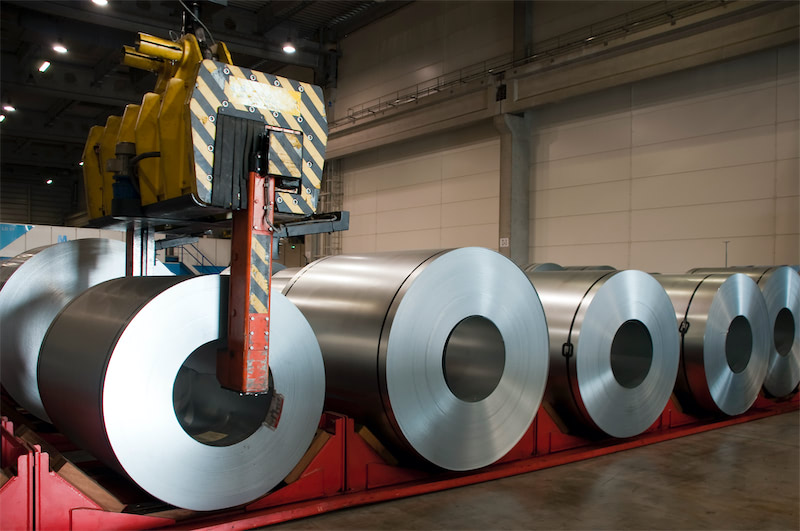
SMM data shows that this week (January 26-30, 2026), as the Chinese New Year holiday approached, the most-traded stainless steel contract (SS2603) saw a significant pullback due to risk-averse capital exiting. By January 30, the contract price pulled back to 14,160 yuan/mt, down 560 yuan/mt (-3.80%) from the closing price of 14,720 yuan/mt on the previous Friday. At the beginning of the week, the futures tried to maintain a high level, but as the holiday neared, the bulls' willingness to take profits increased, coupled with pressure from bears, leading to a substantial decrease in open interest. The concentrated withdrawal of funds caused the futures to quickly give up earlier gains, with the price center returning to a rational range.
From a macro perspective, the policy tone remained loose, but had limited impact on the pre-holiday market. Overseas, the US Fed kept interest rates unchanged at 3.5-3.75% in its January meeting, and Powell stated that policies would be adjusted based on data, and if tariff inflation eases, there could be relaxation, which was in line with market expectations. Domestically, PBOC Governor Pan Gongsheng clearly stated that a moderately loose monetary policy would be implemented in 2026, with room for RRR cuts and interest rate cuts; previously, the central bank conducted 900 billion yuan worth of one-year MLF operations to maintain ample liquidity. Despite a generally warm macro environment, the approach of the long holiday led to a dominant risk-averse sentiment, guiding short-term fund flows, and the macro tailwinds failed to prevent the pre-holiday capital withdrawal.
Fundamentally, the spot market has largely entered a "closed" state, with inventory showing a slight rebound. SMM's latest data indicates that social inventory rose to 853,000 mt this week, an increase of about 9,000 mt from 844,100 mt last week, indicating a small inventory buildup. In terms of spot transactions, pre-holiday stockpiling demand from downstream sectors was not evident, and trading remained sluggish; by January 30, most enterprises had stopped taking orders, and traders were gradually closing, entering a "price without market" holiday mode. High prices suppressed pre-holiday stockpiling enthusiasm, and the lack of demand made it difficult for spot prices to support the previous high futures premium. As the futures pulled back, the spot-futures price spread contradiction slightly eased.
The cost side still showed strong resilience, forming a stark contrast with the futures pullback. By January 30, the price of high-grade NPI continued to rise to 1,054 yuan/mtu, up another 11.5 yuan from the previous week; high-carbon ferrochrome was raised to 8,550 yuan/mt (50% metal content). The uncertainty of Indonesia's ore quota policy continued to support raw material prices, keeping steel mill production costs high. Despite a significant pullback in the futures, spot raw materials did not loosen, meaning that upon return after the holiday, the high cost line will remain the strongest bottom support for stainless steel.
In summary, this week's market performance was typical of "pre-holiday capital risk aversion" and "profit-taking."Against the backdrop of a closed spot market and stagnant demand, funds opted to take profits, leading to a significant correction in futures. However, the continuous rise in NPI prices has capped the deep downside room for valuations, and while the inventory of 853,000 mt saw a slight increase, overall pressure remains manageable. Looking ahead to the post-holiday market, the focus of contention will shift from "fund sentiment" to "the race between costs and inventory buildup." Attention should be paid to whether the extent of inventory accumulation during the Chinese New Year exceeds expectations, as well as the downstream acceptance of high-cost pricing after the holiday. In the initial post-holiday period, futures are expected to seek stabilization supported by costs, while vigilance is warranted against volatility risks arising from inventory changes.
![Before the holiday, the black chain is unlikely to see a trend-driven market [SMM Steel Industry Chain Weekly Report].](https://imgqn.smm.cn/usercenter/zUFfM20251217171748.jpg)
![[SMM Chromium Daily Review] Inquiries and Transactions Weakened, Chromium Market Showed Mediocre Performance Before the Holiday](https://imgqn.smm.cn/usercenter/ENDOs20251217171718.jpg)