

[Analysis] Raw Material Pressure and Alliance Regulation Intertwined, EMM Market Stops Falling and Rebounds
Entering late January 2026, the domestic EMM market exhibited an operational pattern characterized by "raw materials under pressure, optimized supply, and stable yet supported demand." Prices that had been continuously declining gradually stopped falling and rebounded, with market sentiment recovering. Coupled with the release of downstream stocking demand ahead of the Chinese New Year, the industry widely anticipated a slight short-term price rise. Subsequently, as the supply-demand pattern tends toward balance, the market is expected to gradually stabilize.
Data Source Statement: Except for publicly available information, all other data are processed by SMM based on publicly available information, market communication, and relying on SMM‘s internal database model. They are for reference only and do not constitute decision-making recommendations.
For any inquiries or to learn more information, please contact: lemonzhao@smm.cn
For more information on how to access our research reports, please contact:service.en@smm.cn
Related News
![Before the holiday, the black chain is unlikely to see a trend-driven market [SMM Steel Industry Chain Weekly Report].](https://imgqn.smm.cn/usercenter/zUFfM20251217171748.jpg)
Feb 6, 2026 18:30
Before the holiday, the black chain is unlikely to see a trend-driven market [SMM Steel Industry Chain Weekly Report].
Read More
Before the holiday, the black chain is unlikely to see a trend-driven market [SMM Steel Industry Chain Weekly Report].
This week, ferrous metals were in the doldrums, with coking coal and coke staging a mid-week rise. At the beginning of the week, financial markets experienced sharp fluctuations, dragging down sentiment in the ferrous chain and leading to a pullback in futures. Mid-week, Indonesia's cut to coke production quotas drove coking coal and coke futures to lead the gains, though the impact was more pronounced on thermal coal, while coking coal's rise was largely sentiment-driven and short-lived. In the latter part of the week, finished products continued their seasonal inventory buildup, and support from the raw material side weakened, causing the entire ferrous chain to pull back. In the spot market, with the Chinese New Year holiday approaching, purchasing activity slowed down further, with end-users only making limited, as-needed purchases at low prices.
Feb 6, 2026 18:30
Feb 6, 2026 18:09
MMi Daily Iron Ore Report (February 6)
Read More
MMi Daily Iron Ore Report (February 6)
Today, the DCE iron ore futures continued to hit bottom today, with the most-traded contract I2605 closing at 760.5 yuan/mt, down 1.23% from the previous trading day. Spot prices fell by 5–10 yuan/mt compared to the previous trading day.
Feb 6, 2026 18:09
![[SMM Chromium Daily Review] Inquiries and Transactions Weakened, Chromium Market Showed Mediocre Performance Before the Holiday](https://imgqn.smm.cn/usercenter/ENDOs20251217171718.jpg)
Feb 6, 2026 17:41
[SMM Chromium Daily Review] Inquiries and Transactions Weakened, Chromium Market Showed Mediocre Performance Before the Holiday
Read More
[SMM Chromium Daily Review] Inquiries and Transactions Weakened, Chromium Market Showed Mediocre Performance Before the Holiday
[SMM Chrome Daily Review: Trading and Inquiries Weakened, Chrome Market Showed Mediocre Performance Before the Holiday] February 6, 2026: Today, the ex-factory price of high-carbon ferrochrome in Inner Mongolia was 8,500-8,600 yuan/mt (50% metal content), flat MoM from the previous trading day...
Feb 6, 2026 17:41
Related News
Before the holiday, the black chain is unlikely to see a trend-driven market [SMM Steel Industry Chain Weekly Report].
Feb 06, 2026 18:30
MMi Daily Iron Ore Report (February 6)
Feb 06, 2026 18:09
[SMM Chromium Daily Review] Inquiries and Transactions Weakened, Chromium Market Showed Mediocre Performance Before the Holiday
Feb 06, 2026 17:41
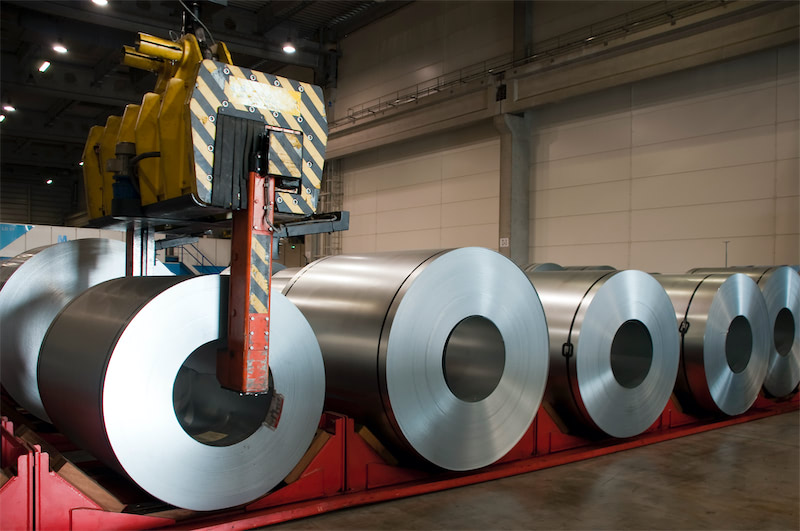
[Daily Trading of SMM Hot-Rolled Coil] Futures fluctuated, spot trading further weakened.
Feb 06, 2026 17:37