The key is not “EV vs. ESS,” but “EV + ESS.” As demand drivers diverge by region, portfolio strategy and execution priorities must diverge as well.
Looking at the global battery market through a “China vs. non-China” lens is more actionable than the common “Asia vs. global” split. China operates close to a self-contained ecosystem, supported by massive domestic demand and a highly concentrated supply chain. Outside China, however, market dynamics differ sharply across regions such as Europe and North America. Policy signals, the pace of infrastructure build-out, grid constraints, and customers’ cost sensitivity all vary, which means demand trajectories vary as well.
Against this backdrop, one shift stands out: EVs continue to provide the foundation of battery demand, while ESS (Energy Storage Systems) is quickly growing into a second growth engine. This is not an argument against EVs. Rather, in non-China markets—where EV demand paths are increasingly sensitive to regional variables—the most natural strategy is to grow ESS alongside EVs to expand total addressable demand and stabilize utilization.
Europe: EV Demand Is Supported by Infrastructure; Competition Converges on “Execution Metrics”
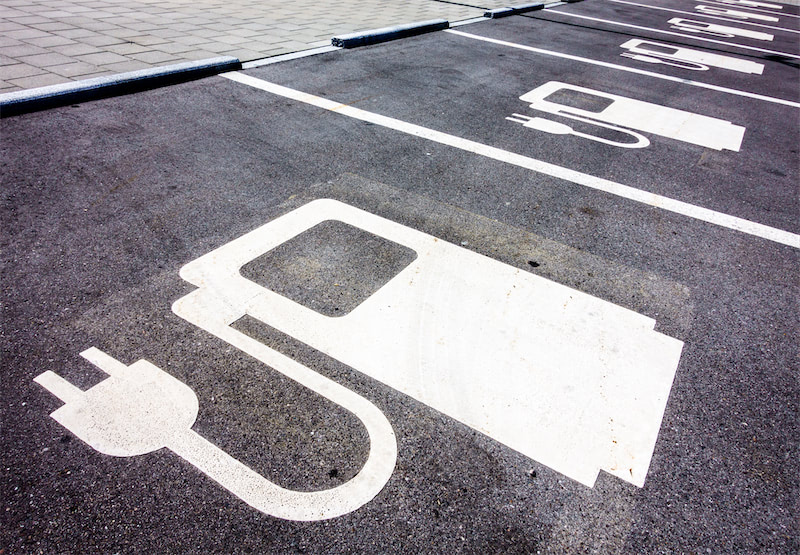
Europe remains a region where policy architecture is relatively explicit: EV adoption is expected to move in parallel with infrastructure deployment. The EU’s alternative fuels infrastructure framework effectively pushes charging build-out along key corridors, reinforcing the “floor” under EV demand.
On the supply side, the direction is also clear: Europe is strengthening local manufacturing and supply-chain capacity. As those signals translate into investment and capacity planning, the competitive landscape shifts away from brand narratives and toward execution metrics: price, lead times, supply reliability, and the ability to tailor portfolios to specific customer requirements.
As execution becomes the focal point, product mix naturally broadens toward mass-market EV segments and ESS. In that context, the rising visibility of LFP (lithium iron phosphate) is best understood not as a simplistic “technology winner” story, but as a reflection of tightening requirements around cost, safety, and supply reliability—especially in applications where total cost of ownership and operational risk matter most.
Europe’s strategic implication is straightforward: EV demand benefits from infrastructure and policy support, while performance increasingly depends on the ability to deliver cost competitiveness, lead-time discipline, and reliable supply—not only in high-performance segments, but also in the mass-market EV and ESS arenas.
North America: EV Growth Faces Greater “Speed Volatility,” While ESS Gains Strength from Grid Demand
North America differs from Europe in one key respect: EV adoption is more exposed to near- and mid-term “speed volatility” driven by policy signals, interest rates, and consumer affordability. In such an environment, corporate priorities often shift from “expansion at any cost” to utilization and capital recovery visibility.
That is where ESS comes in—not as an EV substitute, but as a parallel demand pillar whose rationale is increasingly anchored in the power system itself. The U.S. power market is seeing structural demand growth pressures (including from large computing loads such as data centers), and as power demand rises, the value of flexibility resources rises with it. ESS directly addresses that need by supporting peak management, smoothing intermittency, and improving grid stability.
Recent capacity planning trends in major U.S. markets further reinforce the point: storage additions are being scaled as a practical solution to operational constraints and variability.
North America’s strategic implication is equally clear. EV remains the long-term growth pillar, but given short-term volatility, ESS needs to scale in tandem to stabilize utilization and improve the predictability of returns.
The Post-2026 Inflection: Less About “What You Offer,” More About “How Well You Execute”
As the EV + ESS structure solidifies, competition tends to become more quantitative and operational. In ESS in particular, customer requirements are typically explicit:
-
Cost competitiveness (TCO-driven)
-
Supply reliability (lead time, volume assurance, long-term sourcing stability)
-
Safety
-
Long-duration operational performance (cycle life/degradation) and quality consistency
Accordingly, the key question from 2026 onward shifts from “Do you have LFP?” to whether you can execute across the full bundle: cost, quality, safety, cycle performance, and rapid ramp-up. Importantly, this is not just a cell-maker challenge. As product mix expands from EV-centric to EV + ESS, tighter requirements propagate across the value chain—materials, components, equipment, and process control—especially in terms of pricing pressure, supply stability, and quality variance management.
Europe = Intensifying Execution Competition; North America = Policy/Rate Sensitivity
As competition in Europe increasingly centers on localization and delivery, margin pressure may rise, making operational discipline—lead times, quality consistency, and service levels—more decisive than capacity alone. In North America, EV demand is more exposed to policy and rate-driven pace shifts, while rising grid demand and the need for flexibility continue to strengthen the investment case for ESS, leaving portfolio balance as a key determinant of outcomes.
EV Is the Base, ESS Is the Expansion — Region-Specific Strategies Matter
From 2026 onward, the growth frame in non-China markets increasingly shifts from an EV-only story to an EV + ESS story. Europe benefits from infrastructure-led support that stabilizes EV adoption but pushes competition toward execution metrics. North America faces greater EV speed volatility, while rising grid demand strengthens ESS as a parallel growth pillar.
The strategic takeaway is simple: Keep EV as the foundation, but scale ESS alongside it to secure both growth and stability. In the next phase, performance is likely to be decided less by messaging and more by execution—cost, quality, safety, cycle life, and ramp-up capability.