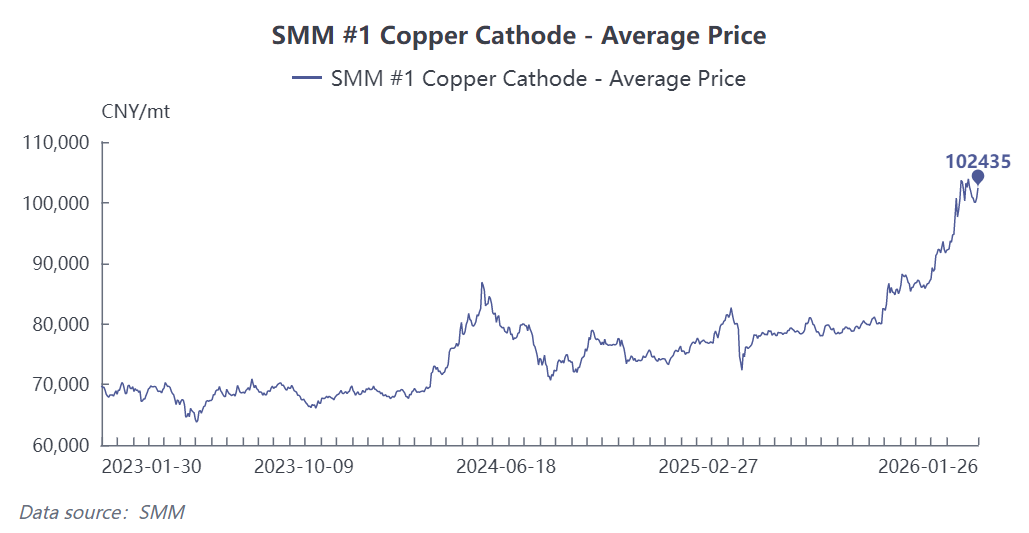
Since the beginning of 2026, domestic copper cathode prices have continued to fluctuate at highs. As of January 6, the SMM #1 copper cathode average spot price stood at 102,435 yuan/mt, with persistently high copper prices significantly impacting and squeezing the downstream brass billet market. In this context, brass billet prices have risen in tandem, breaking historical records, but the strong cost pressure and weak demand have created a "price up, volume down" pressured situation for the industry.
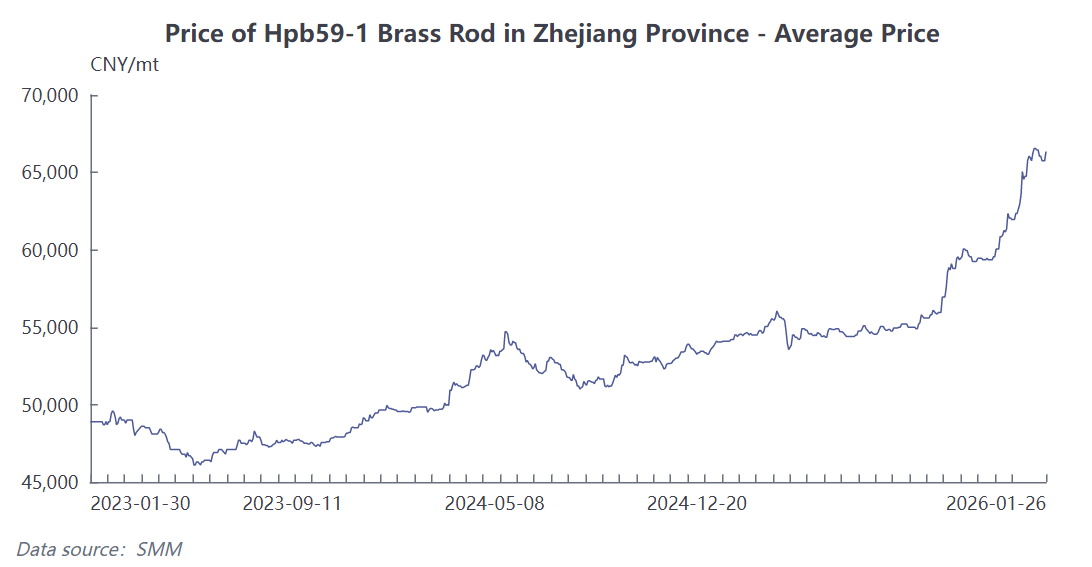
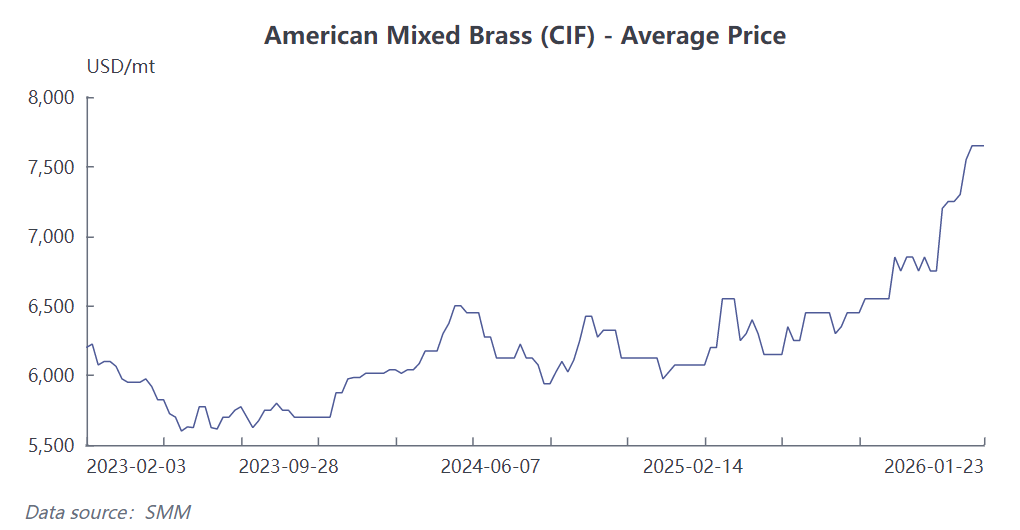
On the price side, the brass billet market has strengthened in line with the rise in raw material copper prices. As of January 26, the average spot price of Hpb59-1 brass billets in Zhejiang climbed to 66,350 yuan/mt, continuously setting new historical highs. However, behind the price increases, enterprises face escalating cost pressures. According to brass billet enterprises, the current procurement of raw materials is under dual pressure: imported secondary brass uses a pricing model based on copper cathode, directly raising raw material costs as copper prices increase; while domestic scrap brass is affected by invoice compliance policies, with stricter "reverse invoicing" regulations, leading to increased demand for invoiced scrap copper, further pushing up overall procurement costs. Small and medium-sized enterprises, due to their weaker financial strength and limited ability to pass on costs, are particularly under pressure.
The weak demand further exacerbates the industry's difficulties. The traditional main sectors for brass billets, such as bathroom hardware and plumbing accessories, have shown poor performance, with finished product prices unable to keep pace with the rise in raw material costs, continuously compressing profit margins. Some small processing enterprises, burdened by losses, have already entered the Chinese New Year holiday early. Only during short-term copper price corrections did a small amount of just-in-time procurement orders emerge, mainly concentrated in emerging areas like NEV connectors, with the supporting role of traditional sectors weakening.
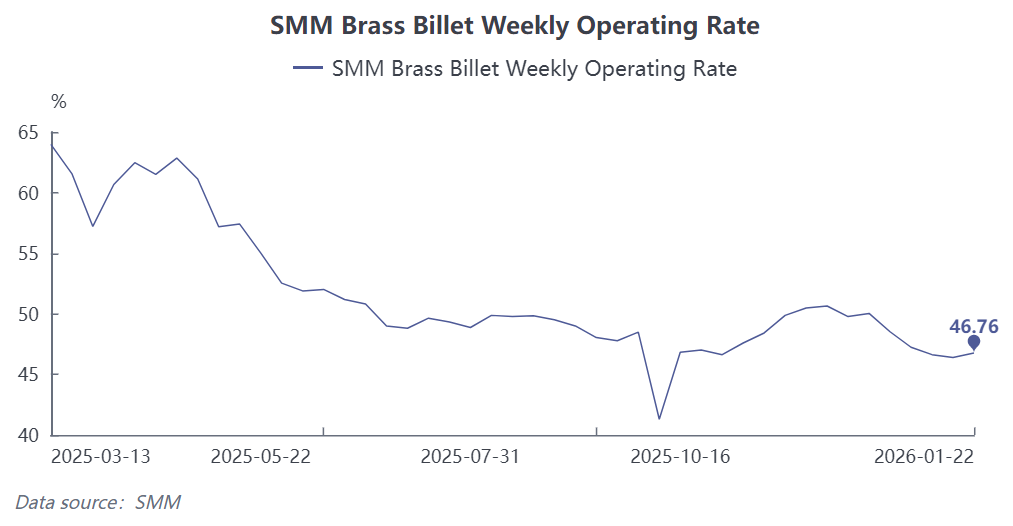
According to the latest SMM data, as of January 23, the weekly operating rate of the domestic brass billet industry was 46.76%, up only 0.36 percentage points MoM, still maintaining a low level below 50%. The slight recovery in the operating rate is mainly due to structural adjustments. With the approaching Chinese New Year, some small and medium-sized enterprises have reduced or halted production early, concentrating orders on large enterprises with financial and scale advantages, slightly lifting the overall industry operating rate, but not changing the weak market conditions. In terms of inventory, influenced by holiday expectations and financial pressures, enterprises have no significant intention to build up stocks, focusing instead on digesting existing inventories.
Looking ahead to February, the Chinese New Year holiday will be the core variable affecting market operations. On the cost side, copper cathode prices are expected to hover at highs, supported by macro front easing expectations and ore shortages, but inventory buildup pressure will limit upside room, providing rigid support for brass billet prices, making a significant drop unlikely. On the demand side, pre-holiday end-user purchase willingness remains low, with some enterprises already on holiday, further shrinking market transactions, and the industry operating rate is unlikely to see a substantial rebound, presenting a sluggish pattern. SMM expects that before and after the Chinese New Year, the brass billet market will maintain a "stable price, weak volume" situation, with true demand recovery needing to wait for post-holiday signals of end-use market recovery.
![Premiums declined, with downstream procurement volume increasing slightly, but overall trading remained weak [SMM South China spot copper]](https://imgqn.smm.cn/usercenter/JopQJ20251217171712.jpg)
![Downstream purchases turn cautious; spot copper premiums in North China pull back [SMM North China spot copper]](https://imgqn.smm.cn/usercenter/udUol20251217171712.jpg)