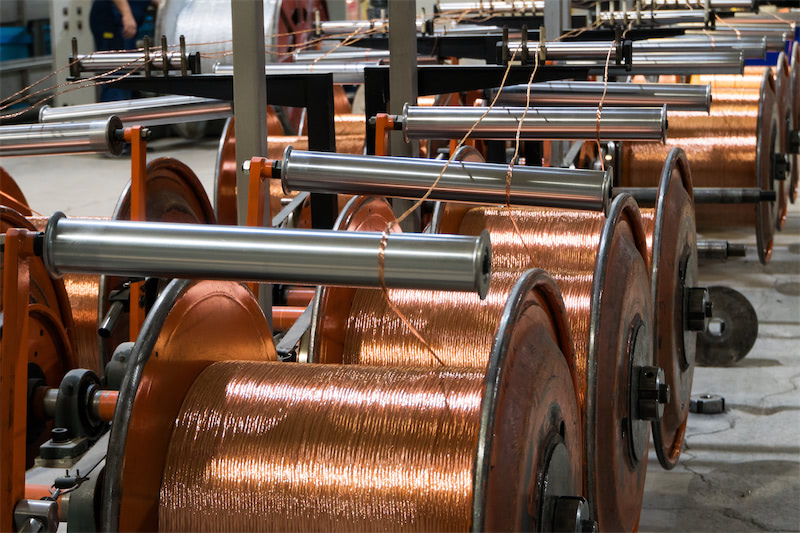
In December 2025, China imported 2.704 million dry metric tons (dmt) of copper ore and concentrate, up 7% month-on-month and 7.2% year-on-year. From January to December 2025, China’s cumulative imports of copper ore and concentrate reached 30.365 million dmt, representing a cumulative year-on-year increase of 7.8%. With the continuous expansion of China’s copper smelting capacity, copper concentrate imports hit a record high in 2025.
From a supply structure perspective, China’s copper concentrate importing countries exhibit a notable “bipolar” characteristic. As major copper-producing regions historically, South American countries such as Chile and Peru export significant volumes of copper concentrate to China. Combined, these two countries account for approximately 67% of China’s total copper concentrate imports. In 2025, China imported 9.64 million dmt of copper concentrate from Chile, up 4.39% year-on-year; 7.42 million dmt from Peru, up 6.12% year-on-year; and 11.49 million dmt from other countries, an increase of 9.22% year-on-year.
It is worth noting that in recent years, major global copper-producing countries have increasingly strengthened control and strategic competition over key mineral resources, leading to significant volatility and uncertainty in the international copper supply chain. As the world’s largest copper consumer, China’s copper concentrate import sources are influenced by multiple geopolitical and trade policy factors.
-
Panama: Due to changes in local policy conditions, the Cobre Panama copper mine has been suspended since 2023, directly resulting in a sharp decline in China’s copper concentrate imports from the country. This highlights the direct impact of policy adjustments in resource-rich nations on the supply chain.
-
Indonesia: To promote the development of its domestic smelting industry, the Indonesian government implemented an export quota system for copper concentrate, causing noticeable fluctuations in China’s imports from Indonesia throughout the year. This reflects the impact of industrial policy changes in resource-rich countries on trade flows.
-
United States: Affected by ongoing Sino-U.S. trade friction and tariff policies, China’s copper concentrate imports from the U.S. have significantly contracted, demonstrating how tensions in economic and trade relations between major powers constrain trade in critical minerals.
These cases collectively illustrate that, against the backdrop of rising global resource nationalism and evolving geopolitical dynamics, the stability of copper resource supply is facing increasingly complex challenges. Strengthening supply chain resilience and promoting diversification of import sources have become crucial directions for ensuring resource security.