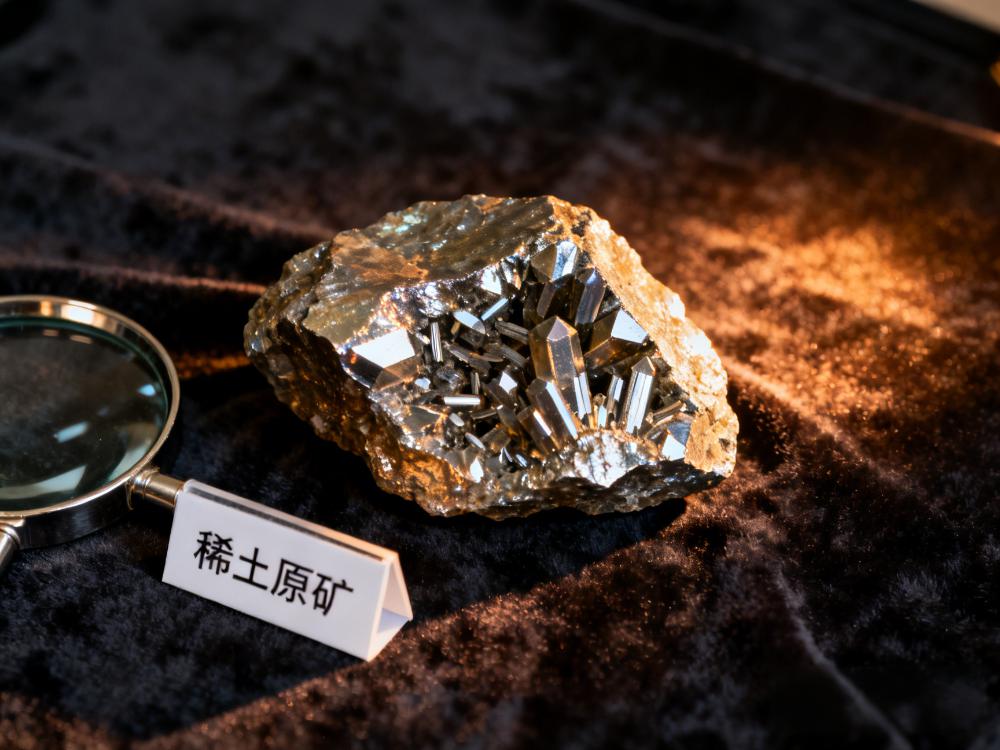
On January 18, 2026, at 15:03, a significant explosion occurred at the rare earth steel plate plant of Bao Gang United Steel. As a key enterprise in China’s rare earth industry, the incident sparked global concerns about rare earth supply and raised expectations of a new round of price increases. However, a comprehensive analysis of the accident’s nature, industry chain structure, and market mechanisms indicates that the impact on rare earth supply is limited and unlikely to substantially affect price trends.
1. Nature of the Incident: Not Directly Linked to Rare Earth Production
The explosion occurred in a 650-cubic-meter saturated water and steam spherical tank at the steelmaking workshop of Bao Gang United Steel’s rare earth steel plate plant, rather than in rare earth mining or smelting facilities. "Rare earth steel plates" refer to finished steel products enhanced with trace rare earth elements (e.g., lanthanum, cerium) to improve performance, not raw rare earth materials. These plates are primarily used in high-end manufacturing sectors such as railways, automobiles, and pipelines, representing the downstream application end of the rare earth industry chain. Geographically, Bao Gang United Steel’s rare earth raw material production bases are located far from the affected plant, ensuring that the accident’s impact remains isolated.
2. Industry Chain Impact: Rare Earth Concentrate Supply Unaffected
Bao Gang United Steel’s internal operations are clearly segmented: its rare earth concentrates are primarily supplied to Northern Rare Earth for separation and smelting. Even if the plate plant and related steel production lines halt operations for safety inspections, this will not directly impact the production or delivery of rare earth concentrates. After the accident, Bao Gang United Steel’s staff stated that the cause is still under investigation, and while the affected production lines have stopped, other lines will gradually suspend operations for inspections. Northern Rare Earth confirmed that although safety checks were initiated, production has not been directly impacted, and no supply disruptions have been reported. The rare earth industry chain exhibits strong segment isolation—from mining and concentration to separation, smelting, and end-use applications—preventing localized incidents from triggering chain reactions.
3. Current Market Structure: Complex Price Formation Mechanism
The Chinese rare earth market exhibits unique structural characteristics: high concentration in the upstream sector, but pricing power largely stems from industrial competition in the midstream and downstream segments. According to SMM statistics, the Chinese market holds over 90% of the global rare earth market share. On the supply side, large groups such as China Northern Rare Earth, China Rare Earth, Shenghe Resources, Chenguang Rare Earth, Jinlong Rare Earth, Gansu Rare Earth, and Keli predominantly control the market. These major groups each wield varying degrees of influence in the rare earth separation and smelting processes. Meanwhile, downstream large magnetic material enterprises, including JL MAG Rare-Earth, Zhong Ke San Huan, Zhenghai Magnetic Material, Dongxing Magnetic Industry, Heli Magnetic Material, Antai Technology, and Ketian Magnetic Industry, dominate rare earth permanent magnet manufacturing technology, forming an integrated control over the entire rare earth resource chain from separation to smelting and casting. Rare earth prices largely depend on the capacity utilization rates, inventory strategies, and market demand of these three parties. In particular, metal plants directly supply producers of rare earth permanent magnets like NdFeB, and their quotations and pace of capacity release are key factors influencing short-term prices. From a global perspective, China holds a dominant position in the rare earth market. This dominance means that China's domestic rare earth price formation mechanism has a decisive impact on the global market. Even amid the wave of "de-globalization" promoted by some Western countries, China's rare earth sector continues to maintain its control over pricing.
4. Support From Supply-Demand Fundamentals and Policy
The long-term trend of the rare earth market depends on supply-demand fundamentals and policy direction, rather than isolated incidents. On the supply side, rare earth supply remains stable in the short term, effectively meeting current demand. On the demand side, emerging sectors such as new energy vehicles, wind power generation, and energy-efficient motors continue to experience growing demand. In terms of policy, China implements steady rare earth control policies aimed at promoting the development of the entire rare earth industry chain. These fundamental factors determine the long-term trend of the rare earth market and will not be altered by a single incident.
As of 18:00 Beijing time on January 19, 2026, the domestic price of Pr-Nd oxide was quoted at 662,000–663,000 yuan/mt, while the price of Pr-Nd alloy pulled back to around 800,000 yuan/mt. This price fluctuation was mainly influenced by the ongoing stalemate and bargaining between upstream and downstream players, representing a normal market adjustment with no direct link to the explosion incident.
The real risks in the rare earth market do not stem from sudden accidents but rather from long-term factors such as global supply chain restructuring and technological substitution. SMM also calls on global customers to view the rare earth market rationally, refrain from creating or spreading rumors, and make informed decisions.