15 January 2026
Silver prices briefly tumbled from record highs after US President Donald Trump said he is holding off on new tariffs targeting imports of critical minerals, easing near-term trade disruption risks
Silver fell more than 7% on Thursday, retreating from an all-time high above $93/oz, as broad tariff threats receded. However, prices have since recovered much of the earlier decline, signalling that traders are repricing the market’s structural drivers. The recent recovery underscores silver's well-known volatility, which is typically higher than gold due to its smaller market size and dual role as both industrial and investment metal.
The decision reduced part of the near-term policy risk premium that had propelled silver to record levels. Despite the correction, silver prices remain more than 25% higher year-to-date, highlighting the strength of underlying market dynamics.
Trump said the administration would instead pursue bilateral agreements with key trading partners to secure adequate supplies of critical minerals and consider a price floor on imports, with officials expected to report back within 180 days. While tariffs were not ruled out entirely, the shift in tone reduced the immediate disruption risk.
The decision follows a months-long Section 232 review under the Trade Expansion Act, assessing whether imports of processed critical minerals threaten US national security.
The tariff review covered a broad set of processed critical minerals beyond silver, from lithium, cobalt, nickel, rare earths and gallium to graphite, platinum group metals and other industrial metals, along with any goods incorporating them such as semi-finished goods and final components used in electric vehicles, batteries, permanent magnets, and electronics.
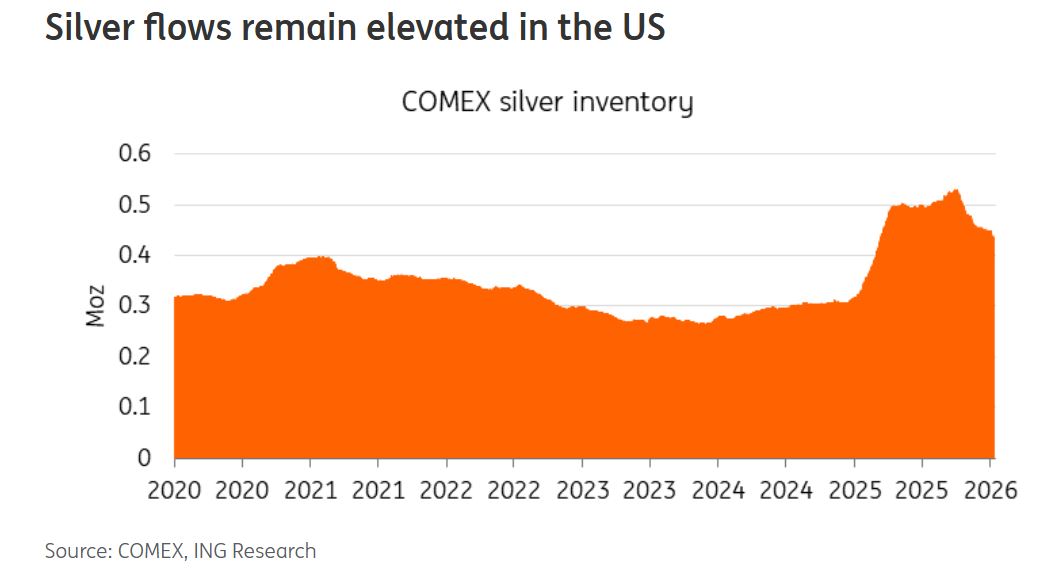
US tariff uncertainty had already pulled significant volumes of physical silver from London to the US, triggering a historic squeeze. This led to a sharp decline in available silver stocks in London, the primary trading hub, amplifying price moves and volatility.
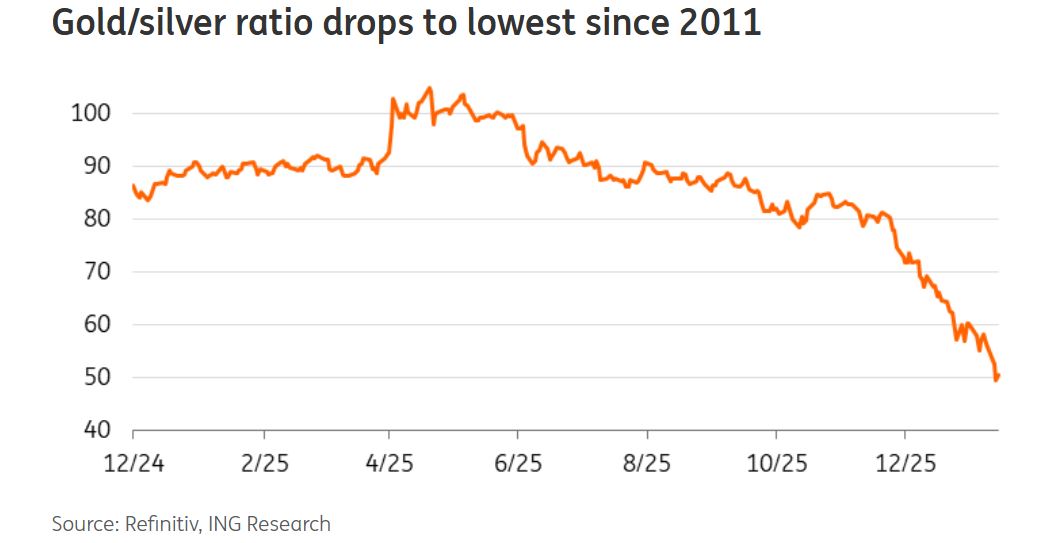
Silver has outpaced gold sharply, with prices up nearly 150% over the past year, supported by both safe-haven flows and robust industrial demand. This has pushed the gold/silver ratio to just above 50, the lowest level since 2011.
Beyond policy-driven volatility, silver continues to face a structural supply deficit. Mine supply growth remains constrained, as most of the silver production is a by-product of other metals, limiting the industry’s ability to respond quickly to higher prices. At the same time, industrial demand linked to solar, electrification, and electronics remains strong, keeping the physical market tight.
This persistent deficit underpins silver’s bullish case and helps explain why prices have remained elevated despite fluctuations in the speculative risk premium.
Volatility is likely to remain elevated as silver’s dual role as both an industrial and investment metal continues to drive larger percentage swings than gold, especially given its smaller overall market size.
In the near-term, prices may consolidate in a range as tariff risks are reassessed and positioning normalises. However, structural deficits, tight physical availability, and ongoing policy uncertainty suggest downside might be limited, with silver likely to remain well-supported on dips. Trade policy developments, macro conditions, and any renewed signs of supply disruptions will remain key catalysts.
Silver’s role in industrial demand and constrained physical supply support a positive structural backdrop, but risks tied to trade policy and macro sentiment will remain key drivers of price dynamics.
Source: https://think.ing.com/articles/trump-puts-silver-tariffs-on-hold/


![Platinum Prices Stop Falling and Rebound, Spot Discounts Widen and Transactions Are Moderate [SMM Daily Review]](https://imgqn.smm.cn/usercenter/QnbfL20251217171735.jpeg)