January 15 - News:
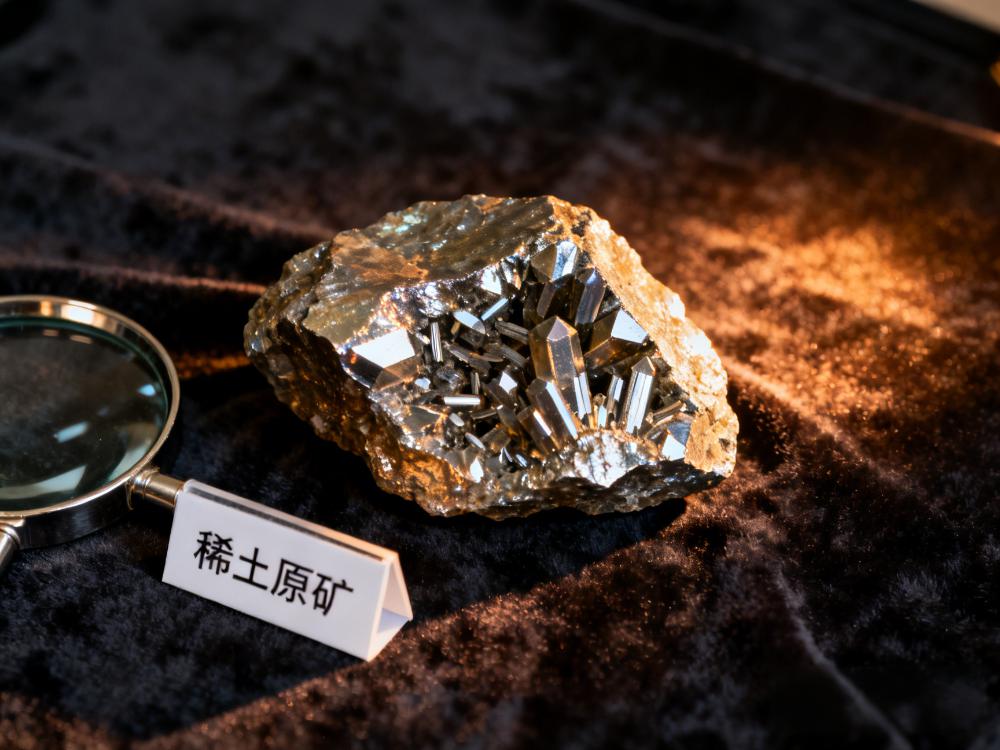
Rare Earth Ore:
Today, the price range for rare earth carbonate was 55,000-55,500 yuan/mt, monazite prices adjusted to 6-6.15 yuan/mt, and medium-yttrium, europium-rich ore prices were around 234,000-235,000 yuan/mt. Recently, the trading atmosphere in the rare earth ore market was poor, and the recovery of separation plants' operating rates fell short of expectations. Although suppliers raised their offers following the rise in oxide market prices, buyers continued to push for lower prices aggressively.
Rare Earth Oxides:
Recently, lanthanum oxide prices remained stable, holding steady at 4,300-4,700 yuan/mt, and cerium oxide prices also continued to stabilize this week at 11,000-12,000 yuan/mt. This week, Pr-Nd oxide prices continued to rise rapidly. Influenced by factors such as spot tightness and replenishment by leading large enterprises, suppliers significantly increased their offers for Pr-Nd oxide. Buyers, optimistic about future rare earth price trends, conducted a round of procurement and stockpiling. However, as upstream offers continued to rise, downstream purchase willingness began to show marginal decline. As of today, Pr-Nd oxide prices were raised to 680,000-685,000 yuan/mt, while downstream alloy plants' wait-and-see sentiment intensified, and actual market transactions were sluggish. This week, the medium-heavy rare earth market also followed the upward trend of Pr-Nd prices. With low operating rates among upstream suppliers and increased replenishment willingness downstream, medium-heavy rare earth prices saw a broad recovery. Dysprosium oxide transaction prices, after a pullback at the beginning of the week, readjusted to 1.44-1.46 million yuan/mt. Inquiry activity in the terbium oxide market also increased, with offers further raised to 6.3-6.35 million yuan/mt. Gadolinium oxide prices rose rapidly along with the Pr-Nd oxide market, boosting supplier confidence, and offers were quickly raised to 182,000-186,000 yuan/mt. Holmium oxide market prices also began to rise with the market trend, reaching 523,000-527,000 yuan/mt as of today. Inquiry and procurement activity in the erbium oxide market continued to increase, with suppliers raising their offers further, and transaction prices this week rose to 365,000-369,000 yuan/mt. Yttrium oxide prices also maintained an upward trend this week, adjusting to 54,000-58,000 yuan/mt during the week.
Rare Earth Metals:
This week, Pr-Nd alloy prices showed a significant increase, breaking through the price highs of the past two years. As of now, Pr-Nd alloy prices were raised to 825,000-835,000 yuan/mt. This was mainly driven by sustained bullish market sentiment and increased downstream procurement activity. At the beginning of the week, continued bullish sentiment pushed raw material prices higher, forcing metal enterprises to raise their offers. Meanwhile, downstream magnetic material enterprises shifted from just-in-time procurement to stockpiling procurement, resulting in active market trading. However, as prices continued to rise, downstream magnetic material enterprises had limited acceptance of high-priced metals, leading to a decline in purchasing enthusiasm and a stalemate in market trading. In the medium-heavy rare earth market, dysprosium-iron alloy closed at 1.43-1.45 million yuan/mt. At the beginning of the week, market inquiries were sluggish, and dysprosium-iron prices continued to decline. Subsequently, supported by rising dysprosium oxide prices, metal enterprises began to halt the decline and raise their offers, with market inquiries showing signs of recovery and the transaction center shifting upward. Driven by bullish sentiment and rising raw material costs, terbium metal prices increased to 7.82-7.85 million yuan/mt. Metal enterprises were reluctant to sell at low prices, and their offers remained relatively firm. Influenced by the continuous rise in Pr-Nd prices, gadolinium-iron alloy raw material prices surged straight up, forcing gadolinium-iron enterprises to passively raise their offers to 180,000-183,000 yuan/mt. However, market trading performance was average, with difficulties in concluding high-priced transactions.
Rare Earth Permanent Magnets
Currently, NdFeB blank N38 (Ce) closed at 216-226 yuan/kg; NdFeB blank 40M price closed at 262-272 yuan/kg; NdFeB blank 40H price closed at 266-276 yuan/kg; NdFeB blank 45SH (ce) price closed at 316-336 yuan/kg.
In terms of prices, NdFeB prices showed a sharp upward trend this week, primarily due to the continuous and sharp rise in the price of Pr-Nd oxide, the raw material for NdFeB, which drove up costs and ultimately led to higher offers. In terms of trading, market activity was moderate this week. On one hand, terminal enterprises maintained a wait-and-see stance due to the rapid and sharp increase in raw material prices. Additionally, as the year-end approached, inventory levels at various terminal enterprises were high, and progress on new projects was relatively slow, resulting in moderate demand and overall moderate market trading activity.
Rare Earth Scrap:
This week, Pr-Nd recycled from NdFeB scrap closed at 665-675 yuan/kg; dysprosium recycled from NdFeB scrap closed at 1,350-1,380 yuan/kg; terbium recycled from NdFeB scrap closed at 5,900-6,100 yuan/kg.
This week, scrap market prices rose significantly, mainly influenced by the rapid upward trend in oxide market prices. At the beginning of the week, driven by market news, bullish sentiment in the oxide market continued to intensify, with suppliers showing low willingness to sell at low prices, leading to sustained price increases in the oxide market. As a result, scrap suppliers began to hold back goods in anticipation of higher prices, and low-priced scrap sources quickly diminished, forcing recycling enterprises to raise their purchase offers. However, due to the continuous price increases, recycling enterprises showed low willingness to chase higher prices, with a strong wait-and-see sentiment, and some recycling enterprises began to suspend purchase offers.