Daniel Renin Shanghai
Lacklustre sales at the end of 2025 will bode ill for the Chinese electric vehicle (EV) market this year, with low-priced carmakers under pressure to offer further price cuts amid an adjusted trade-in subsidy mechanism.
A bleak outlook could also prompt authorities to rein in a discount war as few assemblers are able to post profits.
“As deliveries failed to live up to expectations, all major players would have to slash prices of their vehicles to reduce their inventories at the beginning of 2026,” said Zhao Zhen, a sales director at Shanghai dealer Wan Zhuo Auto. “Competition is getting fiercer this year because of weaker demand for new cars.”
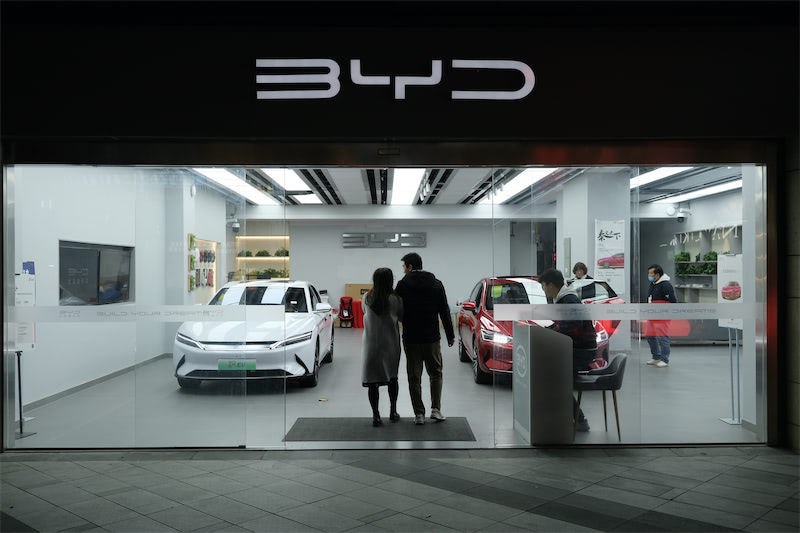
In December, BYD, the world’s largest EV builder, reported 420,398 deliveries, down 18.3 per cent on the year, as its sales fell for the fourth consecutive month.
Li Auto, a premium EV maker, handed 44,246 units to customers last month, a drop of 24.4 per cent from the same period in 2024. Both companies are among the few profitable carmakers in mainland China.
It was expected that EV deliveries would jump sharply in December as consumers rushed to complete purchases before Beijing began phasing out tax incentives and cutting subsidies in 2026. However, initial results showed that sales were far below carmakers’ and analysts’ forecasts.
According to the China Passenger Car Association, sales of pure electric and plug-in hybrid vehicles hit 1.19 million units between December 1 and 28, up 5 per cent on the year.
Analysts forecast year-on-year growth last month to top 30 per cent. By comparison, in the final month of 2024, EV deliveries climbed 32.2 per cent to 1.46 million vehicles.
Mainland buyers had been exempt from a 10 per cent vehicle purchase tax on eligible green-car purchases through December 31 as part of Beijing’s push to curb emissions. From January 1, the tax was set at 5 per cent through the end of 2027, before returning to 10 per cent in 2028.
Beijing also moved last week to renew its trade-in subsidy programme. Under the updated scheme, buyers replacing petrol or electric cars with new vehicles could receive a cash subsidy of up to 20,000 yuan (US$2,858) per unit.
EV buyers purchasing replacement vehicles were eligible for a subsidy equivalent to 12 per cent of the new car’s price, capped at 20,000 yuan, according to a circular jointly issued by the National Development and Reform Commission and the Ministry of Finance. Buyers of petrol-powered vehicles could receive a 10 per cent subsidy, capped at 15,000 yuan.
In the previous two years, the programme offered flat subsidies of 20,000 yuan for EV purchases and 15,000 yuan for petrol cars, after consumers sold or scrapped their used vehicles. The shift to a percentage-based subsidy means buyers of cheaper models stand to receive less support than last year.
Deutsche Bank analyst Wang Bin said in a research note on Tuesday that the revised subsidy mechanism would weigh on lower-priced manufacturers such as BYD, Leapmotor and Geely.
In 2025, China’s EV king BYD delivered 4.6 million vehicles, up 7.7 per cent year on year – its slowest growth since 2020. Deutsche Bank estimated mainland passenger-car sales would fall 5 per cent in 2026, while JPMorgan forecast deliveries by Chinese automotive groups could decline 3 to 5 per cent this year.
“A new round of price competition looks inevitable as carmakers, especially EV builders, try to defend market share,” said Eric Han, a senior manager at Shanghai consultancy Suolei. “Assemblers and dealers will watch the government’s stance closely as they consider further price cuts.”
Beijing, wary of the risks posed by an EV price war, said in late May that it would punish carmakers that spearheaded aggressive discounting. The warning prompted major companies to pare back steep price cuts and loan concessions.
Even so, analysts expected consolidation to accelerate. About 50 loss-making mainland EV makers could be forced to scale down or exit over the next five years as overcapacity persisted and government support eased.
Stephen Dyer, Greater China co-leader and head of Asia automotive practice at AlixPartners, said in July that only 15 Chinese EV brands – about 10 per cent of the total – were likely to turn a profit over the next five years, as sustained price competition continued to squeeze margins.
![[SMM Analysis] Chinese New Year Off-Season “Reset,” Sodium-Ion Battery Industry Chain Recovery Poised to Begin](https://imgqn.smm.cn/usercenter/IpglC20251217171727.jpg)