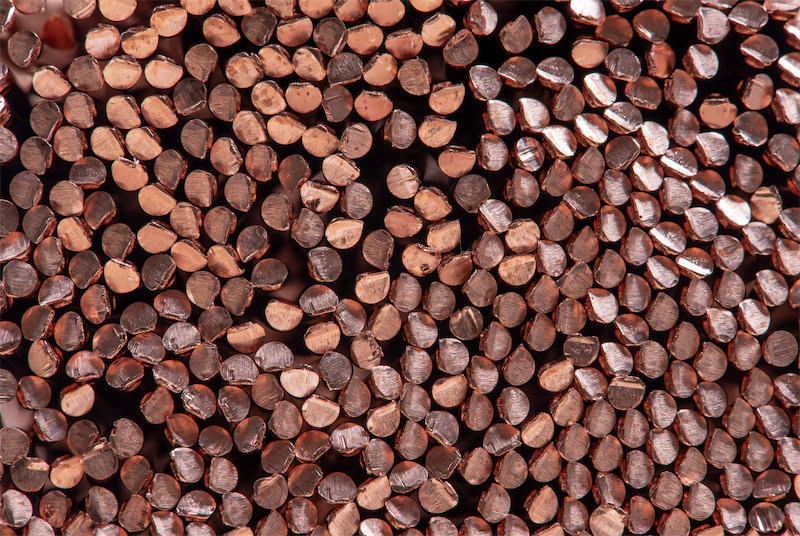
Le marché des déchets de cuivre a connu un repli après une hausse rapide suite aux prix record du cuivre cette semaine, les transactions globales restant atones. En début de semaine, les prix du cuivre ont grimpé à 98 800 yuans/tonne, soit une hausse de 740 yuans/tonne, et le prix du cuivre brut brillant dans le Guangdong a suivi, augmentant à 87 000 yuans/tonne, avec un gain hebdomadaire de 1 400 yuans/tonne. L'écart de prix entre le métal primaire et les déchets s'est élargi à 5 225 yuans/tonne, indiquant théoriquement un avantage économique significatif pour le cuivre secondaire, mais la demande réelle n'a pas suivi. Les marchés étrangers ont stagné en raison des vacances de Noël et du Nouvel An, arrêtant le commerce des matières premières importées de cuivre recyclé. Les entreprises nationales, affectées par les prix élevés du cuivre et les pressions de règlement financier de fin d'année, ont généralement adopté une stratégie de report de la demande, conduisant à une contradiction offre-demande caractérisée par une offre abondante mais une demande retardée. Bien que l'écart de prix entre la cathode de cuivre et la barre de cuivre secondaire se soit élargi à 3 190 yuans/tonne, la volonté d'achat des entreprises de barres de cuivre secondaire est restée faible, la plupart choisissant d'attendre et de retarder leur réapprovisionnement après le Nouvel An.
Alors que le sentiment du marché a changé en milieu de semaine, les prix du cuivre ont reculé de 3 370 yuans/tonne à 98 360 yuans/tonne, et le prix des matières premières de cuivre recyclé a baissé de 2 400 yuans/tonne, le prix du cuivre brut brillant dans le Guangdong retombant dans la fourchette de 85 500 à 85 700 yuans/tonne. L'écart de prix entre le métal primaire et les déchets s'est réduit à 3 495 yuans/tonne, en baisse de 1 730 yuans/tonne sur la semaine. Bien que les fournisseurs aient activement baissé leurs prix, les entreprises de barres de cuivre secondaire ne se sont pas précipitées pour acheter, reportant davantage leurs plans de réapprovisionnement. L'écart de prix entre la cathode de cuivre et la barre de cuivre secondaire s'est contracté à 1 745 yuans/tonne, indiquant que le déclin des produits finis était plus prononcé que celui des matières premières. Bien que certaines entreprises de barres de cuivre secondaire aient reçu des commandes après l'ajustement des prix, beaucoup ont retardé leurs livraisons après les vacances, exacerbant le déclin de l'activité du marché.
Sur le front de l'offre et de la demande, le marché des déchets de cuivre a fait face à des pressions structurelles. L'offre était temporairement détendue en raison des vacances à l'étranger, mais la demande nationale était contrainte par de multiples facteurs. Selon les données du SMM, le taux d'activité des entreprises de barres de cuivre secondaire cette semaine était de 14,71 %, en hausse de 1,19 % sur la semaine mais en baisse de 13,52 points de pourcentage sur un an. L'écart de prix moyen entre les barres de cuivre cathode et les barres de cuivre secondaire s'élevait à 2 342 yuans par tonne, restant pratiquement stable sur le mois. Le décompte moyen des barres de cuivre secondaire du Jiangxi par rapport aux contrats à terme s'est réduit à 2 163 yuans par tonne, en baisse de 33 yuans par tonne sur la semaine. Cependant, la marge brute sur les ventes de barres de cuivre secondaire a augmenté de 422 yuans par tonne sur le mois pour atteindre 1 618 yuans par tonne, reflétant la capacité des entreprises à équilibrer maîtrise des coûts et ajustement des prix. L'incertitude politique est devenue un facteur clé freinant la vitalité du marché, le renforcement des contrôles par les autorités fiscales sur l'authenticité des pratiques de facturation inversée accroissant la pression réglementaire sur les entreprises. L'éventuelle annulation des politiques de subventions locales a maintenu la plupart des producteurs de barres de cuivre secondaire dans un état d'arrêt temporaire et d'observation. Pour la semaine prochaine, l'attention du marché se concentrera sur l'interaction entre les ajustements politiques post-fête et l'évolution des cours du cuivre. Si les subventions locales sont officiellement supprimées et que les prix du cuivre continuent de fluctuer à des niveaux élevés, le taux d'activité des entreprises de barres de cuivre secondaire pourrait rester faible. À court terme, la demande de recomplètement des stocks après les congés pourrait connaître un léger rebond, mais sous la pression des cours élevés du cuivre et des incertitudes politiques, la reprise du marché devrait être limitée. Le taux d'activité des barres de cuivre secondaire devrait fluctuer à des niveaux bas avec une volatilité des prix se resserrant, jusqu'à ce que vendeurs et acheteurs trouvent un nouvel équilibre offre-demande une fois les politiques clarifiées.