SMM 31 Desember:
Poin Utama: Standar nasional pertama China untuk baterai solid-state otomotif, "Kendaraan Listrik—Baterai Solid-State—Bagian 1: Istilah dan Klasifikasi," dirilis untuk masukan publik pada 30 Desember 2025. Standar ini secara jelas mengkategorikan baterai menjadi tiga tipe: cair, hibrida cair-padat, dan solid-state, menghilangkan istilah "semi-solid-state." Standar menetapkan tingkat kehilangan massa ≤0,5% sebagai kriteria inti untuk mendefinisikan baterai solid-state. Langkah ini bertujuan menyatukan standar industri, mengakhiri kebingungan konseptual, dan menandai langkah menuju pengembangan industri yang terstandarisasi.
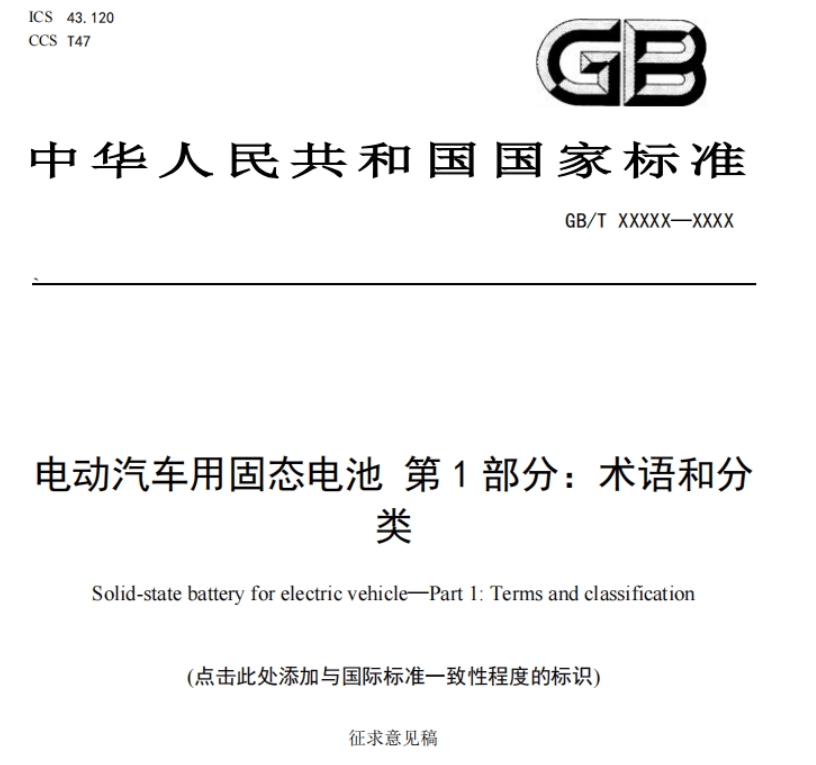
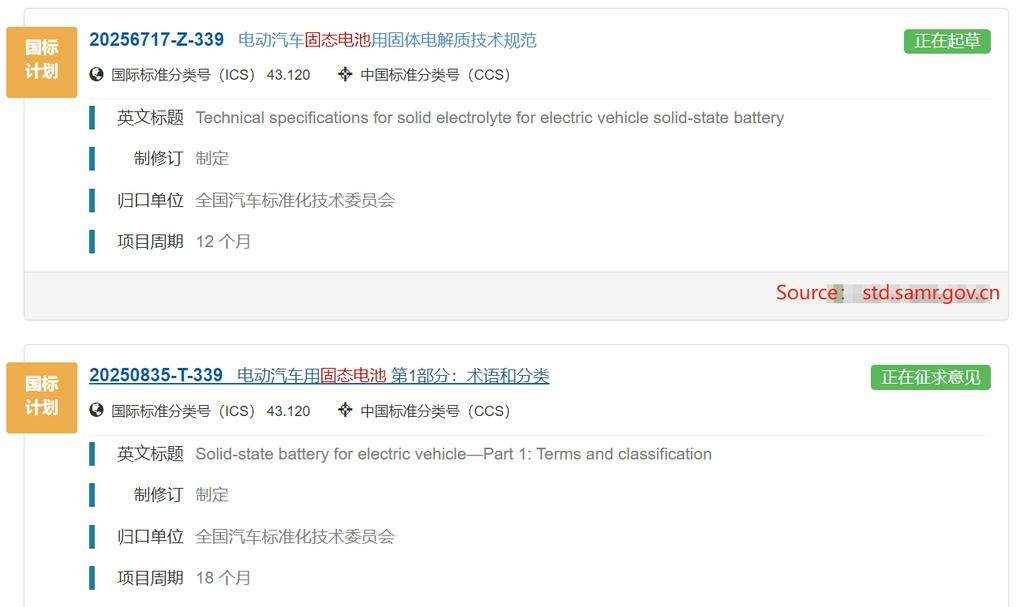
Pada 30 Desember 2025, Komite Teknis Standardisasi Otomotif Nasional meminta masukan publik mengenai "Kendaraan Listrik—Baterai Solid-State—Bagian 1: Istilah dan Klasifikasi." Sebagai standar nasional pertama China untuk baterai solid-state otomotif, inisiatif ini dianggap sebagai tonggak penting dalam transisi teknologi mutakhir ini dari laboratorium ke kolaborasi industri. Ini bertujuan menyelesaikan ambiguitas konseptual pasar dan meletakkan dasar bagi pengembangan industri yang terstandarisasi. "Spesifikasi Teknis untuk Elektrolit Padat yang Digunakan dalam Baterai Solid-State Kendaraan Listrik" yang bersamaan saat ini dalam tahap penyusunan.
I. Inti Standar: Klasifikasi Terpadu dan Ambang Batas Teknis yang Ketat
Rancangan berfokus pada pembentukan sistem terminologi teknis yang terpadu dan penetapan kriteria kuantitatif yang jelas untuk mendefinisikan "baterai solid-state."
Klasifikasi Tiga Tipe yang Jelas, Menghilangkan "Semi-Solid-State": Berdasarkan metode transportasi ion dalam sel, standar mengkategorikan baterai menjadi baterai cair, baterai hibrida cair-padat, dan baterai solid-state. Ini berarti istilah "baterai semi-solid-state" yang sebelumnya umum digunakan tidak termasuk dalam sistem standar nasional, dan produk terkait akan diklasifikasikan sebagai "baterai hibrida cair-padat."
Penetapan Kriteria Kunci: Standar menetapkan indikator kuantitatif inti yang ketat untuk mendefinisikan "baterai solid-state"—tingkat kehilangan massa. Standar menetapkan bahwa tingkat kehilangan massa (kehilangan massa elektrolit dan komponen lain di bawah kondisi uji tertentu) untuk baterai solid-state tidak boleh melebihi 0,5%. Ambang batas ini lebih ketat daripada standar grup "Metode Penentuan Baterai All-Solid-State" yang dirilis pada Mei 2025 (tingkat kehilangan massa <1%). Dasar persyaratan ini adalah pertimbangan potensi dekomposisi minor bahan elektrolit padat, dan uji validasi industri menunjukkan bahwa produk yang mematuhi memiliki tingkat kehilangan massa di bawah 0,5%.
Sistem Klasifikasi Multidimensi: Standar ini lebih lanjut mengklasifikasikan baterai solid-state berdasarkan tiga dimensi:
Berdasarkan Jenis Elektrolit: Baterai solid-state berbasis elektrolit sulfida, oksida, polimer, halida, dan komposit.
Berdasarkan Ion Penghantar: Baterai lithium-ion solid-state, baterai sodium-ion solid-state, dll.
Berdasarkan Bidang Aplikasi: Tipe energi tinggi, tipe daya tinggi, dll.
II. Perencanaan Sistem Standar: Membangun Kerangka Industri yang Komprehensif
Rancangan "Terminologi dan Klasifikasi" hanyalah langkah pertama dalam serangkaian standar nasional. Menurut rencana, seri "Kendaraan Listrik—Baterai Solid-State" dibagi menjadi empat bagian:
Bagian 1: Terminologi dan Klasifikasi (rancangan saat ini)
Bagian 2: Spesifikasi Kinerja
Bagian 3: Spesifikasi Keselamatan
Bagian 4: Spesifikasi Masa Pakai
Selain itu, "Spesifikasi Teknis untuk Elektrolit Padat yang Digunakan dalam Baterai Solid-State Kendaraan Listrik" pendukung telah memasuki tahap penyusunan, menunjukkan bahwa upaya standardisasi meluas hingga ke bahan inti.
Pengenalan standar berarti industri kini memiliki pedoman yang relatif seragam dan terstandarisasi bagi perusahaan dan pelaku industri untuk diikuti, yang bertujuan mengakhiri kebingungan konseptual, menyelaraskan standar teknis, memfasilitasi kolaborasi rantai industri, dan merebut pengaruh dalam pembuatan aturan internasional.
Menurut perkiraan SMM, pengiriman baterai all-solid-state akan mencapai 13,5 GWh pada 2028, sementara pengiriman baterai semi-solid-state akan mencapai 160 GWh. Permintaan global baterai lithium-ion diproyeksikan mencapai sekitar 2.800 GWh pada 2030, dengan permintaan baterai lithium-ion sektor EV menunjukkan CAGR sekitar 11% dari 2024 hingga 2030, permintaan baterai lithium-ion ESS pada CAGR sekitar 27%, dan permintaan baterai lithium elektronik konsumen pada CAGR sekitar 10%. Adopsi global baterai solid-state diperkirakan sekitar 0,1% pada 2025, dengan adopsi baterai all-solid-state diperkirakan mencapai sekitar 4% pada 2030, dan adopsi global baterai solid-state berpotensi mendekati 10% pada 2035.
**Catatan:** Untuk detail lebih lanjut atau pertanyaan mengenai pengembangan baterai solid-state, silakan hubungi:
Telepon: 021-20707860 (atau WeChat: 13585549799)
Kontak: Chaoxing Yang. Terima kasih!
![[Solid-state: FAW Melaporkan Terobosan Baterai Sulfida Tekanan Rendah; Jalur Percontohan Li2S Maju]](https://imgqn.smm.cn/usercenter/nVnLo20251217171728.jpg)
![Impor dan Ekspor Bijih Fosfat Agustus Melonjak saat Musim Permintaan Puncak Tiba? [Analisis SMM]](https://imgqn.smm.cn/usercenter/MaxcL20251217171730.jpg)