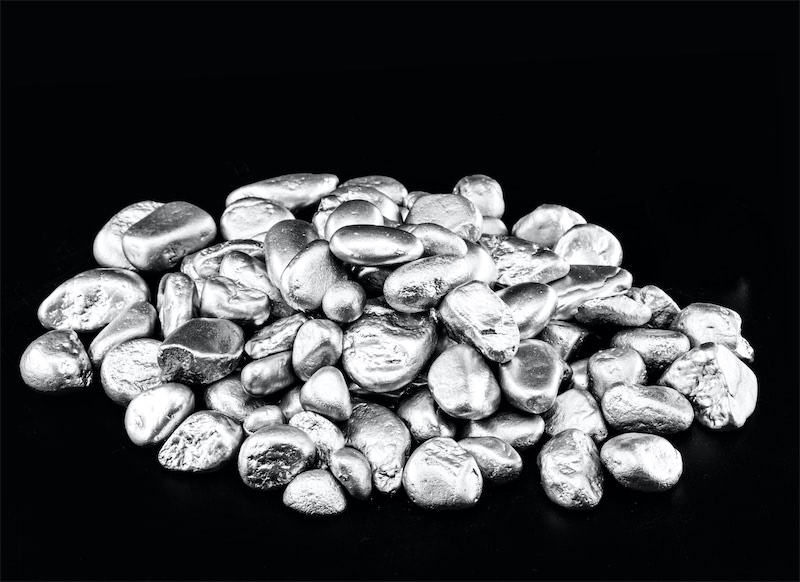
Nickel Ore
Indonesian nickel ore prices slightly declined. In terms of benchmark prices, Indonesia’s domestic nickel ore benchmark for the first half of December was USD 14,599 per dry metric ton, down 0.46% from the previous period. For premiums, according to SMM data on Indonesia’s domestic laterite nickel ore premiums, 1.4% grade averaged USD 22, 1.5% grade averaged USD 25.5, and 1.6% grade averaged USD 26. The delivered price for 1.6% Ni laterite ore in Indonesia was USD 50.8–52.8 per wet metric ton, decline of 0.2% WoW. For hydrometallurgical ore, the delivered price for 1.3% Ni remained stable at USD 24–25 per wet metric ton, unchanged from last week.
- Pyrometallurgical Ore:
From a supply perspective, major Indonesian nickel production hubs are currently in the midst of an active rainy season. This week, cumulative rainfall in the Morowali and Halmahera regions reached 80–160mm; while precipitation in the Konawe region was relatively lower, afternoon thunderstorms remained frequent (30–60mm). This significant increase in rainfall has disrupted production at several mines. On the demand side, procurement demand from NPI (Nickel Pig Iron) smelters remains relatively stable, though buying interest has softened slightly compared to previous peak periods. A small number of smelters continue to increase their nickel ore procurement volumes. Regarding RKAB (Work Plan and Budget), many Indonesian mining companies are currently in the submission and evaluation phase.
- Hydrometallurgical Ore:
On the supply side, supply side remains stable with relatively sufficient circulating ore, and inter-island transport volumes remain at low levels. On the demand side, some smelters have reduced procurement due to ample inventories, leading to price declines.
Looking ahead, as there has been no clear update on RKAB approvals, most mines are maintaining a cautious stance, providing some price support and limiting further downside. Toward year-end, Indonesia’s nickel benchmark price has continued to weaken, putting downward pressure on the absolute price level of Indonesian nickel ore. Although some RKAB quotas are nearing exhaustion, certain mines are still able to release limited volumes by utilizing unused portions of their 2026 quotas, allowing nickel ore procurement to continue and keeping premiums at current levels.
Market attention is currently focused on the Indonesian Nickel Miners Association (APNI) revealing that the Ministry of Energy and Mineral Resources (ESDM) plans to revise the HPM nickel benchmark price formula by early 2026 to include independent royalties of 1.5% to 2% on associated minerals like cobalt and iron, while also proposing a significant reduction in the 2026 RKAB production target to 250 million tons which is a 34% drop from 2025 levels to stabilize global prices. According to SMM's conversation with ESDM, actual 2026 quotas remain unconfirmed as the ESDM continues deliberations to ensure a robust analytical foundation for the new mechanism.
Nickel Pig Iron
“Weak Supply and Demand Lead to Sparse Transactions; High-Nickel Pig Iron (NPI) Prices Decline Again”
The average price of SMM 10-12% NPI average price rose by RMB 2 per nickel unit week-on-week to RMB 885.4 per nickel unit (ex-works, tax included), while the Indonesia NPI FOB index dropped by USD 0.02 per nickel unit to USD 110.46 per nickel unit. Following a week of gains, NPI prices have resumed their downward trend due to falling futures prices and persistent weakness in end-user consumption.
The high-nickel pig iron (NPI) market is currently navigating a period of "dual weakness," where stagnant demand and high inventory levels are weighing heavily on prices. Despite high upstream production costs and temporary smelter maintenance providing some support for offers, actual transaction volumes remain low as buyers resist high prices and sellers seek year-end liquidity through occasional low-priced deals. On the demand side, the lack of recovery in terminal stainless steel consumption and ongoing downstream production cuts have further suppressed buying interest. Looking ahead, market sentiment may see a slight lift due to potential supply shortage expectations, though a sustained price recovery will likely depend on a significant increase in transaction volumes and a rebound in downstream activity.

![[SMM Stainless Steel Flash] Fu'an Aims for $246B in Stainless Steel Output by 2026, Advances 600,000-Ton CR Project](https://imgqn.smm.cn/usercenter/KFwsY20251217171734.jpg)
![[SMM Stainless Steel Flash] Fujian Tsingshan's Stainless Steel Deep Processing Project Receives Construction Permit](https://imgqn.smm.cn/usercenter/Btmsv20251217171733.jpg)
![[SMM Stainless Steel Flash] EU Fastener Distributors Warn CBAM Acts as Penalty Tariff; Import Costs Surge Up to 50%](https://imgqn.smm.cn/usercenter/qLeLR20251217171733.jpg)