【SMM Analysis】Aluminium Import Tariffs in Mexico: Previewing Upcoming Changes

Published: Dec 10, 2025 15:46 (GMT+8)
Source: SMM
【SMM Analysis】Aluminium Import Tariffs in Mexico: Previewing Upcoming Changes

【SMM Analysis】Aluminium Import Duties in Mexico: Previewing Possible Upcoming Changes

Mexico’s Chamber of Deputies has moved forward with reforms to its General Import and Export Tax Law, setting the stage for significant changes to aluminium import duties. The Commission on Economy, Trade and Competitiveness approved the revised draft in early December, lowering tariffs on hundreds of products while introducing new duties that could reshape trade flows and impact key industrial sectors. As of 11 December 2025 Beijing Time (10 December 2025 Mexico City Time), the Mexican Senate has also approved these changes to the import tariff law, effectively locking in the new tariff schedule for implementation from 2026.

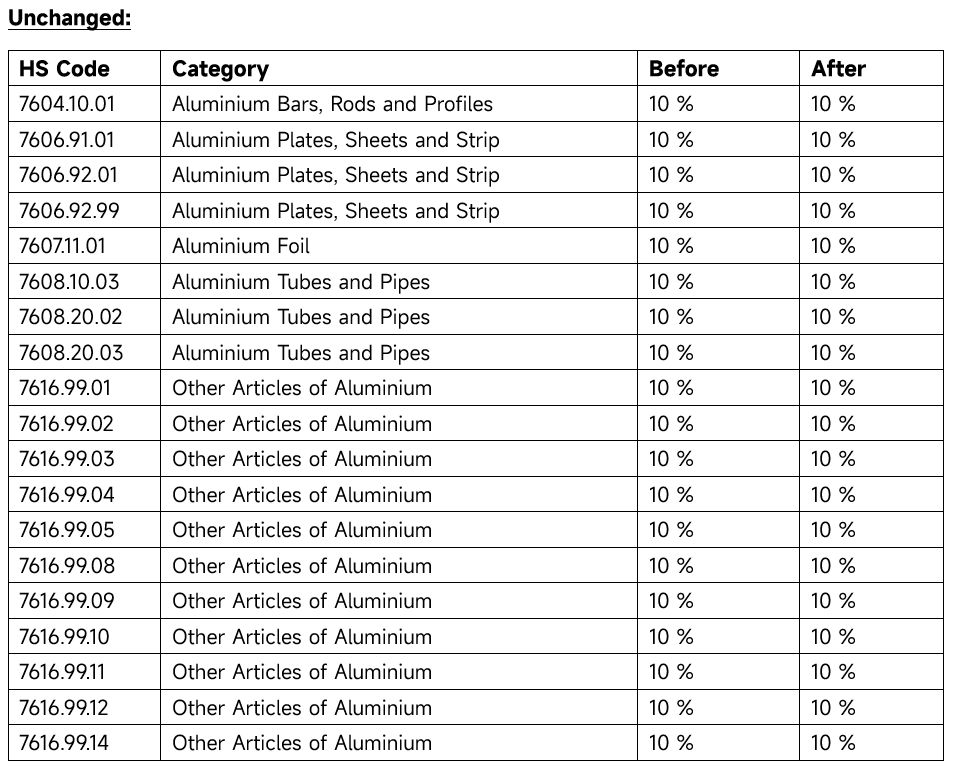
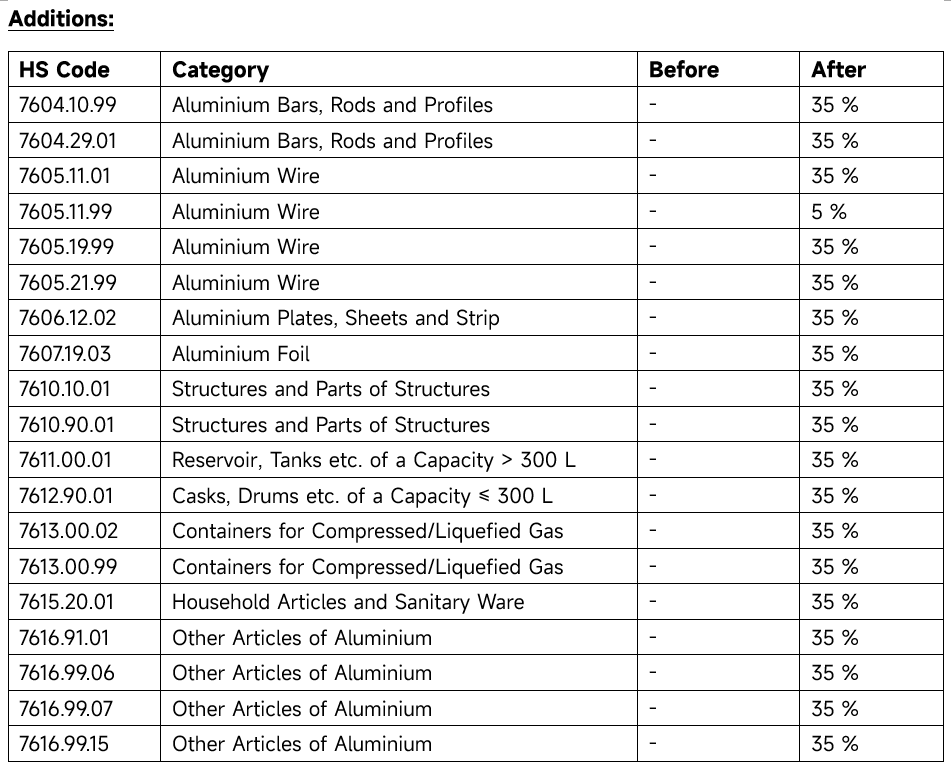
Aluminium as a key sector and trade product saw important changes to its import tariff schedules and listings, many related HS codes are set to face revised duties under Mexico’s latest tariff reform. In total for aluminium-related HS codes, 2 were removed, 19 were added and 19 codes remained:

Implications

The new tariff regime unequally affects different partner countries of Mexico in aluminium trade:

  • The United Arab Emirates (UAE), United States, South Africa, India and Canada gained the most from the removal of tariffs from primary aluminium.
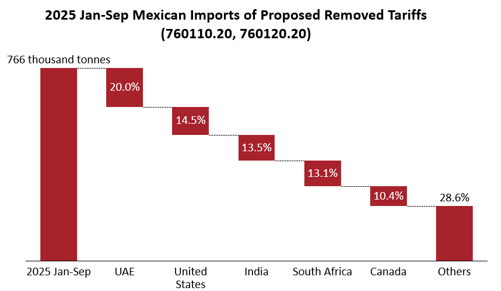
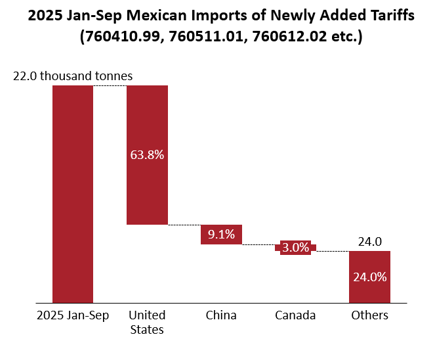
  • In terms of newly added tariffs, The United States and China are the two largest exporters of all new tariff schedules combined in 2024, accounting for 65.3% of Mexico’s imports of various types of bars, wires and structures. Most of the newly added import tariff rates fall at 35%, except 760511.99 which has a 5% tariff rate.
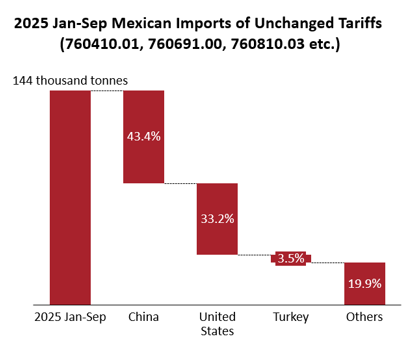
  • Lastly, tariffs which schedules remained unchanged all have their rates set at 10%. These tariffs are mostly to be paid by China, the United States and Turkey, which are all large manufacturers and exporters of aluminium parts.
These tariff adjustments mark a turning point in Mexico’s aluminium trade policy. By removing duties on primary aluminium while imposing new levies on downstream products, the government is signalling support for domestic manufacturing while reshaping import dynamics with major partners such as China, the United States, and Turkey. As final approval by the Senate has been passed by the11th of December 2025, industry stakeholders should prepare for implementation and possible implications by 2026, especially for traders and manufacturers based in China and the USA.

Data Source Statement: Except for publicly available information, all other data are processed by SMM based on publicly available information, market communication, and relying on SMM's internal database model. They are for reference only and do not constitute decision-making recommendations.

For any inquiries or for more information, please contact: lemonzhao@smm.cn
For more information on how to access our research reports, please contact:service.en@smm.cn
Related News
Alba Advances in Acquisition of Aluminium Dunkerque, Aims for Global Low-Carbon Aluminum Expansion
3 hours ago
Alba Advances in Acquisition of Aluminium Dunkerque, Aims for Global Low-Carbon Aluminum Expansion
Read More
Alba Advances in Acquisition of Aluminium Dunkerque, Aims for Global Low-Carbon Aluminum Expansion
[SMM Aluminum Express News] Aluminium Bahrain (Alba) said its proposed acquisition of Aluminium Dunkerque is progressing, with the company working to secure the remaining regulatory approvals required to close the transaction. At its Q3 Board meeting on September 22, Chairman Khalid Al Rumaihi described the deal as an important step in Alba’s international expansion and its ambition to build a global low-carbon aluminum platform. Alba signed the agreement to acquire Aluminium Dunkerque in May 2026, with the transaction subsequently valued at around US$2.2 billion. Aluminium Dunkerque is the EU’s largest primary aluminum smelter, while Alba operates the world’s largest single-site aluminum smelter in Bahrain. The acquisition remains subject to outstanding regulatory approvals and has not yet closed. The Board also approved Alba’s preliminary 2027 Marketing Plan, while reviewing operational, commercial and governance matters. For aluminum supply, the main takeaway is that Alba remains committed to completing the Dunkerque acquisition despite the regional supply disruptions that affected its Bahrain operations earlier this year.
3 hours ago
Guinea Seeks US Financing for CBG's Alumina Refinery Project
3 hours ago
Guinea Seeks US Financing for CBG's Alumina Refinery Project
Read More
Guinea Seeks US Financing for CBG's Alumina Refinery Project
[SMM Aluminum Express News] Guinea is seeking US financing for Compagnie des Bauxites de Guinée’s (CBG) planned alumina refinery, as the country accelerates efforts to process more of its bauxite domestically. Guinea’s Mines Ministry said discussions were held on September 18 with the US International Development Finance Corporation (DFC) and US Export-Import Bank over potential involvement in financing the project. CBG aims to begin construction by the end of 2026, although the refinery’s financing requirement and potential US contribution have not yet been disclosed.
3 hours ago
European Parliament Backs Expanded CBAM for Downstream Aluminum and Steel Products from 2028
3 hours ago
European Parliament Backs Expanded CBAM for Downstream Aluminum and Steel Products from 2028
Read More
European Parliament Backs Expanded CBAM for Downstream Aluminum and Steel Products from 2028
[SMM Aluminum Express News] The European Parliament has backed a broader expansion of the EU Carbon Border Adjustment Mechanism (CBAM) to downstream aluminum and steel products from 2028. Parliament adopted its negotiating position on September 15 by 464 votes to 50, with 159 abstentions, supporting coverage beyond the European Commission’s original proposal for 180 additional downstream products, including aluminum-intensive products such as wire, fasteners, springs and certain finished goods. For aluminum, Parliament also proposes lowering the CBAM exemption threshold from 50 tonnes to just 5 tonnes, meaning smaller-volume importers could become subject to CBAM requirements. It also supports stronger anti-circumvention rules, including the use of emissions default values based on the actual country of origin where authorities suspect attempts to avoid CBAM obligations. The changes are not final yet, with negotiations with the EU Council still required. If adopted, the expansion would increase carbon-reporting and potentially carbon-cost exposure for exporters of downstream aluminum products into the EU, extending CBAM further beyond primary and semi-finished aluminum.
3 hours ago