Policy and Strategic Dynamics
The USDepartment of Energy announced through its Office of Critical Minerals and Energy Innovation's Rare Earth Demonstration Facility Program that it will provide up to $134 million in funding to support commercial feasibility verification projects for the recovery and refining of rare earth elements from unconventional raw materials such as mine tailings and electronic waste. To support this initiative, the US will solicit non-binding letters of intent by December 10, with the full application deadline on January 5, 2026.
However, the US's policy of setting a rare earth price floor has not received support from all allies.The UKIndustry Minister Chris McDonald explicitly stated that the UK has chosen not to emulate the US's support mechanism of setting a price floor for rare earth enterprises. The core consideration is that the UK can already successfully attract sufficient investment to develop its domestic supply chain, but it will continue to monitor the implementation effects of the US policy.
In Asia, India'scabinet formally approved a rare earth permanent magnet industry support plan totaling 72.8 billion rupees (approximately $815 million). The plan aims to build an entire industry chain for sintered NdFeB magnets with an annual capacity of 6,000 mt through competitive tender. Meanwhile, Vietnam'sMinister of Agriculture and Environment Tran Duc Thang confirmed that the country possesses one of the world's largest rare earth reserves and stated that a national rare earth strategy is under development, expected to be released by the Prime Minister in early 2026. The core objective is to establish a closed manufacturing chain to restrict the export of raw materials.
Resource Exploration and Project Progress
In terms of resource exploration, Canada'sAmarlock Company announced the discovery of high-grade rare earth ore in southern Greenland, with a total rare earth oxide content of up to 2.31%. The company is considering developing this resource but acknowledges challenges such as harsh polar environments and lack of infrastructure, and plans to commence drilling next spring.
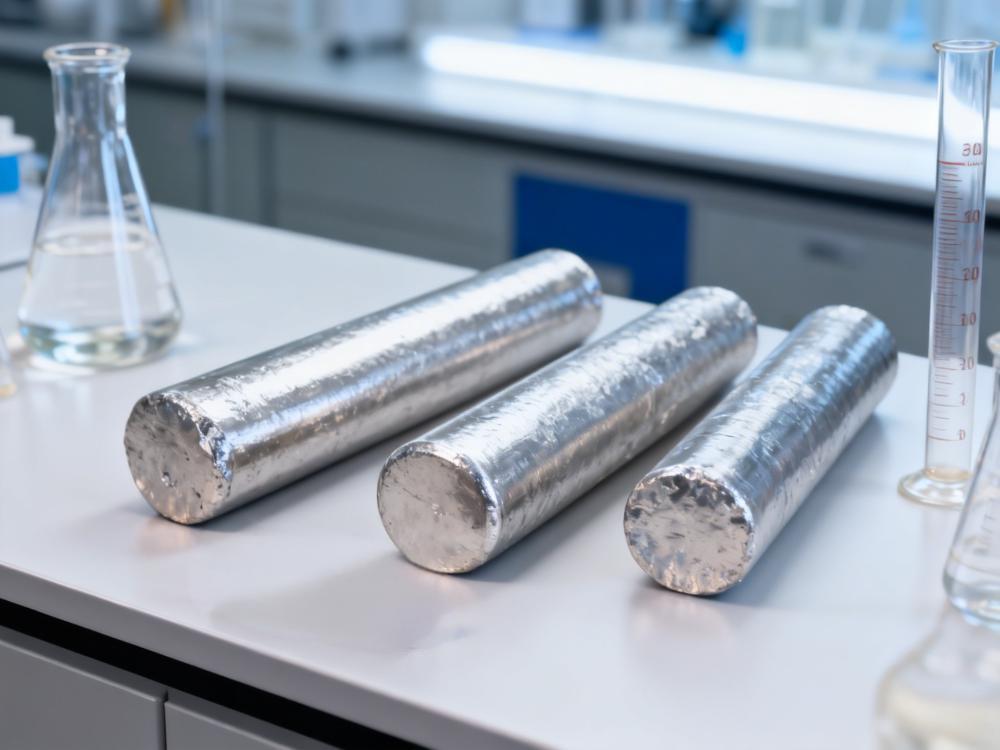
Australia'sStrategic Materials Company disclosed its Q3 results, showing that it shipped a total of 40 mt of rare earth metal during the quarter, with NdFeB production of 16.7 mt and shipments to customers of 13.9 mt. The capacity of the company's metal processing plant in South Korea is continuously increasing, and it plans to raise the annual capacity of rare earth metal alloy from 1,300 mt to 3,600 mt.
Additionally, Rainbow Rare Earths Companyreported progress on its Phalaborwa project in South Africa. The project has successfully produced high-purity mixed rare earth products and is scheduled to be completed and operational by 2027. The company emphasized that its technology does not require traditional mining; instead, it extracts rare earths by processing phosphogypsum scrap generated from historical phosphate production, aiming to become a supplier of responsibly sourced rare earths for Western markets.
R&D and Cooperation
In the field of R&D, the US Department of Energy's Advanced Research Projects Agency provided $3 million in funding to a research team at the University of California, Davis, for developing a bio-based process aimed at using genetically modified acid-resistant microorganisms to selectively capture rare earth elements from acidic mine and industrial wastewater, with the goal of achieving lower-cost and more environmentally friendly recovery.
Meanwhile, the CEO of Momentum Technologies testified before the US House of Representatives, introducing their proprietary membrane solvent extraction technology as a domestic processing solution to address the vulnerability of the US critical mineral supply chain.
International Cooperation and Market Layout
In terms of international cooperation, the US Center for Strategic and International Studies released a report stating that the US has the potential to become an international rare earth processing hub, recommending a dual-track strategy: rapidly building domestic processing and magnet manufacturing capabilities while collaborating with trusted allies such as Australia, Saudi Arabia, and Canada to establish a global processing network.
Kazakhstan, with its newly discovered super-large rare earth deposit in the Karaganda region, is accelerating efforts to attract foreign investment for cooperation. The state-owned Tau-Ken Samruk company has signed technical agreements with institutions from the US, Japan, and France, aiming to build a complete industry chain from mining to processing.