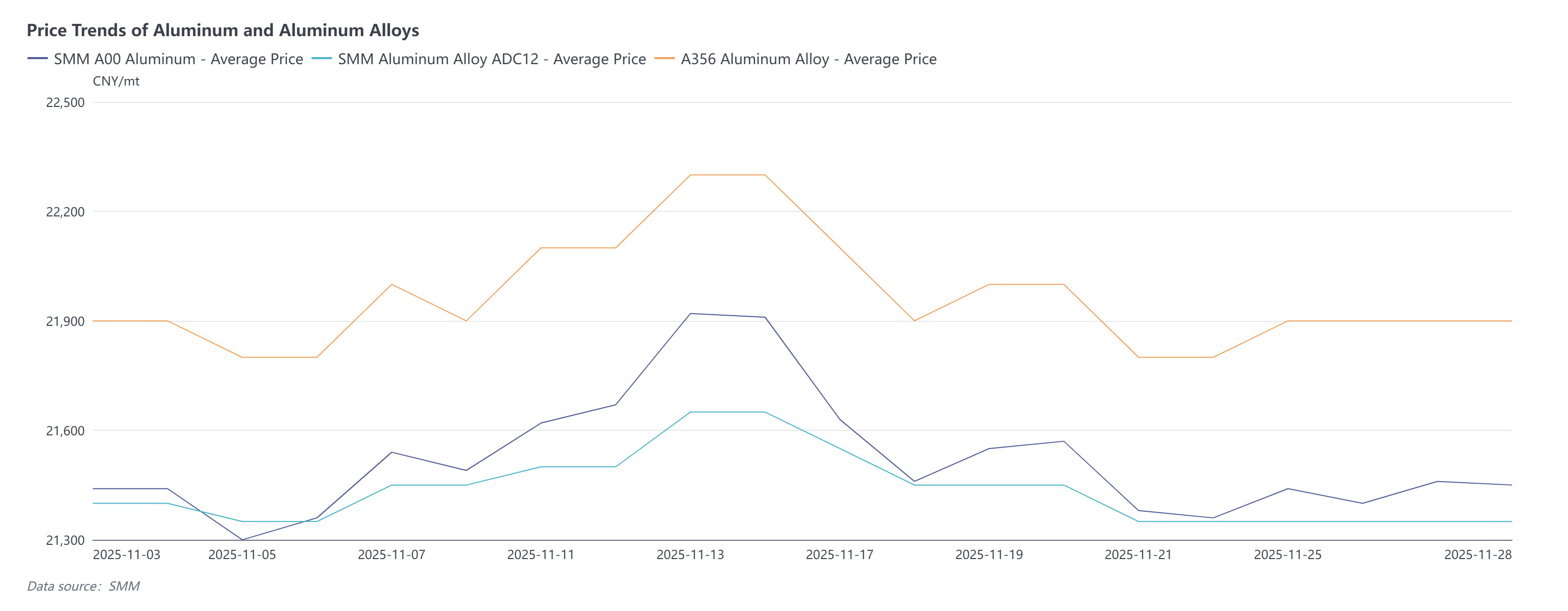
Récemment, alors que les prix de l'aluminium continuaient de fluctuer à des niveaux élevés, SMM a interrogé certains fabricants de pièces moulées en alliage d'aluminium sur leur production et leurs activités actuelles et à court terme. Les résultats sont les suivants :
Entreprise A : Produit principalement des pièces automobiles telles que les blocs-moteurs et les arbres de direction, avec une capacité annuelle de 25 000 tonnes. Les commandes sont principalement des contrats à long terme, donc les fluctuations actuelles du prix de l'aluminium ont un impact relativement faible sur les commandes. La production réelle et les commandes sont restées relativement stables ces derniers mois. La stratégie d'approvisionnement en matières premières vise à assurer une production normale, en maintenant un stock de matières premières suffisant pour une semaine de production, sans ajuster le rythme des achats en raison de la volatilité du prix de l'aluminium.
Entreprise B : Produit principalement des pièces pour engins de chantier, véhicules à énergie nouvelle et véhicules de mobilité nouvelle, avec une capacité annuelle de 5 000 tonnes. Les commandes sont principalement des contrats à long terme, et comme les entreprises en aval sont actuellement en phase de constitution de stocks, le volume des commandes a considérablement augmenté. Les matières premières consistent principalement en lingots d'alliage d'aluminium primaire. Compte tenu des prix élevés de l'aluminium, le stock de matières premières est maintenu uniquement pour une semaine de production, réduisant la fréquence de réapprovisionnement et adhérant à un approvisionnement juste-à-temps.
Entreprise C : Produit principalement de petites pièces automobiles telles que les radiateurs de voiture et les boucles de ceinture de sécurité, avec une capacité annuelle de 1 200 tonnes. Les commandes sont principalement des commandes au comptant. En raison des prix élevés de l'aluminium, les commandes des utilisateurs finaux en novembre ont chuté de 30 % en glissement mensuel par rapport à octobre. Les matières premières sont principalement achetées en début de mois en fonction des commandes réelles. Des pertes sont survenues ce mois-ci en raison de coûts dépassant les prix de vente, entraînant une baisse de 30 % en glissement mensuel de la production réelle par rapport à octobre et une demande affaiblie de matières premières.
Entreprise D : Produit principalement des composants d'embrayage pour motocyclettes, avec une capacité annuelle de 1 500 tonnes. Les commandes sont principalement des contrats à long terme, donc les fluctuations du prix de l'aluminium ont un impact relativement faible sur le volume des commandes. Côté coûts, l'entreprise se couvre en utilisant le prix moyen de l'aluminium du trimestre par rapport aux prix de vente des produits, atténuant efficacement la pression de l'augmentation des coûts, sans impact significatif sur la production. Actuellement, pendant la saison de pointe de consommation pour l'industrie de la motocyclette, les commandes ont augmenté en novembre et décembre, entraînant une croissance soutenue de la production. Pour les matières premières, les achats sont planifiés par lots en fonction des commandes mensuelles réelles tout en maintenant un stock pour une semaine de production, équilibrant stabilité de l'approvisionnement et maîtrise des coûts.
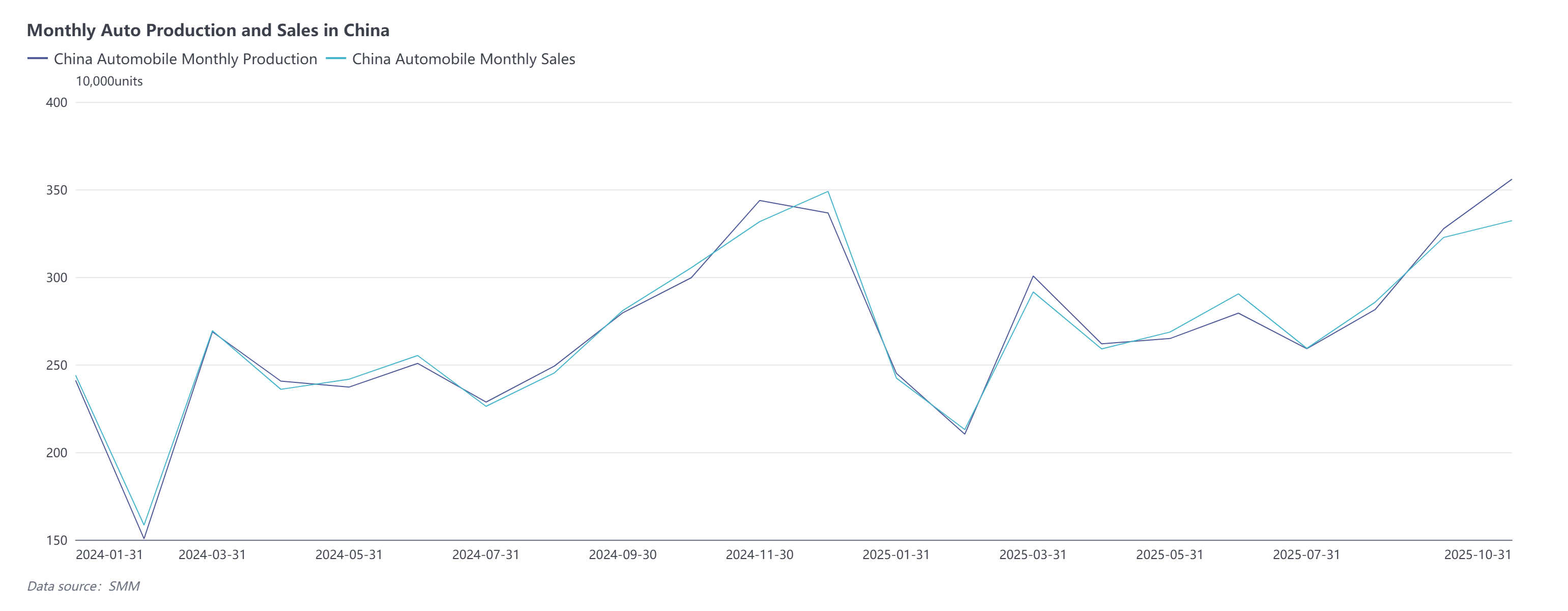
Entreprise E : Produit principalement des composants moulés intégrés pour véhicules électriques, avec une capacité annuelle de 50 000 t. Les commandes sont principalement des contrats à long terme, et les commandes sur le marché du moulage intégré sont relativement stables, donc les fluctuations du prix de l'aluminium n'ont quasiment aucun impact sur la production. Stimulée par les promotions de fin d'année dans l'industrie automobile de première utilisation, les commandes de novembre ont augmenté de 15 % en glissement mensuel par rapport à octobre, et les niveaux de production élevés de novembre devraient se poursuivre en décembre.
En résumé, comme les entreprises de fonderie sont majoritairement dans le secteur des transports, incluant les fabricants de pièces automobiles et motocyclistes, la production globale de l'industrie a montré une croissance, boostée par les promotions de fin d'année des utilisateurs finaux du secteur automobile, et décembre devrait maintenir les conditions stables observées en novembre. Cependant, il existe une divergence significative dans les performances opérationnelles entre les entreprises : celles axées sur les contrats à long terme ont efficacement résisté à la volatilité des prix de l'aluminium grâce à la stabilité des commandes, des mécanismes de couverture des coûts, ou aux bénéfices de la saison haute sur des marchés de niche, maintenant une production stable ou en augmentation progressive. En revanche, les entreprises dépendantes des commandes au comptant, manquant de la sécurité des contrats à long terme, ont subi des baisses à la fois des commandes et de la production, ainsi que des pertes, en raison des prix élevés de l'aluminium et de la demande fluctuante des utilisateurs finaux. Du point de vue des achats de matières premières, la plupart des entreprises ont adopté une stratégie conservatrice de maintien de stocks à court terme et d'approvisionnement juste-à-temps, ajustant le rythme des achats uniquement en fonction des variations des commandes, sans accumuler ou réduire aveuglément les stocks en raison de la volatilité des prix de l'aluminium, reflétant la position prudente de l'industrie face aux prix actuels élevés de l'aluminium.
![Prix spot de l'ADC12 stables ; surveiller le sentiment de stockage avant les doubles festivals [Revue quotidienne des prix de l'ADC12]](https://imgqn.smm.cn/usercenter/jMeFI20251217171722.jpeg)
![SHFE : l'aluminium se stabilise, le sentiment sur le marché spot de l'aluminium continue de s'améliorer [Revue de midi SMM sur l'aluminium spot]](https://imgqn.smm.cn/usercenter/WOsGj20251217171651.jpg)