SMM November 26News:
Key Points: On November 25, 2025, South Korea's LG Chem announced that, in collaboration with Hanyang University, it overcame the challenge of uneven particle size in solid-state electrolytes using spray recrystallization technology, increasing battery capacity and high C-rate discharge capability by approximately 15% and 50%, respectively. LG Chem's technology roadmap involves using polymer-based semi-solid-state batteries as a transition, with the ultimate goal of achieving commercial application of sulfide-based all-solid-state batteries by 2030.
On November 25, 2025, South Korea's LG Chem announced the development of a core technology that significantly enhances the performance of all-solid-state batteries by uniformly controlling the size of solid-state electrolyte particles, a key material. The findings were published in *Advanced Energy*. Using spray recrystallization technology, the basic capacity and high C-rate discharge capacity of the battery increased by approximately 15% and 50%, respectively. This research was conducted jointly by LG Chem's Next-Generation Materials Research Institute and the research team of Professor Taeseup Song at Hanyang University in South Korea.
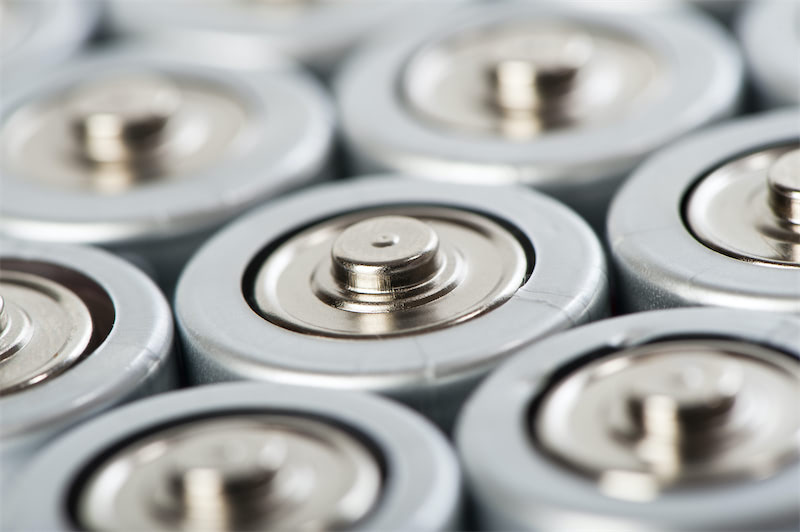
Uneven solid electrolyte particle sizes create minute gaps within the battery, leading to performance degradation. To address this issue, the research team employed spray recrystallization technology, spraying the electrolyte solution into fine droplets to form uniform spherical particles during solvent evaporation. This significantly reduced particle size deviation and improved adhesion between the electrolyte and electrodes.
After applying the spray recrystallization technology, battery capacity increased by approximately 15%, and high-rate discharge capability improved by approximately 50%.
**LG's Solid-State Battery Roadmap and Portfolio**
**Lithium-Sulfur Battery:** Utilizes a sulfur cathode and lithium anode active material, achieving a maximum specific energy exceeding 500 Wh/kg; a lightweight battery. Application scenarios: Aviation, such as high-altitude pseudo-satellites and urban air mobility systems, as well as commercial vehicles like heavy-duty electric trucks and electric buses.
**Lithium-Metal Battery:** Features a volumetric density of approximately 1,000 Wh/L, employing a thin lithium metal anode. Reversibility of the lithium metal anode is enhanced through stable electrolytes, protective layers, and advanced materials. Application scenarios: Electric vehicles and robots requiring high driving range.
**Sulfide All-Solid-State Battery:** Compared to oxide-based all-solid-state batteries, it eliminates the need for high-temperature sintering processes and offers higher ionic conductivity and softer mechanical properties. Compared to semi-solid-state batteries, the all-solid-state battery, with its zero-liquid system and exceptional high-temperature resistance above 100 degrees Celsius, is considered the safest battery.
**LG's Development Direction for Next-Generation Batteries as Stated in Various Public Forums**
1. On June 8, 2023, at the 2023 World Power Battery Conference, Sun Quannan, Vice President of LG Energy Solution, stated plans to commercialize a 'safety-improved' polymer-based semi-solid-state battery by 2026, using higher-capacity silicon or lithium metal anodes to enhance energy density. Development of a liquid electrolyte-based lithium-sulfur battery is targeted for 2027, and a lithium-metal battery for 2028. The goal is the development and commercialization of sulfide-based all-solid-state batteries.
2. On July 23, 2024, at the "SNE Battery Day" conference held at the Seoul Science and Technology Convention Center in Gangnam District, Seoul, Jeong Geun-chang, Vice President of LG's Future Technology Center, stated that while continuously improving lithium-ion batteries, the company is also developing next-generation battery technologies. Sulfide batteries will be used in the high-performance segment, while LFP and LMFP batteries will target the low and mid-end segments, with price competitiveness enhanced through semi-solid-state bipolar batteries. The next-generation batteries under development are expected to be completed by at least 2030. Lithium-sulfur batteries in the trial phase, leveraging low sulfur cost and higher energy storage, achieve an energy density of up to 500 Wh/kg. LG holds a leading position in the development stage of the dry electrode process for all-solid-state batteries, possessing compositions with high ionic conductivity, and utilizes proprietary nano-coating technology to protect cathode materials, reducing resistance and extending battery life.
**LG Profile and Patents**
LG Chem positions itself as a globally leading materials R&D center, focusing on the development of "upstream" core materials such as cathode materials, separators, and cutting-edge solid electrolytes. Its spun-off and independently listed subsidiary, LG Energy Solution, specializes in transforming advanced materials into "midstream and downstream" products like battery cells, modules, and packs, directly serving automaker clients such as Tesla and General Motors. The company plans to achieve the commercialization of sulfide solid-state batteries by 2030.
According to SMM projections, all-solid-state battery shipments are expected to reach 13.5 GWh by 2028, while semi-solid-state battery shipments are forecast to reach 160 GWh. By 2030, global lithium-ion battery demand is estimated to be around 2,800 GWh, with the compound annual growth rates from 2024 to 2030 for lithium-ion battery demand in EVs, ESS, and consumer electronics at approximately 11%, 27%, and 10%, respectively. The global penetration rate of solid-state batteries is projected to be around 0.1% in 2025, and is expected to reach about 4% for all-solid-state batteries by 2030. By 2035, the global penetration rate of solid-state batteries may approach 10%.
**Note:** For further details or inquiries regarding solid-state battery development, please contact:
Phone: 021-20707860 (or WeChat: 13585549799)
Contact: Chaoxing Yang. Thank you!
![[CATL's Wu Kai: Sodium-ion mass production this year, lithium-air next]](https://imgqn.smm.cn/usercenter/MaxcL20251217171730.jpg)