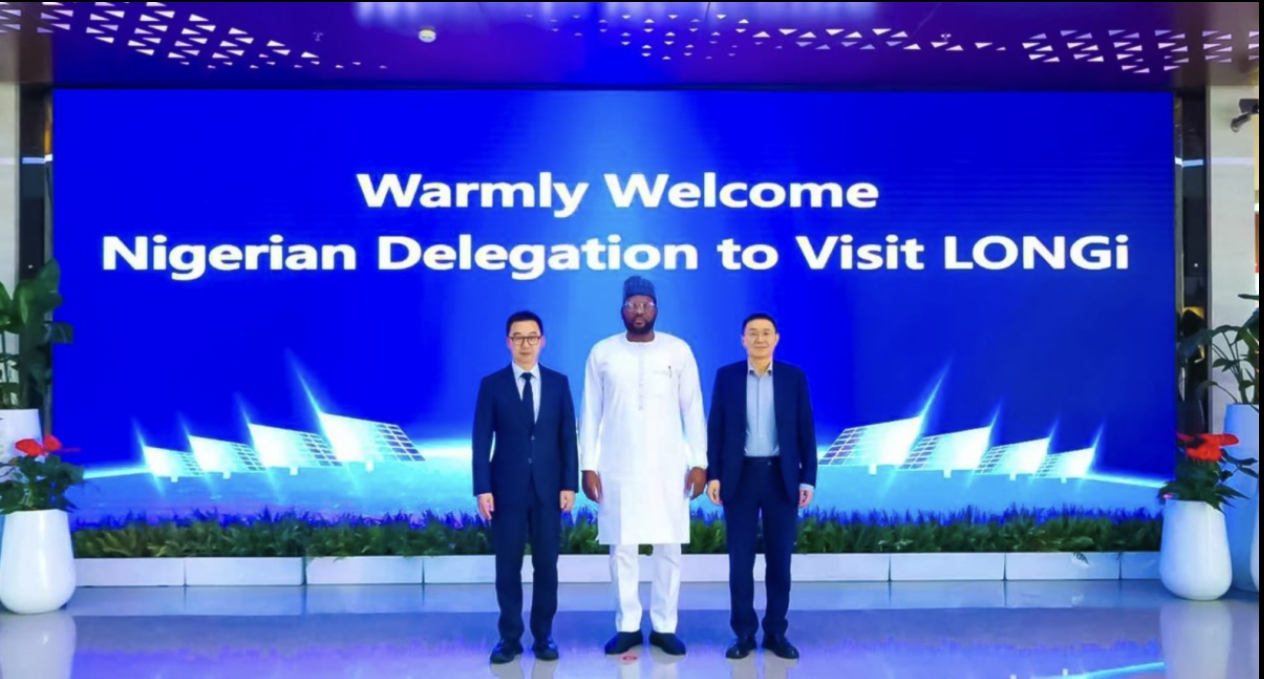
In October 2025, Chinese solar giant LONGi and the Energy Commission of Nigeria (ECN) concluded strategic cooperation negotiations at its headquarters in China. Both parties agreed to advance the establishment of a solar cell/module factory in Nigeria with a capacity of 500–1,000 MW (0.5–1 GW). The official press release from Nigeria and multiple industry media outlets confirmed this intention, noting that the cooperation was deepened based on a memorandum of understanding (MoU) signed earlier in the year in London.
Why choose to establish manufacturing at this moment? The reasons lie in Nigeria's long-standing challenges of unstable power supply and robust demand for distributed PV and microgrids (including issues such as fluctuating national grid connection capacity and widespread reliance on diesel generators), coupled with the government's push for localization and popularization goals such as the "Renewed Hope Solarisation Policy." This creates simultaneous policy and market drivers for local manufacturing. For Nigeria, introducing a manufacturer like LONGi, which possesses scale and technological advantages, is expected to reduce import dependency, improve the module supply chain, and provide more stable upstream support for the distributed and commercial & industrial (C&I) markets.
Current Status and Scale of the Nigeria PV Market:
- Installed Base: According to statistics from the African Solar Industry Association (AFSIA), Nigeria's cumulative PV installed capacity reached approximately 385.7 MW by the end of 2024, with about 63.5 MW newly added in 2024, ranking among the top African countries (2024 annual).
- Market Structure: The market is currently dominated by distributed, commercial and residential solar, as well as micro/mini-grid systems. Utility-scale grid connection projects are progressing relatively slowly due to constraints in transmission and distribution infrastructure and guarantee mechanisms.
- Potential and Targets: IRENA estimates that Nigeria’s theoretical PV power generation potential is enormous (on the scale of hundreds of GW). The Nigerian government has proposed targets in various roadmaps to significantly increase the share of renewable energy by 2030. Local manufacturing is considered one of the industry chain segments supporting medium and long-term expansion.
According to disclosures from the Nigerian Energy Commission and media reports, the cooperation framework between LONGi and the Nigerian government includes: LONGi providing technology, production line planning, and partial capital/equipment support; collaboration in areas such as factory sites, land, administrative assistance, and localized employment training provided by the Nigerian side; the target capacity range is 500–1,000 MW/year (with initial planning allowing for upward expansion), and it will align with the Nigerian government's localization policies to advance parts procurement and worker training. Specific commissioning timetables, funding ratios, and project financing structures have not been disclosed in detail. Both parties indicated that more specific project contracts will be signed and milestones announced in subsequent phases.
Impact on the Market and Industry Chain:
- Supply and Cost: If the project is commissioned as planned, localized production capacity in Nigeria is expected to reduce dependence on imported modules, which will help lower procurement and logistics costs in the long term, thereby enhancing project feasibility and accelerating adoption. This is particularly relevant for C&I and off-grid/microgrid systems, where localized supply can shorten delivery cycles.
- Industrial Stimulus:
Module manufacturing will spur employment and the development of upstream and downstream sectors such as packaging, mounting structures, EPC, and O&M, while also providing a platform for skills transfer and technical training.
Policy Risks and Challenges: In practice, the success of the project depends on factors such as land approvals, tax/tariff incentives, foreign exchange policies, and long-term procurement guarantees in the electricity market (e.g., PPAs and government guarantees). Administrative efficiency, financial conditions, and infrastructure in Nigeria remain key implementation risks.
The collaboration between Nigeria and LONGi serves as both a market-driven response to the country's electricity and energy security challenges and another example of the extension of Chinese manufacturing capabilities into Africa. If the project can overcome policy, financing, and infrastructure constraints and proceed as planned, it is expected to have a long-term positive impact on the adoption of PV modules and local industrialization in Nigeria. In subsequent capacity expansion plans, it will support more new energy electricity demand in Nigeria, extend benefits to neighboring countries, reduce the manufacturing cost of PV modules in Africa, and advance the development of the renewable energy market in the region.
![[SMM PV News] US Solar Faces Labor Shortage Ahead of 'OBBBA' Deadline](https://imgqn.smm.cn/usercenter/xBtJB20251217171738.jpg)
![[SMM PV News] France Unveils 2026 Solar Auction Calendar and New Supply Rules](https://imgqn.smm.cn/usercenter/CpbPE20251217171736.jpg)
![[SMM PV News] Gulf Conflict Shifts Energy Markets, Impacting 'PPAs' and 'BESS'](https://imgqn.smm.cn/usercenter/xAoMy20251217171743.jpg)