As the artificial intelligence wave sweeps across the globe, the computing power demands of data centers are growing at an unprecedented rate. However, providing stable and efficient energy support for these "digital brains" has become a serious challenge. In this context, sodium-ion batteries (hereinafter referred to as "sodium-ion battery") are quietly emerging as a key power assurance solution for future AI data centers, thanks to their unique advantages.
I. The Power Challenges of AI Data Centers: Why Sodium-Ion Battery Is Needed
AI computing, especially large-scale model training and inference, has load characteristics that are completely different from traditional applications. It does not operate steadily but exhibits drastic, millisecond-level peak fluctuations. When thousands of GPUs execute tasks simultaneously, power demand surges instantly, creating strong "pulse currents." Such loads impact the power grid, threaten power supply stability, and may even affect the continuity of computing tasks.
Traditional backup power sources, such as lead-acid batteries, suffer from slow response times, short lifespans, and large sizes. Meanwhile, lithium-ion batteries face concerns related to cost, safety, and cycle life when dealing with high-frequency, high C-rate discharge. AI data centers urgently need a short-term power supply that can respond quickly, flexibly absorb and release energy, and is safe, reliable, and cost-effective—this is precisely where sodium-ion batteries come into play.
II. A Natural Fit: How Sodium-Ion Batteries Act as a "Power Sponge"
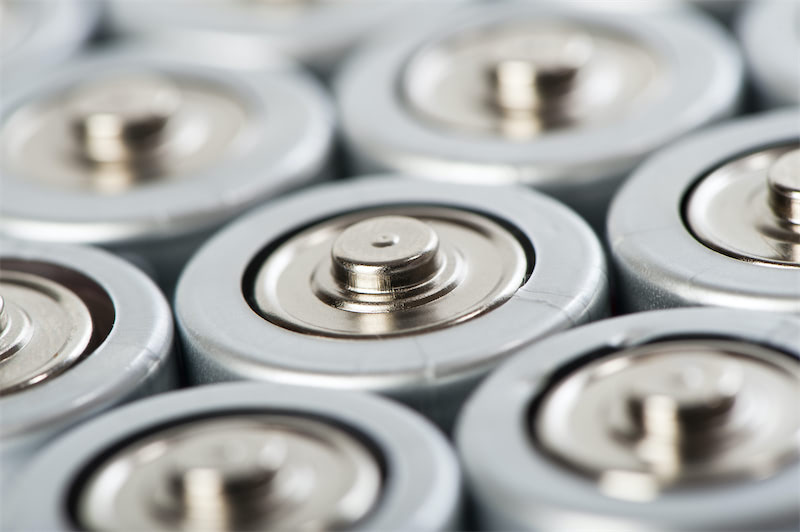
Sodium-ion batteries, leveraging their inherent chemical properties, perfectly meet the instantaneous power demands of AI data centers.
1. Excellent C-Rate Performance Enables Millisecond-Level Response
Sodium-ion batteries possess superior ionic conductivity, enabling sustained discharge at 6C or even higher C-rates. This means a fully charged 100 kWh sodium-ion battery energy storage unit can release a peak power of 600 kW within 10 minutes. This "instant burst" capability allows it to function like a "sponge," quickly absorbing and releasing energy during sudden AI load increases, stabilizing grid fluctuations within milliseconds and ensuring absolute stability in computing power output. 2. Accurate Short-Term Backup Power to Ensure Uninterrupted Data
In the classic "dual utility power + backup generator" architecture of data centers, there is a critical gap of approximately 10 to 15 minutes from the moment the main power fails until the generator fully starts and carries the load. The high C-rate discharge capability of sodium-ion batteries makes them highly suitable for providing high-quality short-term backup power during this period, enabling seamless transition and ensuring that servers remain online without interruption, thereby safeguarding core data.
3. Intrinsic Safety and Wide Temperature Range Performance Enhance System Reliability
Sodium-ion batteries have a higher thermal runaway onset temperature, inherently offering superior safety and reducing fire risks during high-power charging and discharging. Additionally, they maintain stable performance across a broad temperature range from -40°C to 80°C, significantly enhancing the adaptability and reliability of data center power supply systems under various environmental conditions.
4. Cost and Environmental Advantages Align with Sustainable Development
Sodium resources are abundant and widely distributed, resulting in significantly lower raw material costs compared to lithium. Against the backdrop of exponential growth in AI data center construction, sodium-ion batteries provide operators with a scalable and economically viable energy storage solution. Moreover, their environmentally friendly characteristics support tech giants in achieving their ambitious carbon neutrality goals.
III. Future Outlook: An Intelligent Ecosystem of "Lithium-Sodium Synergy" and "AI-Empowered Sodium Batteries"
The application of sodium-ion batteries is not intended to replace all lithium batteries but to complement them. The energy systems of future AI data centers will tend toward a hybrid energy storage architecture based on "lithium-sodium synergy":
- Lithium batteries dominate long-duration energy storage (LDES), providing steady energy support for hours or even longer, addressing the intermittency of wind and solar power.
- Sodium-ion batteries excel in instantaneous frequency regulation, specializing in handling second- and millisecond-level load peaks and frequency adjustments, protecting the system from pulse load impacts.
This division of labor ensures that "the best steel is used for the blade," achieving optimal life cycle costs while guaranteeing extreme reliability.
Even more promising is the two-way empowerment between AI and sodium-ion batteries. AI technology is being applied to develop more advanced battery management systems (BMS), using machine learning models to predict battery state of health (SOH) and remaining useful life (RUL), thereby enabling intelligent operation, maintenance, and efficiency maximization of sodium-ion battery energy storage systems. IV. Challenges and Prospects
Despite promising prospects, sodium-ion batteries still lag behind top-tier lithium batteries in energy density, which is a trade-off factor in data centers where space is extremely valuable. However, this disadvantage does not pose a bottleneck for well-defined short-duration, high-power application scenarios.
Currently, leading global battery manufacturers and equipment suppliers are actively making strategic moves. From the construction of GWh-scale sodium-ion battery production lines to the deployment of sodium-ion battery UPS products, the industrial ecosystem is rapidly maturing. With the continuous surge in AI computing demands and ongoing advancements in sodium-ion battery technology, sodium-ion batteries are expected to become an indispensable part of the underlying energy infrastructure in the future AI-driven world, providing a robust and flexible "sodium" power source for the stable operation of the intelligent era.