1. Introduction to the Company
- NMDC
The National Mineral Development Corporation ( NMDC ) ,established in 1958, is a state-owned enterprise controlled by the Indian Ministry of Steel (60.79%). It is India's largest iron ore supplier and one of the lowest-cost producers in the world. Iron ore production reached 44 million tons in fiscal year 2024. NMDC aims to reach 67 million tons of iron ore by 2025 and 100 million tons by 2030. NMDC have four mining areas whichlocated in the states of Karnataka and Chhattisgarh. In addition to iron ore, the company explores and mines copper,phospate rock, limestone, magnesite, tungsten, beach sand, and other commodities. The company also operates Southeast Asia's only diamond mine. In addition to its operations in India, NMDC also mines iron ore, gold, and other base metals in Australia through its subsidiary, Legacy Iron Ore Ltd.
India is one of the world's leading iron ore producers. In 2023, India's iron ore reserves and production were 5.5 billion tons and 270 million tons, accounting for 3% and 11% of global shares. India's iron ore mining market is comprised of a mix of public and private enterprises 36% of mines are state-owned, while the remaining 64% are privately owned. The state-owned mining companies include the National Mining Development Corporation (NMDC), the Steel Authority of India Limited (SAIL), and Kudremukh Iron Ore Company; while private mining companies include Tata Steel and others.
- Business with China
In 2021, the most of iron ore from India imported to China was pellets, accounting for 31% of total imports. In 2022, due to tariff increases, India's iron ore exports were relatively low. According to 2024 data, China's imports from India were approximately 26 million tons, representing 2% of total iron ore imports. This mainly includes pellets, lump ore, and sinter ore. High-grade ore primarily comes from NMDC. However, NMDC's iron ore exports to China are limited for two reasons: 1) To keep high-quality products domestically, India's export tariffs on high-grade ore are 30% higher than those on low-grade ore; 2) Over the past two years, Chinese steel mills have had poor profit margins and generally weak demand for high-grade ore.
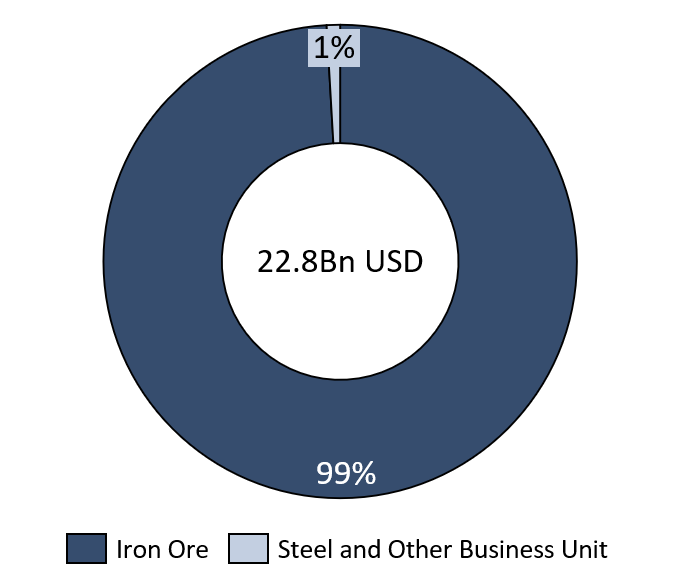
NMDC's Revenue By Segment (USD)
Sources : NMDC;SMM;Trade Map;USGS
2. Iron ore production, shipment volume and main products
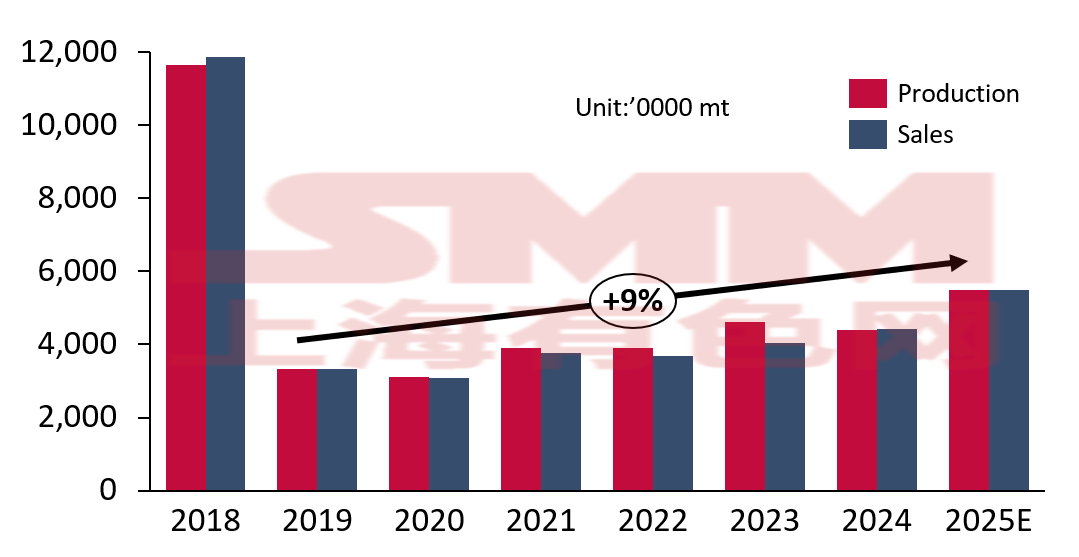
NMDC is India's largest iron ore producer and exporter. NMDC's iron ore production and sales have continuously exceeded 40 million tons from fiscal year 2022 to fiscal year 2024. NMDC's target is to achieve annual production of 100 million tons of iron ore by 2030.
However, Indian mines also face issues with mining license renewals and mining rights disputes, causing significant fluctuations in mine production. Additionally, in recent years, affected by domestic demand in India, iron ore export tariff adjustments have been quite frequent, which has also led to large variations in sales and shipment volumes.
Iron Ore Production and Sales Volume Review (2018-2025E)
Sources : NMDC;SMM
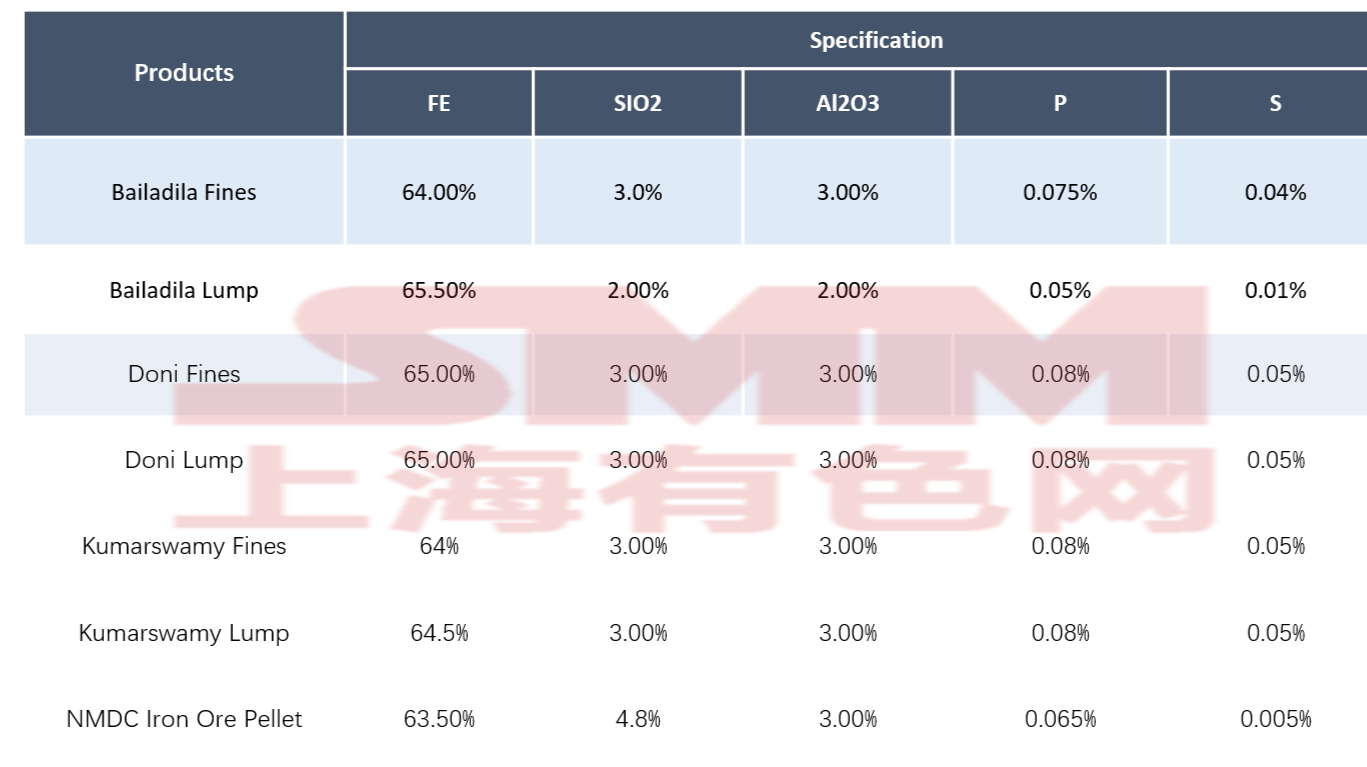
NMDC's Main Product
Sources : NMDC;SMM
3. NMDC's Owned Mine
Sources : NMDC;SMM
- Bailadila Mining Area Overview:
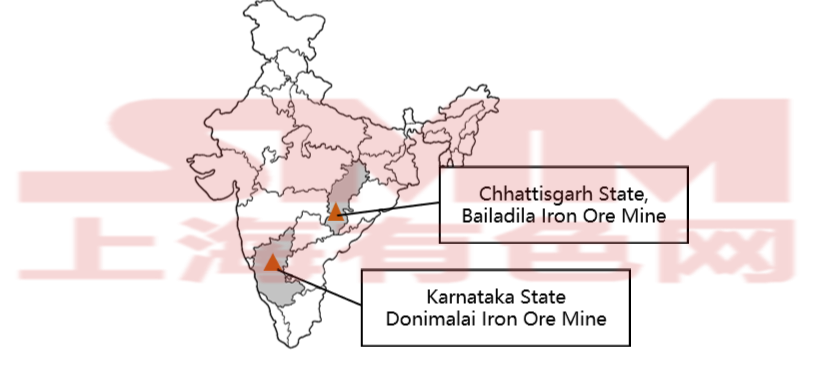
The Bailadila mining area is located in the Dantewada district at the southernmost tip of Chhattisgarh state in central India, approximately 1,400 kilometers southeast of the capital New Delhi. The region has excellent geological conditions with rich and shallow ore deposits, making it one of India's most important high-grade iron ore belts and NMDC's core production base.
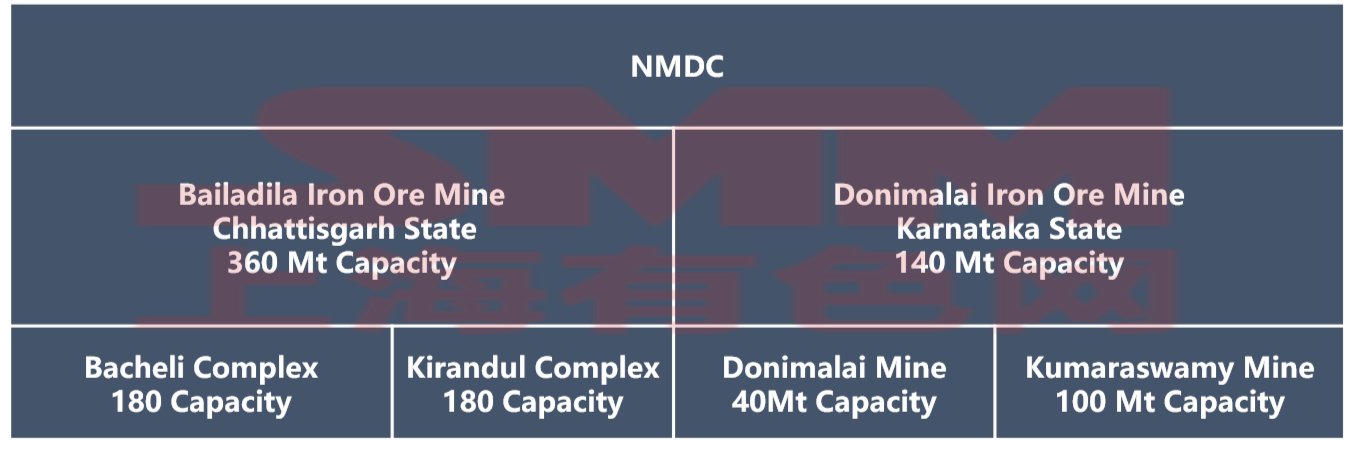
The Bailadila mining area consists of two main complexes: Bacheli and Kirandul, with a total of 9 Mining Lease Blocks. Namely Kirandul mining area: includes blocks 13, 14, 14-NMZ, 11B, and 11C and Bacheli mining area: includes deposits 4, 5, 10, and block 11A. The ore produced consists of Baila lumps (Fe 65.5%) and Baila fines (Fe 64%).
- Donimalai Mining Area Overview:
The Donimalai mining area is located in Karnataka state in southwestern India. The region is situated in an industrial belt with good transportation and infrastructure conditions, close to New Mangalore Port, facilitating ore transportation and domestic steel mill supply.
The Donimalai mining area comprises two mines: Donimalai Mine and Kumaraswamy Mine. Currently, Donimalai Mine has a capacity of 7 million tons per year, while Kumaraswamy Mine has a capacity of 10 million tons per year, with a combined capacity of approximately 17 million tons per year. Main products from this mining area include Doni fines (Fe 65%), Doni lumps (Fe 65%), Kumaraswamy fines (Fe 64%), and Kumaraswamy lumps (Fe 64.5%).
4. Future Expansion Projects
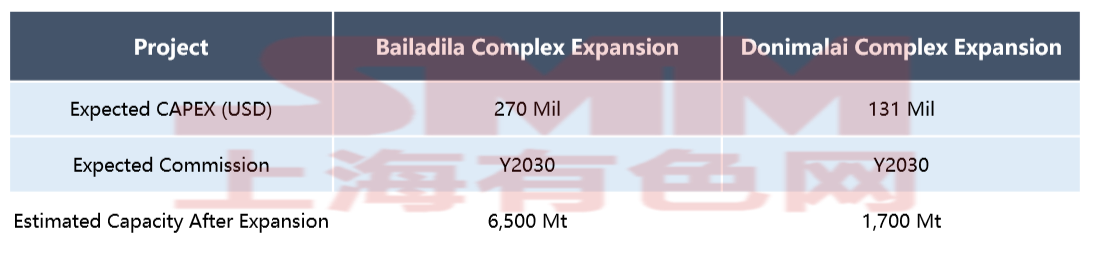
NMDC has a disclosed capacity of approximately 55 million tons as of fiscal year 2025, with production about 45 million tons, and plans to increase capacity to 100 million tons/year by fiscal year 2030 to supply the growing domestic demand. To this end, NMDC has stated it will invest approximately 70 billion rupees (about $780 million) and has already launched multiple projects:
Sources : NMDC;SMM
- Bailadila Mining Area Expansion Project:
Bacheli Complex: The expansion project includes two main components: a beneficiation plant with 4 million tons capacity, a pellet plant located in Nagarnar with annual capacity of 2 million tons, and a 130-kilometer transport pipeline connecting the Bacheli complex and Nagarnar steel plant. The overall goal is to expand capacity from the current 18 million tons to 28 million tons before 2030, and reach 35 million tons by 2032.
Kirandul Complex: The expansion project includes a beneficiation plant with annual capacity of 12 million tons, a crushing plant, and expanded railway transport facilities. The overall goal is to expand capacity from 18 million tons to 30 million tons
- Donimalai Mining Area Expansion Plan:
The Donimalai mining area expansion plan currently includes three main components: a beneficiation plant with 7 million tons capacity and a Downhill Conveyor System connecting the new beneficiation plant with existing facilities to optimize ore handling processes.
The overall purpose is to increase the annual capacity of the Donimalai mining area from the existing approximately 14 million tons to 17 million tons, while improving ore quality and transportation efficiency.
![[SMM Coking Coal and Coke Daily Brief] 20260604](https://imgqn.smm.cn/usercenter/LSkpO20251217171720.jpg)