On October 9, the spot price of silver in London broke through the key level of $50 per ounce, reaching a high of $51.2230 per ounce, setting a new record high since 1980. Additionally, the LBMA spot prices against COMEX futures saw an unusual premium expansion to over $2.50 (typically just a few cents), creating a rare dislocation between futures and spot markets overseas along with a backwardation structure. In response, the Chicago Mercantile Exchange raised margin requirements for silver and gold futures. In contrast, domestic silver prices performed relatively weakly on October 9 and 10, with silver ingot exports becoming profitable.
In 1980, during the Hunt brothers' silver market manipulation case in the US, silver prices also soared to $50.35 per ounce, ultimately ending with US government sanctions that banned the Hunt family from further trading in the futures market, leading to a price collapse. Although the current rally also involves a short squeeze, the macro backdrop and the supply-demand structure for silver ingots differ significantly from the historical context, and the price increase has been relatively mild. One market trader noted that, adjusted for inflation, the current new high in silver prices is only equivalent to about a quarter of the 1980 peak.
Key Data Indicators Interpretation
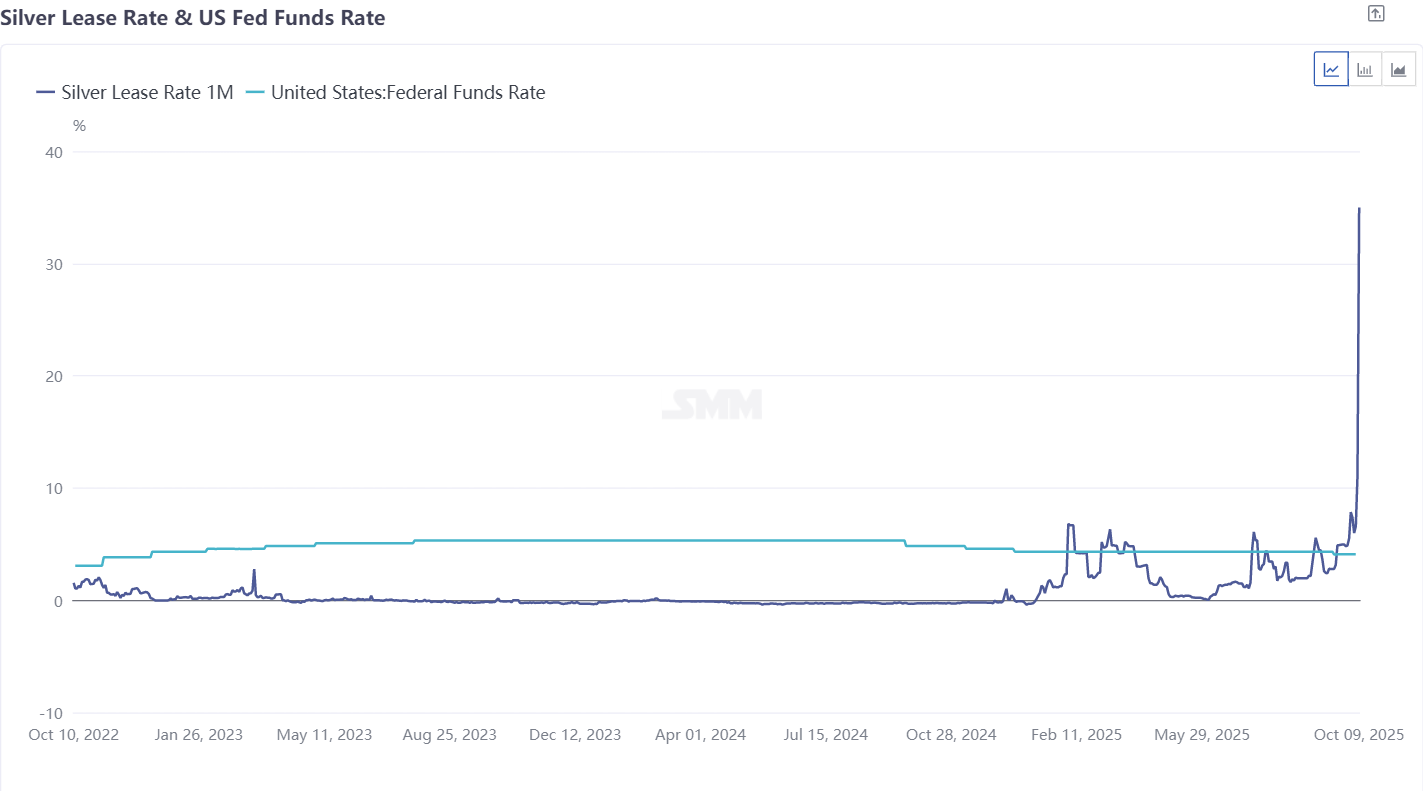
(1) 1-Month Silver Lease Rate Soars to 34.98%
Since March 2025, the London 1-month silver lease rate has risen slightly multiple times, with its operating center significantly higher than the near-zero conventional levels seen in other years. On one hand, concerns over Trump's tariffs have raised expectations of a correlation between London silver ingots being shipped to the New York market; on the other hand, ETF buying exceeding selling has led to a shortage of freely circulating physical silver ingot inventories held by banks. Beyond the New York market, according to overseas traders, since mid-to-late September, banks in Singapore have also encountered difficulties in leasing silver.
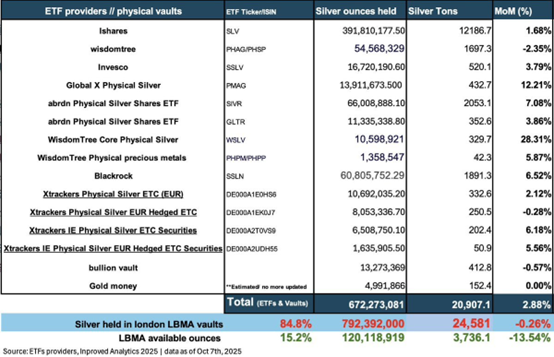
(2) Estimated Freely Circulating Inventory in the London Market Falls Below 4,000 mt
As a large amount of spot silver is linked to ETFs and cannot circulate freely in the market, traders on Twitter have shared estimates that the freely circulating silver in the London market is less than 4,000 mt. The SLV prospectus mentions that custody can be in warehouses in the UK or New York, but given the London market's focus on spot trading and New York's emphasis on futures trading, it is generally assumed that SLV's primary physical holdings are in London warehouses.
Media and investment banks unanimously agree that the recent breakthrough of $50 is primarily due to "physical delivery difficulties" rather than mere macro sentiment. Goldman Sachs, Saxo, and TD Sec, among others, have noted that although traders can arbitrage by moving silver ingots from the US and China to the London market, the actual logistics cycle is difficult to assess. Theoretically, physical inflows could ease the tightness within 1–2 weeks, but the process may be accompanied by significant volatility. In actual spot market trading, SMM has learned that overseas buyers, including banks, are placing orders cautiously, and domestic warehouses have strengthened supervision against silver ingot smuggling. Supply-demand imbalances across different markets cannot be adjusted quickly, and the price gap between domestic and London markets is unlikely to narrow rapidly.
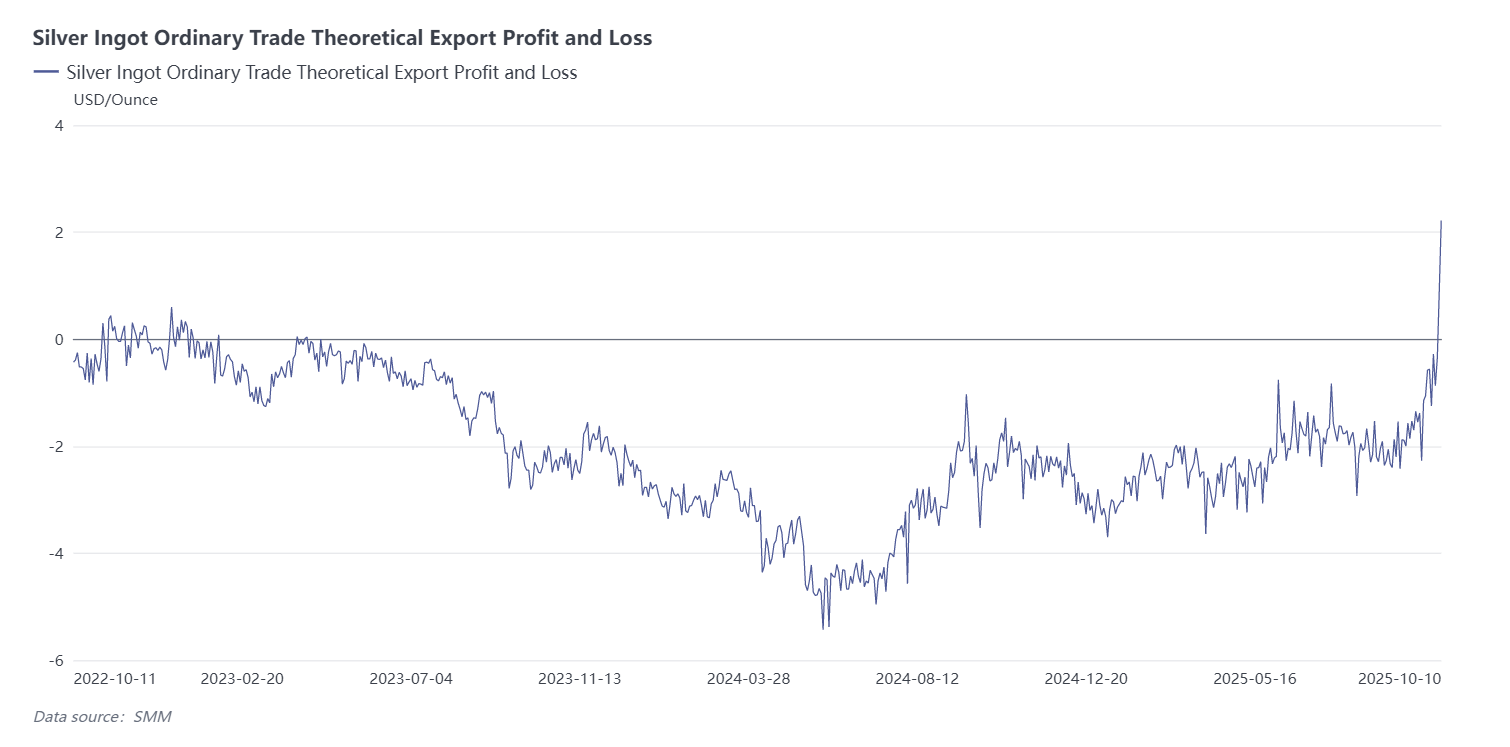
(3) Silver Ingot Export Losses Narrow and Turn into Profits
China's silver import-export market rarely sees export profitability. Smelters primarily engage in processing trade by importing overseas silver-containing ores for processing and then exporting under processing trade arrangements. Due to restrictions on general trade export quotas, applying for temporary export licenses requires longer lead times. Currently, exports are still dominated by processing trade quotas, and domestic prices and COMEX prices have not surged in sync with the London market.
Future Outlook
In addition to the rare short squeeze seen in the London market during this round, the favorable factors supporting precious metal prices themselves continue to sustain their fluctuation at highs:
(1) Currency Devaluation Trade
Funds going long on precious metals are flowing out of major fiat currency markets and shifting into alternative markets such as Bitcoin, gold, and silver, which are perceived as safe assets. Against the backdrop of a potential reshaping of the monetary order and crises like US government shutdowns, central banks worldwide are purchasing gold reserves in large quantities. Furthermore, due to concerns that national fiscal deficits may erode the value of financial assets, safe-haven assets have successively reached new highs.
(2) Interest Rate Cut Cycle
The target range for the FED rate has been lowered to 4.00%–4.25%, and the dot plot implies two additional rate cuts totaling 50 basis points in 2025. During an interest rate cut cycle, the expected increase in gold prices is generally less than that of silver. The context of the rate cut cycle itself provides medium and long-term support for precious metal prices. When extreme events subside and market risk appetite shifts, the decline in gold prices tends to be greater than that of silver prices.
(3) Steady Growth in Industrial Applications and New Energy Sector Demand
Actual production and consumption in the PV and new energy industries have caused a temporary supply-demand mismatch in the silver market, which was previously dominated by investment and trading demand. Theoretically, a sharp rise in silver prices will stimulate the development of mineral resources and recycling. However, the multi-year mine production cycle and the still-developing technology for industrial silver recycling mean that silver ingot supply may not be able to meet the demand gap in the short term. At the same time, the substantial increase in silver prices has also spurred R&D into silver reduction trends in the PV market. Subsequent developments in the consumer market will require close monitoring.
In summary, although the rapid surge in silver prices toward its target, combined with the risk of a short-term retreat after a rapid rise due to overseas market short squeezes, may lead to significant volatility in the near term, prices are expected to continue fluctuating at highs over the medium and long term.
![[SMM Precious Metals Macro] Fed's Hawkish Stance and Rising Yields Pressure Precious Metals Amid Geopolitical Tensions](https://imgqn.smm.cn/usercenter/ipCjz20251217171734.jpeg)