[SMM Analysis] When PV Meets ESS, the Power Grid's "Bottleneck" Finds a Solution

Published: Sep 30, 2025 14:41
Source: SMM
[SMM Analysis] Recently, the Global Solar Council (GSC) stated in a newly released position paper that the world is at a critical crossroads in the energy transition. The rapid development of solar and ESS was expected to accelerate the decarbonisation of energy systems, but in reality, aging grid infrastructure—unchanged for a century—and outdated market rules have become the biggest bottlenecks limiting the further growth of clean energy.

Recently, the Global Solar Council (GSC) stated in a newly released position paper that the world is at a critical crossroads in the energy transition. The rapid development of solar and ESS was expected to accelerate the decarbonisation of energy systems, but in reality, aging grid infrastructure—unchanged for a century—and outdated market rules have become the biggest bottlenecks limiting the further growth of clean energy.

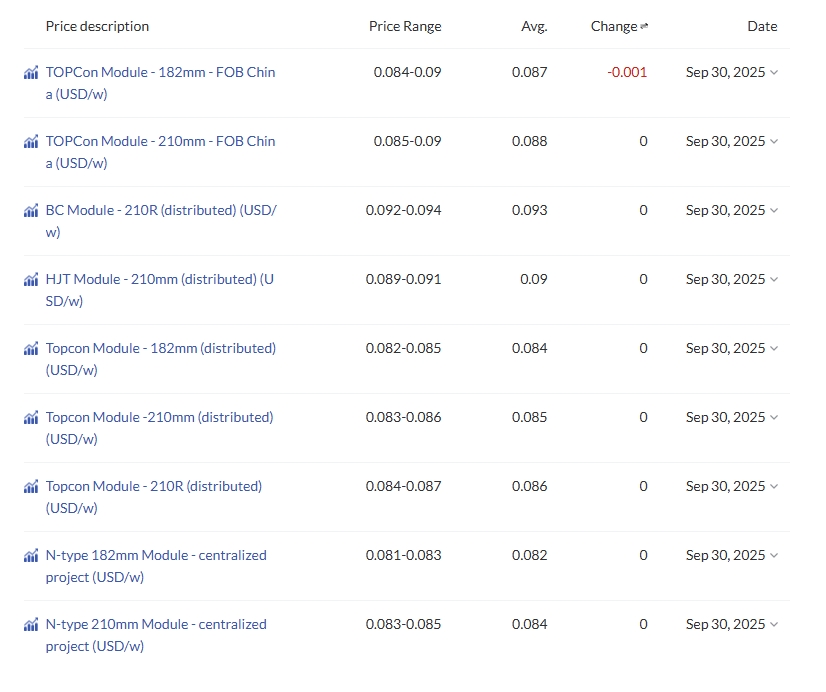
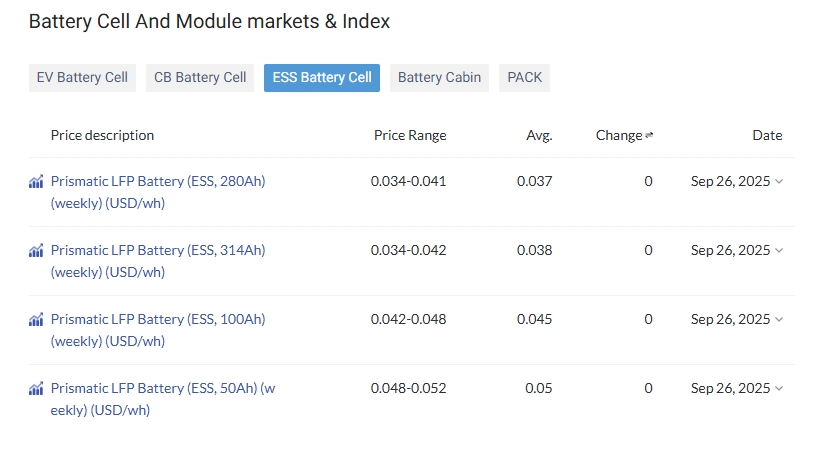
Over the past decade, the costs of PV and ESS have continued to hit bottom, making them the most competitive energy technologies.In the Chinese market, PV module prices have fallen to around 0.09 USD/W, while ESS battery prices have also gradually approached 0.04 USD/Wh.

SMM PV Module Price
SMM ESS Battery Price

However, technological maturity does not guarantee smooth implementation. In Europe, electricity prices during midday hours—when PV output is concentrated—have repeatedly dropped into negative territory, compressing investment returns. In Asia, grid congestion and curtailment of PV power generation have become commonplace, with many newly built power plants in markets such as Japan and Vietnam unable to connect to the power grid. At the same time, while the digitization and intelligentization of the power grid have brought higher efficiency, they have also introduced new risks—cybersecurity threats such as hacking and system vulnerabilities are posing fresh challenges to the stability of power systems.

The GSC emphasized in the document that the combination of PV and ESS is increasingly demonstrating its role as a "game-changer." Short-duration batteries can shift excess midday electricity to evening peak hours, not only alleviating the notorious "duck curve" but also enhancing grid flexibility and reliability. Globally, multiple cases illustrate this trend. Sabah, Malaysia, is constructing a 400 MWh ESS project to strengthen its fragile grid; Uruguay has nearly achieved 100% renewable energy supply through cross-border interconnections and strategic investments; and in Nigeria, distributed PV+ESS systems are gradually replacing tens of millions of diesel generators, providing more economical and cleaner energy for residents and enterprises.

These cases are not merely demonstrations of technological application but also microcosms of changes in the energy landscape. As PV and ESS take center stage in global power systems, the traditional grid model—reliant on centralized power plants and top-down dispatch—is being redefined. The GSC specifically pointed out that future grids must become more decentralized, digitalized, and gradually evolve toward bottom-up energy flows. In this process, ESS is no longer a supplementary role but a key pillar for maintaining the stability of new-type power systems.

The document ultimately concludes that those who lead in promoting grid upgrades and market reforms will gain a competitive edge in the future energy landscape. This is not only about the installed capacity of clean energy but also concerns energy security, price stability, and the overall competitiveness of the industry chain. In other words, the energy transition is no longer just an environmental issue but a core variable for economic growth and social stability.

The GSC noted in the document: "The combination of solar and ESS is no longer a future vision but an inevitable choice in reality." As more countries begin setting ESS targets, advancing cross-border interconnections, and experimenting with new market designs, it is expected that a more flexible, stable, and clean power system will take shape. The real challenge lies in whether this process can proceed quickly enough to meet the world's increasingly urgent energy transition needs.

The source address is:Grid&Storage Position Paper

Data Source Statement: Except for publicly available information, all other data are processed by SMM based on publicly available information, market communication, and relying on SMM's internal database model. They are for reference only and do not constitute decision-making recommendations.

For any inquiries or for more information, please contact: lemonzhao@smm.cn
For more information on how to access our research reports, please contact:service.en@smm.cn
Related News
 Solid-State Battery Weekly |  Steady Progress — Cooling Hype, Stronger Efforts
18 mins ago
 Solid-State Battery Weekly | Steady Progress — Cooling Hype, Stronger Efforts
Read More
 Solid-State Battery Weekly |  Steady Progress — Cooling Hype, Stronger Efforts
 Solid-State Battery Weekly | Steady Progress — Cooling Hype, Stronger Efforts
Highlights: This week (Sep 4–10, 2026), in solid-state batteries, nine government departments included automotive solid-state batteries in the “15th Five-Year” special standards system; Xiamen Tungsten and Tinci advanced pilot production of lithium sulfide and electrolytes; Easpring and GEM shipped cathodes at ton-level; silicon-carbon anode projects expanded capacity; CATL said small-batch production is expected by 2027.
18 mins ago
SMM Daily Review: Spot lithium carbonate prices drifted lower on September 11
38 mins ago
SMM Daily Review: Spot lithium carbonate prices drifted lower on September 11
Read More
SMM Daily Review: Spot lithium carbonate prices drifted lower on September 11
Today, SMM battery-grade lithium carbonate spot prices drifted lower compared with the previous working day. The lithium carbonate 2701 contract opened lower at 140,000 yuan/mt today. After the open, bulls briefly resisted, and the price shot up slightly to 140,400 yuan/mt. Subsequently, bearish pressure was released in a concentrated manner, and the price drifted lower, breaking below the average price line. Near midday, panic selling emerged, and the price accelerated its decline, hitting a low of 128,100 yuan/mt. In the afternoon, dip-buying entered at low levels, and the price gradually consolidated and rebounded, recovering part of the losses. Near the close, the price moved sideways around 135,000 yuan/mt, eventually closing down 4.99% at 134,800 yuan/mt, with open interest decreasing by 1,124 lots. In the spot market, as prices fell rapidly, downstream dip-buying and stockpiling willingness continued to strengthen. However, with upstream lithium chemical plants holding prices firm on spot orders and holding back from selling, the spot orders available in the market were limited. Overall, market inquiries were active, but actual transactions were relatively stable.
38 mins ago
[Solid-State Battery: Nine Departments’ 15th Five-Year Plan Incorporates Automotive Solid-State Batteries into the Specialized Standards System, Accelerating the Supply of Cutting-Edge Technology Standards]
1 hour ago
[Solid-State Battery: Nine Departments’ 15th Five-Year Plan Incorporates Automotive Solid-State Batteries into the Specialized Standards System, Accelerating the Supply of Cutting-Edge Technology Standards]
Read More
[Solid-State Battery: Nine Departments’ 15th Five-Year Plan Incorporates Automotive Solid-State Batteries into the Specialized Standards System, Accelerating the Supply of Cutting-Edge Technology Standards]
[Solid-State Battery: Nine Departments’ 15th Five-Year Plan Incorporates Automotive Solid-State Batteries into the Specialized Standards System, Accelerating the Supply of Cutting-Edge Technology Standards]
[Solid-State Battery: Nine Departments' 15th Five-Year Plan Incorporates Automotive Solid-State Batteries into Specialised Standards System, Accelerating Supply of Cutting-Edge Technology Standards] On 9 September 2026, the Ministry of Industry and Information Technology (MIIT) and eight other departments issued the 15th Five-Year Plan for the Development of the Intelligent Connected New Energy Vehicle Industry (MIIT Joint Regulation Letter [2026] No. 305). In the task of "continuously improving the standards system," the Plan specifies the ongoing establishment and refinement of specialised standards systems for automotive chips, automotive software, automotive artificial intelligence, automotive solid-state batteries, and low-carbon development of automobiles. In the task of "accelerating the supply of cutting-edge cross-disciplinary standards," it further proposes accelerating the formulation of frontier technology standards for automotive artificial intelligence, cockpit-driving integration, solid-state batteries, distributed electric drive, fully active suspension, integrated driving units, and chassis fusion control. The Plan does not establish a separate special clause for the industrialisation of solid-state batteries; the relevant arrangements primarily focus on standards taking the lead, providing regulatory support for subsequent technological breakthroughs and large-scale application.
1 hour ago
[SMM Analysis] When PV Meets ESS, the Power Grid's "Bottleneck" Finds a Solution - Shanghai Metals Market (SMM)