Grasberg Output Cut Rattles Global Cpper Market — Near-Term Prices Jump, Longer-term Balance Tightens

Published: Sep 25, 2025 18:57
On 24 September 2025, Freeport announced output cuts at its Grasberg copper concentrate project in Indonesia due to force-majeure factors — one of the most market-moving shocks to the copper complex this year. The company also lowered its production guidance for 2025 and 2026, prompting sharp market attention and pushing LME copper up ~3.5% that day. By 25 September 2025, LME copper hit a year-to-date high of $10,485/tonne. Below is a brief analysis of the impact of the Grasberg production cut on the electrolytic/ refined-copper market.

On 24 September 2025, Freeport announced output cuts at its Grasberg copper concentrate project in Indonesia due to force-majeure factors — one of the most market-moving shocks to the copper complex this year. The company also lowered its production guidance for 2025 and 2026, prompting sharp market attention and pushing LME copper up ~3.5% that day. By 25 September 2025, LME copper hit a year-to-date high of $10,485/tonne. Below is a brief analysis of the impact of the Grasberg production cut on the electrolytic/ refined-copper market.

1. Southeast Asia supply hit further — spot premiums likely to reach YTD highs

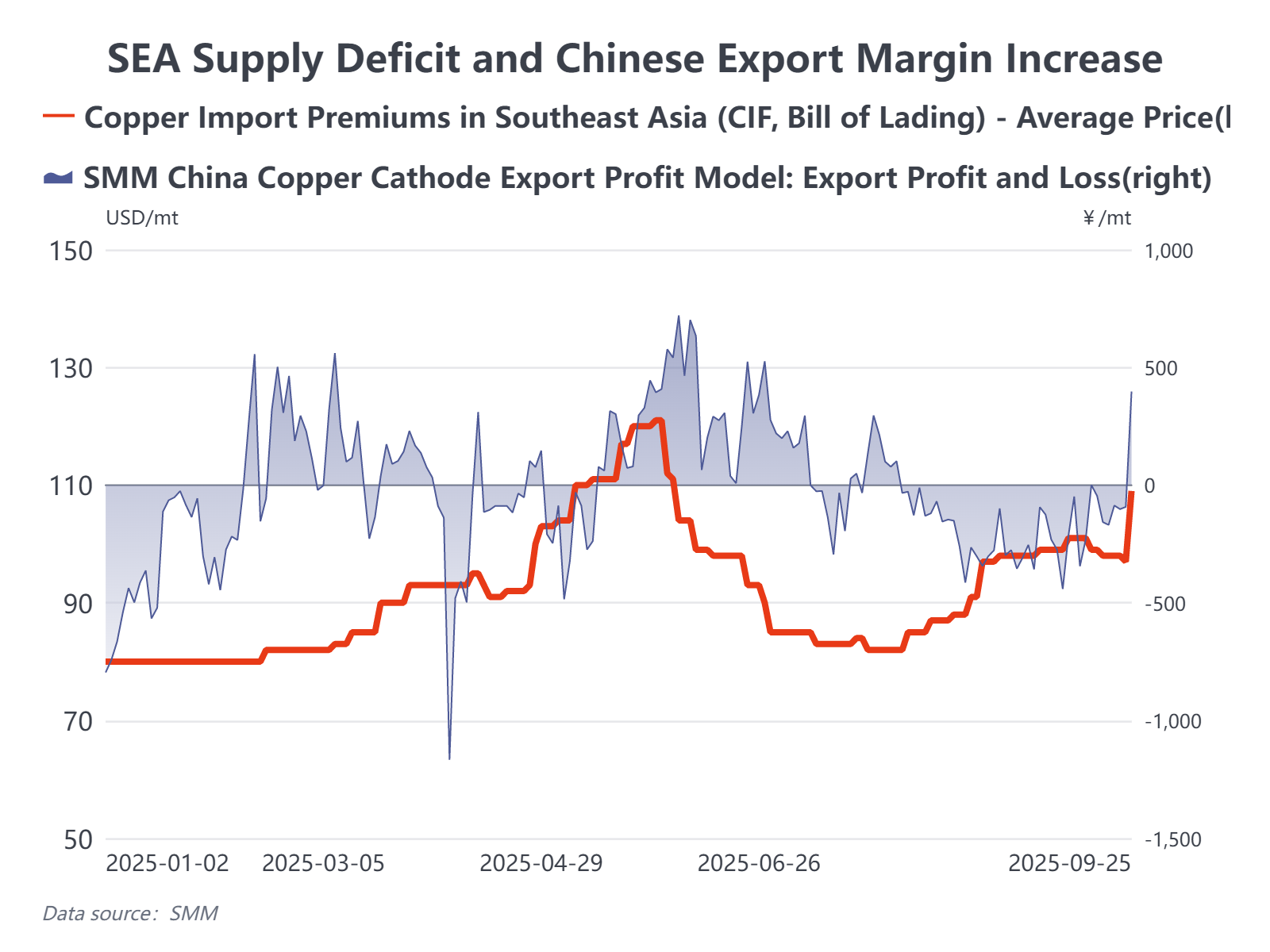
Freeport said the force majeure will reduce Grasberg’s remaining 2025 output by 250,000–260,000 tonnes, and cut full-year 2026 guidance by roughly 270,000 tonnes. In aggregate, this implies about 500,000 tonnes of lost copper over the next 12–15 months. Although Freeport expects a phased recovery from 2027, it also warned of a potential additional loss of 100,000–200,000 tonnes. Grasberg is a major feed source for Indonesian smelters Gresik and Manyar. SMM estimates the disruption could reduce Indonesian refined-copper output in Q4 2025 by roughly 40,000 tonnes per month, much of which had been earmarked for long-term contracts serving the Southeast Asian market. Since the PSR smelter shutdown earlier this year, Southeast Asian refined-copper supply has already been very unstable; this event further disrupts an already fragile supply chain, and regional premiums have clearly risen.
2. Chinese import margin increase— but profit is limited

Domestic consumption in September did not show a material uplift and the National Day holiday is approaching. The price spike opened an export window from a pure arbitrage perspective, and some smelters may be motivated to export short-term. However, the lack of preferential tax exemption/offsets (and the structure of export tax/rebate mechanics) compresses export profitability after the recent rapid price rise. Using prior ore purchase assumptions around $9,900–10,000/tonne, additional tax/fee impacts amount to roughly RMB 500/tonne, meaning export margins are not as attractive as headline prices suggest. SMM expects some smelters to export refined copper in October to help filling Southeast Asian shortfalls, but volumes are likely to be limited.
3. LME contango narrows; CL forward spreads widen

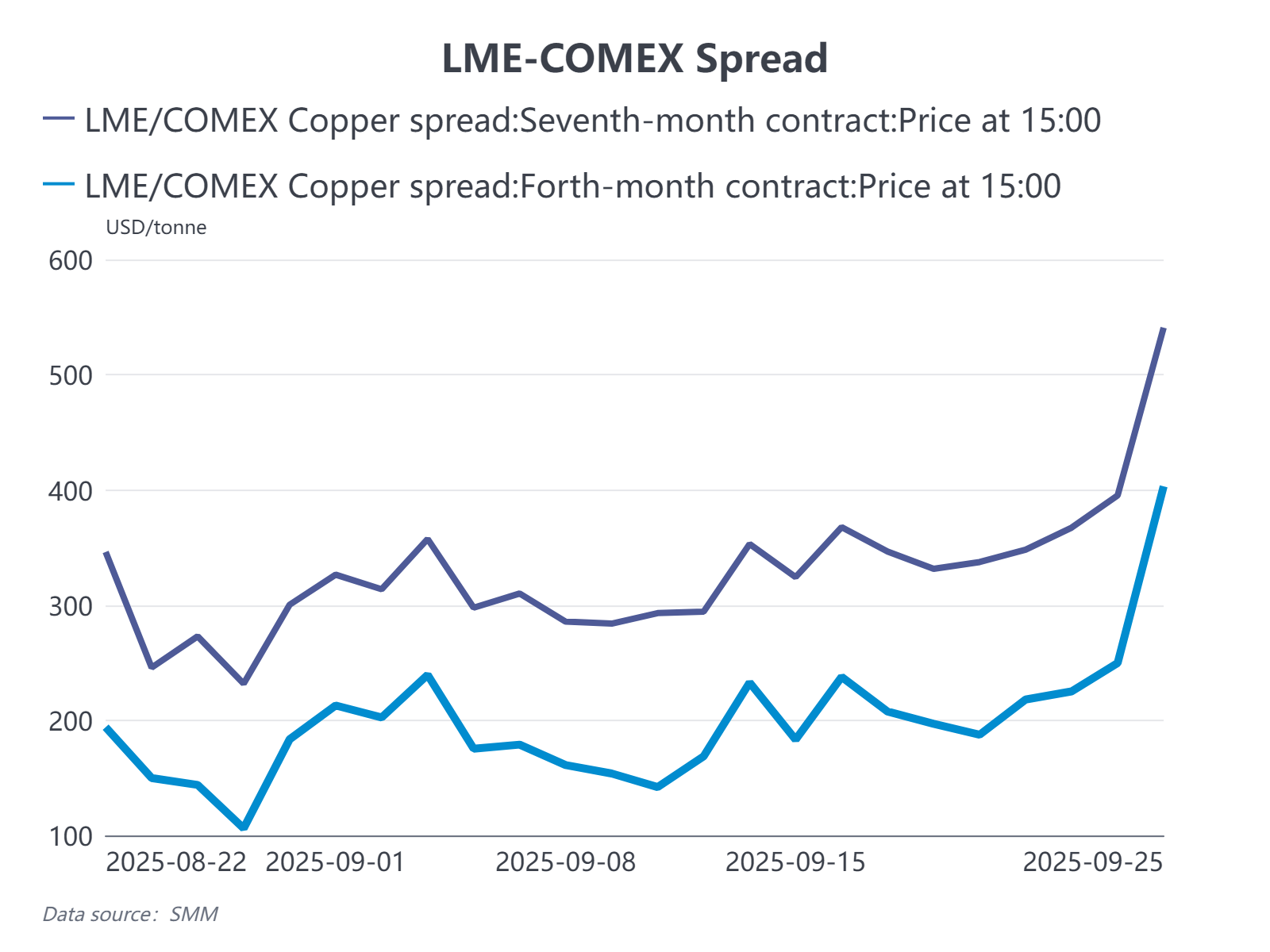
With tighter supply in Asia, LME inventories are likely to fall and the spot–forward (contango) structure should narrow. That said, with current LME stocks still around ~200,000 tonnes, and assuming Southeast Asia is partially replenished by Chinese exports at a monthly shortfall of 20–30 kt, the LME curve is unlikely to see an extreme shift within the year. However, attention should be paid to the existing LME–COMEX far-date spread (now roughly $500–600/tonne), as some traders are combining the current supply-tight logic with expectations of potential future U.S. tariffs on copper. This implies a non-zero probability of extreme structural moves across LME, SHFE–LME and COMEX–LME in Nov–Dec 2025.
4. Annual long-term contract negotiations are forced to accelerate

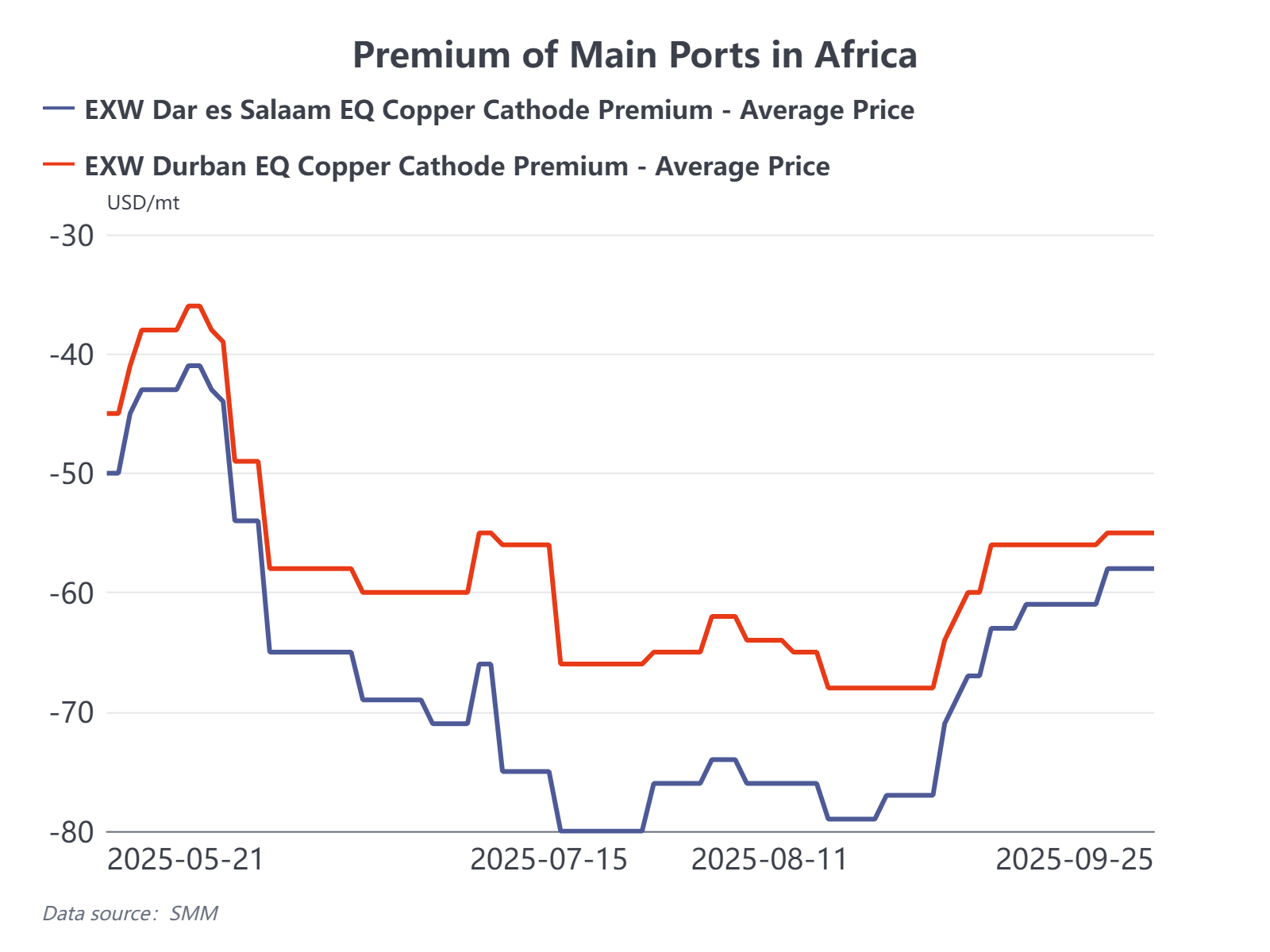
Overall, Asian copper supply will face episodic tightness in Q4. Production cuts in Africa and Indonesia have materially disturbed an already fragile refined-copper flow, and regional premiums are likely to continue rising. The event also puts renewed pressure on the already complex 2026 long-term contract negotiations — African long-term talks may begin as early as late September, and competition for long-term imports from Japan, Korea and South America is expected to intensify this year. On balance, 2026 benchmark long-term prices for Asia look set to move higher relative to 2025.

Outlook: Many of the strategic contests remain unresolved, but 2026 is shaping up to be another year of tight resource allocation. Regional trade fragmentation raises supply-security pressure, and by the year-end long-term negotiations, premiums priced into 2026 are expected to be higher than those for 2025.


Data Source Statement: Except for publicly available information, all other data are processed by SMM based on publicly available information, market communication, and relying on SMM's internal database model. They are for reference only and do not constitute decision-making recommendations.

For any inquiries or for more information, please contact: lemonzhao@smm.cn
For more information on how to access our research reports, please contact:service.en@smm.cn
Related News
Copper Prices Near Record High Amid Supply Tightness and Strong Demand
16 hours ago
Copper Prices Near Record High Amid Supply Tightness and Strong Demand
Read More
Copper Prices Near Record High Amid Supply Tightness and Strong Demand
Copper prices advanced towards a record closing high as tightening physical supply continued to support the market alongside resilient long-term demand. The London Metal Exchange (LME) three-month copper contract strengthened as sustained inflows of metal into the United States and increased buying activity from China reduced the availability of copper in other regions. Large volumes of refined copper have been shipped into the U.S. this year as traders positioned ahead of a potential decision on refined copper import tariffs. At the same time, stronger purchasing activity from China has intensified competition for available material, further tightening the physical market. These developments have contributed to copper gaining approximately 14% since the beginning of 2026, building on three consecutive years of annual gains. Beyond near-term supply tightness, the market continues to be supported by long-term demand from power infrastructure, renewable energy, electric vehicles and artificial intelligence-related data centres. However, declining ore grades at existing operations and the increasing cost and complexity of developing new mines continue to constrain future supply growth. The latest price gains highlight a market increasingly influenced by physical supply constraints rather than demand alone. With inventories remaining tight and new mine supply struggling to keep pace with long-term consumption growth, sustained price strength could continue to support investment in mine expansions, brownfield redevelopment and domestic copper processing capacity.
16 hours ago
Supply-Demand Imbalance Intensifies in China, Blister Copper and Copper Anode RCs Plummet to Yearly Lows [SMM Analysis]
20 hours ago
Supply-Demand Imbalance Intensifies in China, Blister Copper and Copper Anode RCs Plummet to Yearly Lows [SMM Analysis]
Read More
Supply-Demand Imbalance Intensifies in China, Blister Copper and Copper Anode RCs Plummet to Yearly Lows [SMM Analysis]
SMM Analysis: The supply-demand imbalance in the market continued to worsen. As of August 7, with all SMM RCs having fallen to their lowest points of the year...
20 hours ago
Japan's Copper Raw Material Procurement System Integration Delayed; PPC New Company Plan Postponed to February 2027 Operation [SMM Analysis]
20 hours ago
Japan's Copper Raw Material Procurement System Integration Delayed; PPC New Company Plan Postponed to February 2027 Operation [SMM Analysis]
Read More
Japan's Copper Raw Material Procurement System Integration Delayed; PPC New Company Plan Postponed to February 2027 Operation [SMM Analysis]
[Deep Seismic Risks Emerge, Codelco Suspends Andes Norte Expansion Project at El Teniente Copper Mine] Codelco temporarily suspended development and construction activities at the Andes Norte project of the El Teniente copper mine due to potential new-type seismic risks emerging in deep areas, while other production areas of the mine remain in operation. The company will further strengthen seismic monitoring and technical assessment and has not yet announced a resumption time. Andes Norte is an important project for the deep resource succession of El Teniente. This suspension may increase uncertainty over the mine’s medium and long-term production recovery and the commissioning of deep projects.
20 hours ago
Grasberg Output Cut Rattles Global Cpper Market — Near-Term Prices Jump, Longer-term Balance Tightens - Shanghai Metals Market (SMM)