【Phân Tích Thị Trường Nhôm Phế Liệu SMM】 Phân Tích Thị Trường Nhôm Phế Liệu Toàn Cầu SMM (2) Tình Trạng Thiếu Hụt Nguồn Cung Ở Mexico - Giá Tăng và Thị Trường Mới
Khối Lượng Giao Dịch Tăng Trong Bối Cảnh Thiếu Sản Xuất Nguyên Liệu Sơ Cấp
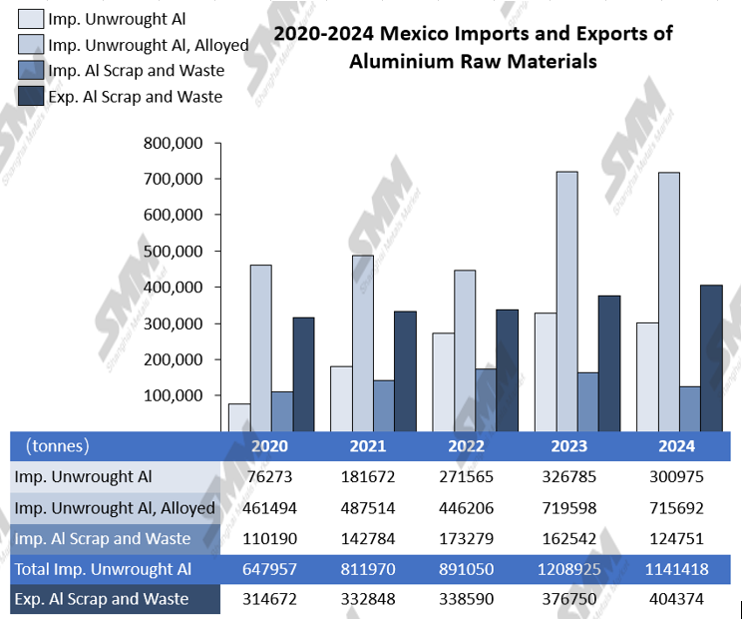
Trong những năm gần đây, khối lượng giao dịch nhôm của Mexico đã tăng đều. Do thiếu năng lực sản xuất alumina và nhôm sơ cấp trong nước, nước này phụ thuộc nhiều vào nhập khẩu nhôm thô từ nước ngoài trong khi tái chế phế liệu nội địa. Từ năm 2020 đến 2024, nhập khẩu nhôm sơ cấp của Mexico đã tăng từ 648,000 tấn lên 1.141 triệu tấn—tăng 176% trong bốn năm.
Bản Địa Hóa và Chủ Nghĩa Bảo Hộ: Nhu Cầu Tăng và Giá Phế Liệu Leo Thang
Để bảo vệ các ngành công nghiệp nội địa, chính phủ Mexico đang xem xét áp dụng một loạt thuế nhập khẩu đối với nhiều lĩnh vực. Các ngành công nghiệp nhôm hạ nguồn—đặc biệt là ô tô và xe máy (bao gồm linh kiện)—có thể phải đối mặt với mức thuế lần lượt là 50% và 35%. Lập trường bảo hộ này có thể kích hoạt một làn sóng phát triển mới trên toàn bộ chuỗi giá trị nhôm của Mexico, làm tăng nhu cầu nhôm thô và nâng cao tầm quan trọng của tái chế phế liệu.
Hiện tại, thị trường Mexico chứng kiến giao dịch thường xuyên các loại phế liệu như Tense (phụ tùng ô tô băm nhỏ) và Talon (dây nhôm), được ưa chuộng nhờ tỷ lệ thu hồi cao và dễ xử lý. Ngược lại, UBC (vỏ hộp đồ uống đã qua sử dụng) được giao dịch ít hơn do hàm lượng tạp chất cao, quy trình xử lý phức tạp và nhu cầu từ thị trường Mỹ tăng. Nghiên c cứu thị trường của SMM chỉ ra rằng phí nhôm LME giảm, kết hợp với nhu cầu phế liệu nội địa tăng, đã đẩy giá phế liệu tiến gần hơn đến mức giá kỳ hạn LME. Một số nhà sản xuất báo cáo rằng giá giao ngay của một số loại phế liệu hiện đang tiệm cận 100% giá kỳ hạn nhôm LME.
Nhà Sản Xuất Hạ Nguồn Tìm Kiếm Giải Pháp Thay Thế
Đối mặt với chi phí gia tăng, các nhà chế biến nhôm hạ nguồn của Mexico đang điều chỉnh cơ cấu nguyên liệu. Ví dụ, dây ép 6063, vốn nhạy cảm với chi phí và nguồn cung phế liệu, đang xem xét sử dụng thỏi nấu lại nhập khẩu làm vật liệu thay thế. Một số nhà sản xuất thậm chí đang khám phá việc sử dụng trực tiếp nhôm sơ cấp hoặc hợp kim nhôm để thay thế phế liệu, do lợi thế giá của phế liệu gần như biến mất và hiệu suất cùng tính ổn định của nó thấp hơn so với các lựa chọn thay thế sơ cấp.
Bất chấp những thay đổi này, nhu cầu về phế liệu vẫn được h hỗ trợ bởi trọng tâm công nghiệp của Mexico vào các lĩnh vực ô tô và vận tải, điều này đảm bảo nhu cầu liên tục đối với các hợp kim như ADC12 và A380, vốn là những yếu tố then chốt trong sản xuất linh kiện ô tô. Những hợp kim này có thể được sản xuất bằng cách sử dụng phế liệu nội địa cấp trung bình đến thấp, tạo thành một cấu trúc cung-cầu trong đó phế liệu cấp thấp h hỗ trợ các nhu cầu công nghiệp cốt lõi trong tương lai.
Tác động hạn chế từ việc miễn thuế của Hoa Kỳ
Do Hoa Kỳ đã miễn thuế 50% đối với nhôm phế liệu, đã nảy sinh lo ngại rằng phế liệu Mexico có thể chảy về phía bắc do giá cả tốt hơn, làm căng thẳng thêm nguồn cung trong nước. Tuy nhiên, nghiên cứu của SMM cho thấy xuất khẩu sang Hoa Kỳ chủ yếu liên quan đến phế liệu cao cấp và UBC, vốn ít được giao dịch phổ biến trong Mexico. Kết quả là, giá cả cạnh tranh của Hoa Kỳ đã đẩy chi phí lên cao cho người dùng phế liệu cao cấp ở Mexico, nhưng phế liệu cấp thấp và nguyên liệu thứ cấp, phục vụ các công ty trong nước và các thị trường Đông Á như Trung Quốc và Hàn Quốc, ít chịu tác động về giá hoặc nguồn cung từ thuế quan của Hoa Kỳ.
Nhìn về phía trước: Trung Đông là trọng tâm chiến lược
Nguồn cung phế liệu nội địa của Mexico hiện đang chặt chẽ và đắt đỏ, gây áp lực lên các nhà xuất khẩu và thúc đẩy nỗ lực tăng nhập khẩu. Về mặt hậu cần, thương mại với Hàn Quốc và Trung Quốc vẫn tiết kiệm chi phí, và cả hai quốc gia đều là đối tác thương mại nhôm lâu năm. Ngược lại, Ấn Độ và Pakistan, bất chấp sự chú ý thị trường gần đây, phải đối mặt với chi phí vận chuyển cao và không được ưu tiên bởi các thương nhân Mexico. Nhìn về phía trước, các công ty Mexico ngày càng hướng tới Trung Đông như một khu vực đầy hứa hẹn—tận dụng các chính sách thuận lợi và chi phí vận chuyển thấp hơn so với Nam Á. Giới trong ngành tin rằng khu vực này có tiềm năng đầu tư vào tái chế phế liệu và chế biến nhôm, và có thể trở thành một biên giới mới cho việc mở rộng chuỗi cung ứng nhôm của Mexico.

![Giá nhôm đi ngang trước kỳ nghỉ lễ Quốc khánh; theo dõi rủi ro tồn kho tăng và hàng về tập trung sau kỳ nghỉ [Đánh giá giá nhôm hàng tuần của SMM]](https://imgqn.smm.cn/usercenter/gdRUL20251217171651.jpg)